Normal view

Received yesterday — 6 April 2026

Published at Applied Energy – Performance benchmark of thermal energy storage concepts in concentrating solar power
24 March 2026 at 21:16


Abstract:
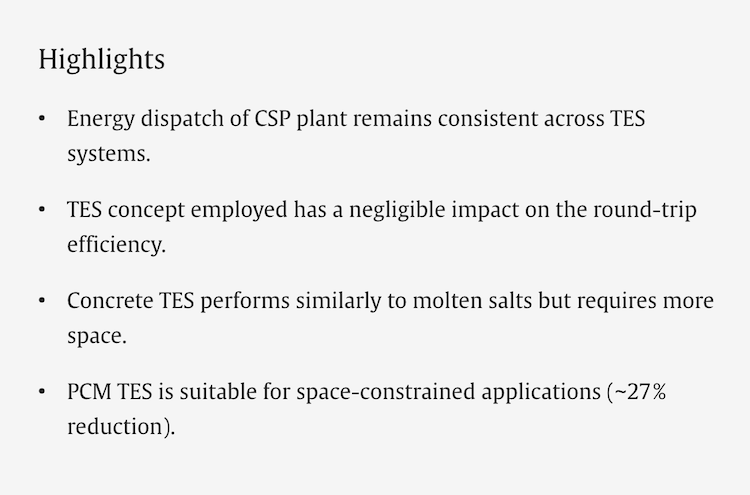
Thermal energy storage (TES) plays a critical role in enhancing the efficiency and dispatchability of concentrating solar power (CSP) plants by mitigating solar energy intermittency. Although molten salts remain the dominant TES solution, alternative systems such as solid-state and latent heat storage offer promising advantages. This study analyses the performance impact of different TES technologies—two-tank molten salt, concrete-based storage, and phase change materials (PCMs)—when integrated into CSP systems. By comparing key performance indicators under identical operating conditions, this study provides insights into the suitability of each TES technology for CSP plant operations. The results highlight the trade-offs between energy yield, efficiency, and footprint. All three concepts demonstrated comparable performance at both the system and TES levels, with disparities of less than 3 %. The advantage of PCM lies in its substantial volume reduction of approximately 27 % compared to molten salt, whereas concrete TES achieves similar outcomes with a slight increase in volume relative to molten salt TES volume.

Pablo D. Tagle-Salazar, Luisa F. Cabeza, Cristina Prieto, Performance benchmark of thermal energy storage concepts in concentrating solar power, Applied Energy, Volume 404, 2026, 127183, ISSN 0306-2619, https://doi.org/10.1016/j.apenergy.2025.127183

The post Published at Applied Energy – Performance benchmark of thermal energy storage concepts in concentrating solar power appeared first on SolarPACES.
Published at Renewable and Sustainable Energy Reviews – Concentrated solar power (CSP) driven desalination systems: A techno-economic review

24 March 2026 at 21:10


Abstract:
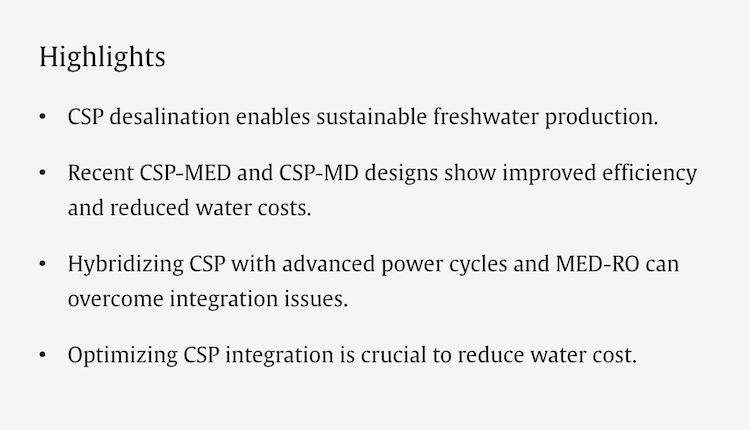
The rising global demand for freshwater, coupled with the urgency to transition away from fossil fuel-based energy systems, has intensified research into sustainable desalination solutions. However, conventional desalination methods reliant on fossil fuels are highly energy-intensive, presenting substantial obstacles to achieving a low-carbon energy transition. Concentrated solar power (CSP) presents a compelling alternative, particularly for arid regions with high direct normal irradiation (DNI). This review provides a comprehensive analysis of recent advancements in CSP-driven desalination technologies, with a particular focus on key methods such as multi-stage flash distillation (MSF), multi-effect distillation (MED), membrane distillation (MD), and innovative hybrid systems. It systematically categorizes solar desalination technologies based on their functional components, economic feasibility, and research progress, highlighting advancements in hybrid system designs, thermal performance optimization, and economic evaluations. Although CSP desalination has experienced significant growth over the past five years, challenges remain in developing cost-competitive solutions, particularly in addressing parasitic losses during integration with conventional power systems. This review identifies potential strategies to overcome these challenges, including optimized system configurations, the integration of thermal energy storage, the adoption of advanced power cycles, and the hybridization of MED-RO systems. Realizing the full potential of CSP for sustainable freshwater production will require advances in materials, system integration, and hybrid configurations. A multidisciplinary approach—combining thermal sciences, desalination engineering, power systems, and techno-economic analysis, alongside supportive policies—is key to establishing CSP desalination as a viable solution for high-DNI, water-scarce regions. This review provides a timely and comprehensive overview of current progress and future directions, offering practical insights for advancing sustainable desalination technologies.

M. Imran Khan, Muhammad Reshaeel, Faisal Asfand, Sami G. Al-Ghamdi, Muhammad Farooq, Mushtaq Khan, Furqan Tahir, Yusuf Bicer, Muhammad Asif, Mohammad Rehan, Tonni Agustiono Kurniawan,
Concentrated solar power (CSP) driven desalination systems: A techno-economic review, Renewable and Sustainable Energy Reviews, Volume 226, Part B, 2026, 116311, ISSN 1364-0321 https://doi.org/10.1016/j.rser.2025.116311

The post Published at Renewable and Sustainable Energy Reviews – Concentrated solar power (CSP) driven desalination systems: A techno-economic review appeared first on SolarPACES.
Published at Renewable and Sustainable Energy Reviews – Computational modeling of high-concentration solar systems using ANSYS-Fluent: Verified models, implemented methods, & existing challenges

24 March 2026 at 21:04


Abstract:
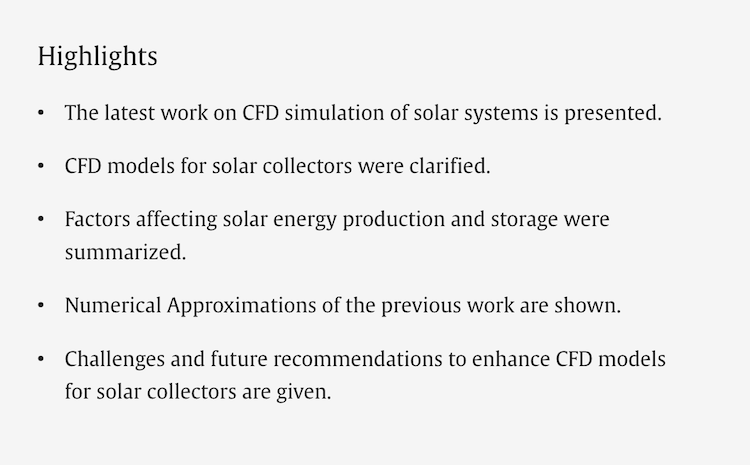
Solar energy is a clean, abundant, and sustainable power source that forms the foundation of energy sustainability. Researchers have focused on examining various factors affecting solar energy generation and storage to improve the efficiency of solar collectors. They have evaluated different design criteria, considering environmental elements such as wind speed, solar radiation, and ambient temperature. Both experimental methods and numerical simulations, including Computational Fluid Dynamics (CFD), have been used. ANSYS-Fluent CFD modeling, in particular, provides a cost-effective alternative to experiments by simulating fluid flow and heat transfer within solar collectors. This article reviews recent advances in numerical modeling of concentrating solar systems, using ANSYS-Fluent, detailing the models and methods employed while discussing current challenges. It covers various solar concentrators, including evacuated tube collectors (ETC), Linear Fresnel reflectors (LFR), Compound Parabolic Collectors (CPC), and Solar Towers (ST). Summaries of previous studies are tabulated, highlighting different CFD models, techniques, and assumptions. The main goals and results of these studies are outlined. The article also discusses validation techniques and compares experimental data with simulation outcomes, assessing the employed numerical models and methods. It emphasizes common physical models, solution strategies, and assumptions used in analyzing different solar concentrating systems. Additionally, it identifies current challenges, suggests future research directions, and offers perspectives to help advance understanding. This work aims to support researchers in understanding current trends in the numerical simulation of high-concentration solar collectors. Scholars can use this resource to select appropriate models and methods, leveraging their strengths and avoiding common pitfalls in CFD analysis of solar collectors with ANSYS-Fluent.

A.S. Abdelrazik, M.A. Sharafeldin, Mohamed Elwardany, A.M. Masoud, Abdelwahab N. Allam, Bashar Shboul, Ahmed O. Eissa, Mansur Aliyu,
Computational modeling of high-concentration solar systems using ANSYS-Fluent: Verified models, implemented methods, & existing challenges,
Renewable and Sustainable Energy Reviews, Volume 226, Part C, 2026, 116305, ISSN 1364-0321, https://doi.org/10.1016/j.rser.2025.116305

The post Published at Renewable and Sustainable Energy Reviews – Computational modeling of high-concentration solar systems using ANSYS-Fluent: Verified models, implemented methods, & existing challenges appeared first on SolarPACES.
Published at Solar Energy Materials and Solar Cells – Metallurgical solid waste-derived skeleton enables shape-stabilized phase change materials with robust properties for high-temperature (≥600 °C) thermal energy storage

24 March 2026 at 20:55

Abstract:
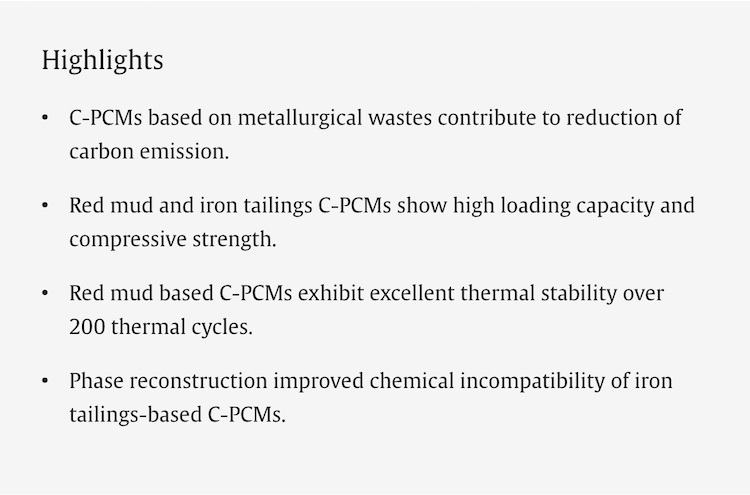
Solid waste-based heat storage materials are attractive due to their low carbon emission and cost effectiveness, demonstrating significant potential for application in concentrated solar plants and waste heat recovery. In this study, steel slag, red mud and iron tailings were used as three types of metallurgical solid wastes to develop form-stable composite phase change materials (C-PCMs) for high temperature (≥600 °C) thermal energy storage in combination with NaCl-Na2SO4 eutectic salt. The thermophysical and mechanical properties of the C-PCMs were comprehensively investigated. Results showed that both red mud and iron tailings had better salt loading capacity than steel slag, which could effectively encapsulate 50 wt% salt without leakage. And these two C-PCMs also exhibited excellent compressive strength of 90 MPa and 81 MPa, respectively. In particular, red mud based C-PCMs showed a phase transition temperature of 625 °C and latent heat of 70 J/g, which only decreased by 2.8% after 200 thermal cycles, indicating good thermal cycling stability. By contrast, iron tailings based C-PCMs initially had lower latent heat of 48 J/g at 622 °C due to the reaction between SiO2 and Na2SO4, but its latent heat increased significantly by 66.6% to 80 J/g after 200 cycles through self-reorganization of the phase during thermal cycling. The results of this work might lay a solid foundation for further exploration of metallurgical solid waste in high temperature thermal energy storage, thereby significantly contributing to carbon emission reductions in both the resource and energy sectors.

Feng Jiang, Hao Wang, Dejian Pei, Tongtong Zhang, Jian Song, Yi Jin, Xiang Ling, Metallurgical solid waste-derived skeleton enables shape-stabilized phase change materials with robust properties for high-temperature (≥600 °C) thermal energy storage, Solar Energy Materials and Solar Cells, Volume 300, 2026, 114272, ISSN 0927-0248, https://doi.org/10.1016/j.solmat.2026.114272

The post Published at Solar Energy Materials and Solar Cells – Metallurgical solid waste-derived skeleton enables shape-stabilized phase change materials with robust properties for high-temperature (≥600 °C) thermal energy storage appeared first on SolarPACES.
Published at Energy Conversion and managaement – Design and performance study on a novel solar moving-bed pyrolysis reactor for waste salt treatment

14 March 2026 at 02:05


Abstract:
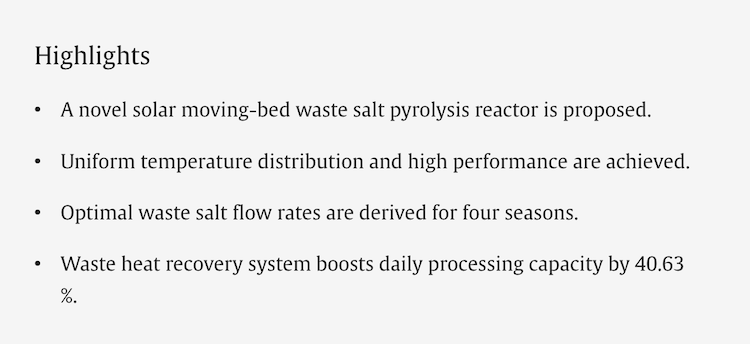
Industrial waste salts with organic impurities require eco-friendly treatment. Conventional pyrolysis relies on fossil fuels, however, concentrated solar energy offers a clean alternative. This study proposes a novel solar moving-bed pyrolysis reactor for purifying waste salt that combines a planar mirror with a parabolic trough concentrator to enable continuous solar irradiation of a vertical moving-bed reactor. The reactor effectively pyrolyzes organic impurities, achieving a final residual ratio below 0.02, while reactor rotation reduces the circumferential temperature difference to 50 K. Seasonal analysis determined optimal flow rates, resulting in a daily processing capacity of 82.66 kg/d in summer 96 % higher than in winter (42.17 kg/d). Furthermore, A 200 K increase in inlet temperature raised daily capacity by 39.06 %; accordingly, an integrated waste heat recovery system was designed and optimized, further enhancing the daily capacity by up to 40.63 %. This work demonstrates the viability of solar-driven pyrolysis for waste salt purification and highlights the importance of operational optimization for industrial solar thermal applications.

Z.J. Dong, H. Ye, W.J. Yan, Y.B. Tao, Design and performance study on a novel solar moving-bed pyrolysis reactor for waste salt treatment, Energy Conversion and Management, Volume 348, Part C,
2026, 120748, ISSN 0196-8904, https://doi.org/10.1016/j.enconman.2025.120748

The post Published at Energy Conversion and managaement – Design and performance study on a novel solar moving-bed pyrolysis reactor for waste salt treatment appeared first on SolarPACES.
Published at Energy Conversion and Management – Constructing a novel closed-loop and efficient pathway for multi-functional CO2 utilization in concentrated solar power systems

23 February 2026 at 02:30


Abstract:
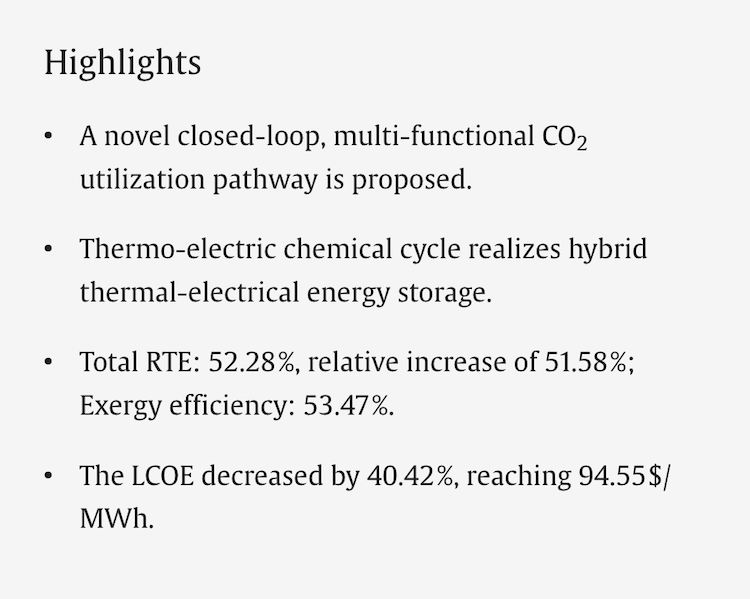
In concentrated solar thermochemical cycles, CO2 utilization enables both energy storage and release. However, the high energy consumption associated with CO2 compression has limited the overall performance of solar power generation. In this work, an energy storage system coupling thermochemical and electrochemical cycles is proposed. This system constructs a “heat storage − electricity storage − electricity release − heat release” closed-loop path for the multi-functional utilization of CO2, achieving efficient and low-cost green power production. Energy analysis showed that the thermoelectric cycle coupling enabled the thermochemical subsystem to achieve a round-trip efficiency of 37.78 %, which represented a relative increase of 9.54 % compared to the conventional thermochemical system. Furthermore, the peak round-trip efficiency of the electrochemical subsystem is 74.70 %. The hybrid system achieved a maximum round-trip efficiency of 52.28%. Exergy analysis revealed that the thermochemical subsystem achieved an exergy efficiency of 41.55 %. The hybrid system achieved an exergy efficiency of 53.47%, with a relative increase of 28.69 %. Economic analysis showed that the hybrid system achieved the levelized cost of 94.55 $/MWh, representing a reduction of 40.42 % compared to the conventional thermochemical storage system. Therefore, this hybrid system has great potential for the multi-functional utilization of CO2.

Yang Yu, Zhipeng Zhang, Binjian Nie, Nan He, Qicheng Chen, Zhihui Wang, Liang Yao, Constructing a novel closed-loop and efficient pathway for multi-functional CO2 utilization in concentrated solar power systems, Energy Conversion and Management, Volume 353, 2026, 121187, ISSN 0196-8904, https://doi.org/10.1016/j.enconman.2026.12118

The post Published at Energy Conversion and Management – Constructing a novel closed-loop and efficient pathway for multi-functional CO2 utilization in concentrated solar power systems appeared first on SolarPACES.
Published at Solar Energy – Design of a SiC-Si moving packed-bed particle-to-sCO2 heat exchanger for high temperature concentrating solar power applications

23 February 2026 at 01:48


Abstract:
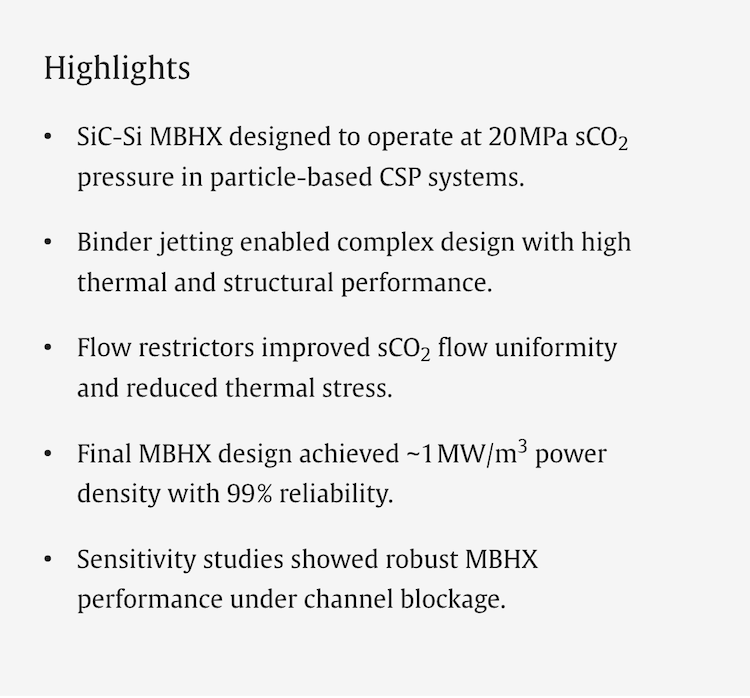
Particle-based concentrating solar power systems integrated with sCO2 power cycles offer high thermal efficiencies but require durable heat exchangers to transfer heat from high-temperature particles to the sCO2 working fluid. This study presents the design and optimization of a silicon carbide-silicon moving packed-bed heat exchanger for fabrication via binder jetting additive manufacturing. The heat exchanger was designed to withstand a 20 MPa sCO2 pressure and operate at particle inlet temperatures up to 750 °C. The final design features 152 sCO2 channels distributed across 19 plates, with elliptical corners and a minimum wall thickness of 3 mm. Flow restrictors at the sCO2 channel inlets significantly improved flow uniformity, reducing thermal stresses and achieving a structural reliability of 99 % under representative operating conditions. The heat exchanger delivers a thermal duty of 9 kW and a volumetric power density of approximately 1 MW/m3 in the channel region. Sensitivity studies confirmed the heat exchanger’s robustness under varying operating conditions, demonstrating its viability as a high-performance alternative to metallic heat exchangers for particle-based high-temperature concentrating solar power applications.

Bipul Barua, Christopher P Bowen, Wenhua Yu, Wenchao Du, David M France, Kevin Albrecht, Mark C. Messner, Dileep Singh, Design of a SiC-Si moving packed-bed particle-to-sCO2 heat exchanger for high temperature concentrating solar power applications, Solar Energy, Volume 303, 2026, 114114, ISSN 0038-092X, https://doi.org/10.1016/j.solener.2025.114114

The post Published at Solar Energy – Design of a SiC-Si moving packed-bed particle-to-sCO2 heat exchanger for high temperature concentrating solar power applications appeared first on SolarPACES.
Published at Energy – Turbo-assisted direct solar air heater for medium temperature industrial processes using Linear Fresnel Collectors. Assessment on daily and yearly basis

21 February 2026 at 00:10


Abstract:

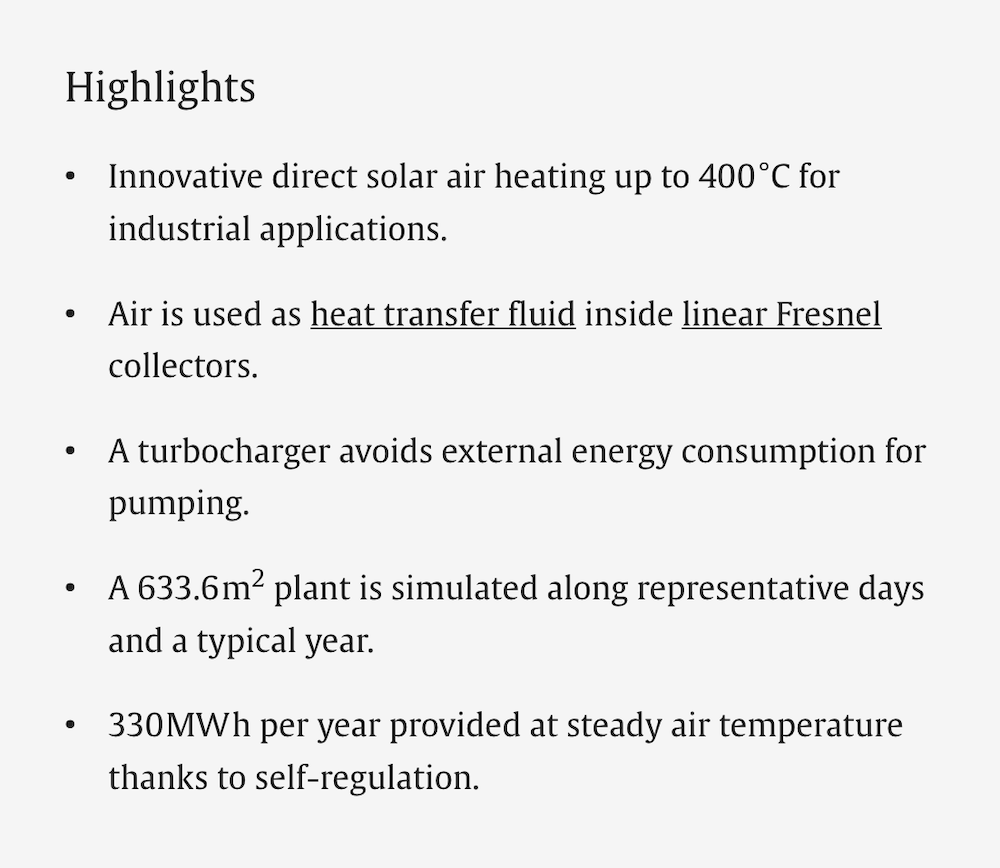
The study analyzes an innovative concentrating solar thermal system aimed at the direct production of hot air for industrial applications. Air is heated inside linear Fresnel collectors in an open to atmosphere circuit, not requiring the use of a primary heat transfer fluid and a heat exchanger, with their associated cost and maintenance. Matching an automotive turbocharger with the solar field avoids auxiliary energy consumption for pumping the airflow. The detailed quasi-steady numerical model implemented, including commercial collector and turbocharger technical features, allows to scrutinize the daily and yearly operating time profile of a medium scale plant with a 633.6 m2 solar field. Considering the typical meteorological year of the selected location (Madrid, Spain), the numerical results indicate that hot air is provided at a remarkable quasi-constant temperature between 300 °C and 400 °C despite the solar variations, delivering 330 MW h per year without overheating the receiver evacuated tubes.

Antonio Famiglietti, Antonio Lecuona, Mercedes Ibarra, Javier Roa, Turbo-assisted direct solar air heater for medium temperature industrial processes using Linear Fresnel Collectors. Assessment on daily and yearly basis, Energy, Volume 223, 2021,120011, ISSN 0360-5442, https://doi.org/10.1016/j.energy.2021.120011

The post Published at Energy – Turbo-assisted direct solar air heater for medium temperature industrial processes using Linear Fresnel Collectors. Assessment on daily and yearly basis appeared first on SolarPACES.

Published at Thermal Science and Enginering Progress – Techno-economic assessment of a concentrating solar air heater and packed-bed thermal energy storage for medium-temperature industrial process heat

20 February 2026 at 21:00


Abstract:
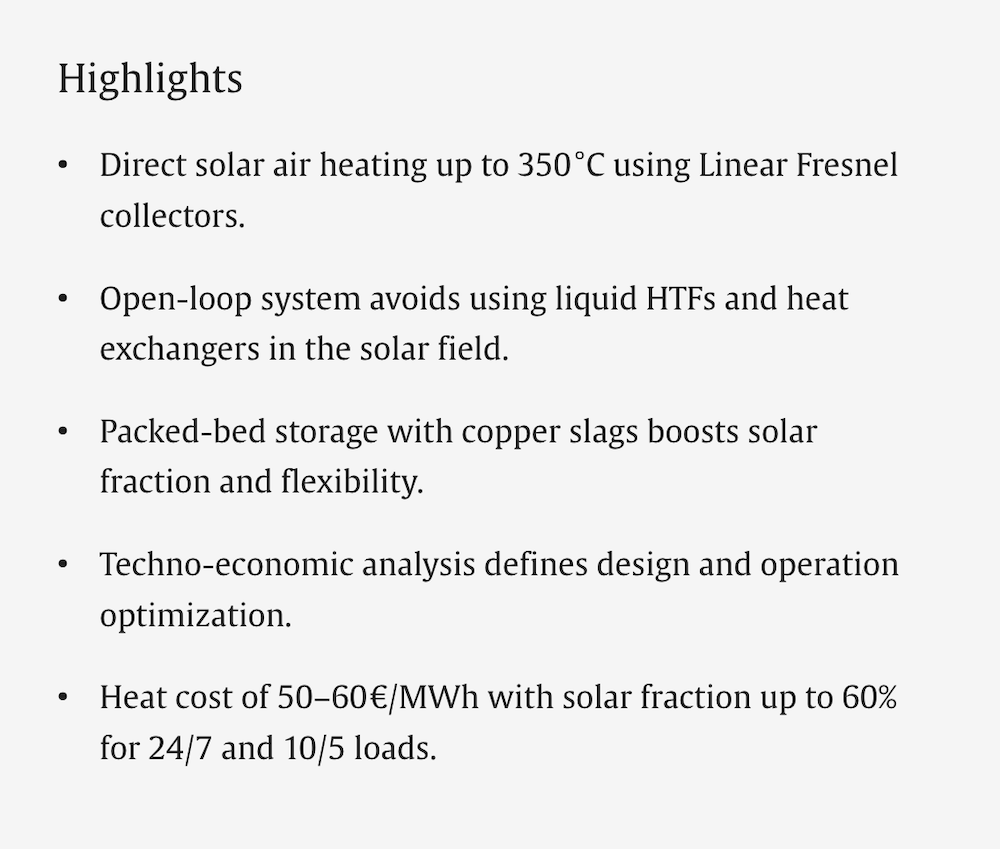
Among the solar thermal technologies, the Linear Fresnel collector can provide solar heat for industrial processes in the medium temperature range of 150–400 °C. Hot air is widely used as a process medium in several industrial processes, such as drying, curing, and cooking. Although steam, pressurized water, and thermal oil are widely used heat transfer fluids in the solar field, the use of air appears as an interesting alternative; it reduces installation costs as well as the risks associated with leakages, and it enables a direct coupling with the air-based thermal processes. This work proposes an innovative layout using Linear Fresnel collectors for direct solar air heating up to 350 °C in an open-to-atmosphere circuit, avoiding liquid heat transfer fluid in the solar field and heat exchangers. A packed-bed thermal energy storage using copper slags as the filler material is coupled with the concentrating solar air heater to increase the solar fraction to the medium- temperature industrial process. A comprehensive techno-economic analysis is carried out to assess the viability of the proposed concept, establishing the design methodology and operation strategy for improving economic performance. The solar system of 360 kW peak thermal power is integrated on an air-based industrial process having a natural gas burner as the conventional heat source, considering four different demand profiles. A methodology for optimizing the packed-bed size is implemented. A levelized heat cost between 50 – 60 €/MWh is achieved by the combined system. Besides, the demand profiles 24/7 and 10/5 are found to have the highest potential to integrate the proposed system, enabling high solar fraction up to 0.6 with limited cost increase.

Antonio Famiglietti, Ignacio Calderón-Vásquez, José Miguel Cardemil, Ian Wolde, Ruben Abbas, Techno-economic assessment of a concentrating solar air heater and packed-bed thermal energy storage for medium-temperature industrial process heat, Thermal Science and Engineering Progress, Volume 70, 2026, 104529, ISSN  2451-9049, https://doi.org/10.1016/j.tsep.2026.104529

The post Published at Thermal Science and Enginering Progress – Techno-economic assessment of a concentrating solar air heater and packed-bed thermal energy storage for medium-temperature industrial process heat appeared first on SolarPACES.

Received before yesterday

Published at Solar Energy – Damage modeling of power tower receiver tubes using the SRLIFE tool

16 January 2026 at 00:51


Abstract:
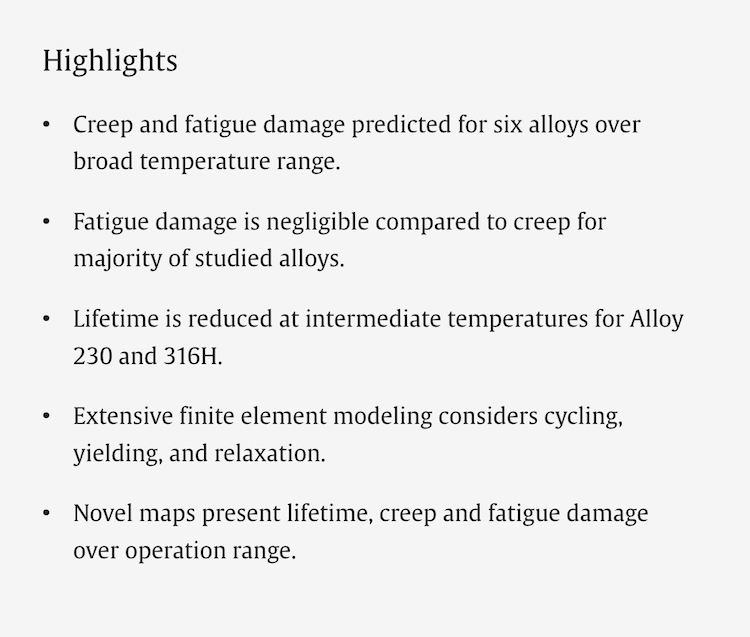
Concentrating Solar Power (CSP) molten-salt central receivers are subject to high, transient incident flux during daily operation. The resulting creep-fatigue damage impacts the receiver’s reliability and restricts the permissible incident flux distribution for a given receiver. This paper aims to reduce CSP plants’ levelized cost of electricity by developing a methodology to predict lifetime and identifies the primary damage mechanism (creep vs fatigue) for any given fluid temperature and temperature gradient. Results are presented in the form of a damage map that serves as a valuable operation guide and design tool. Damage maps can be used to reduce maintenance costs by improving reliability and reduce receiver capital costs by better utilizing the receiver area. FEA simulation and damage modeling of tubes subject to asymmetrical flux conditions is performed in the open-source receiver design tool srlife. Parametric studies are performed over a range of inner tube temperatures and thermal gradients for A230, 316H, 740H, A282, A617, and 800H high temperature alloys. Damage maps are presented for each alloy. A parametric, FEA-based methodology is presented for comparison of fatigue-creep ratios and prediction of tube lifetime based on the critical thermal operating conditions. Fatigue is found to be negligible compared to creep for almost every case. This finding suggests that fatigue effects associated with cloud events are insignificant compared to creep at these high temperature operating conditions. Additionally, lifetime predictions identify thermal conditions where small changes in operating conditions can result in large changes in predicted lifetime.

Jacob Wenner, Mark C. Messner, Michael J. Wagner, Damage modeling of power tower receiver tubes using the SRLIFE tool, Solar Energy, Volume 299, 2025, 113627, ISSN 0038-092X, https://doi.org/10.1016/j.solener.2025.113627

The post Published at Solar Energy – Damage modeling of power tower receiver tubes using the SRLIFE tool appeared first on SolarPACES.

Published at Applied Thermal Engineering – Modelling of flow regimes in tubular concentrating direct absorption solar collectors

16 January 2026 at 00:38

Abstract:
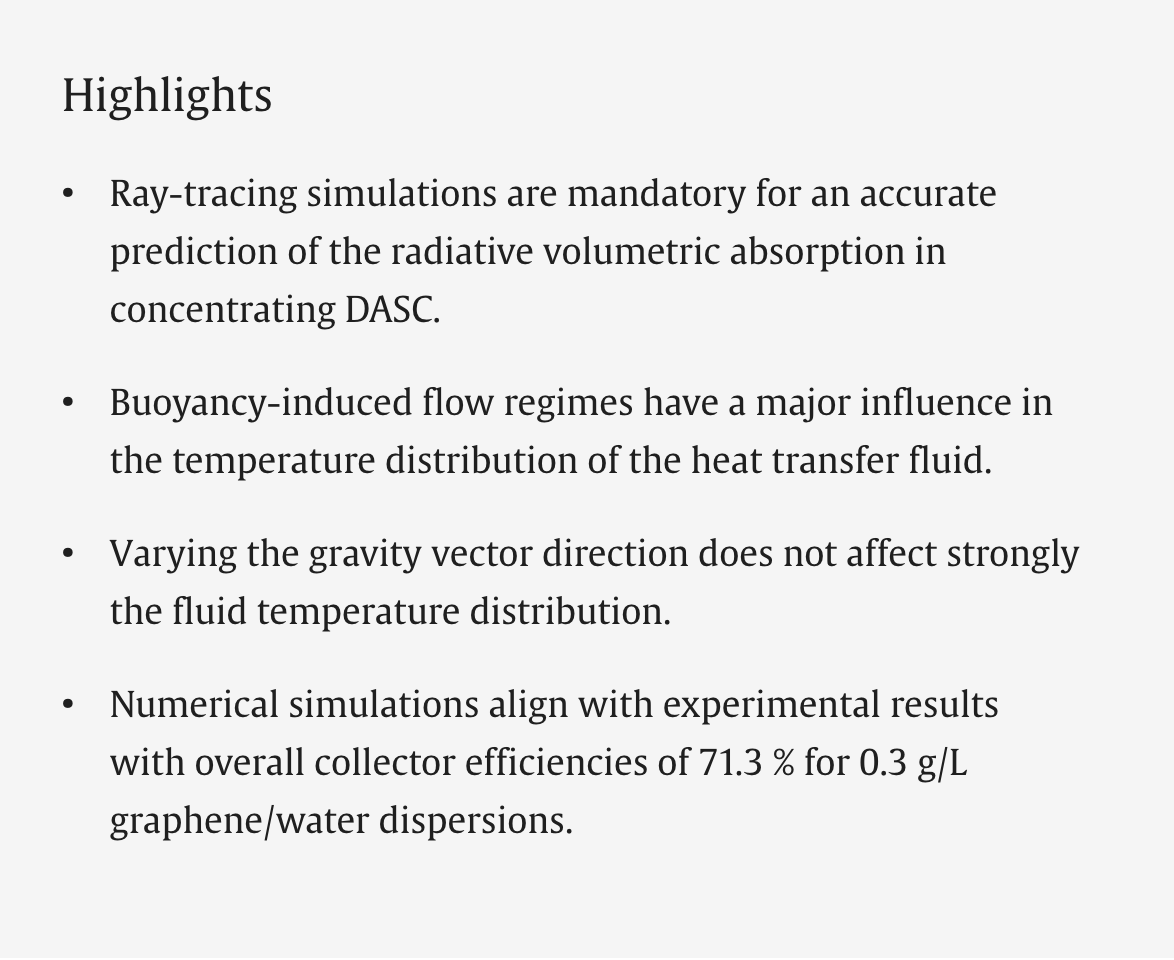
Direct absorption solar collectors have gained attention in the last decades as a promising solution to enhance the performance of conventional thermal collectors. In this concept, the heat transfer fluid absorbs the concentrated radiation volumetrically, which optical properties can be enhanced by dispersing nanoparticles. While several works have reported the benefits of volumetrically absorbing the incident radiation, few studies have explored its effect on the fluid temperature distribution. The presents paper offers a comprehensive numerical analysis of the optical and thermal behavior of a parabolic-trough direct absorption solar collector using a graphene nanoparticle dispersion as absorbing medium. A Monte Carlo based ray-tracing approach is coupled to a computational fluid dynamics analysis to offer a complete evaluation of the performance of such systems. The results reveal a trade-off between complete absorption inside the tube and strong absorption in the wall vicinity, which takes place at higher optical depths. Furthermore, the fluid dynamics simulations underscore the role of buoyancy forces in achieving homogeneous temperature distributions, especially at lower flow rates. Neglecting gravitational effects may lead to inaccurate predictions of the system thermal performance. The numerical predictions align closely with experimental campaigns conducted for a similar collector, with total collector efficiencies of 66.3 % and 71.3 % for 0.2 g/L and 0.3 g/L nanofluids respectively. While these results represent a first-order comparison, they suggest that the model is reliable for designing and optimizing PT-DASC systems for real-world applications.

Miguel Sainz-Mañas, Françoise Bataille, Cyril Caliot, Gilles Flamant,
Modelling of flow regimes in tubular concentrating direct absorption solar collectors, Applied Thermal Engineering, Volume 279, Part C, 2025,127716, ISSN 1359-4311, https://doi.org/10.1016/j.applthermaleng.2025.127716

The post Published at Applied Thermal Engineering – Modelling of flow regimes in tubular concentrating direct absorption solar collectors appeared first on SolarPACES.

Published at Solar Energy Engineering – A Solar Air Receiver With Porous Ceramic Structures for Process Heat at Above 1000 °C—Heat Transfer Analysis

27 December 2025 at 02:02


Abstract:
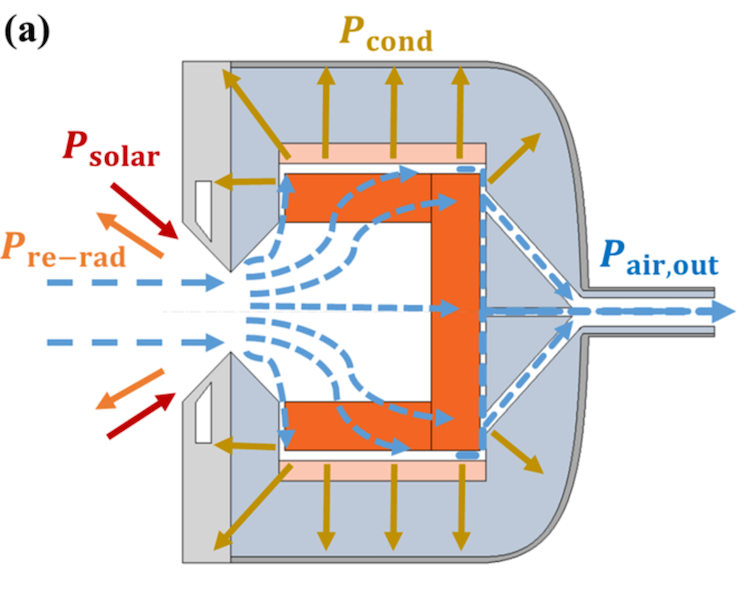
Concentrated solar energy can be used as the source of heat at above 1000 °C for driving key energy-intensive industrial processes, such as cement manufacturing and metallurgical extraction, contributing to their decarbonization. The cornerstone technology is the solar receiver mounted on top of the solar tower, which absorbs the incident high-flux radiation and heats a heat transfer fluid. The proposed high-temperature solar receiver concept consists of a cavity containing a reticulated porous ceramic (RPC) structure for volumetric absorption of concentrated solar radiation entering through an open (windowless) aperture, which also serves for the access of ambient air used as the heat transfer fluid flowing across the RPC structure. A heat transfer analysis of the solar receiver is performed by means of two coupled models: a Monte Carlo (MC) ray-tracing model to solve the 3D radiative exchange and a computational fluid dynamics (CFD) model to solve the 2D convective and conductive heat transfer. Temperature distributions computed by the iteratively coupled models were compared with experimental data obtained by testing a lab-scale 5 kW receiver prototype with a silicon carbide RPC structure exposed to 3230 suns flux irradiation. The receiver model is applied to optimize its dimensions for maximum efficiency and to scale-up for a 5 MW solar tower.

Vikas R. Patil, Aldo Steinfeld, J. Sol. Energy Eng. Apr 2025, 147(2): 021007 (13 pages) Paper No: SOL-24-1108 https://doi.org/10.1115/1.4066499

The post Published at Solar Energy Engineering – A Solar Air Receiver With Porous Ceramic Structures for Process Heat at Above 1000 °C—Heat Transfer Analysis appeared first on SolarPACES.

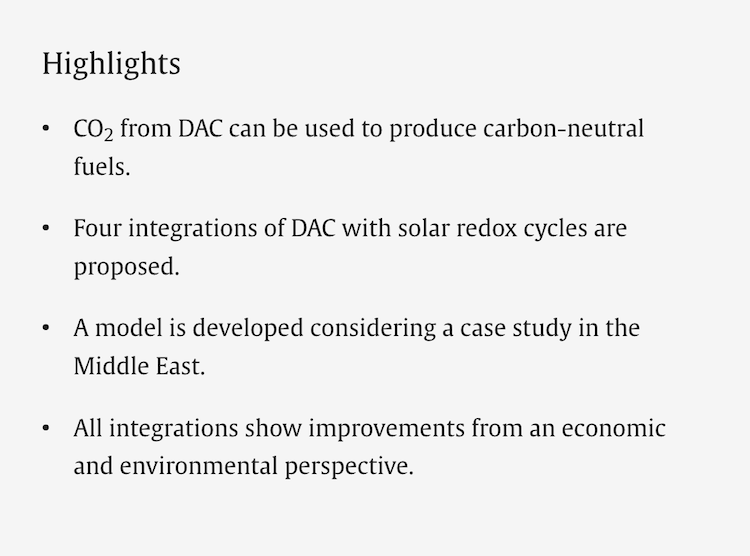
International Journal of Hydrogen Energy – A techno-economic and environmental evaluation of the integration of direct air capture with hydrogen derivatives production

27 December 2025 at 01:50


Abstract:
Carbon-neutral fuels are key to decarbonizing hard-to-abate sectors. Solar redox cycles can produce them by creating oxygen vacancies in a metal oxide capable of splitting water and CO2. The resulting synthesis gas can be processed into a liquid fuel like methanol. To close the carbon cycle, feedstock CO2 can be captured from the atmosphere with direct air capture (DAC), but the synergies between synthetic fuel production and DAC are largely unexplored. In this work, four integration strategies between DAC and solar redox cycles are proposed. Each of them is modeled with Aspen Plus and HFLCAL and compared with a techno-economic and a cradle-to-gate life cycle assessment. The optimal configuration, with a levelized cost of 7.9 ± 0.4 USD2022/kgMethanol and a climate change impact of −450 ± 30 g CO2e/kgMethanol, uses solid DAC powered by waste heat. Therefore, the study recommends the integration of DAC in the production of synthetic fuels.

Enric Prats-Salvado, Nathalie Monnerie, Christian Sattler, A techno-economic and environmental evaluation of the integration of direct air capture with hydrogen derivatives production, International Journal of Hydrogen Energy, Volume 140, 2025, Pages 1153-1162, ISSN 0360-3199, https://doi.org/10.1016/j.ijhydene.2024.10.026

The post International Journal of Hydrogen Energy – A techno-economic and environmental evaluation of the integration of direct air capture with hydrogen derivatives production appeared first on SolarPACES.

Published at Solar Energy – Solar concentrator layout and performance analysis for multi-aperture receiver-reactors in high-temperature applications

26 December 2025 at 23:57


Abstract:
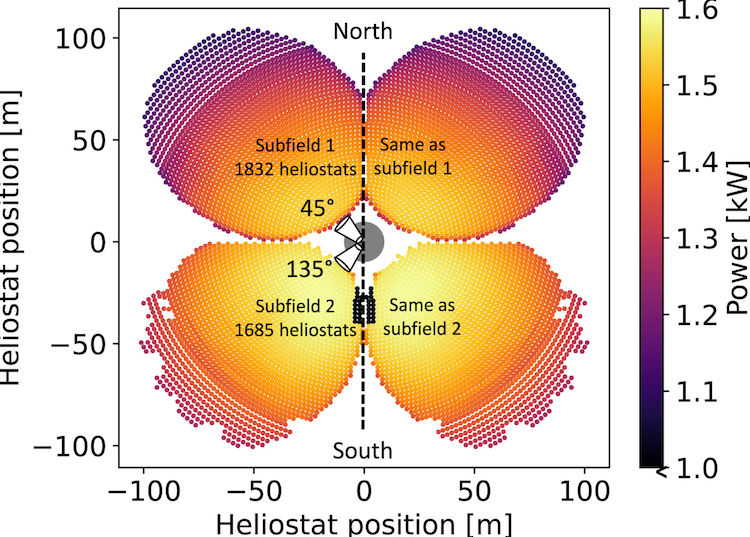
Promising new receiver-reactor concepts with multiple apertures have been proposed for high temperature solar thermochemical hydrogen production. However, limited information about suitable solar concentrator designs consisting of heliostat fields and secondary concentrators is available so far.
The goal of this study is a detailed investigation of the effect of selected solar concentrator design parameters on its performance. For a 10 MW receiver-reactor the number of subfields and corresponding apertures is varied in combination with the receiver height above the ground, the acceptance angle of the secondary concentrator, and the design point flux density. In addition, the performance is analyzed at different power levels. The average annual performance is evaluated as well as the hourly behavior. The latter of which is important to quantify the performance of a plant with an integrated receiver-reactor.
For the heliostat field layout the program HFLCAL1 is used. Solar concentrator designs with annual average efficiencies of over 60% are identified delivering flux densities of up to 5000 suns at design point for 10 MW receivers. Instead of a joint evaluation of the solar concentrator together with a specific receiver-reactor a generic receiver-reactor surrogate model is introduced. With this surrogate model an hourly analysis of the plant performance is conducted and a parametrized correction factor is presented to derive more accurate yearly plant performance estimates.
The study provides detailed information on solar concentrators using multiple heliostat subfields and central tower systems with secondary optics, and indicates further optimization potential of solar concentrators for high-temperature receivers.

Hanna Lina Pleteit, Stefan Brendelberger, Peter Schwarzbözl, Malou Großmann, Martin Roeb, Christian Sattler,Solar concentrator layout and performance analysis for multi-aperture receiver-reactors in high-temperature applications,Solar Energy,Volume 303, 2026,114115,ISSN 0038-092X, https://doi.org/10.1016/j.solener.2025.114115

The post Published at Solar Energy – Solar concentrator layout and performance analysis for multi-aperture receiver-reactors in high-temperature applications appeared first on SolarPACES.

Published at Solar Energy – Effects of concentrated solar–integrated packed-bed thermal energy storage operation on solid oxide electrolysis cell performance

11 December 2025 at 23:58

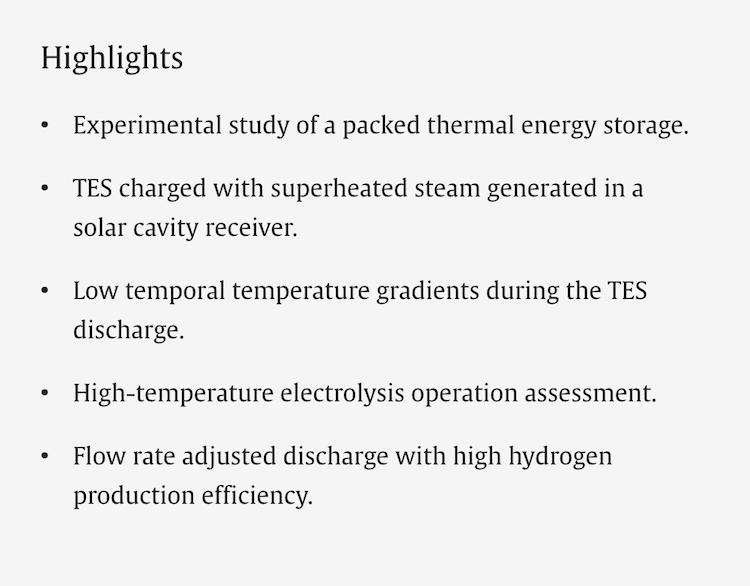
Abstract:

The use of renewable energy in the context of green hydrogen production requires suitable energy storage technologies to compensate for intermittent wind and solar resources. High-temperature electrolysis is a promising way to produce hydrogen as it has the highest electrical efficiency by using steam instead of liquid water compared to low temperature electrolysis. Here, a part of the total energy demand is substituted by thermal energy. For a sustainable and continuous process operation with concentrated solar energy, a high-temperature thermal energy storage heating air and steam is required to operate the high-temperature electrolysis above 800 °C. In this study, the charging and discharging behavior of a packed bed thermal energy storage with a capacity of 17.46 kWh is experimentally tested and a utility scale storage numerically analyzed. The storage is charged with superheated steam from a solar cavity receiver and discharged with ambient air or steam flow. The storage discharge temperature profile results in a change in the electrolysis operating state and therefore, a change in the reagent flow rate. This changes the hydrogen production capacity during the discharge period. Adjusting the thermal energy storage discharge flow rate maintains an electrical conversion efficiency of 97 %. Furthermore, additional electric heating or exothermal operation of the electrolysis is avoided. Additionally, an electrolysis cooling rate of greater than −0.3 K/min can be maintained.

Timo Roeder, Yasuki Kadohiro, Kai Risthaus, Anika Weber, Enric Prats-Salvado, Nathalie Monnerie, Christian Sattler,Effects of concentrated solar–integrated packed-bed thermal energy storage operation on solid oxide electrolysis cell performance,Solar Energy,Volume 302,2025,114032,ISSN 0038-092X, https://doi.org/10.1016/j.solener.2025.114032

The post Published at Solar Energy – Effects of concentrated solar–integrated packed-bed thermal energy storage operation on solid oxide electrolysis cell performance appeared first on SolarPACES.

Published at Applied Thermal Engineering – Dynamic heat transfer model for thermal energy storage using metal wool–phase change material composites

11 December 2025 at 23:52


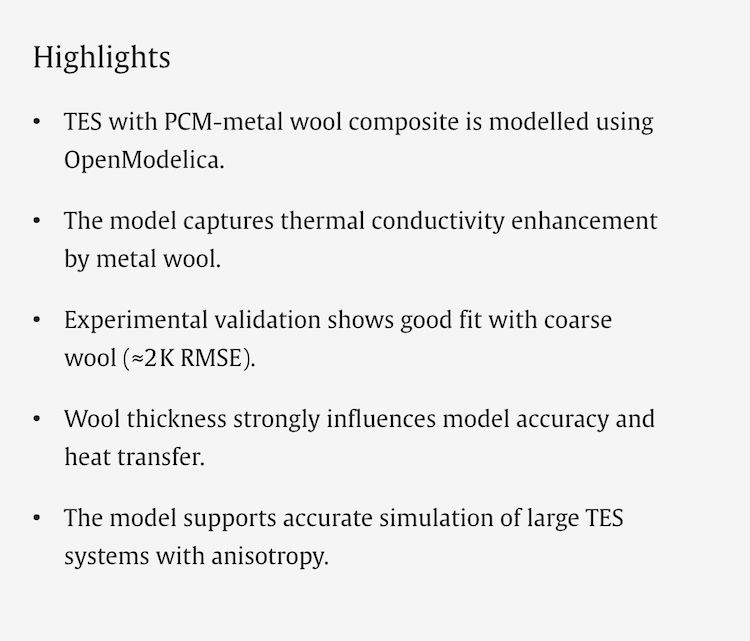
Abstract:
Decarbonisation of the energy sector is critical for climate change mitigation, with the power sector remaining a major contributor to global emissions. Concentrating solar power (CSP) technology combined with thermal energy storage (TES) presents a promising solution to overcome this challenge. TES systems, particularly those utilising phase change materials (PCMs), offer efficient energy storage by harnessing latent heat, enabling reliable power generation, and providing high-temperature heat for industrial processes. This research introduces a heat transfer model designed to simulate the thermal behaviour of TES systems utilising wool–PCM composites as storage medium. The mathematical model was implemented on the OpenModelica platform and it is intended to be incorporated into a simulation tool currently being developed by the authors to assess the performance of CSP plants under dynamic conditions. The model was validated by comparing the simulation results with the experimental measurements of the temperature within the composite domain during both the charging and discharging cycles. The simulations replicated key experimental parameters, including geometry, material properties, and boundary conditions, and evaluated two configurations with coarse and fine wool fibres. The results demonstrated good agreement with the experimental data for coarse wool, with a root mean square error (RMSE) of up to 2.29 K. For fine fibres, the RMSE increased to 5.31 K, indicating a larger deviation. Despite these challenges, the model successfully captured the overall thermal response trend and phase transition behaviour observed experimentally. The findings highlight the efficacy and limitations of the proposed thermal model and emphasise the necessity for advanced macroscopic-scale effective thermal conductivity modelling approaches for such composites that integrate the influence of pore-scale characteristics (i.e., volume change). This research will advance the current state-of-the-art in this field and will mitigate the discrepancies identified in this study when these models are applied in practice. This integration is crucial for enhancing the accuracy and improving the time simulation of large-scale TES systems in CSP applications.

Pablo D. Tagle-Salazar, Luisa F. Cabeza, Anton López-Román, Cristina Prieto,
Dynamic heat transfer model for thermal energy storage using metal wool–phase change material composites,Applied Thermal Engineering,Volume 281, Part 1,2025,128548,ISSN 1359-4311,
https://doi.org/10.1016/j.applthermaleng.2025.128548

The post Published at Applied Thermal Engineering – Dynamic heat transfer model for thermal energy storage using metal wool–phase change material composites appeared first on SolarPACES.

❌