
Reading view

Issues Data Centers Face and How to Overcome Them: A Guide for Managers
Data centers are the backbone of modern digital infrastructure. They power cloud services, financial systems, healthcare platforms, and nearly every technology-driven business. As demand for data storage and processing grows, so do the operational, financial, and risk-related challenges data centers face. For managers, understanding these issues and knowing how to address them proactively is critical to maintaining uptime, security, and long-term viability. This is what you need to know to ensure you can meet up with demand.

Rising Energy Costs and Efficiency Demands

One of the most persistent challenges for data centers is energy consumption. Powering servers, cooling systems, and redundancy infrastructure requires enormous amounts of electricity, and energy costs continue to rise globally. Beyond cost, there is increasing pressure from regulators and customers to reduce environmental impact.

Managers can address this by investing in energy-efficient hardware, optimizing airflow and cooling layouts, and adopting real-time monitoring tools to identify waste. Long-term strategies may include transitioning to renewable energy sources or partnering with utility providers for more favorable pricing structures.

Cooling and Thermal Management Challenges

Heat is an unavoidable byproduct of high-density computing. Inefficient cooling not only increases costs but also raises the risk of equipment failure and downtime. As server densities increase, traditional cooling methods often struggle to keep up.

Modern solutions include hot-aisle/cold-aisle containment, liquid cooling, and AI-driven thermal monitoring systems. For managers, the key is treating cooling as a dynamic system rather than a fixed infrastructure. However, this needs to be one that evolves alongside hardware demands.

Financial Risk and Insurance Considerations

Data centers face significant financial exposure from equipment damage, downtime, liability claims, and unforeseen events. Even with strong operational controls, risk cannot be eliminated entirely.

This is where insurance becomes a critical part of risk management. Evaluating coverage that aligns with the unique needs of data center operations can help protect against losses that would otherwise threaten business continuity. BOP insurance by Next Insurance can help managers think more holistically about protecting assets, operations, and revenue streams as part of an overall risk strategy.

Downtime and Business Continuity Risks

Even brief outages can result in significant financial losses, reputational damage, and contractual penalties. This downtime may be caused by:

  • Power failures
  • Human error
  • Equipment malfunction
  • External events

To mitigate this risk, managers should prioritize redundancy at every critical point, including power supplies, network connections, and backup systems. Regular testing of disaster recovery plans is just as important as having them documented, too. A plan that hasn’t been tested is often unreliable in real-world conditions. You put your business and those whom you cater to at risk.

Cybersecurity and Physical Security Threats

Data centers face a dual security challenge: digital threats and physical risks. Cyberattacks continue to grow in sophistication, while physical threats such as unauthorized access, theft, or vandalism remain real concerns.

Addressing this requires layered security. On the digital side, this includes continuous patching, network segmentation, and monitoring for unusual activity. Physically, access controls, surveillance systems, and strict visitor protocols are essential. Managers should also ensure that staff training keeps pace with evolving threats, as human error remains a major vulnerability.

Compliance and Regulatory Pressure

Data centers often operate under complex regulatory requirements related to data privacy, industry standards, and regional laws. Compliance failures can result in fines, legal exposure, and loss of customer trust.

Managers can stay ahead by maintaining clear documentation, conducting regular audits, and working closely with legal and compliance teams. Building compliance into operational processes, rather than treating it as an afterthought, reduces risk and simplifies reporting.

Turning Challenges Into Strategic Advantage

While data centers face a wide range of operational and strategic challenges, these issues also present opportunities for improvement and differentiation. Managers who address all of the above proactively are better positioned to deliver reliability and value in a competitive market. Don’t let yours be the one that falls victim to the issues and instead take action.

# # #

About the Author:

James Daniels is a freelance writer, business enthusiast, a bit of a tech buff, and an overall geek. He is also an avid reader, who can spend hours reading and knowing about the latest gadgets and tech, whilst offering views and opinions on these topics.

The post Issues Data Centers Face and How to Overcome Them: A Guide for Managers appeared first on Data Center POST.
  •  

Shifting Hyperscale Landscape: Exploring New Models of Growth, Collaboration, and Risk in Data Infrastructure

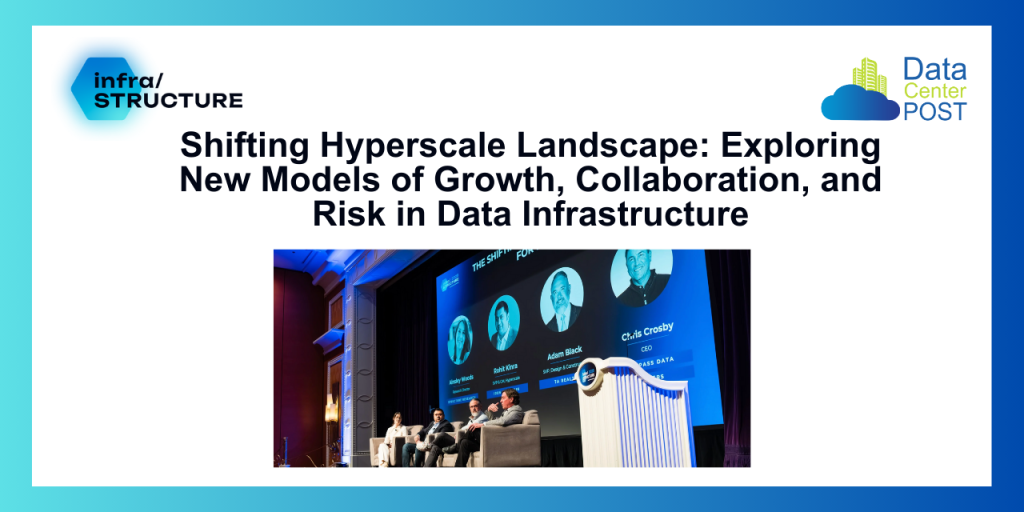
At infra/STRUCTURE 2025, held at The Wynn Las Vegas, industry leaders from Structure Research, Iron Mountain, Compass Datacenters, and TA Realty examined how hyperscales are evolving faster than ever and changing the landscape in data infrastructure.

During the infra/STRUCTURE Summit 2025, held at The Wynn Las Vegas from October 15-16, a panel of industry leaders explored how global hyperscale development models are being transformed by changing procurement dynamics, third-party partnerships, and market-specific constraints.

Moderated by Ainsley Woods, Research Director at Structure Research, the session “Shifting Hyperscale Landscape and Engagement Models” brought together a mix of perspectives from across the ecosystem: Rohit Kinra, Senior Vice President and General Manager of Hyperscale at Iron Mountain; Chris Crosby, CEO of Compass Datacenters; and Adam Black, Senior Vice President of Design and Construction at TA Realty. Together, they discussed how hyperscalers and operators are realigning strategies to manage cost, speed, and risk in an increasingly complex global landscape.

Shifting Toward Third-Party Leasing

Opening the session, Woods noted that while self-build remains a significant approach for hyperscalers, the shift toward third-party leasing continues to accelerate. Kinra explained that this movement reflects a growing appetite to transfer financial and operational risk to providers better equipped to deliver consistent, on-schedule capacity.

“This dynamic enables hyperscalers to focus on core digital capabilities while maintaining agility,” said Kinra.

Crosby observed that data center companies have evolved from highly specialized infrastructure firms into multifunctional operators that behave more like software-driven entities. “The mindset is shifting from ‘construction’ to ‘continuous delivery,’ emphasizing iterative improvement and efficiency at scale.”

Procurement Models and Utility Coordination

Woods directed the discussion toward procurement models, noting “that evolving regulations and nimbyism are materially reshaping project timelines and commitments.”

“Hyperscale leasing can range from single-megawatt tranches to long-term strategic leases, striking a balance between flexibility and guaranteed availability,” said Kinra.

“The necessity of robust collaboration with utilities, pointing out that committed paperwork and confirmed timelines are now prerequisites for greenlighting new projects,” said Crosby. “This transparency and early engagement build trust and ensure that supply chains remain resilient amid rapid scaling.”

Standardization versus Customization

Bringing an engineering and construction perspective, Black said, “The industry is adopting a manufacturing approach to design and delivery. By standardizing components and processes, data center builders are compressing construction cycles, driving down costs, and minimizing rework.”

At the same time, Kinra warned that “flexibility remains crucial, as hyperscalers must frequently adjust designs based on power availability and evolving hardware requirements. Balancing repeatability and adaptability will continue to define long-term competitiveness in global hyperscale markets.”

Partnering for Speed and Scale

When asked whether third-party providers could outperform self-build models, Kinra pointed to overseas examples.

“In high-density Asian markets,” said Kinra, “it’s where leasing has provided a faster and less risky entry point.”

“Experienced operators, especially those with industrial real estate expertise, bring an unlocking function to hyperscalers, helping them secure viable space and navigate permitting challenges,” Crosby underscored.

This is where partners may play a key role in both speed and scale.

“Collaboration, not competition, between hyperscalers and third-party providers will define the next frontier of scale,” said Black. “Flexibility, transparency, and shared accountability are now non-negotiable for long-term partnership success.”

Research, Adaptation, and the Path Forward

In closing, Woods prompted the group for key takeaways. The panelists unanimously emphasized continuous innovation, research, and foresight as the only way to stay aligned with hyperscale’s relentless pace.

“With infrastructure design cycles shortening and technology requirements diversifying,” Kinra concluded, “the winners will be those who can adapt fastest while maintaining reliability and customer focus.”

Infra/STRUCTURE Summit 2026: Save the Date

Want to tune in live, receive all presentations, gain access to C-level executives, investors and/or industry-leading research? Then save the date for infra/STRUCTURE 2026, set for October 7-8, 2026, at The Wynn Las Vegas. Pre-Registration for the 2026 event is now open, and you can visit www.infrastructuresummit.io to learn more.

The post Shifting Hyperscale Landscape: Exploring New Models of Growth, Collaboration, and Risk in Data Infrastructure appeared first on Data Center POST.

  •  

Insuring the Cloud: How Nuclear Policies Could Power the Next Generation of Data Centers

The rapid growth of data centers is resulting in one of the most energy intensive sectors of the industrial economy. Providing power to support artificial intelligence, cloud computing, and cryptocurrency mining requires an uninterrupted supply of electricity. To ensure reliability, some data center developers are considering the deployment of small modular reactors (SMRs). These reactors would provide a steady, carbon-free energy source. However, as nuclear energy enters the data center space the question of insurance and how to protect operators and the public becomes critical to ensure progress toward commercial viability.

Understanding Nuclear Insurance Basics

The foundation of nuclear liability insurance in the United States lies in the Price Anderson Nuclear Industries Indemnity Act (1957), which created a unique liability system for nuclear operators. The Act mandates that reactor owners maintain the maximum amount of insurance coverage available in the market to cover potential nuclear liability damages. Currently, each reactor above 100MW is required to carry $500 million in primary coverage, supported by an additional string of retrospective payments from other licensed operators if needed. Reactors that generate more that 10 MW, but do not generate electrical power, and reactors that generate less than 100 MW are required to carry liability insurance between $4.5 and $74 million. The precise amount is governed by a formula based on thermal power and on the local population density.

Nuclear liability insurance is fundamentally distinct from conventional insurance because it addresses specialized, high-consequence, low-probability risks that other markets cannot efficiently underwrite. Commercial insurance disperses risks among individual insurers while nuclear insurance utilizes insurance pools. Pools, such as the U.S. American Nuclear Insurers (ANI) and Nuclear Risk Insurers (NRI) in the UK, combine the capacity of multiple insurers to jointly cover nuclear risks.

These pooling arrangements are necessary because the nuclear risk profile does not adhere to normal actuarial assumptions. Insurers lack adequate historical loss data on nuclear accidents, and maximum loss scenarios are so extreme that no single company could absorb them. The pooling structure allows for a broader distribution of potentially catastrophic losses across multiple insurers.

Underwriting and Risk Assessment

For nuclear property insurance, the focus of underwriters is on plant design, regulatory compliance, and operational culture rather than the statistical loss experience, which dominates conventional property insurance underwriting. Specialized insurance mutuals such as Nuclear Electric Insurance Limited (NEIL) and European Mutual Association for Nuclear Insurance (EMANI) provide coverage for damages to physical plant property. This coverage includes nuclear specific risks which are typically excluded in commercial markets such as on-site decontamination, radiation cleanup, and extended outage losses.

Conventional property insurance underwriters evaluate frequent, well-understood risks based on probabilistic models using large datasets. For nuclear installations, the low number of severe historical accidents, combined with potentially enormous losses like those sustained at Fukushima and Chernobyl precludes the traditional risk-based rating and instead relies on specialized engineering assessments.

Early engagement with markets is essential

SMR projects are no different than traditional capital projects with respect to builder’s risk insurance coverage during construction, however, when fuel arrives on site, the requirements for coverage and the availability of insurance capacity drastically changes. It is important for project managers to engage with underwriters early in the conceptual design phase to ensure adequate coverage is available. Since SMRs will likely be viewed by underwriters as first-of-a-kind technology with different safety and operational profiles compared to traditional nuclear reactors, they will want to understand the design, construction, and operational nuances to evaluate whether they would insure the risk. This early collaboration allows insurers to identify specific risk exposures at each stage of development, from off-site manufacturing to on-site assembly and nuclear fuel commissioning avoiding any gaps in coverage, particularly during the transition from construction to full operation. Failure to involve insurers early may lead to coverage fragmentation or exclusions, impacting financing and project timelines.

Nuclear property and liability insurance diverges from conventional insurance primarily through collective risk-sharing and the absence of market-based underwriting models. Its unique nature reflects the complexity of managing nuclear risks. As companies explore the deployment of SMR’s to power data centers, understanding these distinctions is crucial to designing viable insurance programs and avoiding any bottlenecks that could delay operation.

# # #

About the Author:

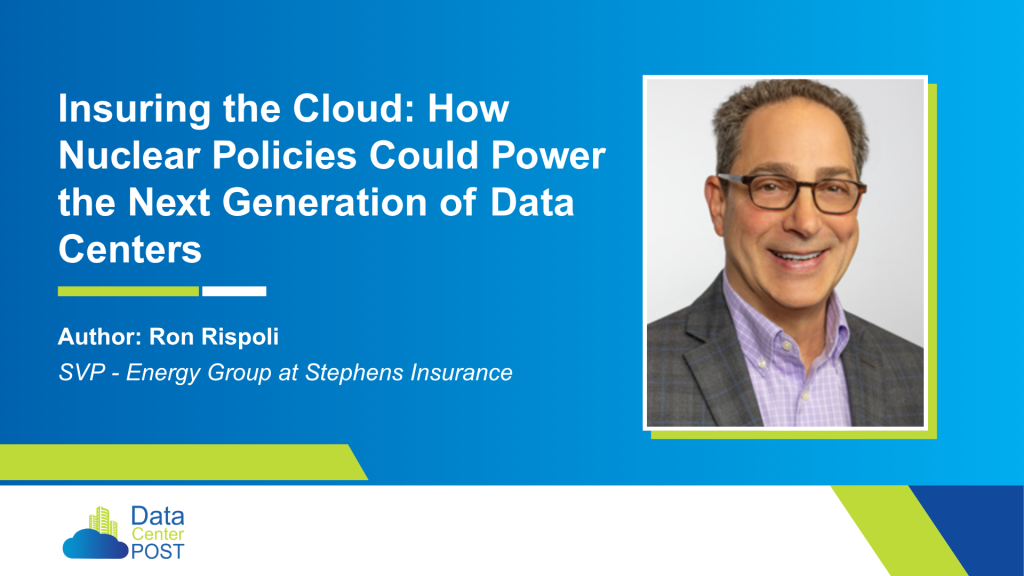
Ron Rispoli is a Senior Vice President in the Energy Group at Stephens Insurance. His primary focus is assisting clients in navigating the complex landscape of nuclear property and liability coverage for both existing and future nuclear facilities. He also provides risk management consultation services to utility clients, with an emphasis on emerging risks in nuclear construction. He works to help clients understand the critical role insurance plays in managing risks associated with nuclear operations and activities. He has over forty years of experience in the commercial nuclear arena.

The post Insuring the Cloud: How Nuclear Policies Could Power the Next Generation of Data Centers appeared first on Data Center POST.

  •