Reading view

EVgo adds 100 NACS fast charging connectors with 500 more planned in 2026

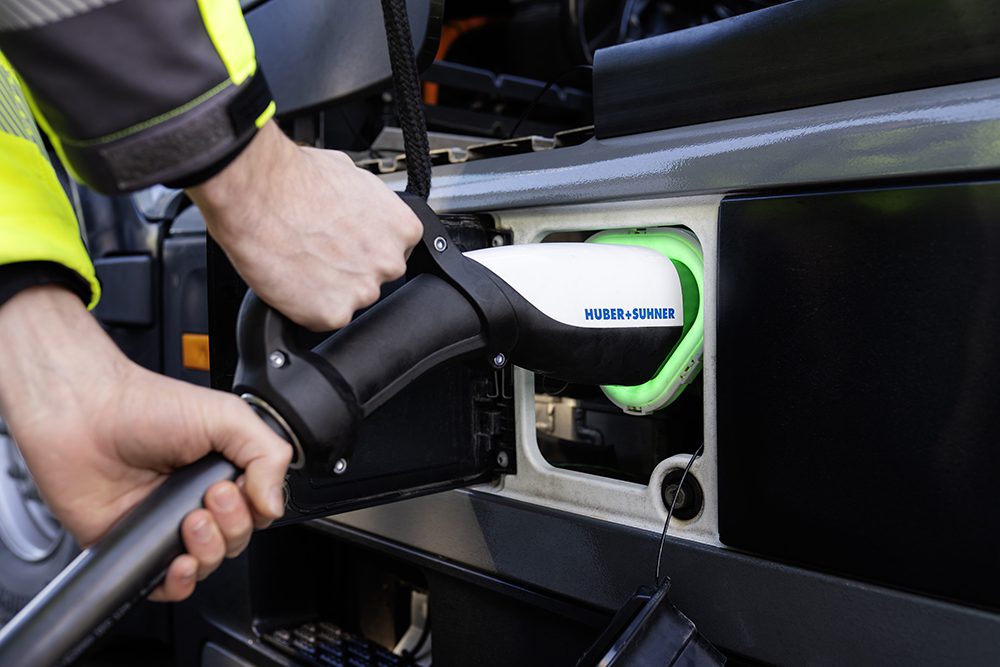
EVgo is expanding deployment of the North American Charging Standard (NACS) connectors across its public DC fast-charging network. After a 2025 pilot that installed nearly 100 NACS connectors across 22 major metropolitan areas, EVgo plans to accelerate deployment to reach more than 500 NACS connectors installed by the end of 2026, aiming to support rising demand from vehicles equipped with a NACS inlet.

EVgo says it will install NACS connectors at both existing and new sites, targeting both Tesla drivers and drivers of newer NACS-equipped EV models. The company expects that more than 80% of new EVs sold in North America will be NACS-compatible by 2030.

For 2026, EVgo says it intends to deploy additional NACS stalls in “key markets with increasing NACS vehicle penetration,” listing Austin, Houston, Las Vegas, Orlando, Phoenix, Chicago, Dallas, Detroit and San Francisco. Most sites are planned to include two to four NACS connectors, with the option to add more based on observed customer behavior and demand.

“We are already seeing an increase in NACS throughput on our network, and with more than 35 NACS models expected on American roads by the end of the year, we expect that to grow as we add more connectors throughout the country,” said Badar Khan, CEO of EVgo.

EVgo says drivers can enroll in Autocharge+ in the EVgo app to automatically start charging sessions at EVgo NACS locations without an adapter. EVgo also says most CCS (Combined Charging System) drivers can enroll in Autocharge+ as well, and that Autocharge+ has enabled over five million sessions on the EVgo network since its 2022 launch.

“Backed by rigorous testing at the EVgo Innovation Lab, we launched not only a market-leading product with our liquid-cooled NACS cables, but also a great customer experience by expanding Autocharge+ compatibility to serve both NACS and CCS drivers,” said Alex Keros, Senior VP of Product at EVgo.

Source: EVgo
  •  

Pilot Travel Centers to deploy heavy-duty EV charging stations for Tesla Semis


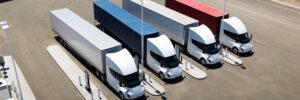
Truck stop operator Pilot Travel Centers has entered into an agreement with Tesla to install charging stations for Tesla’s Semi heavy-duty electric trucks.

The Tesla charging stations will be built at select Pilot locations in California, Georgia, Nevada, New Mexico and Texas, along I-5, I-10 and “several major corridors where the need for heavy-duty charging is highest.” The first sites are expected to open in Summer 2026.

Each location will host four to eight charging stalls featuring Tesla’s V4 cabinet charging technology, which can deliver up to 1.2 megawatts of power at each stall.

Pilot says that in the future, the sites may be expanded to be compatible with heavy-duty electric vehicles from other manufacturers.

“Heavy-duty charging is yet another extension of our exploration into alternative fuel offerings, and we’re happy to partner with a leader in the space that provides turnkey solutions and deploys them quickly,” said Shannon Sturgil, Senior VP, Alternative Fuels at Pilot.

Source: Pilot Travel Centers

  •  

WEX adds public EV charging payments to its fleet fuel card


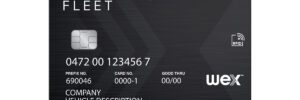
WEX Fleet card now combines gasoline and public EV charging transactions into one card, one account, and one invoice. WEX says it is the first fuel card provider to unify fueling and public EV charging payments across its proprietary closed-loop fuel network, targeting mixed-energy fleets that operate internal combustion engine vehicles and EVs.

The card works at more than 175,000 WEX-accepting public charging ports and at more than 90% of US gas stations that accept WEX cards. The upgraded card embeds RFID technology directly into the standard WEX Fleet card, which WEX says removes the need for a separate EV charging card or mobile app to activate and pay for a charging session. WEX says using its closed-loop fleet network, rather than open-loop general-purpose card networks, enables end-to-end transaction control, richer data, stronger security, and fleet-specific purchase controls while maintaining existing fueling workflows.

For operations teams, WEX offers unified reporting, purchase controls via the DriverDash app, and a single credit line spanning charging and fueling transactions. EV charging can be enabled immediately or added during the next scheduled renewal, and existing EV-enabled customers can request updated cards in the WEX online customer portal.

Source: WEX

  •  

GM adds support for Electrify America EV Charging network to its branded apps


The Electrify America EV charging network, which boasts over 5,000 locations, is now accessible for GM EV customers via the automaker’s branded smartphone apps. Drivers can use their myChevrolet, myGMC or myCadillac apps to find nearby charging stations with real-time availability information, plan routes, monitor charging session status, and pay for charging directly in the app.

Multiple charging apps are the bane of road-tripping EV drivers. Adding support for charging networks within branded apps is one way OEMs can improve the charging experience for their customers. GM aims to connect EV drivers to an expanding ecosystem of public charging infrastructure. GM owners can navigate to the Public Charging page in their myBrand apps and look for supported networks.

“We’re collaborating across the industry to deliver not just more chargers, but better public charging experiences,” said Wade Sheffer, Vice President, GM Energy. “Our work with Electrify America helps make public charging easier to access for GM EV drivers.”

“As EV travel continues to grow, so does the need for convenient charging experiences,” said Robert Barrosa, CEO and President of Electrify America. “Through this integration, GM EV drivers have more Hyper-Fast chargers to choose from and a seamless experience they can count on nationwide.”

Source: Electrify America

  •  

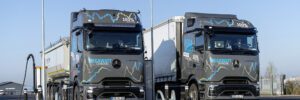
Mercedes-Benz eActros electric trucks drive 2,400 km in long-haul endurance test of Megawatt Charging System


Development engineers from Mercedes‑Benz Trucks tested the Megawatt Charging System on a long‑distance test drive with two MCS‑compatible eActros 600 electric trucks.

The aim was to ensure optimal compatibility between the vehicle and megawatt charging stations from various manufacturers, as well as to gain insights into real‑world usability—including under winter conditions—ranging from the charging curve and average charging power to the overall performance of the MCS infrastructure.

The test run covered a route of approximately 2,400 kilometers, from the Mercedes‑Benz plant in Wörth am Rhein, Germany, through the Netherlands, Belgium and Denmark, to Linköping in southern Sweden. The vehicles were recharged at both public and private MCS charging sites specifically designed for trucks.

The MCS standard enables charging at power levels of up to 1,000 kW. Global standards organization CharIN is working to promote uniform interfaces between charging stations and electric trucks, and to facilitate the development of a pan‑European fast‑charging network for heavy‑duty commercial vehicles.

“The key challenges in megawatt charging lie in harmonizing the vehicle with various charging systems,” said Peter Ziegler, Head of E Charging Components, Mercedes Benz Trucks. “At the same time, the extreme charging currents in MCS charging place high demands on thermal management. The current test run provides an important opportunity to evaluate these aspects under real-world operating conditions.”

Source: Daimler Truck

  •  

EV charging provider L-Charge raises $10 million in new funding round


EV charging provider L-Charge has closed a $10-million funding round, led by Ultra Capital.

L-Charge will use the new capital to expand its national installation footprint; add new product categories; expand its portfolio of off-grid chargers; grow sales, operations and customer support teams to support increasing project volume; and strengthen long-term infrastructure and service capabilities. The investment will support rapid growth in installations in the rideshare, last-mile delivery and fleet segments.

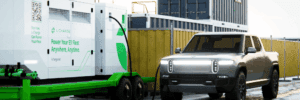
Fleet operators installing charging infrastructure continue to face permitting delays and infrastructure backlogs that add cost and slow EV deployments. L-Charge aims to address these challenges by delivering modular, off-grid charging solutions that enable fleets to electrify in a matter of weeks.

L-Charge’s Charging-as-a-Service and Power-as-a-Service offerings provide commercial customers with a flexible, zero-CapEx alternative to traditional grid-dependent charging infrastructure.

“Demand for our solutions continues to grow as fleet operators look for reliable ways to deploy EVs despite grid limitations and rising costs,” said Stephen Kelley, CEO of L-Charge. “This investment allows us to scale faster, support more customers, and keep building the team needed to sustain our next phase of growth.”

“L-Charge is solving one of the most critical bottlenecks in fleet electrification today—access to power,” said Kristian Hanelt, Partner at Ultra Capital. “Their ability to deploy charging infrastructure independent of grid timelines makes them uniquely positioned to support the rapid electrification of commercial fleets.”

Source: L-Charge

  •