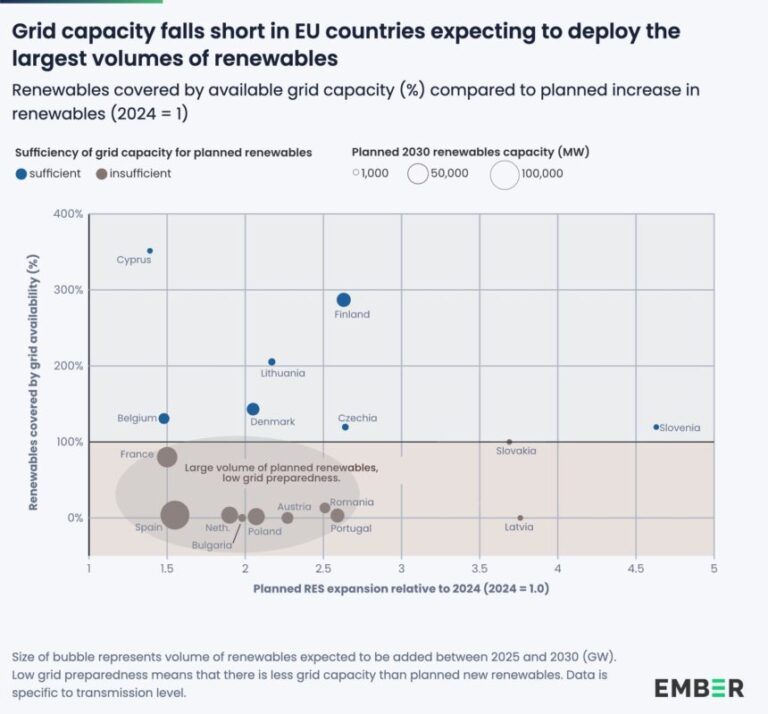
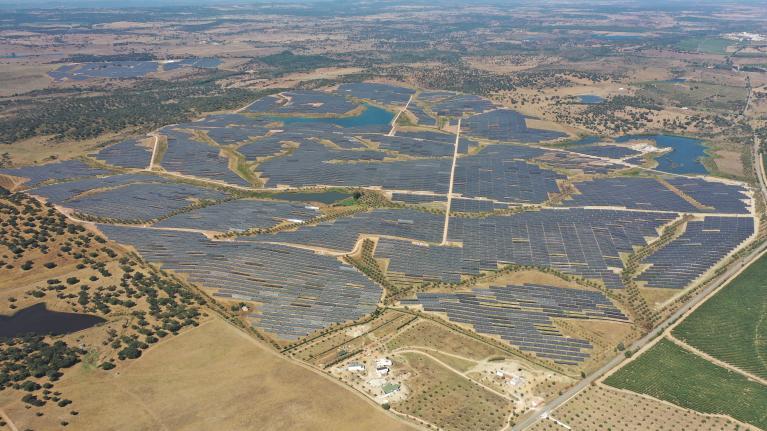
In its analysis, Ember examined grid capacity across 20 EU countries and found the major gap was at the transmission level, with a possible shortfall of 104 GW that would affect utility-scale solar projects.
Analysis: Expected changes to the EU’s cybersecurity laws that could have significant implications for the continent’s solar industry have been delayed, reportedly due to disagreement between officials and member states over how far they should go.
IRU, the European Automobile Manufacturers’ Association (ACEA) and T&E urge the European Commission to ensure continuity of EU funding for heavy-duty vehicle charging and hydrogen refuelling infrastructure, warning that a break in support in 2026–2027 would risk slowing the deployment of zero-emission vehicles. In a joint letter addressed to European Commission President ... [continued]
The costs of certain long-duration energy storage (LDES) technologies are expected to decline by around 37% on average by 2030, according to a new study.
 Login
Login