Reading view

Shri Shripad Naik Highlights Solar Growth and Domestic Manufacturing at ECAMEX 2026

Union Minister Shripad Yesso Naik inaugurated ECAMEX 2026, emphasizing renewable energy's role in India's future. He urged increased solar energy adoption and domestic manufacturing to meet electricity demands and reduce carbon intensity. The event, uniting industry stakeholders, highlighted collaboration as essential for advancing India’s clean energy goals and strengthening local production capabilities.

The post Shri Shripad Naik Highlights Solar Growth and Domestic Manufacturing at ECAMEX 2026 appeared first on SolarQuarter.

  •  

BBDF 2026: Hybrid PPAs face slow uptake among industrial buyers

Hybrid power purchase agreements (PPAs) combining solar and storage are proving harder to close with industrial offtakers than standard solar deals, despite growing market interest.

From ESS News

BBDF 2026 held a panel on hybrid PPAs, with panellists all familiar with the comparatively easy days of solar PPAs. As projects are increasingly co-located, and the wish for banks and financiers is to have some BESS revenues locked down in tolling contracts and not 100% merchant operated, the context for the conversation is to look at how industrial offtakers are stepping up.

Also added to the mix is that standalone solar projects backed by standard long-term offtake agreements are losing their bankability case. Adding a battery is increasingly not optional.

The panel brought together Christoph Strassner, CEO of MaxSolar; Alexander Straube, director of flexibility and structured transactions at EnBW; Julius Kies of DAL Deutsche Anlagen-Leasing; and Pieter van der Meulen, senior account manager at LevelTen Energy.

To continue reading, please visit our ESS News website. 

  •  

Three Questions Every AI‑Driven Operator Should Ask Their Infrastructure Partner

Originally posted on Datalec LTD.

Data centre leaders left ExCeL London earlier this month with one message ringing loud and clear: AI‑driven growth is accelerating, power is tight, and the choice of infrastructure partner is now business‑critical, not optional.

Against a backdrop of rapid hyperscale and colocation expansion, constrained power availability and rising energy scrutiny, the conversations at Data Centre World London 2026 underscored that operators need partners who can help them plan power‑first, deploy at speed, and operate reliably in high‑density environments.

For Datalec Precision Installations (DPI), DCW London was an opportunity to demonstrate exactly that kind of integrated, global capability, from modular data centre solutions through to facilities management, consultancy and lifecycle services. The questions operators brought to the stand were remarkably consistent, whether they were building in the UK, expanding in the Middle East, or planning their next phase of growth in APAC.

Below, we revisit three of the most important questions AI‑driven operators were asking in London and why they will matter even more as the industry converges on Singapore for DCW Asia later this year.

1. How quickly can you take me from secured power to live, AI‑ready capacity?

If there was one common theme at DCW London, it was that power availability has become the primary constraint on new data centre builds, not demand. Once operators have secured land and grid, the urgent requirement is simple: how fast can we safely turn that capacity into revenue‑generating, AI‑ready infrastructure?

This is where modular, pre‑engineered solutions dominated the conversation. Many visitors to the DPI stand wanted to understand how modular white space, plant and service corridors could compress design and construction timelines without sacrificing resilience or compliance. DPI’s next‑generation Modular Data Centre Solutions attracted strong interest because they are designed precisely for this challenge. They help clients move from planning to live halls at speed, whether that’s a new campus in a European hub, a hyperscale expansion in the Middle East, or an edge or colocation site in a fast‑growing APAC market.

To continue reading, please click here.

The post Three Questions Every AI‑Driven Operator Should Ask Their Infrastructure Partner appeared first on Data Center POST.

  •  

ZincFive Earns TIME GreenTech Recognition for Third Straight Year

ZincFive®, a leader in nickel-zinc (NiZn) battery-based solutions for immediate power applications, has once again been recognized by TIME, earning a place on the America’s Top GreenTech Companies 2026 list for the third consecutive year. Developed in partnership with Statista, the ranking evaluates companies based on environmental impact, financial strength, and innovation, placing ZincFive among a select group shaping the future of sustainable technology.

This year, the company ranked #142 out of more than 3,500 evaluated organizations and is one of only two companies headquartered in Oregon to be included on the list.

The recognition reflects continued momentum for ZincFive’s nickel zinc battery technology, which has gained traction as an alternative to traditional energy storage options in mission critical environments. As data centers evolve to support artificial intelligence and increasingly dynamic workloads, the need for power solutions that can deliver both performance and safety has become more pronounced.

ZincFive’s approach centers on immediate power, delivering high power density in a compact footprint while avoiding the risks associated with other battery chemistries. Nickel zinc batteries are designed to provide reliable performance without thermal runaway concerns and rely on more abundant, recyclable materials, supporting both operational and environmental goals.

For ZincFive, continued recognition from TIME signals more than a milestone. It reflects a broader shift in how the industry is evaluating power infrastructure, with greater emphasis on safety, sustainability, and long term performance.

“Earning a place on TIME’s America’s Top GreenTech Companies list for the third consecutive year reflects the growing role of nickel-zinc technology in delivering safe, sustainable power,” said Tod Higinbotham, CEO of ZincFive. He emphasized the company’s “power of good chemistry” approach to balance performance, safety, and eco-friendliness.​

The company’s inclusion builds on a series of recent awards recognizing its innovation in energy storage, particularly in applications where reliability is critical. As demand for resilient and efficient power continues to grow, ZincFive’s technology is increasingly positioned to support the next generation of digital infrastructure.

For full details, read the press release here.

The post ZincFive Earns TIME GreenTech Recognition for Third Straight Year appeared first on Data Center POST.

  •  

Capacity LATAM 2026 Signals a New Era of AI, Cloud, and Data Center Growth Across Latin America

Capacity LATAM 2026, held March 17-18 in São Paulo, Brazil, made it clear that Latin America’s digital infrastructure market is no longer defined by potential, but by execution. As demand for cloud, AI, and connectivity accelerates across the region, the conversation has shifted from future opportunity to immediate deployment where power, capital, and collaboration must align to keep pace with growth.

Across the event, the narrative moved well beyond subsea routes and international traffic flows. Instead, speakers focused on how Latin America is becoming a destination for data creation, processing, and storage. With the region’s data center market projected to nearly double by 2030, investment is accelerating across Brazil, Mexico, Chile, and Colombia, while emerging markets are beginning to play a more strategic role in regional infrastructure planning.

Collaboration emerged as a central theme, particularly as infrastructure deployments become more complex and capital-intensive. During the “From Fiber to Facility” keynote, Gabriel del Campo, Data Center Vice President at Cirion Technologies emphasized that scaling data centers and networks across Latin America requires tighter alignment between operators, fiber providers, and hyperscalers. That coordination is increasingly necessary to navigate supply chain challenges and accelerate time to market in a region where demand is rising quickly.

Investment momentum continues to build, with the “LATAM’s $100B Digital Surge” keynote framing the scale of capital entering the market. Rodolfo Macarrein, Partner at Altman Solon highlighted how shifting political and regulatory dynamics are influencing where and how capital is deployed while reinforcing that long-term demand fundamentals remain strong. Key markets such as São Paulo, Santiago, and Querétaro are emerging as focal points for AI-ready capacity, driven by hyperscale expansion and enterprise demand.

AI infrastructure is already beginning to shape the next phase of development. In the AI keynote, Ivo Ivanov, CEO at DE-CIX pointed to the rise of next-generation digital hubs designed for high-density compute, where power availability, connectivity, and scalability must be considered from day one. José Eduardo Quintella, CEO at Terranova reinforced this by highlighting how speed to deployment and execution are becoming critical differentiators, particularly as new facilities are being delivered on accelerated timelines to meet demand.

Connectivity remains the backbone of this transformation. The subsea keynote highlighted new systems such as Firmina and Humboldt that are expanding capacity and reducing latency between Latin America and global markets. Peter Wood, Senior Research Analyst at TeleGeography emphasized the strategic importance of these routes in supporting cloud expansion and future AI workloads, particularly as latency-sensitive applications become more prevalent across the region.

Energy is quickly becoming one of the most important variables in the region’s growth trajectory. As discussed throughout the energy and infrastructure sessions, access to reliable and sustainable power will ultimately determine how quickly Latin America can scale to meet demand. Renewable energy partnerships, evolving grid strategies, and new power procurement models are all playing a role in shaping where future capacity will be built.

What stood out most across Capacity LATAM 2026 was the level of alignment between stakeholders. Operators, investors, and policymakers are increasingly focused on the same challenge: how to scale infrastructure quickly while addressing constraints around power, supply chains, and regulatory complexity. The shift toward AI-ready infrastructure, combined with sustained cloud demand, is accelerating timelines and raising the stakes for execution.

As the event concluded, the broader message was clear. Latin America is no longer simply part of the global network, it is becoming a critical region where infrastructure must be built to support both local demand and international data flows. The next phase of growth will depend on how effectively the region can translate investment into deployable, scalable infrastructure.

Upcoming Capacity events will continue to spotlight the trends shaping digital infrastructure worldwide, from AI-driven demand to evolving connectivity models. Explore the full event calendar at www.capacityglobal.com/events to see where the industry is heading next.

Dates for Capacity LATAM 2027 are not yet available, for information please visit www.capacityglobal.com/events.

The post Capacity LATAM 2026 Signals a New Era of AI, Cloud, and Data Center Growth Across Latin America appeared first on Data Center POST.

  •  

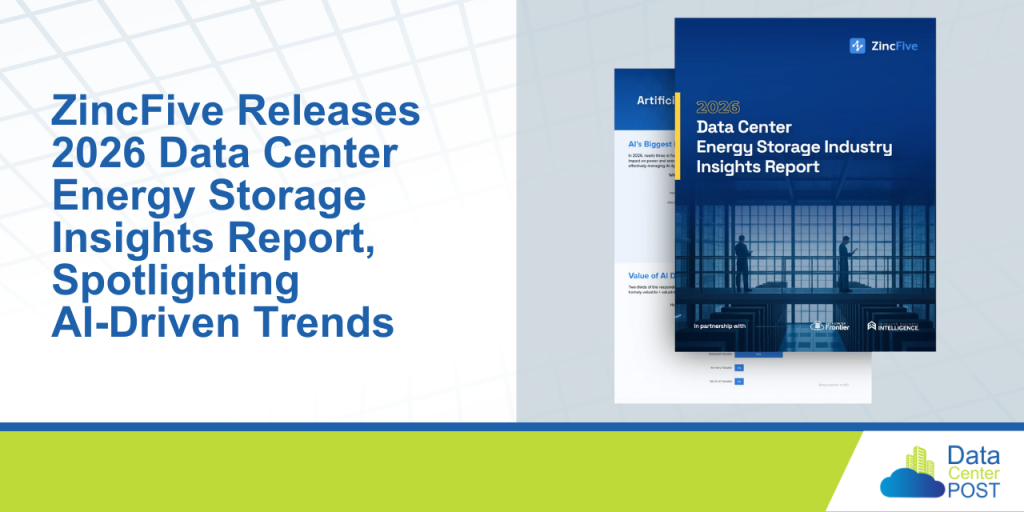
ZincFive Releases 2026 Data Center Energy Storage Insights Report, Spotlighting AI-Driven Trends

In the rapidly evolving landscape of data centers powered by artificial intelligence, energy storage strategies are undergoing a profound transformation. ZincFive®, a leader in nickel-zinc battery solutions, has unveiled its third annual 2026 Data Center Energy Storage Industry Insights Report, developed with Endeavor Business Intelligence. This comprehensive study, based on surveys of 150 global industry professionals conducted in early 2026, reveals how AI workloads are reshaping power infrastructure priorities.

Key Trends Emerge

The report identifies surging AI demands as a central force. Notably, 57% of respondents report that AI is driving higher power density needs and smaller footprints, a trend holding steady from 54% last year. Additionally, 52% emphasize managing AI’s dynamic power fluctuations and upholding power quality – a sharp rise from 37% in 2025 – highlighting the urgency for resilient storage solutions.

Cost and safety dominate decision-making. An impressive 84% prioritize total cost of ownership, up from 79% in 2025 and 65% in 2024, while 76% stress battery chemistry safety. AI dynamic power ranks as the second-biggest driver for technology shifts at 49%, after cost (58%). Sustainability also plays a pivotal role, with 70% factoring it into purchases and 46% achieving moderate to significant cost savings from sustainable initiatives.

Prioritizing Battery Features for AI Challenges

When addressing AI-specific power issues, professionals rank power density (38%), safety (37%), uptime (33%), and maintenance ease (32%) as top criteria for battery selection. These insights underscore the need for advanced chemistries like nickel-zinc, which ZincFive champions for its high power density, safety, and sustainability in mission-critical applications.

“As AI workloads continue to transform data center infrastructure, operators are facing new challenges around power density, power quality, and system reliability,” said Tod Higinbotham, CEO of ZincFive. “This year’s report highlights how the industry is adapting to these evolving demands while balancing cost, safety, and sustainability priorities. The findings underscore the growing need for energy storage technologies capable of delivering high power performance, operational resilience, and infrastructure efficiency in the era of AI-driven data centers.”

Implications for the Industry

This report builds on prior editions, tracking consistent yet intensifying trends amid AI’s expansion. Data center operators can download the full 2026 report, along with 2025 and 2024 versions, from ZincFive’s website to inform strategic planning. As AI continues to demand more from power systems, innovations in safe, efficient energy storage will be crucial for maintaining uptime and sustainability goals.

To read the full press release, please click here.

The post ZincFive Releases 2026 Data Center Energy Storage Insights Report, Spotlighting AI-Driven Trends appeared first on Data Center POST.

  •  

Metro Connect USA 2026 Highlights the Future of U.S. Digital Infrastructure

Metro Connect USA 2026 brought the digital infrastructure community together in Fort Lauderdale, Florida, Feb. 23 to 25, as executives, investors and network operators gathered to discuss the evolving connectivity landscape. Over three days, conversations across keynote sessions, panels and private meetings focused on how the industry is adapting to the rapid growth of artificial intelligence, cloud services and bandwidth demand.

The 2026 event drew more than 3,700 decision-makers representing over 1,200 companies, reflecting the scale of collaboration and investment shaping the next phase of digital infrastructure development in the United States.

Artificial intelligence was a central theme throughout the conference. Industry leaders discussed how AI workloads are driving new requirements for data center capacity, fiber connectivity and power infrastructure. As AI adoption expands beyond hyperscale environments into enterprise applications and edge deployments, operators are facing increasing pressure to scale networks capable of supporting high-volume data movement and compute-intensive workloads.

Fiber infrastructure also remained a key topic. Discussions throughout the event highlighted continued investment in metro fiber expansion, long-haul backbone routes and fiber-to-the-home networks. As cloud platforms, streaming services and AI applications generate greater data traffic, fiber continues to serve as the underlying foundation supporting the digital economy.

Several speakers addressed how infrastructure and investment strategies are evolving alongside these shifts. Marc Ganzi, Chief Executive Offer at DigitalBridge discussed the continued influx of capital into digital infrastructure and the importance of disciplined investment as the sector scales. Steve Smith, Chief Executive Officer at Zayo Group highlighted the role of fiber expansion in supporting enterprise connectivity and hyperscale demand. Alex Hernandez, CEO of PowerBridge, participated in discussions focused on the growing power demands associated with AI infrastructure, including how utilities, data center developers and investors are working to expand power capacity and modernize energy delivery to support large-scale computing environments.

From the investment perspective, Santhosh Rao, Managing Director, Head of Digital Infrastructure at MUFG explored the evolving capital structures supporting infrastructure development, including structured financing and private credit solutions. Anton Moldan, Senior Managing Director at Macquarie Group shared insights into how institutional investors continue to evaluate digital infrastructure assets as a long-term growth opportunity within global infrastructure portfolios.

Beyond the formal sessions, Metro Connect remains known for its highly productive networking environment. Thousands of meetings took place across the event’s exhibit floor, private meeting rooms and curated networking gatherings, reinforcing the conference’s reputation as a place where partnerships are formed and transactions begin.

Outside the formal sessions, attendees spent much of the week engaged in meetings and informal discussions across the venue’s networking areas. Many participants noted that the event continues to serve as a gathering point for companies exploring partnerships, investment opportunities and infrastructure projects.

Looking ahead, the industry will reconvene next year as Metro Connect USA 2027 moves to a new venue. The event will take place February 8–10, 2027 at the Diplomat Beach Resort in Hollywood, Florida.

The post Metro Connect USA 2026 Highlights the Future of U.S. Digital Infrastructure appeared first on Data Center POST.

  •  

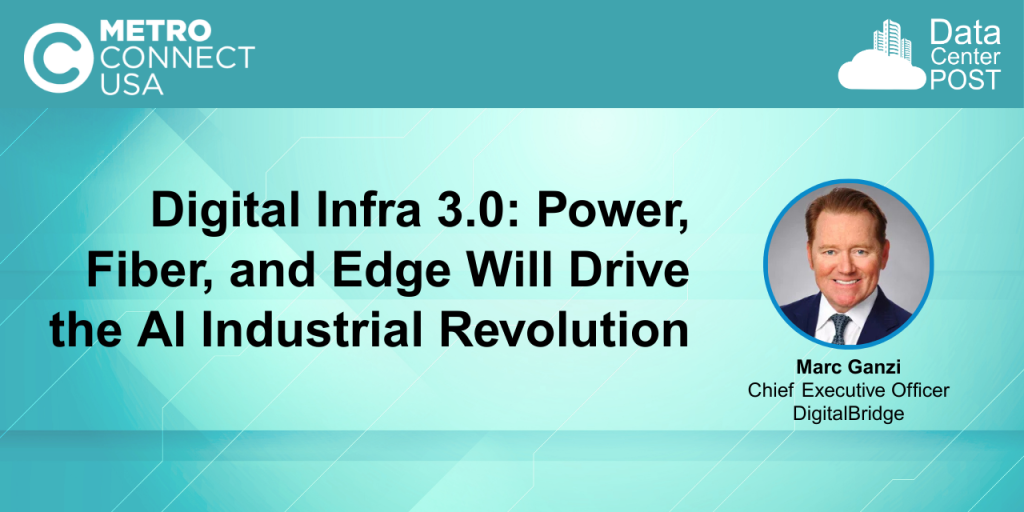
Digital Infra 3.0: Power, Fiber, and Edge Will Drive the AI Industrial Revolution

At Metro Connect USA 2026, held February 22-25 in Fort Lauderdale, Marc Ganzi, Chief Executive Officer of DigitalBridge, delivered a keynote outlining how artificial intelligence is reshaping the digital infrastructure industry. In his address, “Digital Infra 3.0: Building the AI Industrial Revolution,” Ganzi described how the sector is evolving from a connectivity-focused market into a broader ecosystem that includes data centers, fiber networks, edge computing, and energy infrastructure.

Ganzi emphasized that AI has moved beyond hype and is beginning to generate measurable outcomes across industries. While much of the public discussion focuses on applications and large language models, he noted that the true monetization of AI will occur through enterprise and industrial use cases. Manufacturing, agriculture, healthcare, and transportation are already integrating AI-driven automation, robotics, and predictive analytics to improve productivity and efficiency.

These developments rely on a layered infrastructure environment. Hyperscale facilities train AI models, while edge data centers support inferencing workloads closer to where data is used. Fiber networks provide the low-latency connectivity required to move massive volumes of data between locations, and wireless systems connect devices and sensors in the physical world. Beneath all of these components sits an increasingly critical factor: power.

Power availability was a central theme of Ganzi’s keynote. As AI workloads grow, electricity demand is rising faster than grid capacity can keep pace. The digital infrastructure industry is now leasing significantly more power than the grid can bring online each year, creating a widening gap between supply and demand. As a result, developers are increasingly operating as energy strategists, exploring diversified energy approaches that may include microgrids, battery storage, solar, wind, and natural gas generation.

The search for reliable power is also influencing where new infrastructure is built. While traditional hubs such as Northern Virginia remain central to the industry, developers are exploring additional markets where grid access and energy availability make large-scale AI deployments possible. In many cases, power availability has become the deciding factor in site selection.

Despite the focus on energy, Ganzi reminded the audience that connectivity remains essential to the AI economy. The ability to move enormous amounts of data across networks continues to depend on high-capacity fiber infrastructure and low-latency connectivity. Even as AI advances in software and hardware, the underlying network infrastructure remains fundamental.

Ganzi also described the evolution of AI infrastructure in phases. The industry has moved through the early stage of training large language models and is now entering a period where inferencing and edge deployments are expanding. The next stage will involve integrating AI directly into physical environments, where intelligent systems control machines, robotics, and automated processes across multiple industries.

As the sector expands, developers face growing challenges that include power constraints, permitting delays, supply chain pressures, water usage concerns, and increased scrutiny from investors. Ganzi stressed that success will depend on operational discipline, strong customer relationships, and the ability to deliver infrastructure projects reliably and on schedule.

Ultimately, he framed the current moment as the beginning of Digital Infra 3.0, a phase in which digital infrastructure converges with traditional infrastructure to support the AI economy. As AI adoption accelerates, the companies that successfully combine power, connectivity, and compute will play a defining role in building the foundation for the next era of global digital infrastructure.

The discussion around digital infrastructure, connectivity, and AI will continue at the next major Capacity event, International Telecoms Week (ITW) in Washington, D.C., May 18-21, 2026.

To learn more about upcoming events in the Capacity Media portfolio, visit www.capacitymedia.com/events.

The post Digital Infra 3.0: Power, Fiber, and Edge Will Drive the AI Industrial Revolution appeared first on Data Center POST.

  •  

Capacity Middle East and Datacloud Middle East 2026 Highlight Rapid Growth in AI and Data Center Infrastructure

The Middle East has long been described as a geographic bridge connecting Europe, Asia, and Africa. Today, however, the region is becoming far more than a transit corridor. At Capacity Middle East 2026 and Datacloud Middle East 2026, held in Dubai, February 10-12, 2026, industry leaders explored how the region is rapidly evolving into a major destination for digital infrastructure investment. Telecom operators, data center developers, investors, and technology providers gathered to discuss the next phase of growth, which includes expanding connectivity routes, scaling AI-ready data centers, and strengthening the interconnection ecosystems needed to support the region’s digital economy.

The Middle East’s Connectivity Role Is Expanding

For many years, global connectivity discussions framed the Middle East primarily as a transit hub linking international markets. Speakers at Capacity Middle East emphasized that this narrative is evolving as regional internet traffic, enterprise workloads, and cloud adoption continue to grow across the Middle East. Infrastructure strategies are increasingly focused on supporting demand generated within the region itself rather than simply facilitating global transit. This shift is encouraging greater investment in fiber interconnection between data center clusters, cross-border terrestrial routes linking neighboring markets, and internet exchange points that allow regional traffic to remain within the region. As the Middle East’s digital economy expands, more data is being generated and consumed locally, reinforcing the need for robust regional infrastructure.

Hybrid Connectivity Routes Are Gaining Momentum

Another major topic throughout Capacity Middle East was the development of hybrid connectivity routes that combine subsea cables with terrestrial fiber infrastructure. While subsea cables remain the backbone of global connectivity, geopolitical risks and congestion along traditional Red Sea routes have highlighted the need for diversified network paths between Asia and Europe. Operators are increasingly exploring alternative corridors that incorporate land-based routes across regional markets. Industry leaders noted that deploying these hybrid routes is not simply an engineering challenge. Subsea and terrestrial networks operate under different economic models and regulatory frameworks, meaning coordination across multiple jurisdictions will be required to ensure these routes remain commercially viable. Despite those complexities, hybrid infrastructure is expected to play an important role in strengthening global connectivity resilience.

Data Center Development Is Accelerating Across the Region

At Datacloud Middle East, much of the conversation centered on the region’s rapidly expanding data center ecosystem. The Middle East offers several structural advantages that are attracting global infrastructure investment, including competitive energy pricing, available land for hyperscale campuses, strong sovereign investment funds, and coordinated national digital strategies. Market insights shared during the event indicated that vacancy rates across regional data center markets remain low while a significant portion of new capacity is already pre-leased before completion. Although most existing capacity remains concentrated in the United Arab Emirates and Saudi Arabia, emerging markets such as Oman and Jordan are also advancing national initiatives designed to attract new digital infrastructure development and diversify the region’s data center footprint.

AI Is Reshaping Data Center Design

Artificial intelligence infrastructure requirements were a central theme at Datacloud Middle East. Traditional enterprise data centers typically operate at densities between 10 and 20 kilowatts per rack, but AI training clusters are already pushing beyond 100 kilowatts per rack, creating new challenges for power delivery, cooling strategies, and facility design. Because large-scale data center projects often require 18 to 24 months to build, developers must make long-term infrastructure decisions with limited visibility into future workload requirements. As a result, many operators are shifting toward flexible data center architectures capable of supporting both traditional enterprise workloads and high-density AI environments. Rather than designing facilities for a single predictable future state, the industry is increasingly prioritizing adaptability.

Industry Leaders Highlight the Region’s Momentum

Several speakers provided important insights into the trends shaping the Middle East’s digital infrastructure ecosystem. Johan Nilerud, Chief Strategy Officer at Khazna Data Centers, discussed how hyperscale demand and national digital initiatives are accelerating the development of large-scale data center campuses across the Gulf. Karim Benkirane, Chief Commercial Officer at du, highlighted the role telecommunications providers play in enabling cloud adoption and expanding regional connectivity capacity. Mehdi Paryavi, Chairman of the International Data Center Authority, explored how national initiatives such as Oman’s Digital Triangle are positioning emerging markets to compete for future AI and cloud infrastructure investment. Tahir Gok, MENA Lead at datacenterHawk, shared market insights showing continued demand for colocation capacity and strong growth across the region’s key digital hubs. Julian Barratt-Due, Managing Director at KKR, also discussed the growing interest from international investors seeking opportunities to participate in the Middle East’s digital infrastructure expansion alongside sovereign wealth funds.

Interconnection Will Define the Next Phase

A consistent theme across both conferences was the critical importance of interconnection. Data centers, cloud platforms, AI infrastructure, and enterprise networks all rely on strong connectivity ecosystems. Without robust interconnection between facilities, internet exchanges, and regional fiber routes, the full value of new infrastructure investments cannot be realized. Industry leaders emphasized that the next phase of digital infrastructure development in the Middle East will require dense fiber ecosystems, carrier-neutral exchanges, and strong regional connectivity frameworks that allow traffic to move efficiently across markets.

A New Era for Middle East Digital Infrastructure

Capacity Middle East and Datacloud Middle East demonstrated how quickly the region’s infrastructure landscape is evolving. Supported by AI demand, sovereign investment, and coordinated national strategies, the Middle East is rapidly expanding its connectivity and data center capacity. The region’s role in the global digital ecosystem is no longer limited to bridging continents. Instead, it is emerging as a strategic hub where infrastructure is being built to support both global traffic flows and a rapidly growing regional digital economy. As investment continues to accelerate, the conversations taking place in Dubai suggest that the Middle East will remain a central focus of digital infrastructure development in the years ahead.

The next Capacity event will be International Telecoms Week (ITW) in Washington, D.C., May 18-21, 2026.

To learn more about upcoming events in the Capacity Media portfolio, visit www.capacitymedia.com/events.

The post Capacity Middle East and Datacloud Middle East 2026 Highlight Rapid Growth in AI and Data Center Infrastructure appeared first on Data Center POST.

  •