Normal view

Received yesterday — 31 January 2026

Pilot Travel Centers to deploy heavy-duty EV charging stations for Tesla Semis

30 January 2026 at 16:33

Truck stop operator Pilot Travel Centers has entered into an agreement with Tesla to install charging stations for Tesla’s Semi heavy-duty electric trucks.

The Tesla charging stations will be built at select Pilot locations in California, Georgia, Nevada, New Mexico and Texas, along I-5, I-10 and “several major corridors where the need for heavy-duty charging is highest.” The first sites are expected to open in Summer 2026.

Each location will host four to eight charging stalls featuring Tesla’s V4 cabinet charging technology, which can deliver up to 1.2 megawatts of power at each stall.

Pilot says that in the future, the sites may be expanded to be compatible with heavy-duty electric vehicles from other manufacturers.

“Heavy-duty charging is yet another extension of our exploration into alternative fuel offerings, and we’re happy to partner with a leader in the space that provides turnkey solutions and deploys them quickly,” said Shannon Sturgil, Senior VP, Alternative Fuels at Pilot.

Source: Pilot Travel Centers

End of an EV era: Tesla discontinues Model S and Model X

29 January 2026 at 22:07

Major technological disruptions tend to come in waves, and it’s rare for the companies that lead the first waves to be at the forefront of subsequent waves (anybody remember Blackberry? MySpace? Yahoo?).

Few companies have so completely dominated the first wave of a tech tsunami as Tesla, which produced the first EV that the media could describe without using the word “granola” (the Roadster); the first EV that could be considered a mass-market vehicle (Model S); and an EV that became the world’s best-selling car (Model Y). Along the way, the company built a charging network that remains the industry’s gold standard, and built a tidy little business selling stationary storage.

Times change. The number of available EV models has grown from a handful to hundreds, the center of gravity of the EV industry has shifted from the US to China, and the company that I once called “an innovation factory” has shifted its attention to other things.

Tesla’s mercurial manager announced during the company’s Q4 2025 earnings call that the Model S and Model X will be discontinued by the middle of this year.

The announcement was widely expected. Tesla’s third-gen vehicles, Models 3 and Y, eclipsed their parents some time ago. Indeed, this was always part of the company’s plan. Public perceptions of Tesla and its divisive director have changed drastically since the firm’s founding, but there’s no denying that the strategy worked wonderfully, nor is there any dishonor in pulling the plug on Models S and X, which launched in 2012 and 2015, respectively.

In fact, some may wonder why the two venerable vehicles lasted as long as they did. As Electrek put it, “Tesla stopped caring about these vehicles years ago.” As Tesla’s cheeky chieftain himself put it back in 2019, his company was still making these “niche” vehicles more for “sentimental reasons than anything else.”

Tesla stopped breaking out sales figures for Models S and X in 2023, lumping them into an “other models” category with Cybertruck and the Tesla Semi. Of course, EV pundits made educated guesses at the declining numbers. Electrek estimates that Model S/X deliveries were “likely in the 30,000 range for all of 2025.” By contrast, Tesla sold 357,000 units of Model Y in the US alone in 2025, by Cox Automotive’s estimate.

The auto industry expects models to be “refreshed” from time to time (or cancelled to make way for new models). In 2025, Tesla launched an “update” to Models S and X that consisted of a new paint color, a few new features that Models 3 and Y already had, and a $5,000 price increase.

Tesla’s Fremont, California factory has the capacity to produce 100,000 units of Model S/X annually—it would seem that the line has been running at a fraction of that for some years now. The company’s bellicose boss says that this factory space will be repurposed to build Optimus robots.

Yeah, sure, but are there any new cars on the way? On the earnings call, the firm’s polarizing premier reaffirmed that the steering wheel-free Cybercab and a new Roadster supercar are still in the pipeline.

Sources: Electrek, The Verge, TechCrunch, InsideEVs, Teslarati

GM adds support for Electrify America EV Charging network to its branded apps

28 January 2026 at 15:58

The Electrify America EV charging network, which boasts over 5,000 locations, is now accessible for GM EV customers via the automaker’s branded smartphone apps. Drivers can use their myChevrolet, myGMC or myCadillac apps to find nearby charging stations with real-time availability information, plan routes, monitor charging session status, and pay for charging directly in the app.

Multiple charging apps are the bane of road-tripping EV drivers. Adding support for charging networks within branded apps is one way OEMs can improve the charging experience for their customers. GM aims to connect EV drivers to an expanding ecosystem of public charging infrastructure. GM owners can navigate to the Public Charging page in their myBrand apps and look for supported networks.

“We’re collaborating across the industry to deliver not just more chargers, but better public charging experiences,” said Wade Sheffer, Vice President, GM Energy. “Our work with Electrify America helps make public charging easier to access for GM EV drivers.”

“As EV travel continues to grow, so does the need for convenient charging experiences,” said Robert Barrosa, CEO and President of Electrify America. “Through this integration, GM EV drivers have more Hyper-Fast chargers to choose from and a seamless experience they can count on nationwide.”

Source: Electrify America

Received before yesterday

Keysight introduces test solutions for high-power and megawatt charging

24 January 2026 at 16:22

Keysight Technologies has announced two new EV charging test solutions designed to support the industry’s move to high-power and megawatt-level charging.

The company explains that the rapid growth of electrification is driving demand for charging infrastructure capable of supporting everything from fast charging for passenger vehicles to megawatt-level charging for heavy-duty transport and industrial fleets. At the same time, engineers and manufacturers face increasing complexities due to interoperability challenges, stringent safety requirements, and the need to comply with evolving international standards such as MCS, CCS, ISO 15118, GB/T and CHAdeMO.

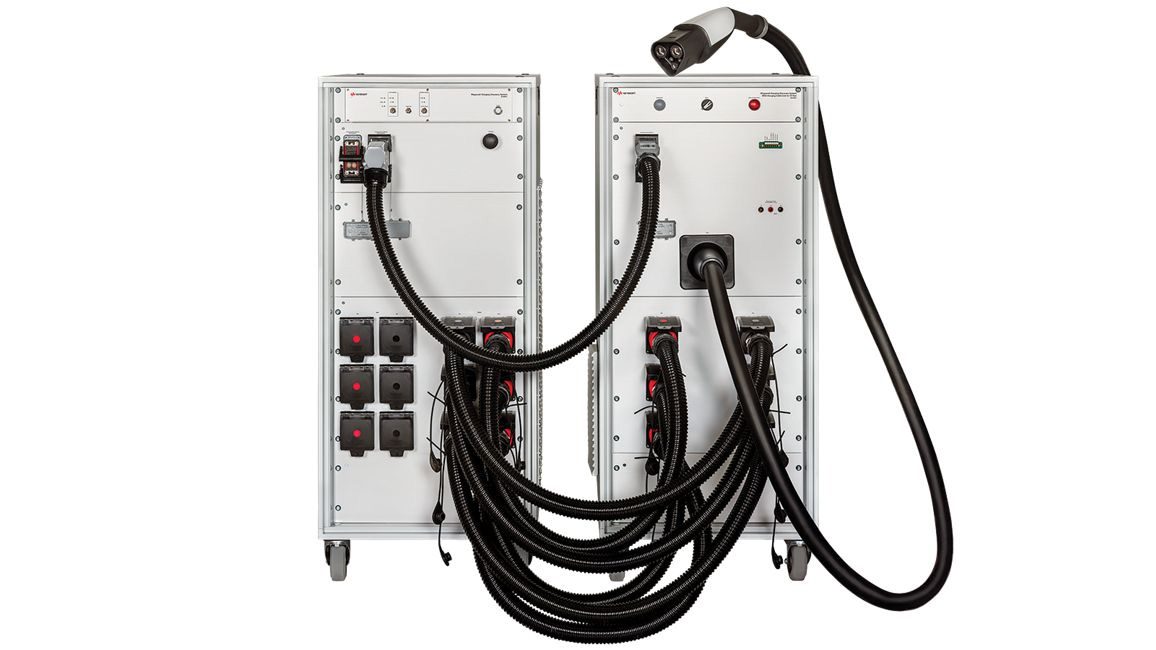
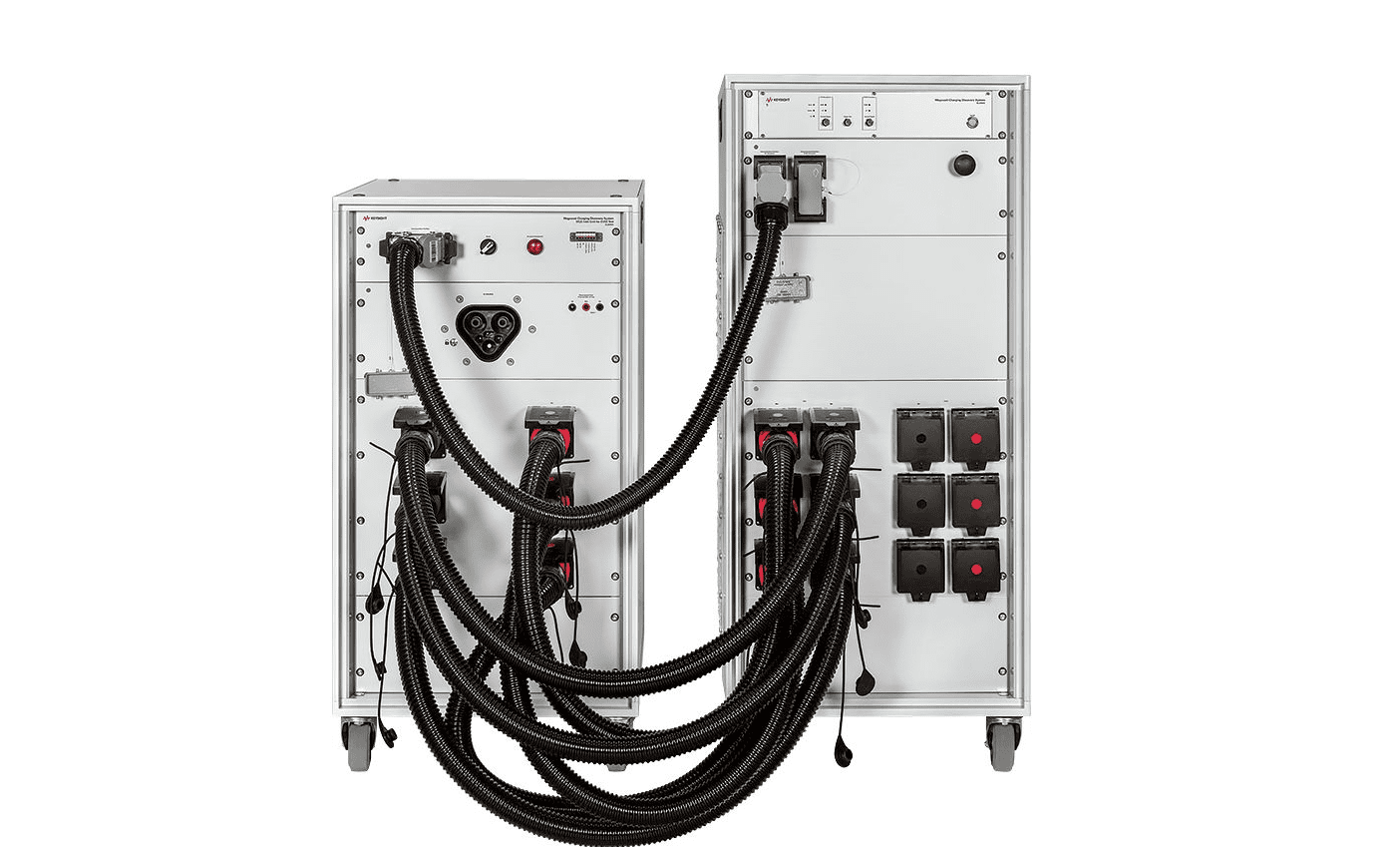
The SL2600 A Megawatt Charging Discovery System enables validation of megawatt charging for heavy-duty applications, supporting voltages up to 1,500 V and currents up to 1,500 A. Its modular, upgradable architecture allows engineers to test both EVs and charging stations within a single system.

The enhanced SL1047A Scienlab Charging Discovery System—High‑Power Series delivers software‑scalable performance starting at 400 A and 1,000 V, and can be expanded up to 800 A and 1,500 V without hardware replacement. It supports all global charging standards, including full compliance with GB/T 2024. It also introduces enhanced charging communication test capabilities, featuring significant improvements and extended functionality to address increasingly complex EV charging requirements. 

“The transition to high-power and megawatt-level charging is a pivotal moment for the EV industry,” said Thomas Goetzl, Vice President and General Manager for Keysight’s Automotive & Energy Solutions. “Our latest test solutions give manufacturers and engineers the confidence to innovate quickly and deliver reliable charging systems that meet global standards.

Source: Keysight Technologies

Evotrex’s new power-generating RV trailer is designed for off-grid travel

23 January 2026 at 15:11

Towing is a sore point for would-be EV adopters (as Ford belatedly realized, to its cost). The most elegant solution may not be to bulk up on batteries in the towing vehicle, but rather to electrify the tow itself. This approach holds great promise not only in trucking applications (see our recent feature article, Electrifying the Box), but also in the RV world.

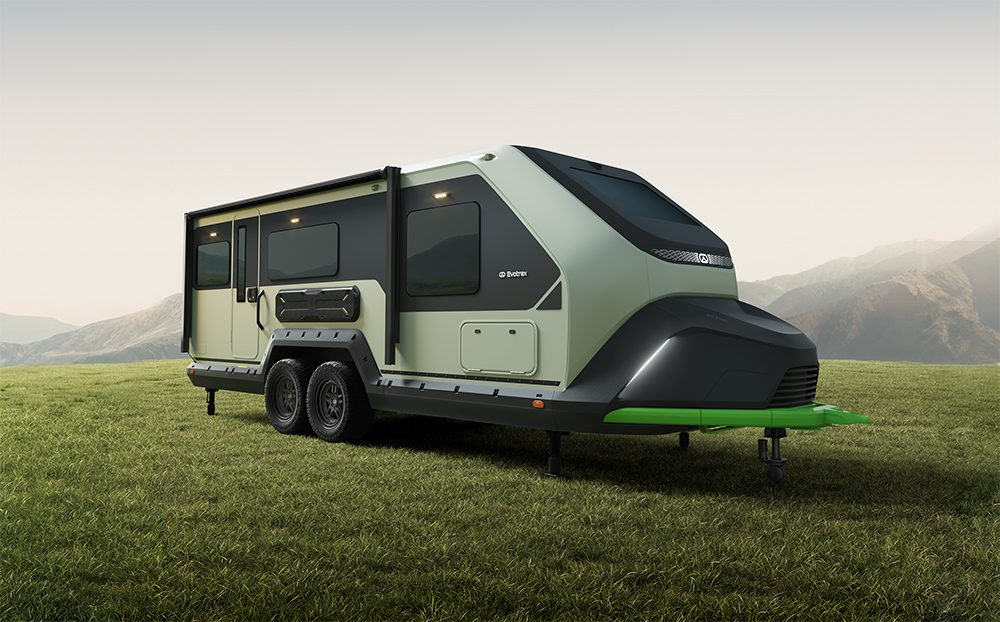
California-based Evotrex has launched an RV trailer that can generate its own power, intelligently manage energy consumption, and even transfer energy to the towing vehicle to maximize range.

The Evotrex-PG5, which represents Evotrex’s entry into the RV market, offers “luxury amenities and adventure-ready design,” and is designed for extended off-grid travel. It features a unified energy system that combines a 43 kWh LFP battery, 1.5 kW of solar generation capacity, and a gas-powered onboard generator.

Like the electrified semi-trailers offered by Range Energy and Trailer Dynamics, Evotrex’s PG5 has its own electric motor, which is controlled by a force sensor to support the towing vehicle with just the right amount of torque. This not only increases range, but also stabilizes towing and improves maneuverability. Once unhitched, the same system enables remote maneuvering for parking and campsite positioning.

The PG5 can export power to run tools, cooking gear and camping equipment (vehicle-to-load), or to supply backup power to a home during outages (vehicle-to-home). An innovative feature called RangeBoost enables vehicle-to-vehicle charging—the PG5 is capable of bidirectional energy transfer to and from the towing vehicle, extending usable range.

“Our goal with the PG5 was to design an RV that empowers adventurers to explore without compromise,” said Alex Xiao, CEO and founder of Evotrex. “Its power-generating capabilities and intelligent energy management system provide the comfort, reliability and control needed for confident off-grid travel.”

Preorders for the Evotrex-PG5 are now open, and production is scheduled to begin by the end of 2026. The standard Evotrex-PG5 Pioneer model starts at $119,990, and the fully loaded Evotrex-PG5 Atlas is priced at $159,990.

Source: Evotrex

Mercedes-Benz eActros electric trucks drive 2,400 km in long-haul endurance test of Megawatt Charging System

22 January 2026 at 16:46

Development engineers from Mercedes‑Benz Trucks tested the Megawatt Charging System on a long‑distance test drive with two MCS‑compatible eActros 600 electric trucks.

The aim was to ensure optimal compatibility between the vehicle and megawatt charging stations from various manufacturers, as well as to gain insights into real‑world usability—including under winter conditions—ranging from the charging curve and average charging power to the overall performance of the MCS infrastructure.

The test run covered a route of approximately 2,400 kilometers, from the Mercedes‑Benz plant in Wörth am Rhein, Germany, through the Netherlands, Belgium and Denmark, to Linköping in southern Sweden. The vehicles were recharged at both public and private MCS charging sites specifically designed for trucks.

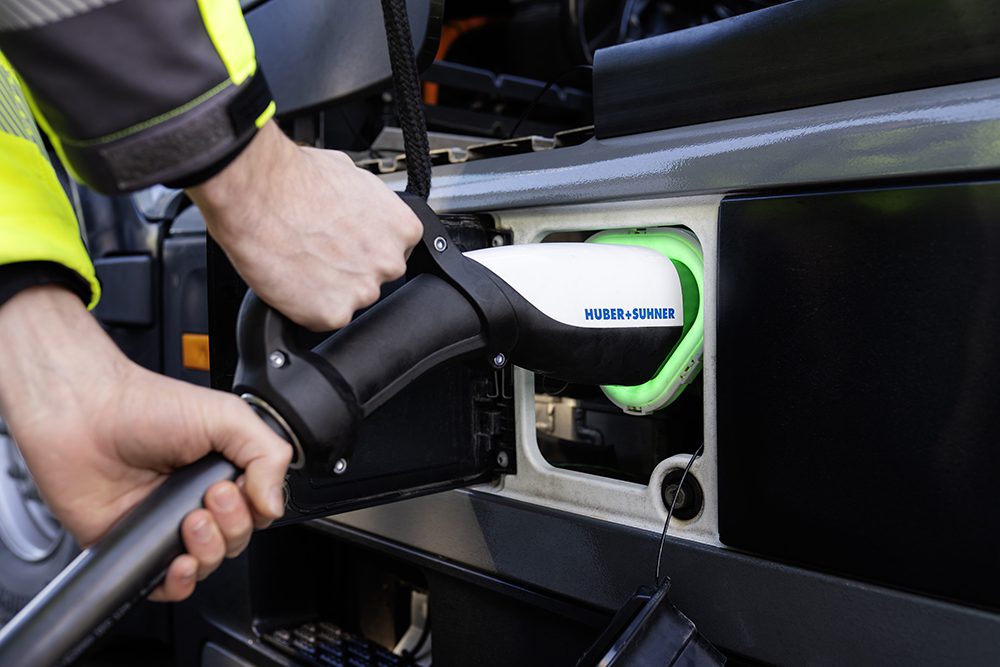
The MCS standard enables charging at power levels of up to 1,000 kW. Global standards organization CharIN is working to promote uniform interfaces between charging stations and electric trucks, and to facilitate the development of a pan‑European fast‑charging network for heavy‑duty commercial vehicles.

“The key challenges in megawatt charging lie in harmonizing the vehicle with various charging systems,” said Peter Ziegler, Head of E Charging Components, Mercedes Benz Trucks. “At the same time, the extreme charging currents in MCS charging place high demands on thermal management. The current test run provides an important opportunity to evaluate these aspects under real-world operating conditions.”

Source: Daimler Truck

EV charging provider L-Charge raises $10 million in new funding round

22 January 2026 at 16:28

EV charging provider L-Charge has closed a $10-million funding round, led by Ultra Capital.

L-Charge will use the new capital to expand its national installation footprint; add new product categories; expand its portfolio of off-grid chargers; grow sales, operations and customer support teams to support increasing project volume; and strengthen long-term infrastructure and service capabilities. The investment will support rapid growth in installations in the rideshare, last-mile delivery and fleet segments.

Fleet operators installing charging infrastructure continue to face permitting delays and infrastructure backlogs that add cost and slow EV deployments. L-Charge aims to address these challenges by delivering modular, off-grid charging solutions that enable fleets to electrify in a matter of weeks.

L-Charge’s Charging-as-a-Service and Power-as-a-Service offerings provide commercial customers with a flexible, zero-CapEx alternative to traditional grid-dependent charging infrastructure.

“Demand for our solutions continues to grow as fleet operators look for reliable ways to deploy EVs despite grid limitations and rising costs,” said Stephen Kelley, CEO of L-Charge. “This investment allows us to scale faster, support more customers, and keep building the team needed to sustain our next phase of growth.”

“L-Charge is solving one of the most critical bottlenecks in fleet electrification today—access to power,” said Kristian Hanelt, Partner at Ultra Capital. “Their ability to deploy charging infrastructure independent of grid timelines makes them uniquely positioned to support the rapid electrification of commercial fleets.”

Source: L-Charge

❌