Mercedes-Benz Trucks will begin sales of its new battery-electric eArocs 400 in April, expanding its electric portfolio to include the construction segment.
Customers in an initial 13 EU markets can now order the eArocs 400, which made its debut at last year’s bauma trade fair in Munich. Beginning in the third quarter of 2026, the base vehicle will be produced at the Mercedes-Benz plant in Wörth am Rhein, followed by integration of the electric drivetrain by Paul Group, headquartered in Vilshofen an der Donau.
The eArocs 400 is equipped with two LFP battery packs, each offering 207 kWh of capacity, housed in a battery tower behind the cab. It’s designed specifically for urban and near-road construction work, and in many use cases, it can complete a full work day without intermediate charging.
The eArocs 400 is initially offered in two versions, with technically permissible gross vehicle weights of 37 and 44 tonnes. It is available in an 8×4/4 axle configuration and four wheelbase options, and is suitable for applications such as dump bodies and concrete mixer bodies.
Key components from the second-generation Mercedes Benz eActros portfolio have been incorporated into the eArocs 400.
The eArocs 400 features an 800-volt onboard electrical architecture, as well as an integrated 3-speed transmission, providing a continuous output of 380 kW and a peak output of 450 kW. The truck supports charging at up to 400 kW via the standard CCS2 charging interface, available on both sides of the vehicle.
“The new battery-electric eArocs 400 combines the robustness required with an efficient electric drive system, covering key use cases in near-road construction,” said Stina Fagerman, Head of Marketing, Sales and Services at Mercedes Benz Trucks.
Of four all-new vehicles unveiled in New York, two were battery-electric SUVs: one big, one small.
While EVs are supposedly in retreat across the US—don’t believe all the headlines—new battery-electric models continue to launch. Two more debuted this week at the media preview day before the New York International Auto Show that opens to the public this weekend.
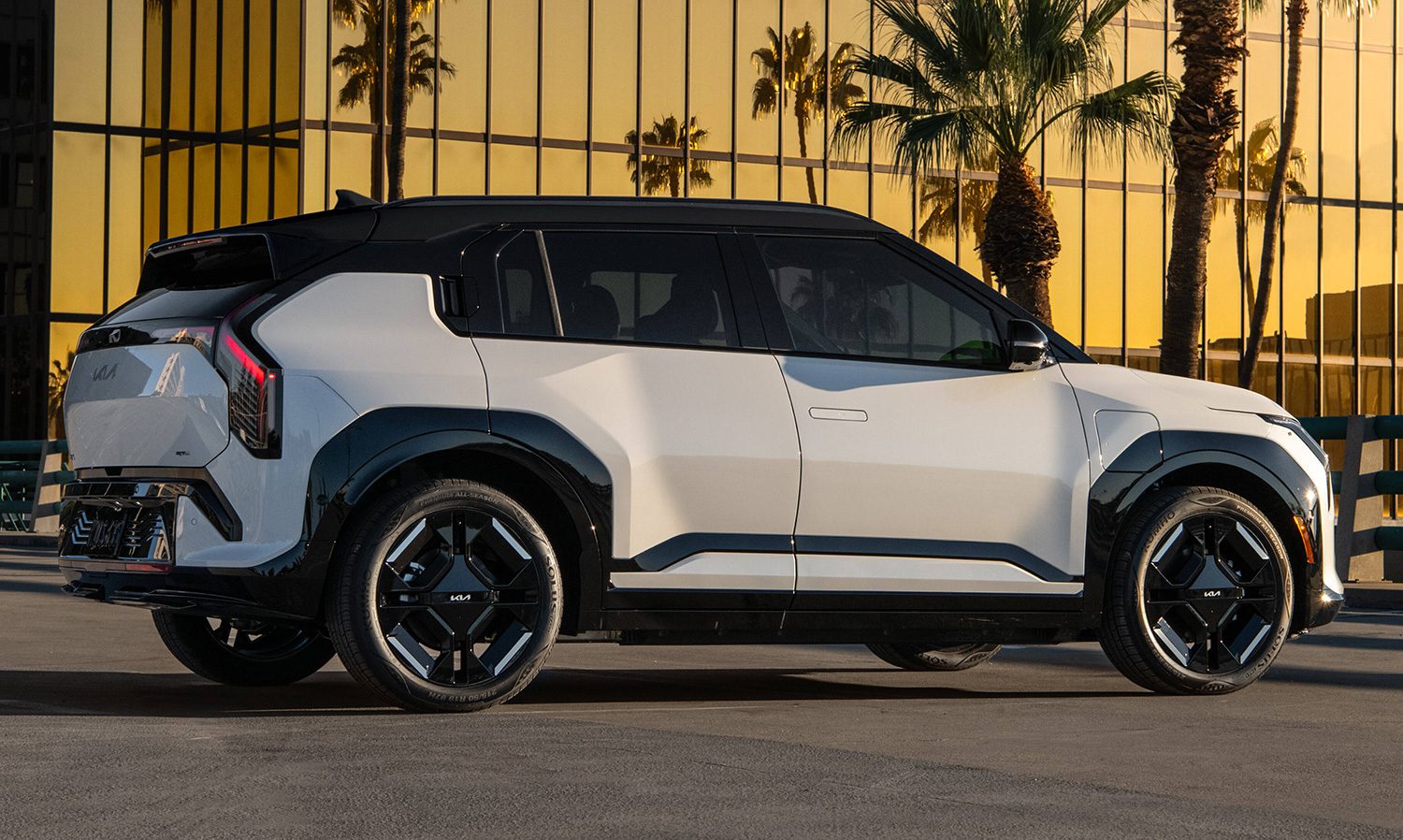
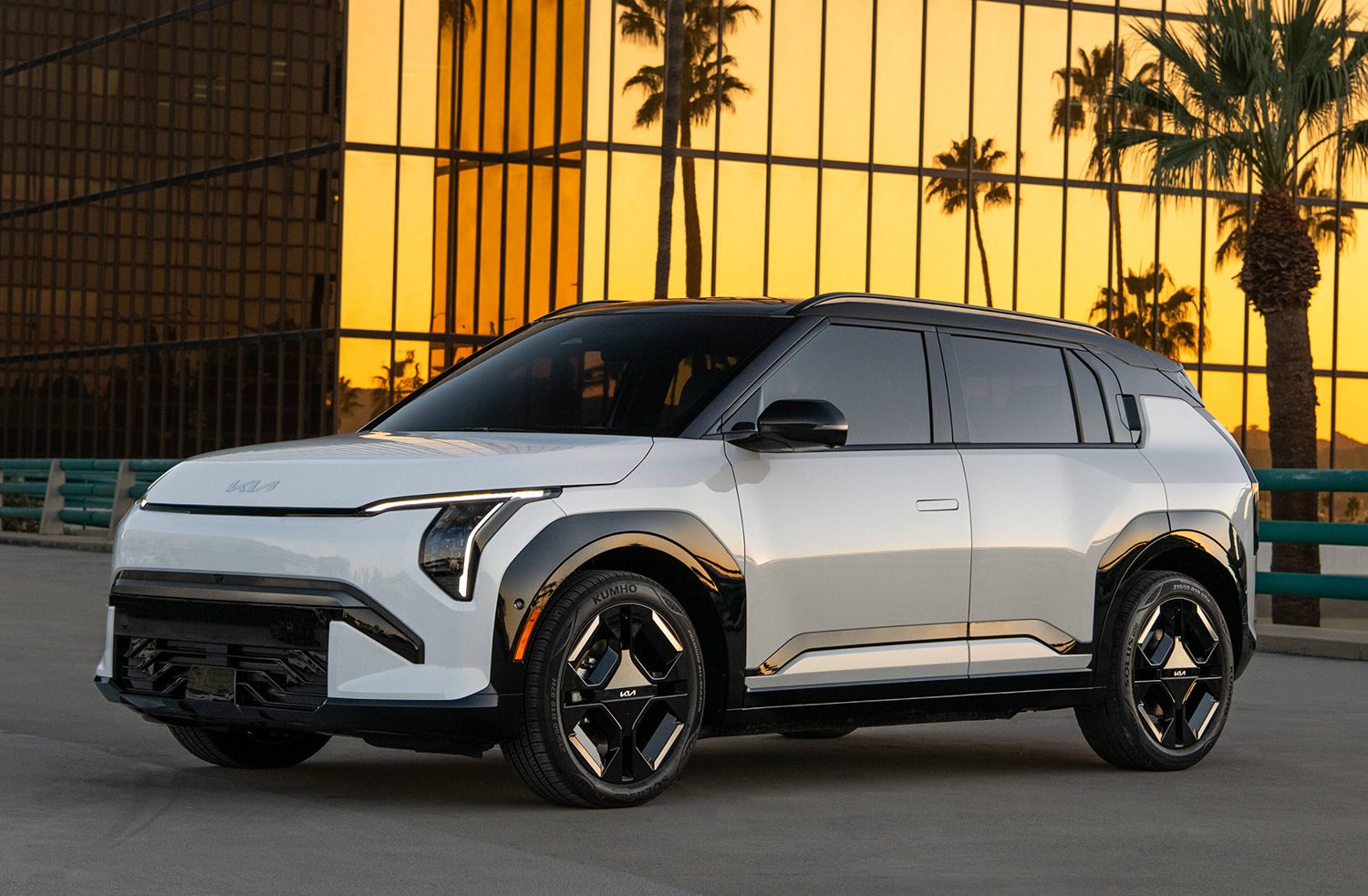
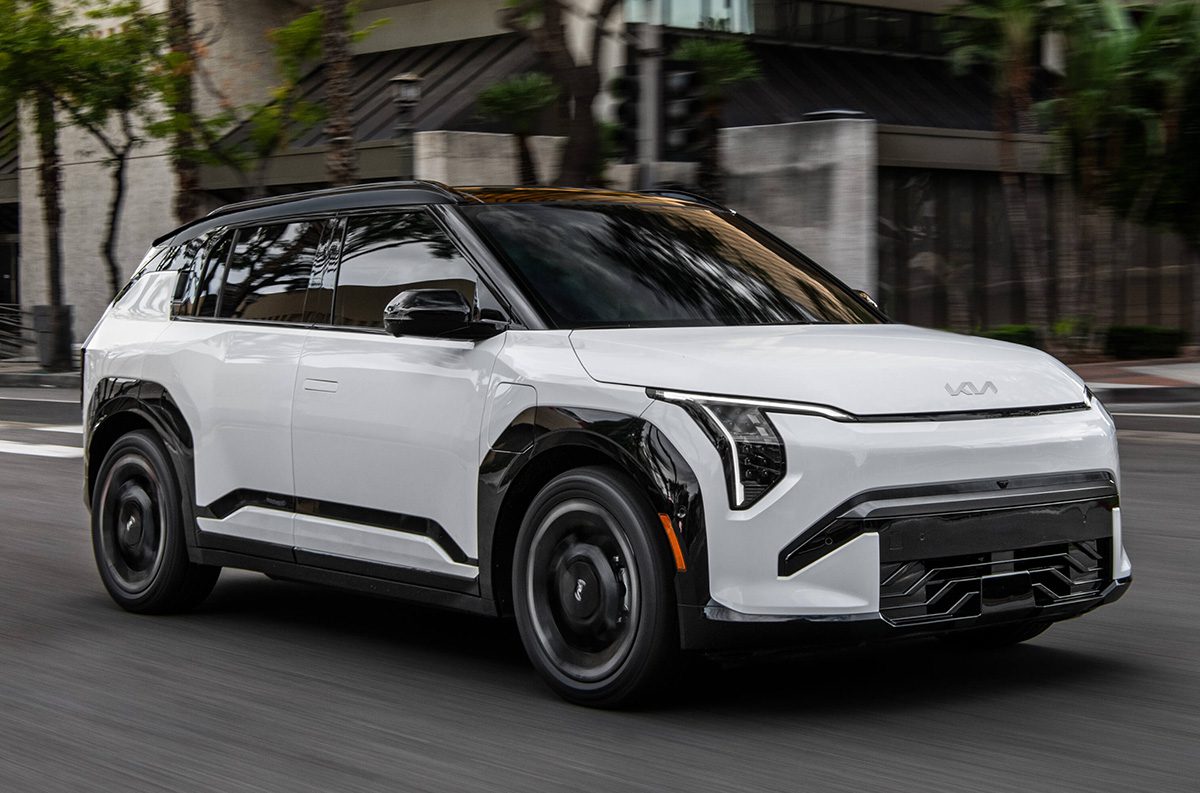
The 2027 Kia EV3 is a small SUV utility vehicle that’ll be the smallest, least expensive entry in Kia’s growing line of EVs; it’s expected to go on sale late this year. At the other end of the scale, the 2027 Subaru Getaway three-row SUV utility vehicle is the brand’s largest among the four EVs it’s announced. It too will land at dealerships in late 2026.
Small SUV, big range
The Kia EV3 has been on sale in South Korea for almost two years, followed by several European countries, Australia, and New Zealand. Demand in those markets has been substantial. In North America, it will compete in the low-priced end of the EV market. Pricing and specs won’t be released until later in the year, but it’s expected to compete with the Chevrolet Bolt (starting at $28,995), the Nissan Leaf ($31,485), and perhaps Ford’s upcoming midsize electric pickup, promised for $30,000 or so. All prices include the mandatory delivery fee.
In its US trim, the EV3 in US trim is promised to have up to 320 miles of EPA-rated battery range on certain versions, comfortably higher than the 300-mile mark that may be the new US standard for buyers concerned about range. Its design nods to the big, square EV9 three-row SUV, and Kia claims a drag coefficient of 0.275, low for such a small, square, upright vehicle.
Kia offers two options for battery capacity: the EV3 Light model uses a 58.3-kilowatt-hour pack, driving only the front wheels, and projected at a range of 220 miles. This is the model whose base price will no doubt be prominently featured in marketing. On higher trims (Wind, Land, GT-Line, and GT), battery capacity is 81.4 kWh. All-wheel drive is optional on Wind and Land, standard on GT-Line and GT. Motor output is 261 hp (192 kW) on all-wheel drive models, which rises to 288 hp (212 kW) on the higher-performance EV3 GT model.
Charging is via a NACS port on the right-front fender. Kia claims DC fast charging from 10 to 80 percent in 29 minutes for the small battery, 31 minutes for the large one. As always, that’s under ideal conditions of battery temperature and ambient temperature, at a charging station capable of delivering the sustained current required. Plug and Charge is standard, allowing “plug it in and walk away” charging once set up. Kia didn’t provide a rating for onboard AC charging.
Reflecting the broad appeal of using an EV as a portable source of electricity, the EV3 will offer vehicle-to-load (V2L) power outputs. Using a bidirectional Wallbox home charging station, it will also offer vehicle-to-home (V2H) capability to power a home during outages.
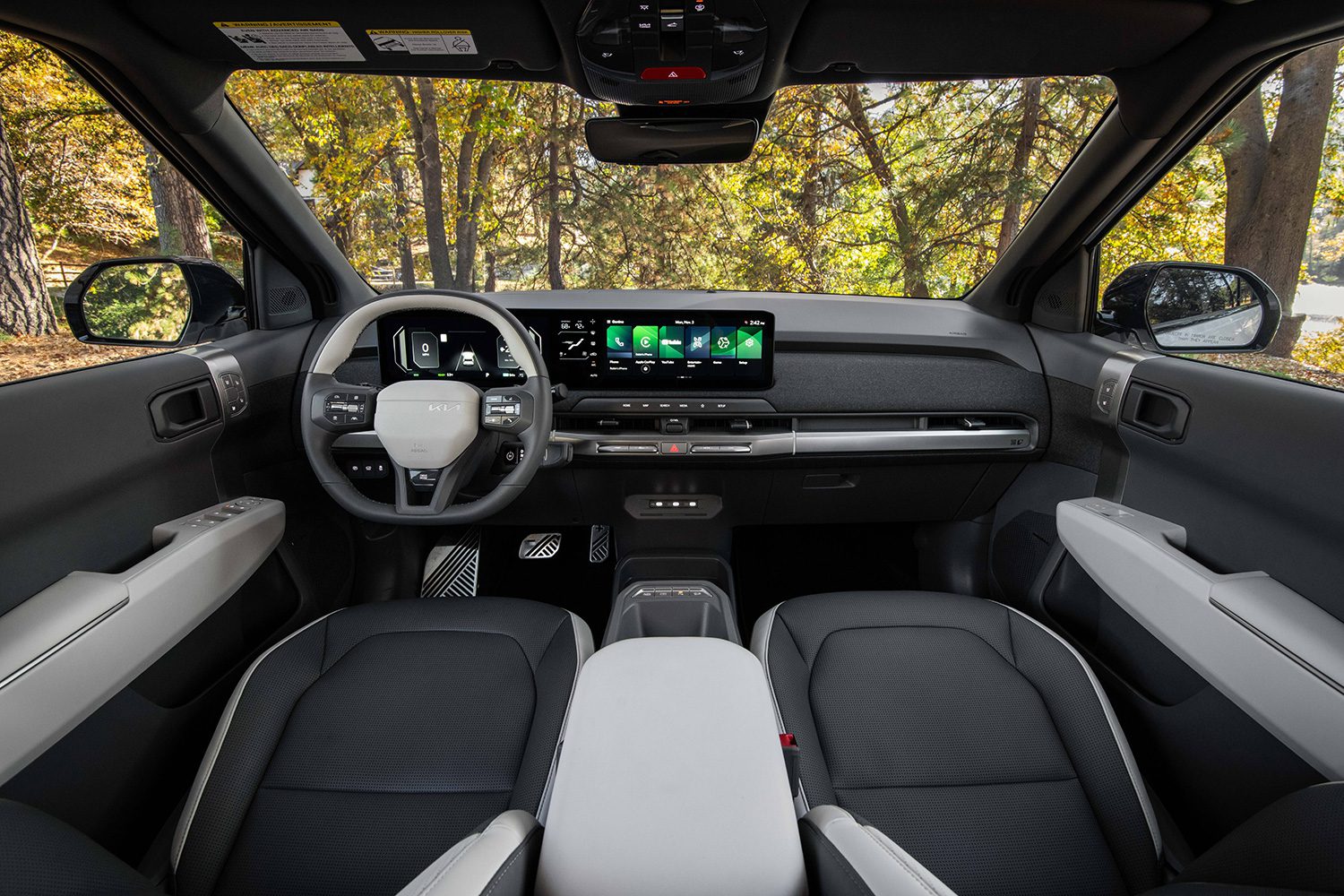
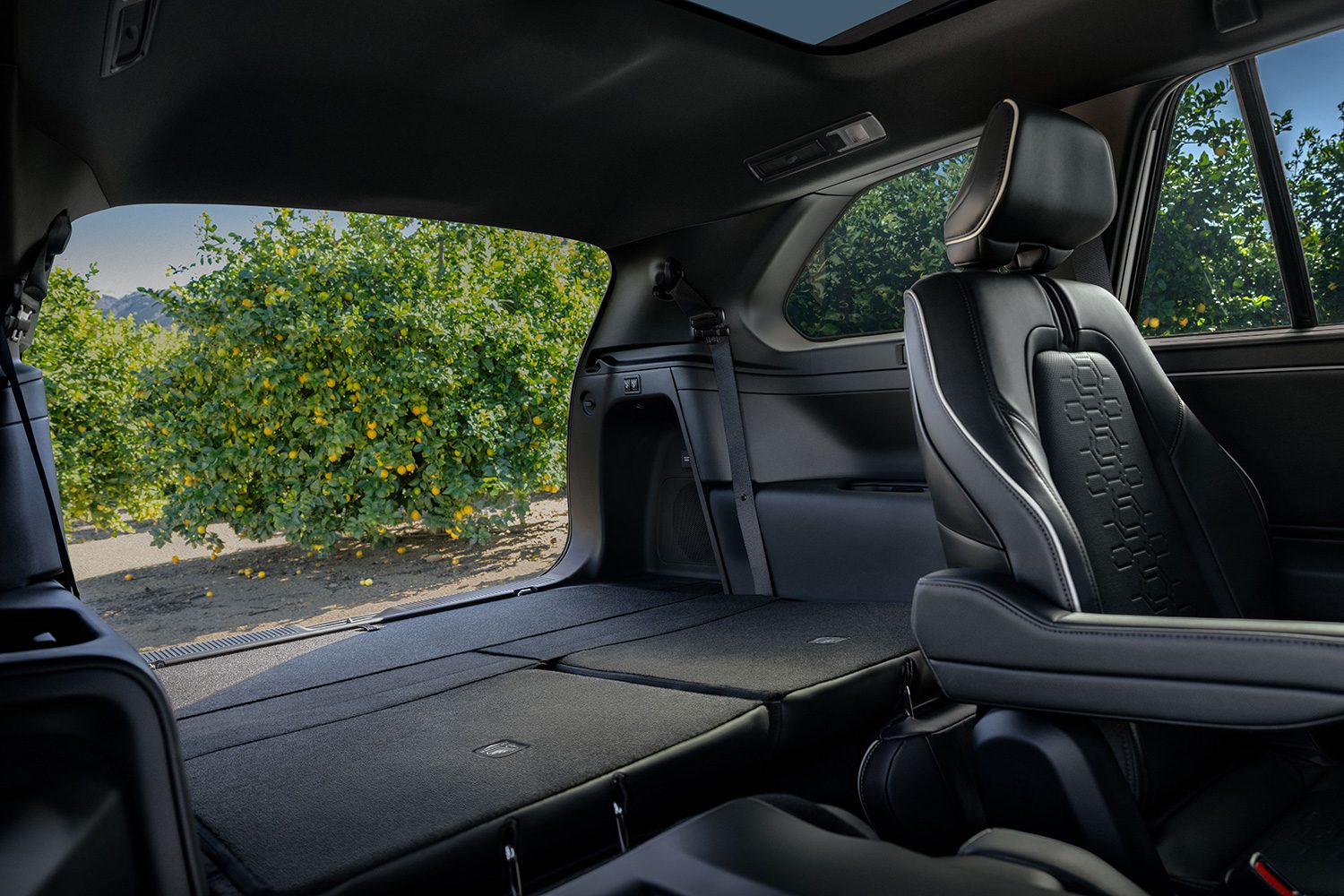
Inside the small SUV, the brand’s characteristic pair of 12.3-inch displays sit horizontally across the dash. The EV3 will offer some features and options rarely found on subcompact cars in the US, including a head-up display and Surround-View monitor. A power liftgate is available, giving access to 26.1 cubic feet of cargo volume behind the second row, or 56.5 cubic feet with the rear seat folded down.
To keep costs down, the EV3 is built on a lower-cost version of the Hyundai-Kia E-GMP battery-electric platform. One salient difference: a 400-volt battery architecture rather than the 800 volts of the EV6 hatchback utility and EV9 three-row SUV, its larger siblings. That lower-cost platform is also used for the Kia EV4, a sleek compact sedan whose US debut was indefinitely delayed in October after it was scheduled to go on sale in the first quarter of this year. With utility vehicles taking a growing share of the market, and sedans losing share, that may have been a smart decision—especially since the North American EV3 is expected to be assembled in Mexico, at the same Kia plant that builds the K4.
Big SUV, small maker
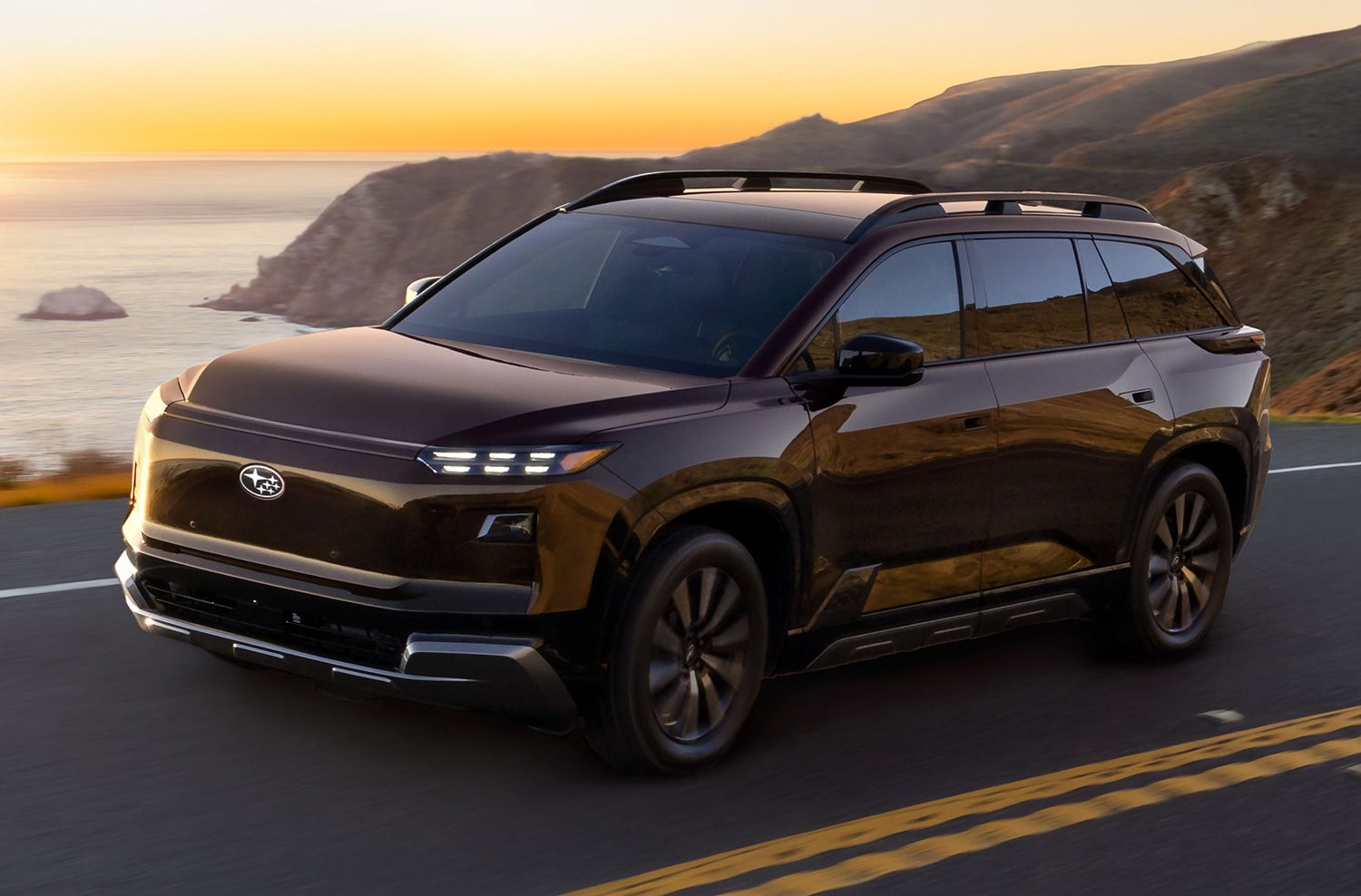
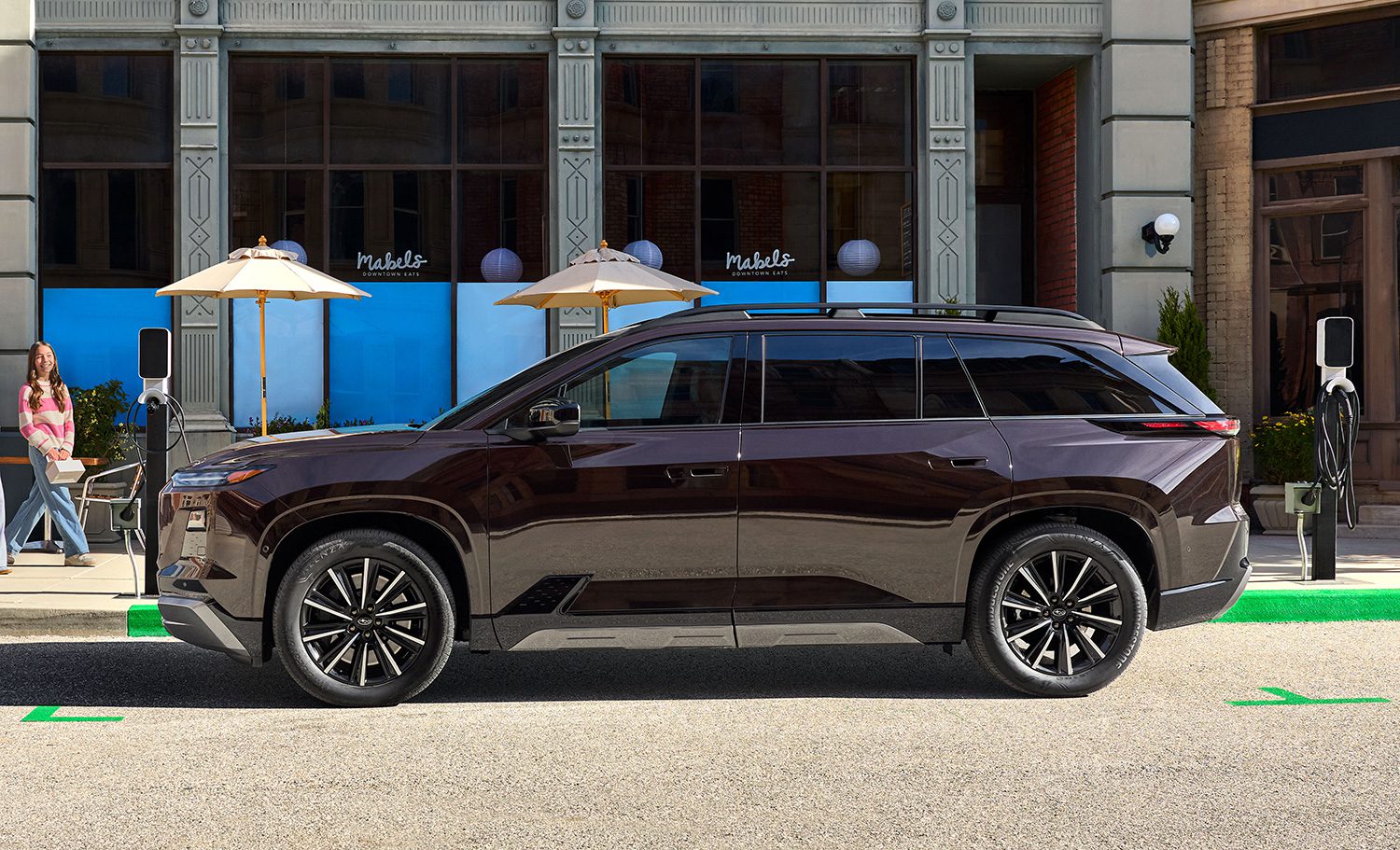
At the other end of the size scale, the 2027 Subaru Getaway 3-row SUV is the largest EV offering from the small Japanese maker that now sells two-thirds of its global output in North America. Like the EV3, it will have a rated range of more than 300 miles, but this seven-passenger crossover utility vehicle is aimed at the high end of Subaru’s range. The Getaway is the EV counterpart to the brand’s aging Ascent gasoline 3-row SUV; it becomes Subaru’s tenth separate US model line.
If the shape looks familiar, that’s because it’s a light redo of the Toyota Highlander battery-electric SUV announced early this year. It’s now the fourth Subaru EV to be a clone of a Toyota, following the Solterra hatchback (Toyota bZ nee bZ4X), Uncharted small hatchback (Toyota C-HR EV), and Trailseeker wagon or utility vehicle (Toyota bZ Woodland)—the latter being the only one whose shape genuinely reads as a Subaru.
Powered by a 95.8-kWh battery pack, every Getaway comes standard with all-wheel drive—a Subaru hallmark since the 1990s—provided by a pair of electric motors rated at 420 hp (309 kW) combined. The 0-to-60-mph acceleration time for this seven-passenger SUV is quoted at “less than 5 seconds,” and its towing capacity is up to 3,500 pounds.
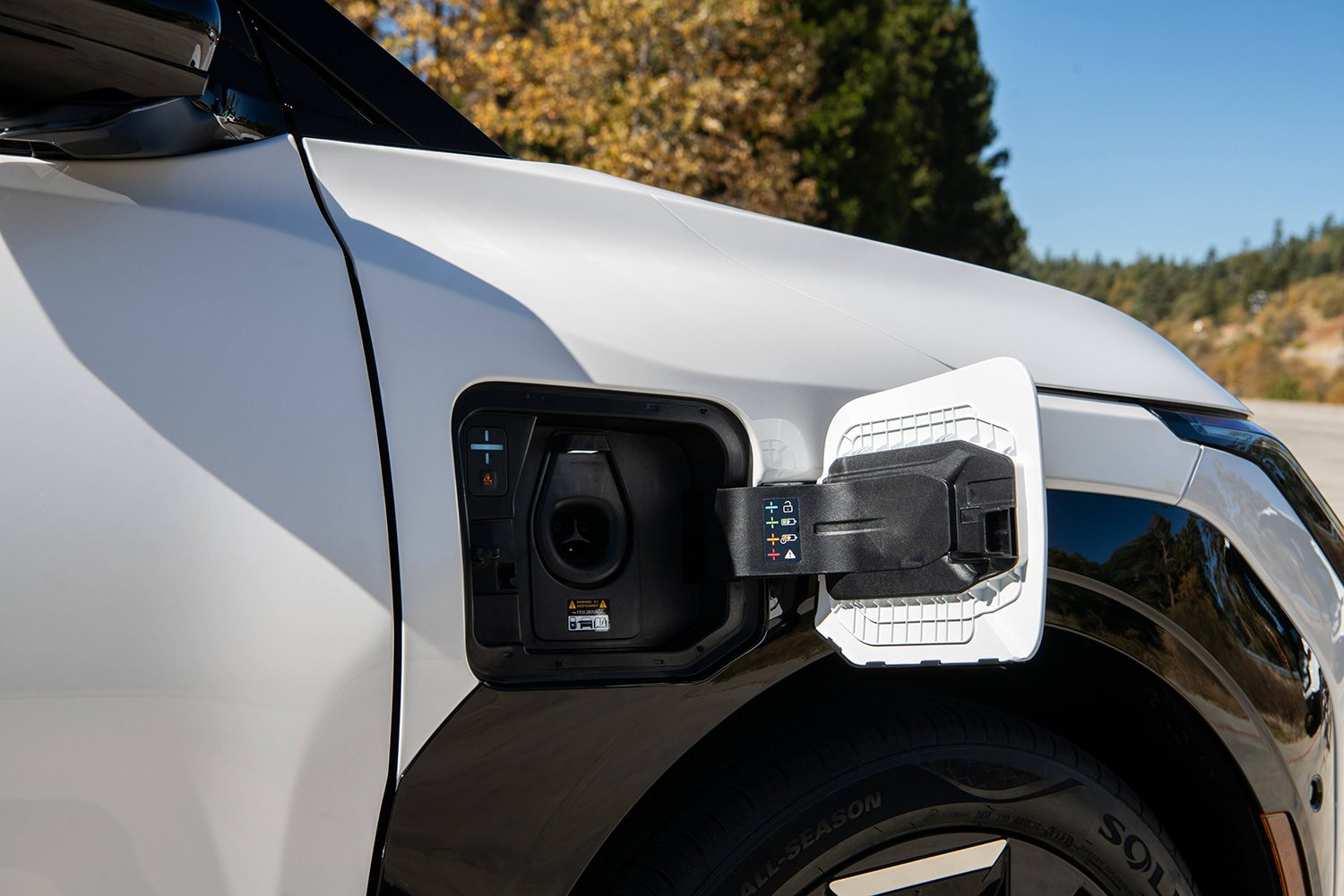
Like the smaller EV3, the Getaway charges via a NACS port on the right-front fender. Subaru quotes a 10-to-80-percent DC fast charging time at up to 150 kW of “approximately 30 minutes”–again under those ideal conditions. Battery preconditioning is standard, and the front Daytime Running Lights double as charging-status indicators when the car is plugged in.
In the first half of 2027, a “standard-range” model with a lower battery capacity of 77.0 kWh will be offered. It too will have AWD standard, but details will have to wait until then.
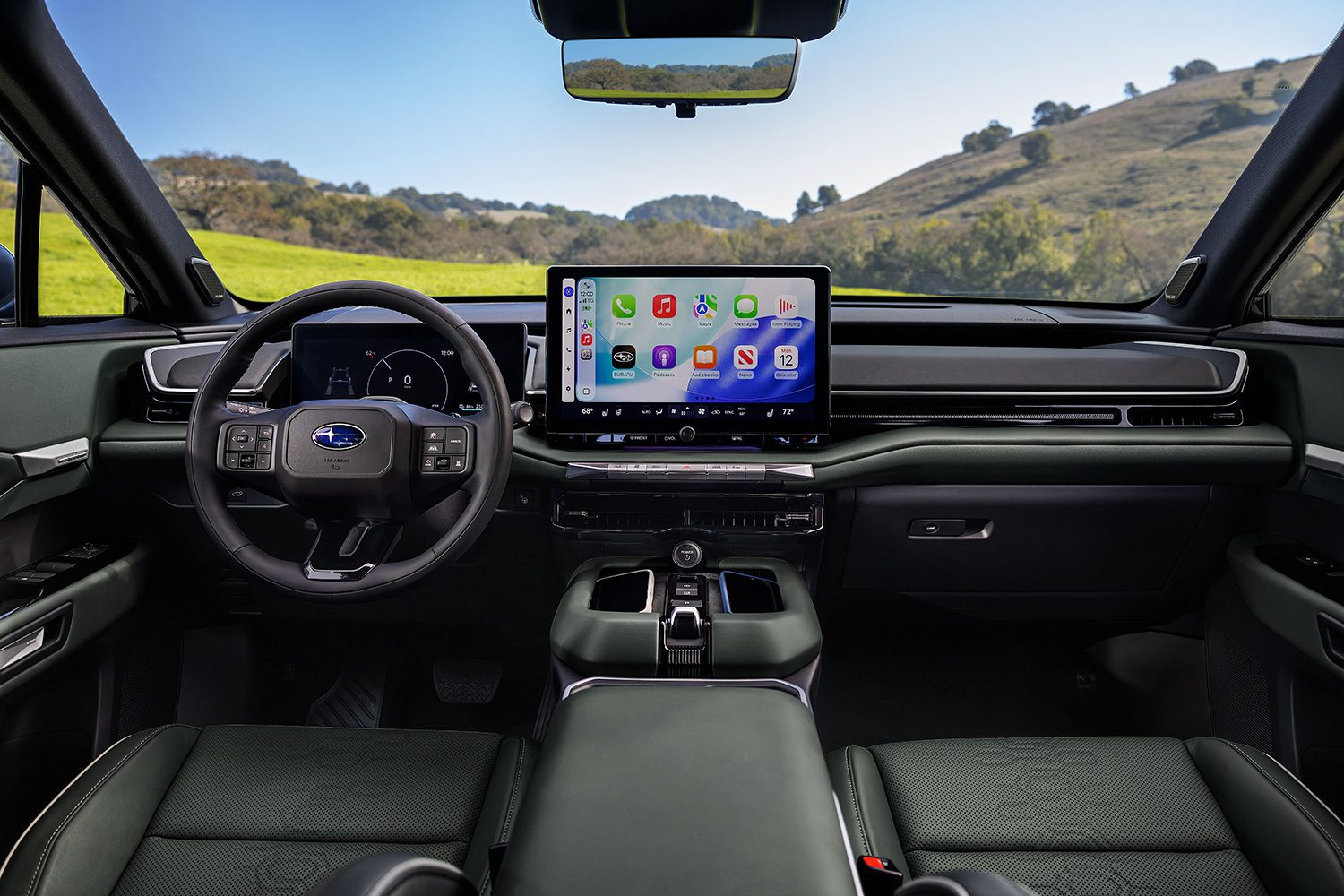
Inside, the Getaway uses a 12.3-inch digital instrument cluster—the standard Toyota setup—and a central 14-inch touchscreen display. Heated front seats are standard, with a heated steering wheel and an array of heated second- and third-row seats, ventilated seats, and more either standard on certain trims or optional.
Other features and options befit a three-row SUV likely used to carry families. Those include three-zone climate control that includes dedicated vents for the third row, a cup holder at every seat, USB-C charge ports for every row, and an optional panoramic moonroof. And “most” versions of the Getaway will have the brand’s characteristic ladder-type roof rails as standard, allowing owners of other Subaru models to use their existing Thule carriers and other roof accessories seen on Subies all across the country.
Unlike the Korea-built EV3, the 2027 Subaru Getaway will be assembled in the United States, at the Toyota plant that builds its Toyota Highlander twin in Georgetown, Kentucky. That exempts it from tariffs on imported vehicles, and it marks only the second US assembly plant for Subaru, which builds a majority of its gasoline models in its Lafayette, Indiana, plant.
Major technological disruptions tend to come in waves, and it’s rare for the companies that lead the first waves to be at the forefront of subsequent waves (anybody remember Blackberry? MySpace? Yahoo?).
Few companies have so completely dominated the first wave of a tech tsunami as Tesla, which produced the first EV that the media could describe without using the word “granola” (the Roadster); the first EV that could be considered a mass-market vehicle (Model S); and an EV that became the world’s best-selling car (Model Y). Along the way, the company built a charging network that remains the industry’s gold standard, and built a tidy little business selling stationary storage.
Times change. The number of available EV models has grown from a handful to hundreds, the center of gravity of the EV industry has shifted from the US to China, and the company that I once called “an innovation factory” has shifted its attention to other things.
Tesla’s mercurial manager announced during the company’s Q4 2025 earnings call that the Model S and Model X will be discontinued by the middle of this year.
The announcement was widely expected. Tesla’s third-gen vehicles, Models 3 and Y, eclipsed their parents some time ago. Indeed, this was always part of the company’s plan. Public perceptions of Tesla and its divisive director have changed drastically since the firm’s founding, but there’s no denying that the strategy worked wonderfully, nor is there any dishonor in pulling the plug on Models S and X, which launched in 2012 and 2015, respectively.
In fact, some may wonder why the two venerable vehicles lasted as long as they did. As Electrek put it, “Tesla stopped caring about these vehicles years ago.” As Tesla’s cheeky chieftain himself put it back in 2019, his company was still making these “niche” vehicles more for “sentimental reasons than anything else.”
Tesla stopped breaking out sales figures for Models S and X in 2023, lumping them into an “other models” category with Cybertruck and the Tesla Semi. Of course, EV pundits made educated guesses at the declining numbers. Electrek estimates that Model S/X deliveries were “likely in the 30,000 range for all of 2025.” By contrast, Tesla sold 357,000 units of Model Y in the US alone in 2025, by Cox Automotive’s estimate.
The auto industry expects models to be “refreshed” from time to time (or cancelled to make way for new models). In 2025, Tesla launched an “update” to Models S and X that consisted of a new paint color, a few new features that Models 3 and Y already had, and a $5,000 price increase.
Tesla’s Fremont, California factory has the capacity to produce 100,000 units of Model S/X annually—it would seem that the line has been running at a fraction of that for some years now. The company’s bellicose boss says that this factory space will be repurposed to build Optimus robots.
Yeah, sure, but are there any new cars on the way? On the earnings call, the firm’s polarizing premier reaffirmed that the steering wheel-free Cybercab and a new Roadster supercar are still in the pipeline.
Towing is a sore point for would-be EV adopters (as Ford belatedly realized, to its cost). The most elegant solution may not be to bulk up on batteries in the towing vehicle, but rather to electrify the tow itself. This approach holds great promise not only in trucking applications (see our recent feature article, Electrifying the Box), but also in the RV world.
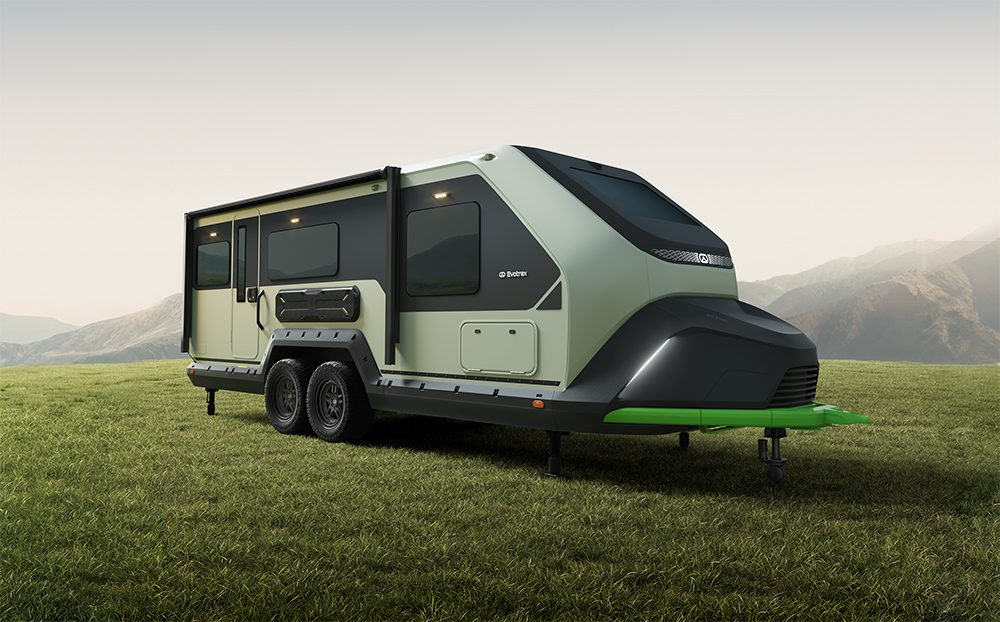
California-based Evotrex has launched an RV trailer that can generate its own power, intelligently manage energy consumption, and even transfer energy to the towing vehicle to maximize range.
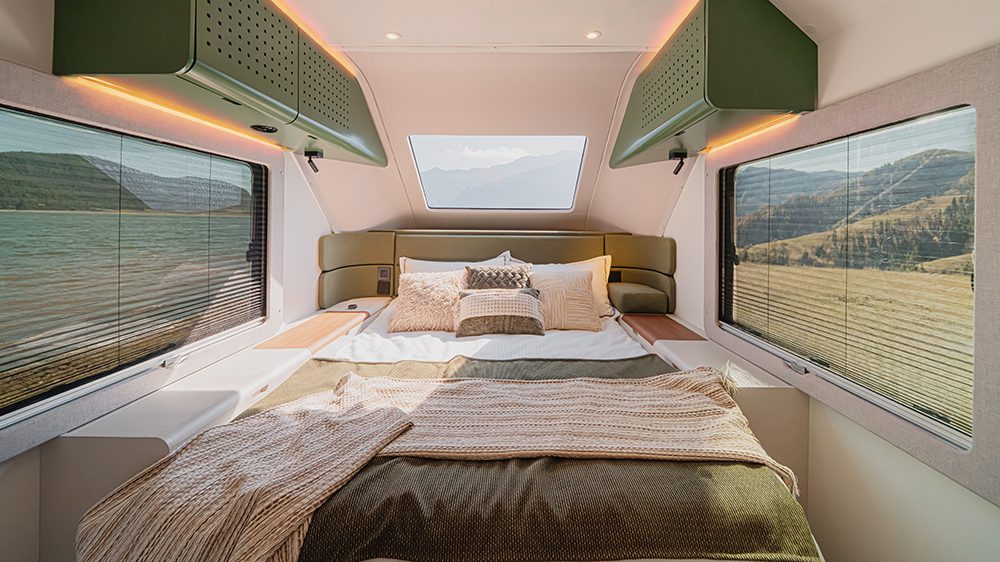
The Evotrex-PG5, which represents Evotrex’s entry into the RV market, offers “luxury amenities and adventure-ready design,” and is designed for extended off-grid travel. It features a unified energy system that combines a 43 kWh LFP battery, 1.5 kW of solar generation capacity, and a gas-powered onboard generator.
Like the electrified semi-trailers offered by Range Energy and Trailer Dynamics, Evotrex’s PG5 has its own electric motor, which is controlled by a force sensor to support the towing vehicle with just the right amount of torque. This not only increases range, but also stabilizes towing and improves maneuverability. Once unhitched, the same system enables remote maneuvering for parking and campsite positioning.
The PG5 can export power to run tools, cooking gear and camping equipment (vehicle-to-load), or to supply backup power to a home during outages (vehicle-to-home). An innovative feature called RangeBoost enables vehicle-to-vehicle charging—the PG5 is capable of bidirectional energy transfer to and from the towing vehicle, extending usable range.
“Our goal with the PG5 was to design an RV that empowers adventurers to explore without compromise,” said Alex Xiao, CEO and founder of Evotrex. “Its power-generating capabilities and intelligent energy management system provide the comfort, reliability and control needed for confident off-grid travel.”
Preorders for the Evotrex-PG5 are now open, and production is scheduled to begin by the end of 2026. The standard Evotrex-PG5 Pioneer model starts at $119,990, and the fully loaded Evotrex-PG5 Atlas is priced at $159,990.

 Login
Login