Reading view

Building the Digital Foundation for the AI Era: DataBank’s Vision for Scalable Infrastructure
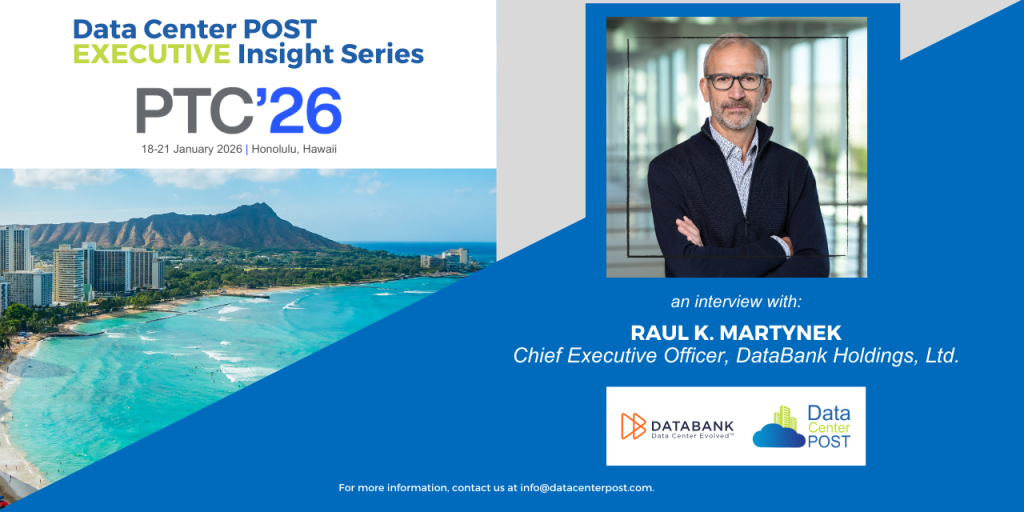
Data Center POST connected with Raul K. Martynek, Chief Executive Officer of DataBank Holdings, Ltd., ahead of PTC’26. Martynek joined DataBank in 2017 and brings more than three decades of leadership experience across telecommunications, Internet infrastructure, and data center operations. His background includes senior executive roles at Net Access, Voxel dot Net, Smart Telecom, and advisory positions with DigitalBridge and Plainfield Asset Management. Under his leadership, DataBank has expanded its national footprint, strengthened its interconnection ecosystems, and positioned its platform to support AI-ready, high-density workloads across enterprise, cloud, and edge environments. In the Q&A below, Martynek shares his perspective on the challenges shaping global digital infrastructure and how DataBank is preparing customers for the next phase of AI-driven growth.

Data Center Post (DCP) Question: What does your company do?  

Raul Martynek (RM) Answer: DataBank helps the world’s largest enterprises, technology, and content providers ensure their data and applications are always on, always secure, always compliant, and ready to scale to meet the needs of the artificial intelligence era.

DCP Q: What problems does your company solve in the market?

RM A: DataBank addresses a broad set of challenges enterprises face when managing critical infrastructure. Reliability and uptime are foundational, as downtime can severely impact revenue and customer trust. We also help organizations meet security and compliance requirements without having to build costly internal expertise. Our platform allows customers to scale infrastructure without large capital expenditures by shifting to an operating expense model. In addition, we provide managed expertise that frees internal teams to focus on strategic priorities, simplify hybrid IT and cloud integration, improve latency for distributed and edge workloads, strengthen cybersecurity posture, and mitigate talent and resource constraints.

DCP Q: What are your company’s core products or services?

RM A: Data center colocation, Interconnection, Enterprise Cloud, Compliance Enablement, Data Protection. Powered by expert, human support

DCP Q: What markets do you serve?

RM A: DataBank serves customers across a broad geographic footprint in the United States and Europe. In the western United States, the company operates in key markets including Irvine, Los Angeles, and Silicon Valley in California, as well as Las Vegas, Salt Lake City, and Seattle. Its central U.S. presence includes Chicago, Denver, Indianapolis, and Kansas City. In the southern region, DataBank supports customers in Atlanta, Austin, Dallas, Houston, Miami, and Waco. Along the East Coast and Midwest, the company operates in markets such as Boston, Cleveland, New Jersey, New York City, Philadelphia, and Pittsburgh. Internationally, DataBank also serves customers in the United Kingdom.

DCP Q: What challenges does the global digital infrastructure industry face today?

RM A: The industry is facing a convergence of challenges, including power availability and grid constraints, sustainability and carbon reduction requirements, cooling demands for high-density AI and HPC workloads, supply chain pressures, land acquisition and zoning issues, and increasing interconnection complexity. At the same time, organizations must contend with talent shortages and rising cybersecurity risks, all while supporting rapidly expanding digital workloads.

DCP Q: How is your company adapting to these challenges?

RM A: We are building in markets with available power headroom and designing scalable power blocks to support future growth. Our facilities are being prepared for AI-era density with liquid-ready designs and more efficient cooling strategies. Sustainability remains a priority, with a focus on lowering energy and water usage. We are standardizing construction to improve efficiency and flexibility while expanding interconnection ecosystems such as DE-CIX. Additionally, our managed services help fill enterprise talent gaps, and we continue to invest in operational excellence, security, and company culture.

DCP Q: What are your company’s key differentiators?

RM A: DataBank differentiates itself through strong engineering and operational management, future-ready platforms, and deep compliance expertise. Our geographic focus allows us to serve customers where they need infrastructure most, while our managed services provide visibility and control across complex environments. We are also supported by patient, long-term investors, enabling disciplined growth and sustained investment.

DCP Q: What can we expect to see/hear from your company in the future?  

RM A: Customers can expect continued commitment to enterprise IT infrastructure alongside expanded AI-ready platforms. We are growing our interconnection ecosystems, advancing sustainability initiatives, modernizing key campuses, and expanding managed and hybrid IT services. Enhancing security, compliance, and customer success will remain central, as will our focus on talent and culture.

DCP Q: What upcoming industry events will you be attending? 

RM A: AI Tinkers; Metro Connect; ATC CEO Summit; MIMSS 26; DCD>Connect 2026; ITW 2026; 7×24 Cloud Run Community Festival; CBRE Digital Infrastructure Summit 2026; AI Infra Conference; TMT M&A Forum; MegaPort Connect; TAG Data Center Summit; Supercomputing 2026; Incompany; DE-DIX Dallas Olde World Holiday Market

DCP Q: Do you have any recent news you would like us to highlight?

RM A: DataBank has recently announced several milestones that underscore its continued growth and long-term strategy. The company expanded its financing vehicle to $1.6 billion to support the next phase of platform expansion and infrastructure investment. DataBank also released new research showing that 60 percent of enterprises are already seeing a return on investment from AI initiatives or expect to within the next 12 months, highlighting the accelerating business impact of AI adoption. In addition, DataBank introduced a company-wide employee ownership program, reinforcing its commitment to culture, alignment, and long-term value creation across the organization.

DCP Q: Is there anything else you would like our readers to know about your company and capabilities?

RM A: DataBank is building the digital foundation for the AI, cloud, and connected-device era. Its national footprint of data centers delivers secure, high-density colocation, interconnection, and managed services that help enterprises deploy mission-critical workloads with confidence.

We are designing for the future with liquid-cooling capabilities, campus modernization, and expanded interconnection ecosystems. We are equally committed to responsible digital infrastructure: improving efficiency, reducing water use, strengthening security, and advancing compliance.

Above all, DataBank we are a trusted infrastructure partner, providing the expertise and operational support organizations need to scale reliably and securely.

DCP Q: Where can our readers learn more about your company?  

RM A: www.databank.com

DCP Q: How can our readers contact your company? 

PQ A: www.databank.com/contact-us

To learn more about PTC’26, please visit www.ptc.org/ptc26. The event takes place January 18-21, 2026 in Honolulu, HI.

If you are interested in contributing to Data Center POST, contact us at contributions@datacenterpost.com.

Stay in the know! Subscribe to Data Center POST today.

# # #

About Data Center POST

Data Center POST provides a comprehensive view of the digital infrastructure landscape, delivering industry insights into the global data center ecosystem. As the industry’s only peer-contributed and online publication, we offer relevant information from developers, managers, providers, investors, and trendsetters worldwide.

Data Center POST works hard to get the most current information and thought-provoking ideas most apt to add relevance to the success of the data center industry. Stay informed, visit www.datacenterpost.com.

ADVERTISE | CONTRIBUTE | SUBSCRIBE

The post Building the Digital Foundation for the AI Era: DataBank’s Vision for Scalable Infrastructure appeared first on Data Center POST.
  •  

Duos Edge AI Deploys Edge Data Center in Abilene, Texas

Duos Technologies Group Inc. (Nasdaq: DUOT), through its operating subsidiary Duos Edge AI, Inc, has deployed a new Edge Data Center (EDC) in Abilene, Texas, in collaboration with Region 14 Education Service Center (ESC).​ This deployment expands Duos Edge AI’s presence in Texas while bringing advanced digital infrastructure to support K-12 education, healthcare, workforce development, and local businesses across West Texas.​

This installation builds on Duos Edge AI’s recent Texas deployments in Amarillo (Region 16), Waco (Region 12), and Victoria (Region 3), supporting a broader strategy to deploy edge computing solutions tailored to education, healthcare, and enterprise needs.​

“We are excited to partner with Region 14 ESC to bring cutting-edge technology to Abilene and West Texas, bringing a carrier neutral colocation facility to the market while empowering educators and communities with the tools they need to thrive in a digital world,” said Doug Recker, President of Duos and Founder of Duos Edge AI.​ “This EDC represents our commitment to fostering innovation and economic growth in regions that have historically faced connectivity challenges.”

The Abilene EDC will serve as a local carrier-neutral colocation facility and computing hub, delivering enhanced bandwidth, secure data processing, and low-latency AI capabilities to more than 40 school districts and charter schools across an 11-county region spanning over 13,000 square miles.​

Chris Wigington, Executive Director for Region 14 ESC, added, “Collaborating with Duos Edge AI allows us to elevate the technological capabilities of our schools and partners, ensuring equitable access to high-speed computing and AI resources. This data center will be a game-changer for student learning, teacher development, and regional collaboration.”

By locating the data center at Region 14 ESC, the partnership aims to help bridge digital divides in rural and underserved communities by enabling faster access to educational tools, cloud services, and AI-driven applications, while reducing reliance on distant centralized data centers.​

The EDC is expected to be fully operational in early 2026, with plans for a launch event at Region 14 ESC’s headquarters in Abilene.​

To learn more about Duos Edge AI, visit www.duosedge.ai.

The post Duos Edge AI Deploys Edge Data Center in Abilene, Texas appeared first on Data Center POST.

  •  

Interconnection and Colocation: The Backbone of AI-Ready Infrastructure

Originally posted on 1547Realty.

AI is changing what infrastructure needs to do. It is no longer enough to provide power cooling and a basic network connection. Modern AI and high performance computing workloads depend on constant access to large data sets and fast communication between systems. That makes interconnection an essential part of the environment that supports them.

Traditional cloud environments were not built for dense GPU clusters or latency sensitive applications. This has helped drive the rise of neocloud providers, which focus on specialized compute and rely on data centers for the physical setting in which it operates.

Industry reporting from RCR Wireless notes that many neocloud providers choose to colocate in established facilities instead of building new data centers. This gives them faster speed to market and direct access to network ecosystems that would take years to recreate on their own. In this context data centers with strong connectivity play a central role.

1547 operates facilities that combine space and power with the network access needed for AI and neocloud deployments. These environments allow operators to place infrastructure where it can perform as intended.

The Shift from Cloud First to Cloud Right

For many years, the default approach for new applications was simple. Put it in the cloud. That cloud first mindset is now giving way to a cloud-right strategy. The question is no longer only whether something can run in the cloud, but whether it should.

AI and high-performance workloads often need to run close to users, to data sources, or along specific network routes. They require predictable latency and steady throughput. When model training or inference spans many GPUs across different clusters, even small delays can affect performance and cost.

Analysts have observed that organizations are matching each workload to the environment that fits it best. As RTInsights highlights, not every workload performs well in a single centralized cloud. Some applications remain in hyperscale environments. Others move to edge sites, private clouds or colocation facilities that offer greater control over performance. Neocloud operators support this shift by offering GPU focused infrastructure from locations chosen for both efficiency and access to network routes.

To do that, they need more than space. They need carriers, cloud on-ramps, internet exchanges and private connection options. They need a fabric that lets them move data efficiently between customers, partners, and providers. Connectivity within the facility brings these elements together and supports cloud right placement.

1547 facilities support this shift by giving operators access to diverse networks in key markets. These environments allow AI workloads to sit where they perform best while staying connected to the wider ecosystem.

To continue reading, please click here.

The post Interconnection and Colocation: The Backbone of AI-Ready Infrastructure appeared first on Data Center POST.
  •  

Evocative Advances Data Center Growth Strategy With New Financing

Evocative, a global provider of Internet infrastructure, has announced that it has raised debt financing from a large global investment firm, complementing continued equity support from its long-term investment partner, Crestline Investors. The financing reflects the next phase of a multi-year growth plan focused on scaling capacity in step with customer demand.

The investment will enable targeted infrastructure initiatives, including capacity upgrades, strategic metro expansions, and continued enhancements across Evocative’s data center, network, bare metal, and cloud platforms as the company responds to rising requirements for power, space, and network density to support enterprise and service provider customers.

“Crestline has worked closely with Evocative as the company continues to execute its strategic business plan,” said Will Palmer, Executive Managing Director and Co-Head of US Corporate Credit. “We believe Evocative is well positioned to meet the increasing demands of the digital infrastructure industry, and we are pleased to support their ongoing expansion and long-term vision.”

Crestline Investors has partnered with Evocative for several years, supporting the company through multiple phases of its strategic growth plan and backing its efforts to scale a global digital infrastructure platform focused on high-density colocation and connectivity. This latest financing builds on that foundation, providing capital to expand where demand is already taking shape.

“This financing marks a significant milestone in Evocative’s continued journey to expand capacity and deliver on our long-term vision of high density colocation and a robust global network to support next generation AI applications,” said Derek Garnier, CEO at Evocative. “We remain committed to building with discipline, scale, and customer focus. Our aim is to continue delivering the space, power, and connectivity required for AI development, hybrid cloud environments, and infrastructure diversification.”

As demand for AI-driven and hybrid infrastructure continues to grow, Evocative remains focused on expanding capacity with discipline across its digital infrastructure platform, aligning investment with real-world deployment needs rather than speculative buildout.

To learn more about Evocative’s digital infrastructure solutions, read the full press release here.

The post Evocative Advances Data Center Growth Strategy With New Financing appeared first on Data Center POST.
  •  

Colocation, Connectivity, and Capacity

Capacity Europe 2025: An Industry Newcomer’s Overview 

Capacity Europe took place from October 21-23, 2025 in London and brought more than 3,600 industry experts together to discuss the future of the telecommunications industry.

Central themes included the growing demand for capacity with the growth of AI and positioning data centers in edge or hub locations. Conversations surrounding the theme of AI were far more common than previous years and discussions about how the industry should best respond underscored all the panels.

The agenda featured many panels such as:

  • The AI conundrum: Establishing ‘hubs’ or edge revival?
  • Build today or buy forever: the role of European data centers in facilitating the AI explosion
  • Chasing power: how to meet future requirements
  • The investment outlook for digital infrastructure
  • Global Connectivity Trends: A European Perspective
  • The Hollow Core Fibre Opportunity: Faster, Further & Deployable Now
  • Testing the waters for quantum communications networks
  • The rise of Eastern European terrestrial corridors

The conclusion from “The AI conundrum: Establishing ‘hubs’ or edge revival?” panel included insights such as Wes Jensen at Wanaware’s point of understanding that inference happens at the edge while training is done at the hubs, so growing demand will necessitate more infrastructure at both, demanding a strong response from the industry.

The role of European data centers was also a central point for discussion at Capacity Europe 2025. With many panelists believing that Europe has the opportunity to adopt at a level competitive to the US and China, the atmosphere was cautious yet optimistic. Regulatory hurdles and plenty of red tape must first be addressed before data centers in Europe can truly flourish at a level close to the success of the US and China.

Additionally, power was also an important part of the debate. Growing demand has worried nearby communities, and discussion about creating a friendly approach that doesn’t villainize data centers is vital in promoting their adoption across Europe. Panelists concluded that turning that PR around requires a tremendous amount of force, but is still a possible undertaking.

Power availability is limited as many of these proposed plant projects will take substantial time, while a data center project may only take two or three years to complete, the average power plant would take longer. There is an inevitable gap in power availability as data centers race to catch demand faster than power can be supplied.

The conversation in the conference also addressed what Nabeel Mahmood of ZincFive mentioned to be a gray tsunami, a shortfall of young professionals entering the industry while there is a large portion of older professionals retiring. The conclusion was generally that the industry should gain awareness and ride off the publicity of data centers to appeal to students. One such program, “Talent in Digital Infrastructure,” was run at the event with a range of speakers from various backgrounds and topics. Students from both UK universities and sixth forms listened to bring awareness to the fact the industry existed, with many speakers emphasizing that they found their way into telecommunications by accident and weren’t aware that it was even an option.

Capacity Europe not only connected the telecommunications industry from across continents, but also provided important insight about the rapidly changing state of the industry. Moving forward, the success of European telecommunications innovation is in the hands of the many experienced and intelligent industry professionals to deal with the new problems posed by the rapid growth and scaling of artificial intelligence.

If you’re interested in participating in the industry-shaping discussion, you can save the date for Capacity Europe 2026! The event will be from the 13th to 16th of October, at the Intercontinental O2 in London.

# # #

About the Author

Sebastian Cohen is an intern at iMiller Public Relations and student at the University of St. Andrews where he is pursuing a degree in Financial Economics and Management.

The post Colocation, Connectivity, and Capacity appeared first on Data Center POST.
  •  

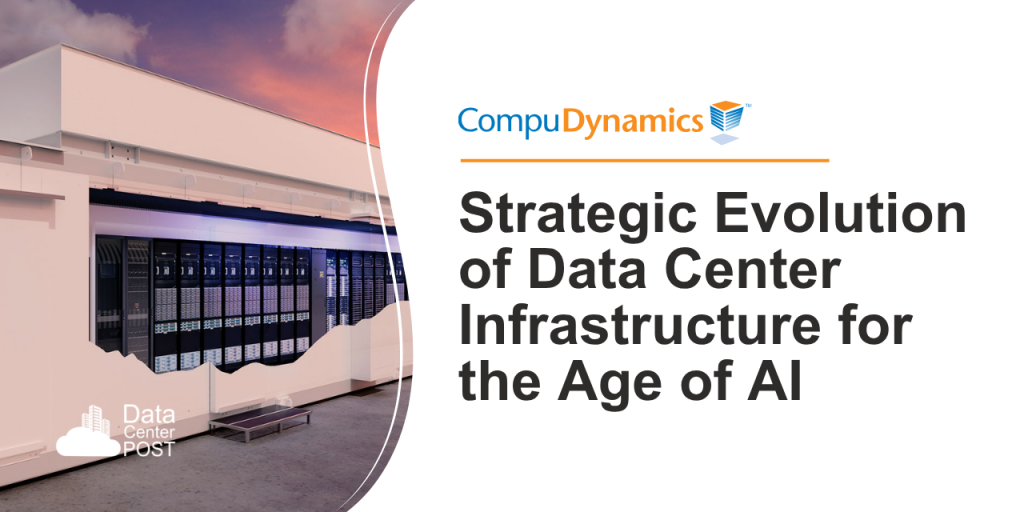
Strategic Evolution of Data Center Infrastructure for the Age of AI

Originally posted on Compu Dynamics.

Artificial intelligence is transforming how digital infrastructure is conceived, designed, and deployed. While the world’s largest cloud providers continue to build massive hyperscale campuses, a new layer of demand is emerging — AI training clusters, high-performance compute environments, and inference nodes that require speed, density, and adaptability more than sheer scale.

For these applications, modular design is playing a strategic role. It isn’t a replacement for traditional builds. It’s an evolutionary complement — enabling rapid, precise deployment wherever high-density compute is needed.

Purpose-Built for AI, Not the Cloud of Yesterday

Traditional colocation and hyperscale data center facilities were engineered for predictable, virtualized workloads. AI environments behave differently. They run hotter, denser, and evolve faster. Training clusters may exceed 200 kW per rack and require liquid-cooling integration from day one. Inference workloads demand proximity to the user to minimize latency.

Modular data center solutions provide a practical way to meet those demands. Prefabricated, fully engineered modules can be built in parallel with site work, tested in controlled conditions, and commissioned in days rather than months. Each enclosure can be tailored to its purpose — an AI training pod, an inference edge node, or a compact expansion of existing capacity.

To continue reading, please click here.

The post Strategic Evolution of Data Center Infrastructure for the Age of AI appeared first on Data Center POST.
  •  

365 Data Centers Introduces Breakthrough in AI-Driven Colocation

365 Data Centers, a leading provider specializing in network-centric colocation, cloud, and managed services, has taken a major leap forward in the enterprise IT landscape by launching an AI-enabled platform in partnership with Robot Network. This collaboration is much more than a typical technology upgrade; it redefines what businesses can expect from this type of partnership. With digital transformation forcing companies to seek new efficiencies, the ability to integrate intelligent operations at the infrastructure layer has quickly become a game-changer.

Traditionally, colocation facilities have been the passive hosts of IT assets, serving as secure and reliable spaces for housing critical infrastructure. However, 365’s platform now transforms colocation into an active optimization layer for AI, allowing most enterprise workloads to be processed securely within the data center edge while reserving specialized, high-density AI capabilities for the remaining tasks. This hybrid approach enables businesses to reap the financial and operational benefits of consolidated infrastructure while ensuring rapid access to advanced analytics, reporting, and custom business capabilities powered by AI.

By fusing its robust network and cloud services with Robot Network’s proprietary AI stack, 365 will enable scalable, cost-effective AI adoption on demand. The new platform supports small-language models and is optimized for leading hardware such as AMD EPYC processors and NVIDIA GPUs. Now, enterprises can deploy agentic AI within footprints as compact as 10-50 kW, significantly boosting revenue per watt – a key metric for both financial and technical performance.

With this new offering, 365 and Robot Network deliver flexible, scalable private cloud AI solutions built to address real business challenges. Whether it’s rapid data analytics, sophisticated reporting, or custom business intelligence applications, enterprises can tap into a pooled infrastructure that maximizes efficiency while minimizing upfront and recurring costs.

Security, compliance, and uptime remain top priorities. The platform incorporates enterprise-grade resilience with 24/7 monitoring and certified security. By letting 365 handle labor-intensive aspects like compliance, network optimization, and hardware refreshes, employers can focus on driving innovation rather than maintaining legacy systems.

Initial use cases revolve around a proprietary AI chat platform leveraging small and large language models. The goal is to ultimately lower barriers for businesses of all sizes to unlock advanced capabilities previously reserved for tech giants, using proven models from firms like Meta, OpenAI, and Grok.

As 365 and Robot Network continue to build out their joint platform, they are reinforcing their roles as trusted infrastructure partners for forward-looking enterprises. The path to AI-driven business success now runs through secure, scalable colocation, and 365 stands ready to guide customers confidently into the future of intelligent operations.

The post 365 Data Centers Introduces Breakthrough in AI-Driven Colocation appeared first on Data Center POST.
  •  

Retail vs wholesale: finding the right colo pricing model

Colocation providers may offer two pricing and packaging models to sell similar products and capabilities. In both models, customers purchase space, power and services. However, the method of purchase differs.

In a retail model, customers purchase a small quantity of space and power, usually by the rack or a fraction of a rack. The colocation provider standardizes contracts, pricing and capabilities — the cost and complexity of delivering to a customer’s precise requirements are not justified, considering the relatively small contract value.

In a wholesale model, customers purchase a significantly larger quantity of space and power, typically at least a dedicated, enclosed suite of white space. Due to the size of these contracts, colocation providers need to be flexible in meeting customer needs, even potentially building new facilities to accommodate their requirements. The colocation provider negotiates price and terms, and customers often prefer to pay for actual power consumption rather than be billed on maximum capacity. A metered model allows the customer to scale power usage in response to changing demands.

A colocation provider may focus on a particular market by offering only a retail or wholesale model, or the provider may offer both to broaden its appeal. The terms “wholesale” and “retail” colocation more accurately describe the pricing and packaging models used by colocation providers rather than the type of customer.

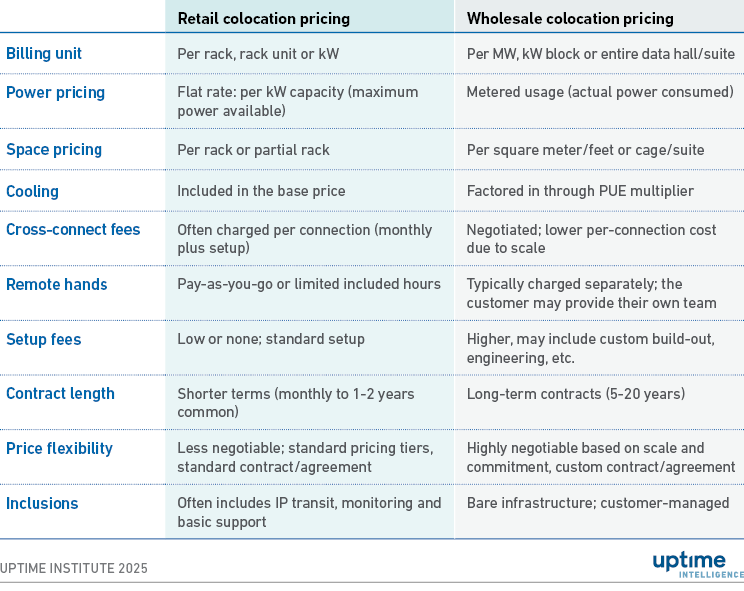
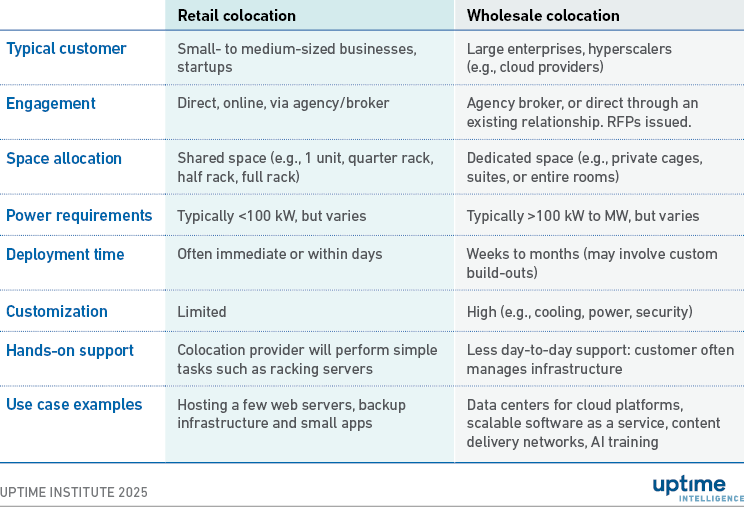
Table 1 Key differences between retail and wholesale colocation providers

Table: Key differences between retail and wholesale colocation providers

Retail colocation deals typically have higher gross margins in percentage terms, but the volume of sales is lower. Most colocation providers would rather sell wholesale contracts because they offer higher revenues through larger volumes of sales, despite having lower gross margins. As wholesale colocations are better prospects, retail customers are more likely to experience cost rises at renewal than wholesale customers.

Retail colocation pricing model

Retail terms are designed to be simple and predictable. Customers are typically charged a fixed fee based on the maximum power capacity supplied to equipment and the space used. This fee covers both the repayment of fixed costs, and the variable costs associated with IT power and cooling. The fixed fee bundles all these elements together, so customers have no visibility into these individual components — but they benefit from predictable pricing.

In retail colocation, the facilities are already available, so capital costs are recovered across all retail customers through standard pricing. If a customer exceeds their allotted maximum power capacity, they risk triggering a breaker and potentially powering down their IT equipment. Some colocation providers monitor for overages and warn customers that they need to increase their capacity before an outage occurs.

Customers are likely to purchase more power capacity than they need to prevent these outages. As a result, some colocation providers may deliberately oversubscribe power consumption to reduce their power costs and increase their profit margins. There are operational and reputational risks if oversubscription causes service degradation or outages.

Some colocation providers also meter power, charging a fee based on IT usage, which factors in the repayment of capital, IT and cooling costs, as well as a profit margin. Those with metering enabled may charge customers for usage exceeding maximum capacity, typically at a higher rate.

Can a colocation provider increase prices during a contract term? Occasionally, but only as a last resort — such as if power costs increase significantly. This possibility will be stipulated in the contract as an emergency or force majeure measure.

Usually, an internet connection is included. However, data transfer over that connection may be metered or bundled into a fixed cost package. Customers have the option to purchase cross-connects linking their infrastructure to third-party communications providers, including on-ramps to cloud providers.

Wholesale colocation pricing model

Wholesale colocation pricing is designed to offer customers the flexibility to utilize their capacity as they choose. Because terms are customized, pricing models will vary from customer to customer.

Some customers may prefer to pay for a fixed capacity of total power, regardless of whether the power is used or not. In this model, both IT power and cooling costs are factored into the price.

Other customers may prefer a more granular approach, with multiple charging components:

  • Fixed fee per unit of space/rack based on maximum power capacity and is designed to cover the colocation provider’s fixed costs, while including a profit margin.
  • Variable IT power costs are passed directly from the electricity supplier to the customer, metered in kilowatts (kW). Customers bear the full cost of price fluctuations, which can change rapidly depending on grid conditions.
  • To account for variable cooling costs, power costs may be calculated by multiplying actual power usage by an agreed design PUE to create an “additional power” fee. This figure may also be multiplied by a “utilization factor” to reflect cases where a customer is using only a small fraction of the data hall (and therefore impacting overall efficiency).

Some customers may prefer a blended model of both a fixed element for baseline capacity and a variable charge for consumption above the baseline. Redundant feeds are also likely to impact cost. If new data halls need to be constructed, these costs may be passed on to the customers directly, or some capital may be recovered through a higher fixed rack fee.

Alternatively, for long-term deployments, customers may opt for either a “build-to-suit” or “powered shell” arrangement. In a build-to-suit model, the colocation provider designs and constructs the facility —including power, cooling and layout — to the customer’s exact specifications. The space is then leased back to the customer, typically under a long-term agreement exceeding a decade.

In a powered shell setup, the provider delivers a completed exterior building with core infrastructure, such as utility power and network access. The customer is then responsible for outfitting the interior (racks, cooling, electrical systems) to suit their operational needs.

Most customers using wholesale colocation providers will need to implement cross-connects to third-party connectivity and network providers hosted in meet-me rooms. They may also need to arrange the construction of new capacity into the facility with the colocation provider and suppliers.

Hyperscalers are an excellent prospect for wholesale colocation, given their significant scale. However, their limited numbers and strong market power enable them to negotiate lower margins from colocation providers.

Table 2 Pricing models used in retail and wholesale colocation

Table: Pricing models used in retail and wholesale colocation

In a retail colocation engagement, the customer has limited negotiating power — with little scale, they generally have minimal flexibility on pricing, terms and customization. In a wholesale engagement, the opposite is true, and the arrangement favors the customer. Colocation providers want the scale and sales volume, so are willing to cut prices and accommodate additional requirements. They are also willing to offer flexible pricing in response to customers’ rapidly changing requirements.


The Uptime Intelligence View

Hyperscalers have the strongest market power to dictate contracts and prices. With so few players, it is unlikely that many hyperscalers will be bidding for the same space, which would push up prices. However, colocation providers still want their business, because of the volume it brings. They would prefer to reduce gross margins to ensure a win, rather than risk losing a customer with such unmatched scale.

The post Retail vs wholesale: finding the right colo pricing model appeared first on Uptime Institute Blog.

  •