Login
Login
Brazil Establishes Offshore Wind Guidelines, Prepares Next Steps
Brazil has established guidelines for the regulation of offshore wind development, which include rules […]

A federal-private partnership announced last week would bring 10 gigawatts (GW) of new power generation to Pike County, Ohio, pairing a large-scale natural gas buildout with a data center campus on former U.S. Department of Energy (DOE) land.
The announcement was part of a broader U.S.-Japan trade and investment framework that is beginning to take concrete shape. DOE and the U.S. Department of Commerce announced the agreement with SoftBank subsidiary SB Energy and AEP Ohio.
Under the arrangement, SB Energy plans to develop 9.2 GW of natural gas generation alongside a 10 GW data center complex at the Portsmouth Site, a former uranium enrichment facility that has undergone decades of environmental remediation. SB Energy has also committed $4.2 billion to upgrade and expand transmission infrastructure in Southern Ohio in coordination with AEP Ohio.
Both the generation and grid investments are structured so that costs are not passed to ratepayers, a condition the Trump administration has termed its “Ratepayer Protection Pledge.” Excess transmission and generation capacity, officials said, would be made available to the broader grid.
The Portsmouth announcement represents the most developed iteration yet of projects tied to Japan’s $550 billion U.S. investment pledge, which was framed as part of a trade agreement lowering U.S. tariffs on Japanese imports. A February announcement had outlined the project’s scale and general configuration, but left key execution questions unresolved, including interconnection, permitting posture, fuel supply and contracting structure.
Construction is expected to begin this year, though detailed engineering, permitting and financing documentation have not been publicly released.
The Ohio deal was not the only large-scale natural gas development tied to the U.S.-Japan framework announced that week. NextEra Energy confirmed March 20 that President Trump had approved development of up to 10 GW of gas-fired generation across Texas and Pennsylvania hubs.
Those projects, including a Texas site developed in coordination with Comstock Resources, would be jointly owned by U.S. and Japanese interests and operated by NextEra, pending negotiation of definitive agreements.
NextEra CEO John Ketchum said the company’s hub-based development model, which currently includes nearly 30 sites at various stages of development, is designed to compress timelines and reduce execution risk. The company is targeting approximately 40 hubs total.
Whether execution keeps pace with announcement scale remains to be seen, but the volume of committed gigawatts and named partners represents a measurable step beyond earlier, more tentative project outlines.
Texas and PJM are notably two of the fastest-growing areas for large data center development and associated electricity demand.

Adani Green Energy Limited (AGEL), through its various step-down subsidiaries, has operationalised a total of 951 MW of renewable projects across Baiya, Rajasthan and Khavda, Gujarat. The commissioned capacities are 251 MW at Baiya and [...]
The post Adani Green Energy commissions 951 MW renewable projects appeared first on Renewable Watch.
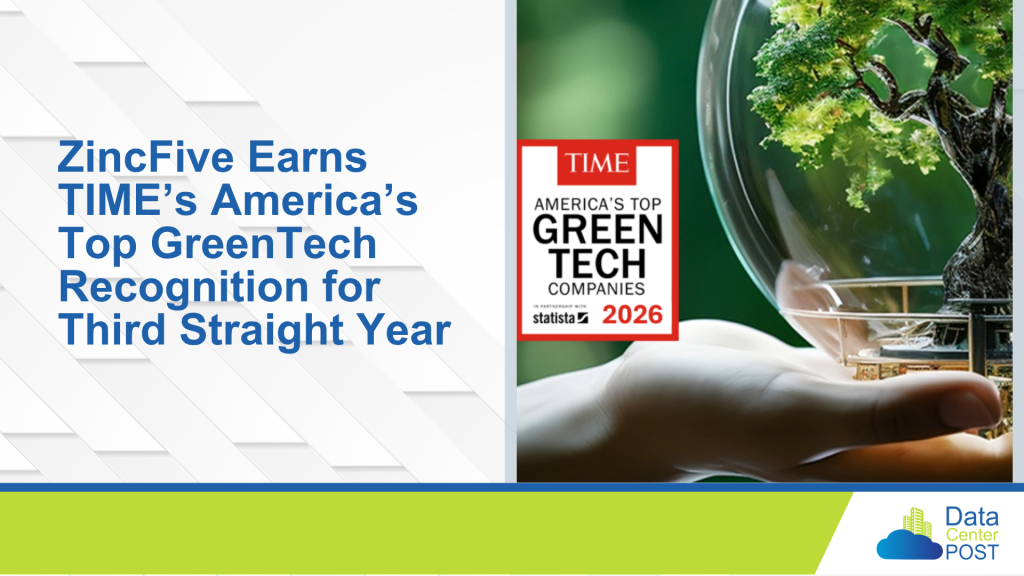
ZincFive®, a leader in nickel-zinc (NiZn) battery-based solutions for immediate power applications, has once again been recognized by TIME, earning a place on the America’s Top GreenTech Companies 2026 list for the third consecutive year. Developed in partnership with Statista, the ranking evaluates companies based on environmental impact, financial strength, and innovation, placing ZincFive among a select group shaping the future of sustainable technology.
This year, the company ranked #142 out of more than 3,500 evaluated organizations and is one of only two companies headquartered in Oregon to be included on the list.
The recognition reflects continued momentum for ZincFive’s nickel zinc battery technology, which has gained traction as an alternative to traditional energy storage options in mission critical environments. As data centers evolve to support artificial intelligence and increasingly dynamic workloads, the need for power solutions that can deliver both performance and safety has become more pronounced.
ZincFive’s approach centers on immediate power, delivering high power density in a compact footprint while avoiding the risks associated with other battery chemistries. Nickel zinc batteries are designed to provide reliable performance without thermal runaway concerns and rely on more abundant, recyclable materials, supporting both operational and environmental goals.
For ZincFive, continued recognition from TIME signals more than a milestone. It reflects a broader shift in how the industry is evaluating power infrastructure, with greater emphasis on safety, sustainability, and long term performance.
“Earning a place on TIME’s America’s Top GreenTech Companies list for the third consecutive year reflects the growing role of nickel-zinc technology in delivering safe, sustainable power,” said Tod Higinbotham, CEO of ZincFive. He emphasized the company’s “power of good chemistry” approach to balance performance, safety, and eco-friendliness.
The company’s inclusion builds on a series of recent awards recognizing its innovation in energy storage, particularly in applications where reliability is critical. As demand for resilient and efficient power continues to grow, ZincFive’s technology is increasingly positioned to support the next generation of digital infrastructure.
For full details, read the press release here.
The post ZincFive Earns TIME GreenTech Recognition for Third Straight Year appeared first on Data Center POST.
Originally published in the Idaho Statesman.
America’s most pressing ambitions — re-industrialization, artificial intelligence leadership, cleaner energy and thriving small businesses — are colliding with a hard reality: The nation lacks the power and energy grid infrastructure required to deliver them.
To compound the issue, local communities often oppose new data centers because, among other reasons, consumers fear that their own energy bills may rise. Nevertheless, by supporting new technologies, including a new generation of small modular reactors, or SMRs, policymakers can address America’s power needs in ways that benefit consumers.
During his State of the Union address, President Trump announced a “new Rate Payer Protection Pledge” to ensure that the tech companies, rather than consumers, bear the costs of new data centers. The pledge builds on an earlier bipartisan plan that encourages technology companies to build their own power plants. Google, Meta, Microsoft, xAI, Oracle, OpenAI, and Amazon signed the pledge in early March to “BYOP” — Bring Your Own Power — to the data center party.
As part of a comprehensive energy strategy, SMRs offer a practical path to expanding power capacity, pairing reliable power with comfortable safety margins. SMRs are compact, standardized nuclear plants built with factory-produced components that reduce construction time, lower costs and improve safety compared with traditional large- scale reactors. Unlike conventional nuclear plants that require massive, decade-long construction projects, SMRs can be prefabricated and deployed incrementally, making them ideally suited to today’s energy, AI and grid demands.
Idaho’s Role in SMR Development
SMRs’ potential provides another reason to watch the Idaho National Laboratory and its National Reactor Innovation Center. Last May, the White House issued four executive orders that significantly expanded the Department of Energy’s authority to regulate new advanced reactors and could encompass a prototype reactor for powering a data center.
One of these Orders directs DOE to approve at least three new reactors. DOE subsequently accepted 11 applicants into its reactor pilot program.
In fact, the need for data centers to provide their own power is a problem tailor-made for the NRIC, whose mission is to “bridge the gap between concept, demonstration, and commercialization of advanced nuclear technology.” NRIC recently announced its Nuclear Energy Launch Pad in response to this high private sector interest. The Launch Pad initiative is the new vehicle to test and operate these trailblazing technologies in partnership with private nuclear technology developers, with an eye toward eventual commercial deployment and proof of DOE’s plans to expand the private sector’s ability to obtain DOE Authorization.
In conjunction with the Launch Pad, the Department of Energy and the Nuclear Regulatory Commission should continue to pursue regulatory reforms that could significantly speed the growth of all nuclear power, including SMRs. One of the recent executive orders directed the Nuclear Regulatory Commission to modernize its regulations. Proposed revised regulations, which should prioritize safety, speed, and cost, are expected soon.
To continue reading, please click here.
The post These Nuclear Reactors Can Benefit Idaho, Power America’s Ambitions appeared first on Data Center POST.
Rob Thornton, President & CEO, International District Energy Association (IDEA)
As the number of data centers grows, so do concerns about location, power access, and grid capacity, especially as AI and cloud computing drive surging electricity demand. Yet, data centers hold an unexpected solution: the waste heat they generate can be harnessed for community benefit.
Captured through district energy systems, this heat can be transformed into a valuable community resource that provides low-carbon warmth, improves grid stability, and redefines data centers as energy partners.
The Power Behind the Numbers
In 2023, data centers accounted for roughly 4.4% of total U.S. electricity use, a share projected to rise to as much as 12% by 2028. As utilities and developers scramble to expand clean generation and transmission, waste heat reuse offers an immediate, scalable way to reduce carbon intensity and ease grid stress.
How Heat Reuse Works
Servers generate heat, which can be captured and directed into district energy networks—insulated pipes transporting hot or chilled water—supplying heat to nearby buildings. This approach reduces the electricity needed for heating and cooling, improving overall efficiency and cutting emissions. In essence, the data center becomes part of a shared local energy ecosystem.
Some add combined heat and power (CHP) systems that produce electricity and heat simultaneously. CHP can increase efficiency for large or urban centers. Two deployment models stand out:
Cities Leading the Way
Areas with dense data center development, such as Northern Virginia’s “Data Center Alley,” are exploring new district heating networks to link excess data center heat with community energy needs. Several pioneering projects in Canada illustrate the potential.
From Grid Burden to Energy Partner
Heat reuse fundamentally shifts the purpose of data centers from major power consumers to vital contributors in a circular energy economy. By sharing surplus heat, these facilities support decarbonization, reliability, and resilience, and these solutions can be achieved faster than large-scale infrastructure investments.
How Operators Can Get Started
For operators and planners evaluating heat reuse, three clear steps can set the foundation for success:
As the data economy grows, speed, sustainability, and resilience must move forward together. Waste heat has the potential to be much more than a byproduct; it can become a resource that positions data centers as active agents in community well-being. In the era of AI, shared energy is truly smart energy.
# # #
About the Author:
Rob Thornton is President & CEO of the International District Energy Association (IDEA), a global nonprofit founded in 1909 that advocates for efficient, resilient, and sustainable district energy systems. Under his leadership, IDEA works with public and private partners worldwide to advance energy efficiency, decarbonization, and community-scale thermal networks.
The post From Server Heat to City Warmth: Data Centers’ Hidden Energy Advantage appeared first on Data Center POST.
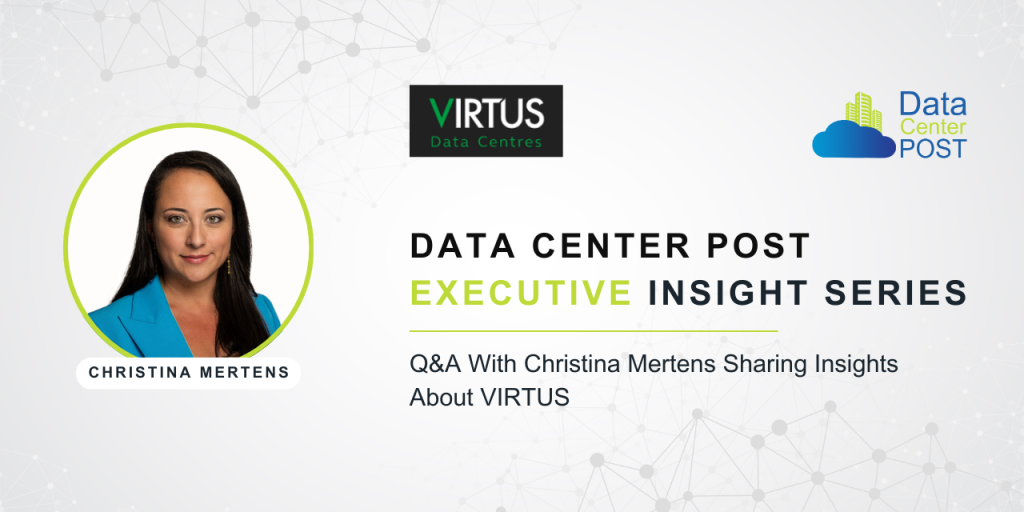
Data Center POST had the opportunity to connect with Christina Mertens, who joined VIRTUS as VP Business Development EMEA in June of 2022. With her she brings over ten years’ experience in developing strategies for, and expanding, existing and new hyperscale infrastructure geographies across EMEA.
For the past decade, she has worked for Amazon in EMEA, where she expanded the existing AWS data centre regions in colocation and self-built facilities, as well as launched new region geographies as the country manager. In her previous role as Data Center Divestiture Principal at Amazon Web Services in EMEA, Christina worked alongside large strategic hyperscale cloud customers, advising them on their infrastructure assets and developing new models to facilitate and enhance their cloud migration journey. She is the Managing Director of Germany and Italy, responsible for overseeing all aspects of the business, including expansions, sales, data centre design, construction and operations.
The information below is summarized to provide our readers a deeper dive into who VIRTUS is, what they do and the problems they are solving in the industry.
What does VIRTUS do?
VIRTUS is a European data centre provider and the largest in the UK. With over 10 years of experience, whichever sector a business operates in, VIRTUS tailors solutions to specific customer requirements.
What problems does VIRTUS solve in the market?
Businesses have unique workloads, project durations and changing requirements. VIRTUS’ solutions are designed to provide the digital infrastructure which supports these needs. Built to a vast scale, all of our data centres are designed modularly, allowing full flexibility for data centre customers’ requirements. Our facilities operate using 100% renewable energy and are amongst the most efficient facilities in the world.
What are VIRTUS’ core products or services?
We build AI-ready, built to suit and colocation data centres.
VIRTUS’ AI Ready Data Centres are designed to support the high performance computing (HPC) demands of artificial intelligence workloads. Our facilities provide the optimum environment for HPC deployments of any size, including the next generation of AI IT infrastructure and Machine Learning (ML) workloads, which require next generation cooling deployment and increased power per rack.
Our built to suit data centres are those designed specially for the customer. We know that organisations of all sizes need real flexibility, which is why we work with our customers to create bespoke solutions. For example, some require cutting-edge AI solutions which may require space to scale at speed, others might have a hyperscale cloud deployment that needs custom built data halls.
Our colocation service is designed to provide maximum flexibility with individual IT power and space requirements. The modular facilities are designed to scale up with customer growth. This combined with truly flexible commercials allows customers to grow in a cost efficient and unrestrictive environment.
What markets do you serve?
VIRTUS’ European data centres are strategically located in key markets; currently this is London (UK), Berlin (Germany) and Milan (Italy). As part of ST Telemedia Global Data Centres’ (STT GDC) global platform, we have a presence in ten geographies, more than 101 data centres and over 2GW of IT load across 20+ major business markets.
Our vast experience comes from working with many industry sectors – from financial institutions which require ultra-low latency, to thriving tech start ups which rely on contiguous space to grow, and providing entire buildings or campuses for the world’s largest hyperscalers.
What challenges does the global digital infrastructure industry face today?
Many current European data centres simply cannot meet the short- and long-term demands for critical digital infrastructure, often due to a shortage of infrastructure that can support high HPC workloads. It is a fundamental challenge to find land with access to renewable power to build new facilities, quickly and at scale.
For years, development revolved around a handful of key metropolitan hubs. Frankfurt, London, Amsterdam and Paris (collectively known as the FLAP locations) carried much of the continent’s cloud, enterprise and interconnection load, due to their proximity to financial services, global carriers and concentrated digital ecosystems.
Undoubtedly, whilst those hubs continue to grow, their conditions have changed. Power supply is being delayed due to parts of the electricity distribution network not being capable of transporting it, suitable land parcels are becoming scarcer and therefore more expensive to secure, and planning regulations are increasing, lengthening timelines to approvals, if they are granted at all.
Meanwhile, demand for computing power is surging in ways that surpass forecasts made even two years ago. AI training and inference, HPC, analytics and modernised public services all require significant and sustained energy and cooling capacity.
McKinsey suggests that global demand for data centre capacity could more than triple by 2030. It is clear that Europe needs more digital infrastructure, but it needs that infrastructure in places with the headroom and regulatory clarity to support long term expansion. And this is partly why what is sometimes known as the second-tier locations are becoming increasingly more critical to expanding Europe’s digital architecture.
Over the next five years, this is not a marginal shift. Analysts expect Europe’s installed data centre capacity to more than double, from roughly 24 GW in 2025 to around 55 GW by 2030, with secondary markets growing fastest. And, while recent CBRE analysis indicates that in 2025, around 57% of new capacity will still be delivered in the core FLAP-D markets, the remaining 43% will come from secondary locations such as Milan, Madrid and Berlin, many of which are now on track to exceed 100 MW of installed capacity in their own right. This is the context in which tier two locations are moving from “nice to have” to essential if Europe is to keep pace with global demand.
How is VIRTUS adapting to these challenges?
Our strategy is to build new facilities at scale, located close to, but not necessarily in major European metropolitan cities, and supplied with renewable energy.
We are currently building a €3bn 300MW data centre campus development at Wustermark, west of Berlin. Wustermark offers what many central locations cannot – land large enough for a multi-building campus, access to sustainable electricity, proximity to rail and motorway networks, and alignment with Germany’s policy focus on digital capacity. The site is also positioned to benefit from Germany’s wider energy and grid modernisation programmes, including access to renewable energy to power the campus as it is adjacent to Germany’s largest on-shore windfarms capable via a substation and direct coupling, of fulfilling the energy requirements of the facility.
This move towards larger campuses is a calculated strategy that acknowledges the non-linear cost relationship inherent in these types of operations; larger megascale campuses capable of 200-500MWs can often afford providers – and therefore customers – greater efficiencies.
We are also constructing another facility in Italy. Located in Cornaredo, within the Milan West data centre cluster the site will provide ample capacity to support hyperscalers, enterprises and service providers as digital infrastructure demands in Europe continue to grow.
What are VIRTUS’s key differentiators?
What sets VIRTUS apart from our competitors can be found in many aspects of the design, build and operations of our facilities. However, the quality of operations – the Operational Excellence – is where we truly excel. The way we have implemented design innovations makes a difference to the service we provide in terms of efficiency and resilience. It’s how we design, build, test, maintain, change and operate our facilities that differentiates us – ensuring robust and reliable availability is delivered.
What can we expect to see/hear from VIRTUS in the future?
It’s an exciting time for VIRTUS Europe, but to meet customer demand we’re still increasing our presence as the leader in the UK market, opening two new London data centres in 2026 (LONDON12 and LONDON14) and in the near future a large four data centre campus at Saunderton, whilst continuing our European expansion.
What upcoming industry events will you be attending?
The VIRTUS team is attending the following events: Platform UK where Adam Eaton will be speaking on a keynote panel, Energy Storage Summit where Helen Kinsman will be speaking on a panel, Compute Summit where Ramzi Charif will be speaking on a panel, and finally Datacloud Energy where Helen Kinsman will be speaking on another panel.
Do you have any recent news you would like us to highlight?
Earlier in 2026 we announced VIRTUS’ new CEO, Adam Eaton. Under his leadership, we will continue to expand our portfolio of high-efficiency, sustainable data centres, building on more than a decade of rapid growth across the UK and Europe. VIRTUS remains committed to its vision to deliver world-class, energy-efficient infrastructure that supports the growth of the digital economy.
Where can our readers learn more about VIRTUS?
You can learn more about us on our website, www.virtusdatacentres.com.
How can our readers contact VIRTUS?
You can contact us through the form on our website, www.virtusdatacentres.com/contact-us.
# # #
About Data Center POST
Data Center POST provides a comprehensive view of the digital infrastructure landscape, delivering industry insights into the global data center ecosystem. As the industry’s only peer-contributed and online publication, we offer relevant information from developers, managers, providers, investors, and trendsetters worldwide.
Data Center POST works hard to get the most current information and thought-provoking ideas most apt to add relevance to the success of the data center industry. Stay informed, visit www.datacenterpost.com.
If you are interested in contributing to Data Center POST, contact us at contributions@datacenterpost.com or submit your article here.
Want more digital infrastructure news? Stay in the know and subscribe to Data Center POST today!
The post Company Profile: VIRTUS on Redefining Data Centre Growth in Europe appeared first on Data Center POST.
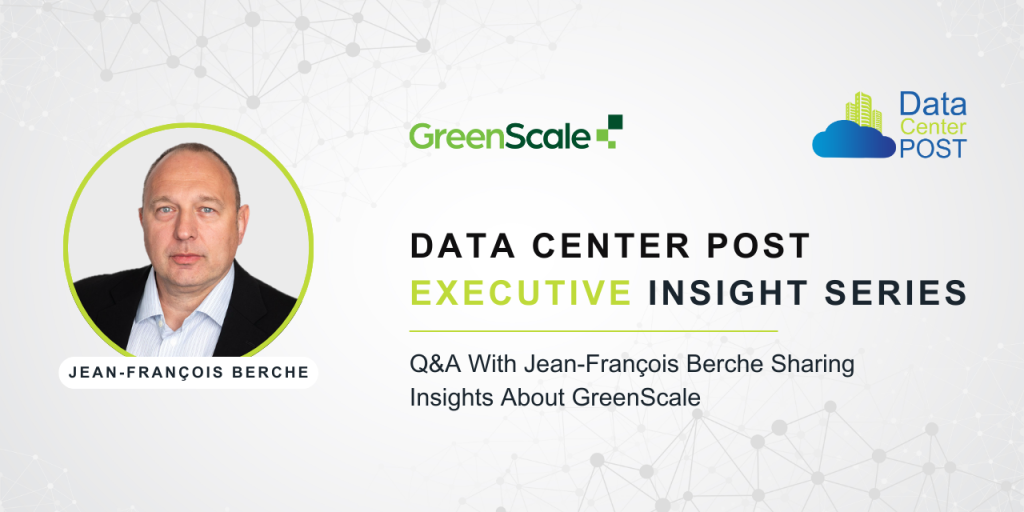
Data Center POST had the opportunity to connect with Jean-François Berche, the Chief Technology Officer at GreenScale, who is guiding the company’s technological vision towards infrastructure that is scalable, efficient, and above all, sustainable. He focuses on developing data centres capable of supporting the complex needs of AI-driven workloads, while ensuring GreenScale leads in technology integration within the energy ecosystem.
Jean-François previously held senior roles at Microsoft and AWS, where he was instrumental in expanding the cloud infrastructure to meet the growing demands of AI. His extensive work in site selection, colocation, and cloud region expansion at Microsoft and AWS positions him to drive GreenScale’s technological capabilities to the pinnacle of what is possible.
His passion for sustainability in technology is well-aligned with GreenScale’s mission. Outside of work, Jean-François remains committed to exploring how technology can positively impact society through sustainable and innovative practices. The interview information below has been summarized to provide readers with clarity into who GreenScale is, what they do and the problems they are solving in the industry.
What does GreenScale do?
GreenScale is a sustainable data centre platform redefining the future of sustainable digital infrastructure across Europe’s expanding data centre markets.
What problems does GreenScale solve in the market?
As demand for high-performance AI and cloud workloads accelerates, power availability, grid constraints, and environmental impact have become critical bottlenecks. At GreenScale, we are developing a sustainable data centre platform that positively contributes to the grid, local communities, and the wider energy ecosystem. We provide access to long-term power scalability, combined with deep local relationships with grid utilities and local communities, to enable customers to grow compute capacity quickly, efficiently, and responsibly.
What are GreenScale’s core products or services?
Digital infrastructure
What markets do you serve?
We’re developing data centres in Europe, with plans for international expansion.
What challenges does the global digital infrastructure industry face today?
The global digital infrastructure industry faces the challenge of scaling AI and cloud capacity amid constrained power availability, grid limitations, and growing environmental concerns.
How is GreenScale adapting to these challenges?
Sustainability at GreenScale starts with site selection. By focusing on new power-rich regions such as Norway, where hydropower is abundant, and Derry/Londonderry, where strong wind resources support renewable energy generation, we secure clean, scalable energy from the outset. Working closely with local utilities allows us to contribute positively to the grid while accelerating speed to deployment and enabling responsible, long-term growth for digital infrastructure.
What are GreenScale’s key differentiators?
GreenScale’s key differentiators lie in our ability to deliver at speed while maintaining a strong sustainability focus. We prioritise rapid deployment through strategic partnerships, including our recently announced collaboration with Vertiv, and by building in new power-rich markets that support long-term scalability. Our platform is underpinned by a deep commitment to ESG and led by a team with over 100 years of combined industry experience, enabling us to execute reliably in a rapidly evolving market.
What upcoming industry events will you be attending?
PTC, NVIDIA GTC, DCAC, Data Centre Expo, Data Centre World London, Datacloud Global Congress and many more!
Do you have any recent news you would like us to highlight?
Where can our readers learn more about GreenScale?
Readers can learn more on our company website, www.greenscaledc.com.
How can our readers contact GreenScale?
You can contact us through our website, www.greenscaledc.com/contact.
# # #
About Data Center POST
Data Center POST provides a comprehensive view of the digital infrastructure landscape, delivering industry insights into the global data center ecosystem. As the industry’s only peer-contributed and online publication, we offer relevant information from developers, managers, providers, investors, and trendsetters worldwide.
Data Center POST works hard to get the most current information and thought-provoking ideas most apt to add relevance to the success of the data center industry. Stay informed, visit www.datacenterpost.com.
If you are interested in contributing to Data Center POST, contact us at contributions@datacenterpost.com or submit your article here.
Want more digital infrastructure news? Stay in the know and subscribe to Data Center POST today!
The post Company Profile: GreenScale on Building Sustainable, Power-Rich Digital Infrastructure appeared first on Data Center POST.