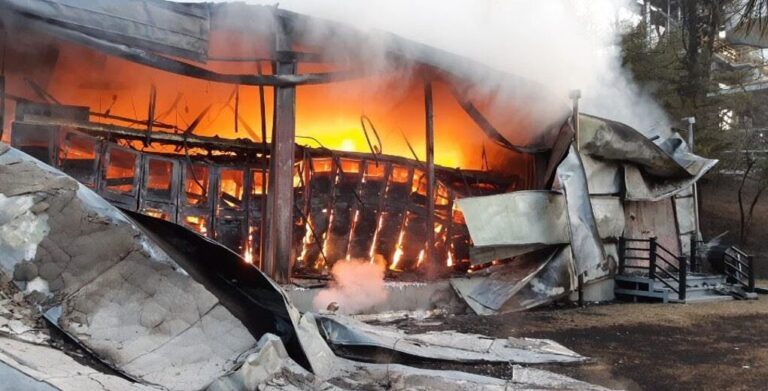
BESS safety issues become all too visible when it's already too late, but a considered approach through the full lifecycle can mitigate these and many other risks, writes Sunny Rai from Intertek.
By Brad Buecker, SAMCO Technologies and Buecker & Associates, LLC
The rapid development of data centers and other large energy users around the country is placing challenges on power generation supplies. Many experts recognize the need for a balanced energy production mix that includes renewables and dispatchable sources such as combined cycle and nuclear generation. Mike Caravaggio of EPRI (Electric Power Research Institute) summed it up well in his “We’ve got to have it all” presentation at POWERGEN 2026’s opening keynote session.
A key piece to this puzzle is ensuring the reliability, from a water/steam chemistry aspect, of combined cycle heat recovery steam generators (HRSGs), coal units being scheduled for extended service, and the potentially significant development of small modular nuclear reactors (SMRs). POWERGEN 2026 saw the first in a planned permanent co-location of the longtime Electric Utility & Cogeneration Chemistry Workshop.
This article highlights the presentations from the just-concluded EUCCW to show the quality material that the conference has offered for decades, and that we intend to continue. Our workshop has covered numerous other important issues over the years that impact many additional industries. Topics regularly include cooling water treatment, industrial wastewater control, environmental issues, and others. We encourage interested readers to plan on attending future workshops and to perhaps consider sharing your expertise with a paper or simply through the excellent networking opportunities.
HRSG Chemistry Developments
This author was very grateful for being given the leadoff presentation (and a subsequent encore presentation at the “O&M Zone” on the exhibit floor) that outlined up-to-date HRSG feedwater and boiler water chemistry programs. A strong motivating factor comes from direct experience and that of colleagues, in which combined cycle plant owners decide to operate with a “lean and mean” staff, with few if any chemistry-trained personnel. Problematic is that “lean” often accentuates “mean”, where even one water/steam or cooling water chemistry failure can potentially shut down the plant, or worse, jeopardize employee safety, as we shall see below.
My power industry career began in 1981 at a coal-fired utility, and over the last 4+ decades I have seen the evolution of water/steam chemistry treatment programs for conventional steam generators and HRSGs. Foremost is a major change in feedwater chemistry treatment to minimize flow-accelerated corrosion (FAC). FAC first became evident in 1986 when it caused a feedwater piping failure that killed four personnel at a nuclear plant. Other fossil-plant FAC failures have occurred in the years since, including one in an attemperator line to the sister plant of one at which I worked, which caused two fatalities. Severe FAC has been observed in many combined cycle HRSGs around the globe (due to improper chemistry practices), as reported by renowned water/steam chemistry expert Dr. Barry Dooley and colleagues. An FAC-induced failure is shown in Figure 1.
Figure 1. Catastrophic failure caused by single-phase FAC.1 Original source, EPRI, including Reference 2.
EPRI has performed extensive work on the causes and preventive measures for FAC, and the Reference 2 document should be in the library of all high-pressure steam generating plants.
Boiler (or in HRSG jargon, evaporator) water treatment chemistry has also been refined over the years, but with some adjustments for the complexity of HRSG configurations. Conventional coal-fired units are single pressure design, although some sliding pressure operation is often necessary to adjust for load changes. Conversely, combined cycle HRSGs are typically multi-pressure configuration, with the most common units having a low-pressure, intermediate-pressure, and high-pressure evaporator. Tri-sodium phosphate (Na3PO4) is usually employed for pH control in the IP and HP circuits, but in the most popular HRSG units, known as the feed-forward low-pressure (FFLP) design, a solid alkali such as TSP cannot be used in the LP circuit. Rather, the ammonia from feedwater pH conditioning is the proper choice. A key factor in modern phosphate programs is minimization of phosphate “hideout” i.e., the precipitation of phosphate on boiler tubes at high boiler temperatures. I addressed this issue in two of my POWERGEN/EUCCW 2026 presentations, and further details are available in publications from the International Association of the Properties of Water and Steam.
Dan Dixon of EPRI discussed issues related to under-deposit corrosion (UDC) in HRSGs. UDC is a problem that has plagued conventional steam generators for decades. Iron oxide corrosion products generated by poor chemistry programs or layup practices travel to the steam generator and precipitate on boiler/evaporator tubes, usually on the hot side. The porous deposits serve as sites for concentration of water impurities that can induce direct boiler tube corrosion and can also initiate hydrogen damage, an insidious mechanism that may cause widespread boiler tube failures, as this author has also learned from direct experience.
Additional Steam Generator Protection with Film-Forming Products and Vapor Phase Corrosion Inhibitors
Additional steam generator protection methods continue to gain ground. The last two decades or so have seen re-emergence of film-forming products (FFPs), with both amine and non-amine active groups. As the name film-forming products implies, the compounds establish a protective surface on steam generator metals. Dale Stuart of ChemTreat discussed these chemistries and outlined successful applications, while pointing out that research continues regarding use and efficacy of these programs in both power and industrial steam generator applications.
Figure 2. General schematic of how one film-forming amine attaches to the iron oxide layer on steel. The hydrophobic carbon chains extend outwards to form the protective barrier. Illustration courtesy of Dale Stuart.
Two interrelated questions still stand out in the author’s mind regarding FFPs; how well do they transport through superheaters/reheaters to downstream equipment, and how much thermal decomposition occurs in these high-temperature regions? Thermal breakdown of alkalizing amines (sometimes utilized for feedwater pH conditioning) is well known. The decomposition products, small organic acids and carbon dioxide, will depress the pH and raise the cation conductivity of the condensed steam, which in turn influences feedwater chemistry. Logic suggests that the organic-based FFPs also decompose to a considerable extent. An important point is that film-forming chemistry should be a supplement to and not a replacement of established feedwater and boiler water treatment methods.
Often not given proper consideration is metal protection during unit shutdowns. When a steam generator is taken out of service and left standing full of water or has pockets of water in spots such as non-drainable superheaters, air which enters as the boiler network cools can establish localized oxygen corrosion cells. Besides direct attack and metal damage, the corrosion products will travel to the boiler at startup to establish deposits for UDC, as mentioned above. Cortec’s Scott Bryan gave an excellent presentation on the increasing popularity and efficacy of vapor phase corrosion inhibitors (VpCIs) to protect steam generators during outages. These products can serve in both dry and wet conditions, where they continually release a non-hazardous compound that migrates throughout the steam generator circuits to form a protective layer on metal surfaces. During startup, the compounds exit the unit via the blowdown stream. VpCIs offer corrosion protection for other applications, including, most notably, cooling system protection during layups.
Makeup Water Treatment Evolution
Figure 3. A skid-mounted ultrafiltration system. Source: SAMCO Technologies.
High-purity makeup water production for utility boilers received a huge boost in the middle of the last century with development of synthetic ion exchange (IX) resins. The demineralization process received a further boost with the maturation of reverse osmosis (RO) technology later in the century and continuing until now. Personnel at many plants retrofitted RO upstream of existing IX demineralizers, which greatly extended IX run times and reduced chemical regeneration frequency. However, another transformation has been taking place. This is the increasing selection of micro- and ultrafiltration membrane technologies for suspended solids removal ahead of RO systems.
Particulate removal is a critical pretreatment process to protect RO membranes. Clarifiers with effluent sand filtration were the common choice in the last century, but for many water supplies such as lakes or reservoirs, MF and especially UF are much more efficient at removing fine particles. (MF/UF treatment of some river waters can potentially be problematic due to the large surge of suspended solids during heavy precipitation.) A common design now for HRSG high-purity makeup water systems is UF for particulate removal, two-pass RO for bulk demineralization, and then mixed-bed polishing in portable “bottles” that an outside contractor generates off-site. Continuous electrodeionization (CEDI) is another polishing technique.
Cooling Water Treatment
Cooling water treatment is a critical (but sometimes overlooked) issue at an enormous number of industrial plants, not just power, so future EUCCW attendees should probably always expect to see this topic on the agenda. At the top of the list is microbiological fouling control, as biofouling can cause the most prompt and intense problems in cooling systems. Well-designed and operated chemical feed programs/systems are paramount for reliable operation. A difficulty that arose in the 1980s and continues to this day is that modern corrosion/scale inhibitor programs operate at a mildly alkaline pH around 8.0. As water pH rises above a pH of 7, the efficacy of standard bleach drops dramatically. If conditions allow microbes to settle on metal surfaces, some quickly begin to form a polysaccharide layer (slime) that protects the organisms and others from biocides. The slime/silt layer greatly reduces energy transfer in heat exchangers, reduces and restricts flow, and can induce severe under-deposit and microbiologically-induced corrosion.
Figure 4. Steam surface condenser tubes heavily fouled with microbiological slime and silt.3
Jo Anna Ordóñez of Water Tech outlined an emerging technology in which bleach potency can be enhanced with a special metal catalyst to produce a mineral oxychloride (MOCl) and hydroxyl radicals (OH∙) that have a much higher oxidizing power than conventional oxidizers. Having worked with cooling water treatment for years at three different power/industrial plants, the technology intrigues me, in part because of its reported ability to attack sessile organisms and the accompanying slime layer. Of course, nothing beats a well-operated program to prevent organisms from settling in the first place.
Additional 2026 Presentations
The remaining two presentations from this year’s EUCCW also provided excellent information.
Brian Snyder of NiSource (the parent firm of Northern Indiana Public Service Company, NIPSCO) outlined a program that plant personnel implemented at one of their primary power stations to reduce scaling and fouling issues related to transport of coal combustion residuals (CCR), i.e., fly ash and bottom ash. As many readers are no doubt aware, issues regarding CCR storage and disposal have become high profile over the last several decades, which have been exacerbated by several spills of ash pond material. Many ash ponds still exist at both retired and active coal-fired power plants around the country, where concerns remain about ash disposal and the potential for pond leachate to enter surrounding aquifers and surface supplies. Interestingly, these ash impoundments may serve as sources for recovery of rare earth elements (REE). Research is underway regarding this possibility.4
We at the EUCCW also want to keep our finger on the pulse of nuclear plant development for future workshops. This year, Claudine Fields of Day & Zimmermann gave an informative presentation entitled, “Attracting the Next Generation of Nuclear Craft Professionals.” If the U.S. experiences a nuclear renaissance, potentially in the form of small modular reactor development, the industry will need a wide variety of personnel ranging from the trade crafts to engineering disciplines to safety and environmental management. Ms. Fields pointed out that the time to generate student’s interest in science and the potential for a good career is at middle-school or early high school age.
The 2027 EUCCW
We are already making plans for the 2027 EUCCW, to again be co-located with POWERGEN next January in Salt Lake City. Steam generation chemistry will still be on the agenda, as combined cycle power plants remain an important part of the energy mix, and another year should help clarify planned nuclear development. Geothermal projects also are gaining steam (pun intended). Expect to see additional cooling water treatment discussion because this topic is critical for many industries. Makeup water treatment, with recognition of the increasing selection of alternative raw water supplies such as municipal wastewater treatment plant effluent, continues to be an important topic.
To reiterate, we welcome your suggestions for cutting-edge topics to be included in the call for papers.
References
Buecker, B., Shulder, S., and Sieben, A., “Fossil Plant Cycle Chemistry”; pre-workshop seminar for the 39th Annual Electric Utility Chemistry Workshop, June 4-6, 2019, Champaign, Illinois.
Guidelines for Control of Flow-Accelerated Corrosion in Fossil and Combined Cycle Power Plants, EPRI Technical Report 3002011569, the Electric Power Research Institute, Palo Alto, California, 2017. This document is available to the industry as a free report because FAC is such an important safety issue.
Post, R., Buecker, B., and Shulder, S., “Power Plant Cooling Water Fundamentals”; pre-workshop seminar for the 37th Annual Electric Utility Chemistry Workshop, June 6-8, 2017, Champaign, Illinois.
“$8.4 Billion: Enormous Cache of Rare Earth Elements Discovered in America”; SciTechDaily, report from the University of Texas, Austin, March 17, 2025.
Brad Buecker currently serves as Senior Technical Consultant with SAMCO Technologies. He is also the owner of Buecker & Associates, LLC, which provides independent technical writing/marketing services. Buecker has many years of experience in or supporting the power industry, much of it in steam generation chemistry, water treatment, air quality control, and results engineering positions with City Water, Light & Power (Springfield, Illinois) and Kansas City Power & Light Company’s (now Evergy) La Cygne, Kansas, station. Additionally, his background includes eleven years with two engineering firms, Burns & McDonnell and Kiewit, and he spent two years as acting water/wastewater supervisor at a chemical plant. Buecker has a B.S. in chemistry from Iowa State University with additional course work in fluid mechanics, energy and materials balances, and advanced inorganic chemistry. He has authored or co-authored over 300 articles for various technical trade magazines, and he has written three books on power plant chemistry and air pollution control. He is a member of the ACS, AIChE, ASME, AWT, and he is active with POWERGEN (and the now co-located Electric Utility & Cogeneration Chemistry Workshop), and the International Water Conference. He can be reached at bueckerb@samcotech.com and beakertoo@aol.com.
Winter Storm Fern has exited stage right, but not before wreaking havoc on power grids across the southeastern United States. As of Monday morning at 9 am ET, more than 800,000 customers were still without electricity after Fern pummeled a vast swath of the US with snow, sleet, and ice amidst subzero temperatures.
According to live tracker PowerOutage.com, Tennessee (250,459), Mississippi (161,059), and Louisiana (127,719) have the most outages, followed by Texas (66,665), Kentucky (47,624), and South Carolina (44,114). Tens of thousands of power outages persist in Georgia, North Carolina, Virginia, and West Virginia.
A Deadly, Icy Mess
More than a dozen deaths have been blamed on the winter storm already, and perilous conditions persist through the day Monday, creating “dangerous travel and infrastructure impacts” for days, according to the National Weather Service.
For utilities, that means power poles and lines damaged or broken under the weight of ice. Predictions called for up to a staggering 1.5 inches of ice accumulation in some areas, including northern Mississippi and the western Carolinas. For reference, half an inch of ice (or less) is all it takes to down a power line and trigger widespread outages.
On Sunday, freezing rain slickened roads and brought trees and branches down, imperiling hundreds of miles of the southern US. In Corinth, Mississippi, heavy machinery manufacturer Caterpillar told employees at its remanufacturing site to stay home Monday and Tuesday. In Oxford, MS, police appealed to residents to stay home, and some utility crews were pulled from their jobs overnight.
“Due to life-threatening conditions, Oxford Utilities has made the difficult decision to pull our crews off the road for the night,” the utility company posted on Facebook early Sunday. “Trees are actively snapping and falling around our linemen while they are in the bucket trucks.”
Elsewhere, deep snow — over a foot (30 centimeters) in a 1,300-mile (2,100-kilometer) swath from Arkansas to New England — halted traffic and canceled flights.
President Donald Trump approved emergency declarations for at least a dozen states by Saturday. The Federal Emergency Management Agency had rescue teams and supplies in numerous states, Homeland Security Secretary Kristi Noem said.
Hardest-Hit Utilities and Their Response
Tennessee’s Nashville Electric Service (NES) and Entergy (primarily in Louisiana) remain the heaviest-hit utilities Monday morning. More than 175,000 Nashville Electric subscribers are without power, representing nearly 38% of its customer base. More than 147,000 Entergy users are still waiting for their lights to come back on, or roughly 5% of the total served by the utility in LA.
NES says teams of nearly 300 line workers have been deployed around the clock to make repairs and restore infrastructure. The utility says more than 76 broken poles have already been fixed. More than 70 distribution circuits are out and are being restored. Since Saturday, crews have been operating in continuous rotations and will remain on extended 14–16‑hour shifts.
Icy conditions have limited restoration progress in its territories, according to Entergy. Overnight, temperatures dropped below freezing, hampering travel and causing additional outages in some locations. As of Monday morning, the utility reported more than 88,000 outages in Louisiana and another 55,000 in Mississippi. As of Sunday evening, transmission damage assessments show approximately 20 transmission lines, 470 miles, and 20 substations out of service across Entergy’s service area. Around 10 transmission lines and 30 substations have been returned to service. At least 400 poles, 90 transformers, and 1,460 spans of wire were damaged; more than 20 poles, 20 transformers, and 70 spans of wire have been restored so far.
Duke Energy, Southwestern Electric Power Company, and Appalachian Power Company each have just north of 30,000 customers still without electricity. Tri-County EMC, Blue Ridge Electric Cooperative, North East Mississippi EPA, and Cumberland EMC are still working to restore services for more than 20,000 customers.

 Login
Login