 Login
Login
Full Circle Lithium Announces First US School Deployment of FCL-X™ to Address Rising Lithium Battery Fire Risks
Full Circle Lithium Announces First US School Deployment of FCL-X to Address Rising Lithium Battery Fire Risks
- FCL enters the education sector with an initial rollout in a large southeastern school district and has advanced discussion with other regional schools and campuses
- Lithium-ion battery fire risks are increasing across schools and all education centers, from laptops to e-mobility and electric buses
- FCL-X provides a dedicated solution designed to suppress and prevent the re-ignition of lithium-ion battery fires
TORONTO, April 1, 2026 /PRNewswire/ – Full Circle Lithium Corp. (“FCL” or the “Company”) (TSXV: FCLI; OTCQB: FCLIF, FSE: K0Q), a leading US-based lithium-ion battery fire extinguishing products manufacturer, announces today its first sale into the United States educational system, with an initial deployment in a large school district in the southeastern United States. The milestone marks a significant step forward in addressing a rapidly growing safety challenge facing schools nationwide: lithium-ion battery fires.
This deployment reflects a proactive move by school leadership to confront an emerging, increasingly visible risk associated with the widespread use of lithium-powered devices in educational environments.
A Growing Problem in Modern Schools
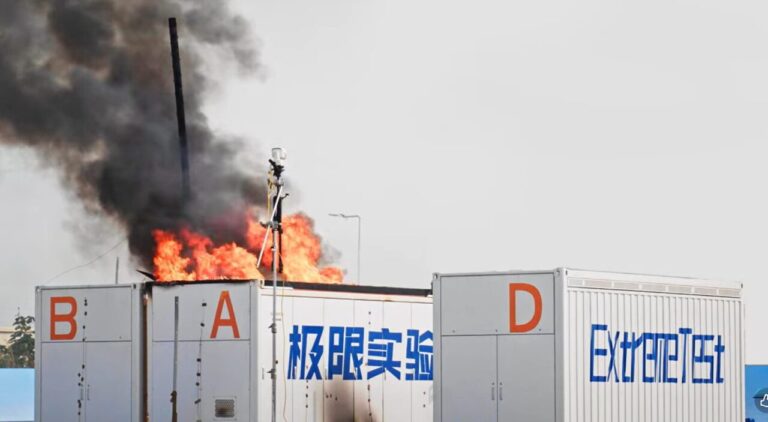
Lithium-ion batteries are now embedded throughout the education ecosystem, from laptops and tablets in classrooms, to e-scooters and e-bikes on campus, to electric school buses and maintenance equipment.
While these technologies support digital learning and sustainability goals, they also introduce a growing fire risk that requires new safety solutions.
- Lithium-ion battery fires can ignite suddenly, burn at extremely high temperatures, and are prone to re-ignition.¹
- These batteries are present in nearly every device used daily by students and staff, significantly increasing exposure risk.²
- Fire authorities and safety experts across the U.S. have identified lithium battery incidents as a rapidly increasing hazard requiring targeted response measures. ¹
The Scale of the U.S. Education Market
The urgency of this issue is amplified by the sheer size of the United States education system:
- The K–12 system includes over 130,000 schools serving approximately 50 million students
- Colleges and universities add another 4,000+ institutions with more than 19 million students enrolled
- Combined, these institutions represent tens of millions of daily device users, with laptops, tablets, and personal mobility devices now standard tools for learning and campus life
From classrooms and dormitories to transportation fleets and maintenance operations, lithium-ion batteries are now deeply embedded in daily educational infrastructure. As electrification and digital learning continue to expand, the education sector has become one of the largest and fastest-growing environments of concentrated lithium battery usage, making the need for effective, purpose-built fire safety solutions increasingly urgent.
Recent events across U.S. schools highlight the scale and immediacy of the issue:
- Schools have been evacuated due to fires and smoke events caused by lithium-ion batteries in laptops, including widely used classroom devices.³
- One school district reported six separate lithium battery-related laptop fires, underscoring how quickly incidents can escalate.⁴
- Fire officials warn that these batteries can overheat, ignite, and even explode, posing serious risks in classroom settings.³
Beyond the classroom, the risk continues to expand:
- E-scooters and e-bikes brought onto school grounds
- Charging hubs with dozens of devices connected simultaneously
- Electric transportation, including school buses and service fleets
A Purpose-Built Solution for a Modern Hazard
Full Circle Lithium’s FCL-X technology is specifically engineered to address the unique challenges of lithium-ion battery fires, including:
- Rapid suppression of thermal runaway events
- Prevention of re-ignition
- Safe deployment in occupied environments such as schools
Traditional fire extinguishers are not designed for lithium-ion battery fires, leaving a critical gap in protection, one that schools are now beginning to address.
Carlos Vicens, CEO of Full Circle Lithium, commented: “Lithium-ion batteries are now everywhere in the school environment, from the classroom to transportation, and the risk is no longer theoretical. Schools across the U.S., including in the Southeast, are experiencing real incidents involving laptops, mobility devices, and charging systems. This is a growing problem that requires solutions specifically designed for these types of fires. This initial deployment is a key step in improving protection for our educational facilities.
Setting a New Standard for School Safety
As lithium-ion battery usage continues to accelerate, forward-thinking school systems are taking action to modernize their safety infrastructure. This first deployment in the southeastern United States highlights a broader shift: recognizing lithium battery fire risk as a system-wide safety issue and implementing solutions that match the complexity of the threat.
Footnotes
¹ Lithium-ion battery fires burn hotter, spread rapidly, and are more difficult to extinguish than traditional fires; fire authorities report increasing incident rates.
² Lithium-ion batteries power common school devices, including laptops, tablets, and micromobility equipment, increasing exposure in educational settings.
³ U.S. schools have experienced evacuations and fire incidents linked to lithium-ion batteries in laptops, with officials warning of explosion risk.
⁴ A U.S. school district reported six lithium battery-related laptop fires tied to device tampering and thermal runaway.
READ the latest Batteries News shaping the battery market
Full Circle Lithium Announces First US School Deployment of FCL-X to Address Rising Lithium Battery Fire Risks, source
The post Full Circle Lithium Announces First US School Deployment of FCL-X™ to Address Rising Lithium Battery Fire Risks appeared first on Batteries News.



 Conductive socks that are connected to the trousers complete the protective suit. BME HVL
  A strapping system links all the elements of the suit—the jacket, trousers, gloves, and socks—and guides current through a controlled path outside the body. BME HVL