Sion Power is expanding its Licerion® lithium-metal battery program to supply cells and battery systems for US defense and aerospace. The cells are engineered to exceed 500 Wh/kg, up to 200 Wh/kg more than current advanced lithium-ion technology, even with silicon anode enhancements.
The platform covers both primary (single-discharge) and secondary (rechargeable) configurations. Target applications include long-endurance UAS, tactical and counter-UAS drones, missile and loitering munition platforms, autonomous maritime and ground vehicles and space systems. Sion Power operates a 110,000 sq ft cell manufacturing facility in Tucson, Arizona, and says it can demonstrate cells and integrated battery systems today, and expects initial product shipments in late 2026.
Lithium-metal anodes store substantially more energy per kilogram than graphite because lithium metal is lighter and more electrochemically active. For weight-constrained platforms, closing the gap from 300-350 Wh/kg for advanced Li-ion to 500+ Wh/kg translates directly into longer endurance and expanded payload capacity. Sion Power’s expansion also responds to US policy momentum—NDAA provisions support domestic battery supply chains and highlight demand for American-manufactured advanced cells.
“Our lithium-metal technology provides the step-change in energy density required to support longer-range missions, increased flight duration and higher payload capability while maintaining a U.S.-based manufacturing capability aligned with national security priorities,” said Pamela Fletcher, CEO of Sion Power.
“By combining high-energy lithium-metal chemistry with advanced battery pack engineering, Sion Power enables defense integrators to unlock two to three times increases in mission endurance, significantly extended operational range and dramatically higher payload capacity compared with conventional lithium-ion and lithium-polymer batteries used in today’s unmanned systems,” said Tracy Kelley, chief science officer at Sion Power.
Vishay Intertechnology has launched the VODA1275, an automotive-grade photovoltaic MOSFET driver that delivers 8 mm creepage distance and CTI 600 mold compound in a compact SMD-4 package. The device targets high voltage automotive applications including pre-charge circuits, wall chargers, and battery management systems for EVs and HEVs.
The VODA1275 delivers 20 V open circuit voltage, 20 μA short circuit current, and 80 μs turn-on time—three times faster than competing devices, according to Vishay. The driver provides reinforced isolation with a working isolation voltage of 1260 Vpeak and isolation test voltage of 5300 VRMS, making it suitable for 800 V+ battery systems. The device is AEC-Q102 qualified and meets automotive reliability standards.
The high open circuit voltage allows designers to use a single MOSFET driver instead of two drivers in series, which was previously required for higher voltage applications. This simplifies circuit design and reduces component count in systems that need to drive MOSFETs and IGBTs reliably at high voltages. The driver can also enable custom solid-state relays to replace electromechanical relays in next-generation vehicles.
The optically isolated device draws power from an infrared emitter on the low voltage side, eliminating the need for an external power supply on the isolated side. “The VODA1275 features the industry’s fastest turn-on times and the highest open circuit voltage and short circuit current in its class,” the company stated. The driver is RoHS-compliant and halogen-free. Samples and production quantities are available now with eight-week lead times, priced at $1.20 per piece for US delivery.
Bosch Rexroth has introduced the TS 7plus, a fully electric roller conveyor designed for heavy-payload manufacturing lines. The company says it’s the world’s first freely configurable, fully electric transfer system for loads up to 3,000 kg, targeting automotive, battery and aerospace/defense assembly.
The TS 7plus runs on modular sections using solid or hollow rollers roughly 50% larger than those in the predecessor TS 7 system. The larger rollers reduce moving parts per meter, which Bosch Rexroth says improves availability. Standard workpiece pallets go up to 2,200 x 3,000 mm, minimum transport height is 350 mm for both longitudinal and transverse conveying, and conveyor speed reaches 24 m/min—Bosch Rexroth says that’s significantly faster than AGVs. A redesigned bearing block with two mounting tabs speeds assembly and simplifies maintenance and replacement.
Drive is via lubrication-free king shafts with bevel gears, eliminating the re-tensioning and lubrication demands of chain drives. Motors come in 180 W and 250 W variants with a third-party interface, and can mount inside or outside the conveyor section. Internal mounting clears the working area of interfering contours, the bevel gear path also keeps lubricants away from workpieces.
The system supports two operating modes: conventional accumulation with stop gates, and a segmented mode where each motor section runs only when required. Segmented operation cuts energy consumption over the full lifecycle and allows smaller motors to be specified, extending service life. Configuration is handled by MTpro planning software—available as a local install or as the browser-based MTpro Online Designer—which auto-generates CAD models and parts lists from the standard-component builds for export to the Rexroth Store or certified partners.
The electric vehicle market is emerging as a leading field for advanced heating technologies. In EVs, heating systems are essential not only for passenger comfort but also fundamental to thermal management, keeping battery cells within their optimal temperature range in cold climates. Proper thermal control enables faster and more efficient charging, longer driving range, and extended battery life. To achieve this, EV battery heaters must be compact, lightweight, reliable, energy-efficient, and durable under demanding conditions.
Thick-film heaters on steel (HoS) are advancing as a next-generation solution, gaining adoption in Asia due to their high-power density, design flexibility, and proven resilience in harsh environments. Unlike conventional systems such as heat pumps, cartridge heaters, or positive temperature coefficient (PTC) ceramic heaters, HoS technology offers superior efficiency, reduced size and weight, and faster thermal response.
This paper reviews traditional EV battery heating methods, outlines the performance advantages of HoS technology, and examines the market forces driving innovation in thermal management. A case study is also presented that demonstrates how HoS technology is enabling progress in electric mobility.
Magna, one of the world’s largest automotive suppliers, has introduced DHD REX, a single-motor dedicated hybrid drive for range extended electric vehicles (REEVs). The ready-to-integrate system is built on a modular architecture designed for OEMs operating across markets with different regulatory requirements, infrastructure conditions and customer expectations.
DHD REX runs in three modes: pure electric driving, a generating mode in which the ICE charges the battery for range extension, and an optional parallel hybrid mode for highway performance. The single-motor design reduces cost and packaging complexity compared to dual-motor configurations. Magna says the system is validated across B through E vehicle segments in AWD layouts including SUVs, and integrates into both ICE-based platforms and BEV-derived architectures.
In a range extended EV, the combustion engine runs as a generator in most conditions rather than driving the wheels—the electric motor handles propulsion. DHD REX’s optional parallel mode adds the ability for the ICE to contribute mechanical drive at highway speeds, where the efficiency penalty of the generator-motor conversion path is most pronounced.
DHD REX complements Magna’s DHD Duo, a dual e-motor dedicated hybrid already in series production. The single-motor architecture targets OEMs that want range extension capability without the cost and packaging of a two-motor system, and the modular design adapts to both ICE-based platforms being electrified and native BEV architectures adding a range extender.
“DHD REX reflects our commitment to adaptable, customer-focused solutions that support a wide range of performance and market expectations,” said Diba Ilunga, President Magna Powertrain.
ENNOVI has secured a German patent for its adhesive-free lamination technology for battery cell contacting systems (CCS). The laser-based process eliminates the adhesives used in conventional hot and cold lamination, and the company says the technology is already validated—meaning OEMs can adopt it without having to prove out the manufacturing process themselves.
CCS components connect and integrate individual cells within a battery module, typically combining busbars, voltage sense lines and the physical laminate layers that hold them together. Conventional CCS lamination bonds those layers using adhesives in hot or cold press processes. ENNOVI’s laser lamination achieves the same bond without adhesive material. The technology supports cylindrical, prismatic and soft pouch cell architectures. With this patent, ENNOVI now offers three lamination options (hot, cold and adhesive-free) for its CCS designs, giving battery engineers a process choice matched to their cell format.
The patent’s main commercial argument is risk reduction. Developing a new lamination process in-house takes time and carries qualification uncertainty; using a pre-validated, patented technology lets engineering teams skip that work. ENNOVI supports co-development and tailored engineering engagement, which it says allows OEM partners to maintain control over their product roadmaps.
The technology was developed at ENNOVI’s Advanced Solutions Engineering Center in Neckarsulm, which includes prototyping, testing and R&D capabilities. The facility holds ISO 9001:2015 and TISAX certifications—the latter covering automotive supply chain data security requirements.
“Automotive OEMs and battery manufacturers can design in the unique features of adhesive-free lamination, reduce engineering risk by using a technology that is already validated, rather than reinventing it,” said Randy Tan, Product Portfolio Director for Energy Systems at ENNOVI.
Due to the rising global demand for sustainable chemicals, the bio-based polymer market is anticipated to expand substantially in the future, based on industry forecasts. The primary driving force behind the development of bio-based polymers is their use of renewable, plant-based content which is critical given the public’s concern on the use of fossil fuels. Significant advancements in the method for refining biomass raw materials towards the creation of bio-based construction materials and products are driving this rise.
Are you ready to revolutionize your approach to electronic component protection? Discover the groundbreaking advancements in bio-based heat shrink tubing materials that are setting new standards in sustainability and performance. This exclusive whitepaper delves into the latest innovations and market trends, providing you with the insights needed to stay ahead in the industry.
Here’s what you’ll learn:
Market Dynamics: Understand the driving forces behind the growth of bio-based polymers and their impact on the industry
Scientific Innovations: Explore the latest advancements in polymer chemistry and the development of bio-based materials
Environmental Impact: Learn how bio-based polymers reduce greenhouse gas emissions and reliance on fossil fuels
Application Benefits: Discover the versatility, durability, and safety features of bio-based heat shrink tubing in various applications.
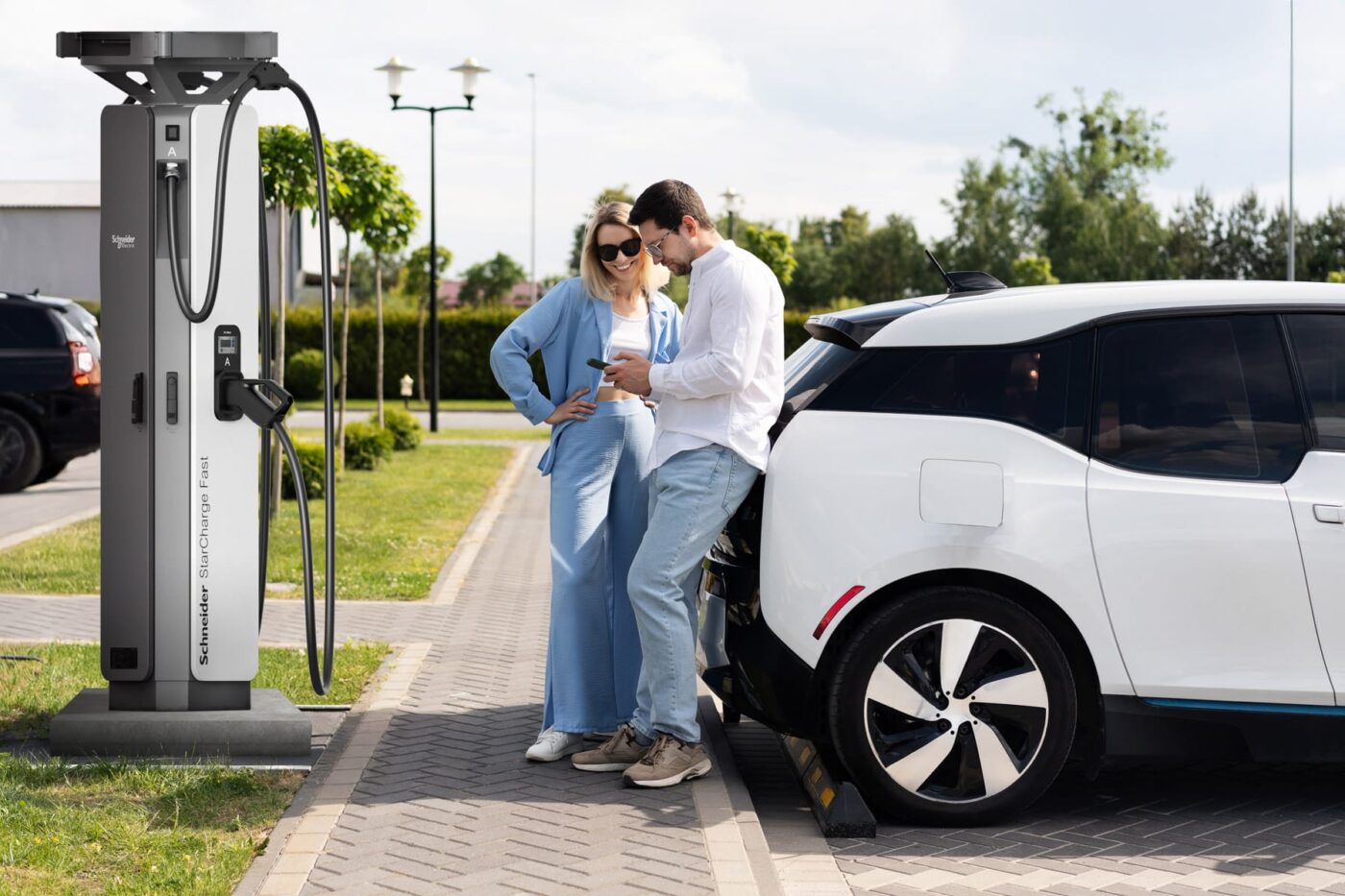
Schneider Electric has introduced Schneider StarCharge Fast 720, an EV charging system for commercial and industrial sites and fleet operators in Europe. The system delivers up to 720 kW and can charge up to 12 vehicles simultaneously, targeting higher-throughput charging as demand for eMobility grows.
Schneider Electric reports 97% efficiency for StarCharge Fast 720 and says it uses dynamic load management to optimize charging across multiple vehicle types, including e-trucks, buses and passenger cars. The company positions the product as a high-power option for sites that need to serve mixed fleets and keep vehicles moving.
The system uses a decentralized architecture to improve site layout flexibility. Operators can place up to six dispensers within an 80-meter radius of the power cabinet, enabling scalable configurations for different site footprints.
For installation and operations, Schneider Electric says the design can minimize grid connections, simplify installation, and reduce noise. StarCharge Fast 720 includes lifecycle support from installation through tailored maintenance plans, with 24/7 assistance and remote monitoring via Schneider Electric’s EcoStruxure Energy Asset Portal.
Cyclic Materials has closed a $75-million Series C equity round to scale its rare earth element recycling operations across the US and Europe and accelerate its Canada-based research and development footprint. The company says the funding will speed deployment of locally anchored recycling infrastructure for magnet-containing end-of-life scrap and magnet production waste—materials it processes to produce magnet rare earth elements, including heavy rare earth elements that it notes are less commonly available from Western mining deposits.
Cyclic Materials says that the new capital will support commercial rollout and global expansion with “a substantial focus” on North American market needs.
Cyclic Materials operates a two-stage physical and hydrometallurgical recycling technology to produce rare earth elements from end-of-life products and magnet production waste. It claims its approach reduces carbon footprint by 61.2%, cuts water use to five percent of what mining requires, and achieves recovery rates exceeding 98%. The company also says its recycling infrastructure can be deployed years faster than traditional mining projects, and it positions the system as a pathway to supply heavy rare earths used in high-performance permanent magnets.
Cyclic Materials’ Mesa, Arizona site, the very first scale-up of a commercial plant for recycling and local production of rare earths in the US, with a focus on heavy and light rare earth magnets.
Cyclic Materials says its proprietary technologies can economically and sustainably recover critical raw materials from end-of-life electric vehicle motors (as well as wind turbines, MRI machines, and data center electronic waste). The company links these feedstocks to demand growth in e-mobility and other permanent-magnet-driven systems.
EVgo is expanding deployment of the North American Charging Standard (NACS) connectors across its public DC fast-charging network. After a 2025 pilot that installed nearly 100 NACS connectors across 22 major metropolitan areas, EVgo plans to accelerate deployment to reach more than 500 NACS connectors installed by the end of 2026, aiming to support rising demand from vehicles equipped with a NACS inlet.
EVgo says it will install NACS connectors at both existing and new sites, targeting both Tesla drivers and drivers of newer NACS-equipped EV models. The company expects that more than 80% of new EVs sold in North America will be NACS-compatible by 2030.
For 2026, EVgo says it intends to deploy additional NACS stalls in “key markets with increasing NACS vehicle penetration,” listing Austin, Houston, Las Vegas, Orlando, Phoenix, Chicago, Dallas, Detroit and San Francisco. Most sites are planned to include two to four NACS connectors, with the option to add more based on observed customer behavior and demand.
“We are already seeing an increase in NACS throughput on our network, and with more than 35 NACS models expected on American roads by the end of the year, we expect that to grow as we add more connectors throughout the country,” said Badar Khan, CEO of EVgo.
EVgo says drivers can enroll in Autocharge+ in the EVgo app to automatically start charging sessions at EVgo NACS locations without an adapter. EVgo also says most CCS (Combined Charging System) drivers can enroll in Autocharge+ as well, and that Autocharge+ has enabled over five million sessions on the EVgo network since its 2022 launch.
“Backed by rigorous testing at the EVgo Innovation Lab, we launched not only a market-leading product with our liquid-cooled NACS cables, but also a great customer experience by expanding Autocharge+ compatibility to serve both NACS and CCS drivers,” said Alex Keros, Senior VP of Product at EVgo.
Heilind Electronics is adding the Molex SideWize High-Voltage Connectors to its portfolio of high-power interconnect solutions. The connectors target space-constrained, high-power designs where engineers are balancing packaging, electrical safety and power density in power-distribution hardware, like EV charging systems, data-center power shelves, UPS equipment and industrial automation.
The Molex SideWize Connectors use a right-angle architecture intended to maximize power transfer in constrained environments. The connectors are rated up to 80 A and 1,500 V per UL 4128, positioning them for high-voltage, high-current systems. The design supports higher-wattage, denser power architectures “without increasing heat generation or installation complexity.”
The right-angle design is intended to eliminate cable bend-radius challenges, while color-coding, positive locking, and 360° cable rotation are meant to simplify mating and reduce cable wear.
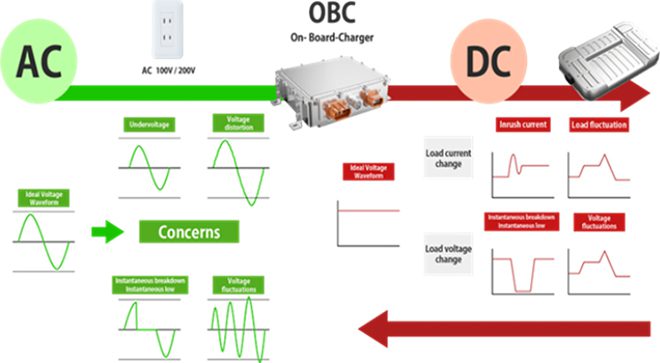
The global electric vehicle industry is experiencing rapid growth, driving an urgent demand for power conversion systems that are not only efficient but also highly reliable. Among these, the on-board charger (OBC) is a critical component, tasked with converting alternating current (AC) from various charging infrastructures, residential, commercial, or public, into direct current (DC) suitable for charging high-voltage battery systems.
The performance and safety of the OBC directly impact overall vehicle efficiency, battery health, and user experience. As the EV ecosystem evolves to incorporate advanced functionalities such as vehicle-to-grid (V2G), vehicle-to-home (V2H), and modular, distributed power electronics, the requirements for testing and validation have become more complex and rigorous, particularly under variable and dynamic electrical conditions.
This article presents a comprehensive overview of how Kikusui’s cutting-edge power testing solutions specifically, the PCR-WEA/WEA2 series of programmable AC/DC power supplies, the PXB series of bidirectional DC power supplies, and the PLZ-5WH2 high-speed DC electronic loads enable detailed evaluation, functional testing, and seamless system integration of OBCs and other critical EV power electronic components, including traction batteries. These tools support robust characterization across a range of real-world scenarios, contributing to improved design validation, compliance, and performance optimization in next-generation electric mobility systems.
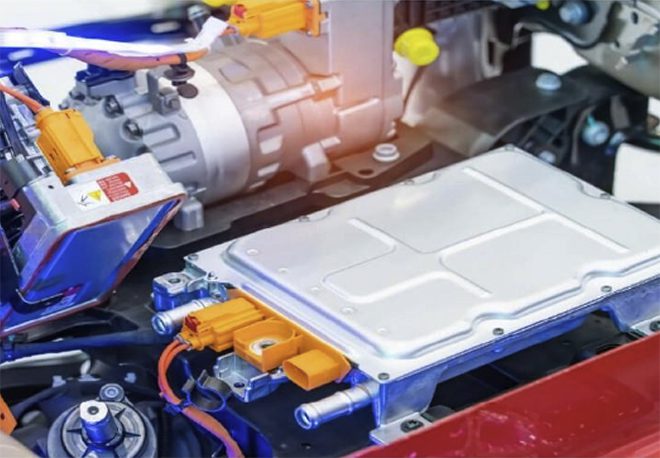
Electric vehicle OBCs serve as the primary interface between the power grid and a vehicle’s high-voltage battery, enabling safe AC-to-DC conversion across a wide range of input conditions. Modern OBCs must not only provide efficient unidirectional charging but increasingly support bidirectional energy flow for V2H/V2G functions, grid-interactive services, and energy storage applications.
At the same time, automotive manufacturers are shifting toward compact, modular, and multifunctional power electronic assemblies, combining OBCs, DC/DC converters, and junction boxes into integrated units to reduce size, weight, and cost.
These advancements increase the need for:
Robust AC-side resilience against voltage sags, frequency variations, momentary interruptions, and harmonic distortion.
Stable DC-side control, ensuring proper charging behavior, battery protection, and compliance with global standards.
Test equipment capable of reproducing worldwide grid conditions, enabling repeatable and accelerated development.
Kikusui’s laboratory-grade power systems provide this controlled environment, ensuring OBCs and battery systems are verified under real-world electrical variability with high fidelity.
Figure 1. AC–DC Conversion of Voltage and Current Waveforms in an On-Board Charger (OBC).
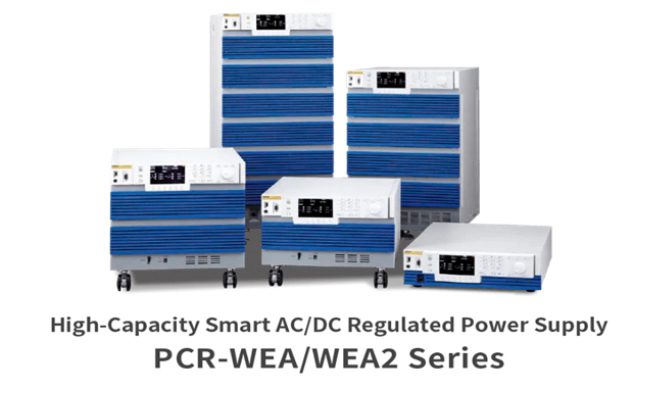
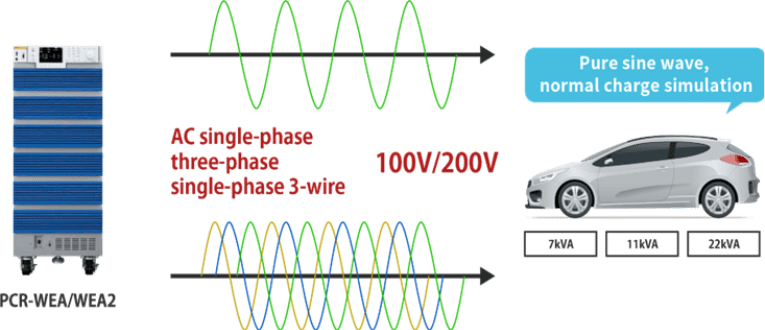
AC-Side Evaluation of On-Board Chargers The PCR-WEA/WEA2 Series is a high-capacity AC/DC regulated power supply designed for flexible, high-precision grid simulation. It supports all major global AC configurations used for electric vehicle (EV) charging, including:
Single-phase 120 V (commonly used in USA)
Single-phase 200 V three-wire (L1-N-L2, typically 100 V line-to-neutral, 200 V line-to-line)
Three-phase 208V (line-to-line), common in industrial or commercial charging applications
A single PCR-WEA/WEA2 unit can replicate these voltage and phase conditions without requiring additional hardware, significantly reducing test complexity and enabling rapid configuration changes for global compliance testing.
The 15-model PCR-WEA2 lineup offers AC/DC output from 1 kVA to 36 kVA, with variable single- and three-phase output from 6 kVA upward. It features a regenerative mode for reduced power consumption and supports mix-and-match parallel operation up to 144 kVA for scalable test systems, the series offers:
Output frequency flexibility up to 5 kHz
4x rated peak current capability
1.4x inrush current tolerance for 500 ms
These features enable engineers to accurately evaluate OBC performance during startup, simulate real-world grid disturbances, and validate transient handling during rapid load transitions.
Available power configurations options 1 kVA and 2 kVA, 4 kVA, 8 kVA, 12 kVA, 16 kVA, 20 kVA, and 24 kVA. For applications requiring higher capacity, parallel operation can extend the output up to 96 kVA. Additionally, the three-phase PCR-WEA2 series is available in 3 kVA, 6 kVA, 12 kVA, 18 kVA, 24 kVA, 30 kVA, and 36 kVA models, with parallel expansion possible up to 144 kVA.
Figure 2. AC Power Simulation for EV Charging: Single-Phase and Three-Phase 100V/200V Inputs Delivering Pure Sine Wave Outputs for 7kW, 11kW, and 22kW Charging.
Key Features and Benefits of PCR-WEA/WEA2:
Versatile Output Configurations supporting all major EV charging voltages.
Ultra-Compact Design providing high power density for reduced lab footprint.
Exceptional Transient Handling for inrush and peak-load events.
Advanced Sequencing Functions to simulate disturbances, harmonics, and advanced grid behavior.
Global Grid Simulation with adjustable voltage, frequency, and phase.
Proven Reliability, widely used in Japanese automotive and consumer electronics industries.
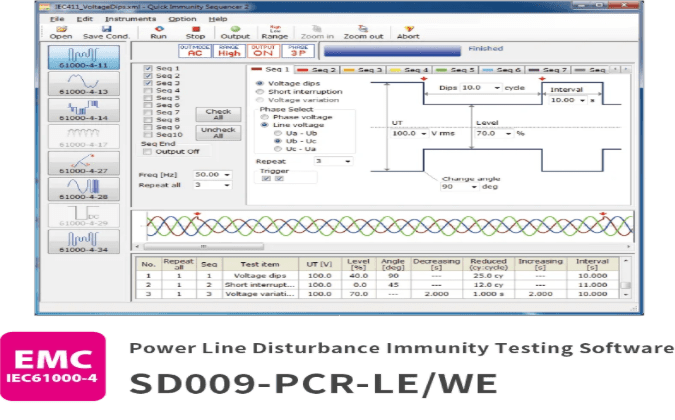
Sequence Functions for Advanced AC Simulation The PCR-WEA/WEA2 Series incorporates sophisticated waveform programming that allows engineers to replicate complex utility grid behavior with precision. These functions are essential for evaluating OBC reliability, EMC performance, and compliance with international test standards.
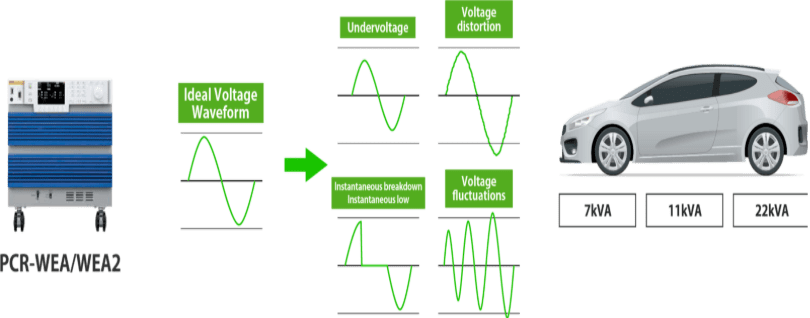
Simulation of Power Disturbances
The system can reproduce a range of real-world anomalies, including:
Undervoltage/Overvoltage
Voltage dips, swells, and fluctuations
Instantaneous interruptions
Waveform distortion
These simulations help verify OBC operation during brownouts, unstable infrastructure, and transient grid events.
Harmonic and Phase Control
The PCR-WEA/WEA2 supports harmonic synthesis up to the 40th order, enabling detailed analysis of power factor correction (PFC) behavior and OBC EMI performance. Adjustable initial phase settings (e.g., 0°, 90°, 270°) enable worst-case startup scenario testing.
Compliance and Standards Testing
The series supports testing aligned with major global power quality standards, such as:
IEC 61000-4-11 – Voltage dips, short interruptions, variations
IEC 61000-4-28 – Frequency variations
IEC 61000-4-34 – Voltage disturbances for high-current equipment
These features help manufacturers validate devices before formal certification, reducing development cycles and compliance risk.
Figure 3. Various Sequence Functions: Simulation of Voltage Dips, Interruptions, and Harmonic Waveforms for Compliance with IEC 61000 Standards
DC-Side Evaluation of On-Board Chargers To complement AC-side testing, Kikusui provides powerful DC-side test instruments, including the PXB Series bidirectional DC power supply and the PLZ-5WH2 Series high-speed DC electronic load.
PXB Series – Bidirectional High-Capacity DC Power Supply
The PXB Series offers bidirectional operation, allowing both sourcing and sinking of power for energy-regenerative testing. This reduces total energy consumption during extended test cycles.
Supporting voltages up to 1,500 V, the PXB series is ideal for evaluating high-voltage battery systems (300–750 VDC typical). Its regenerative capability simulates both charging and discharging conditions, closely reflecting actual EV operating environments.
PLZ-5WH2 Series – DC Electronic Load
The PLZ-5WH2 Series provides high-speed transient response and precise dynamic load control, enabling accurate measurement of OBC output characteristics such as voltage regulation, ripple, and transient response.
With voltage handling up to 1,000 V, it allows engineers to evaluate the OBC’s behavior under sudden load changes, ensuring safety and reliability in real-world operation.
System Integration and Application Flexibility By combining the PCR-WEA/WEA2, PXB, and PLZ-5WH2 systems, Kikusui delivers a fully integrated OBC test environment capable of simulating both grid-side and battery-side conditions with precision.
This integrated platform allows:
End-to-End AC–DC performance testing under variable grid conditions
Long-term endurance and efficiency testing through regenerative power flow
Harmonic, transient, and compliance testing per global standards
Optimized energy use through power regeneration
Such a setup ensures comprehensive validation and accelerated development of next-generation OBC and EV power systems.
Conclusion As EV power electronics expand in capability and complexity, the need for high-precision, globally representative test environments continues to grow. Kikusui’s PCR-WEA/WEA2, PXB, and PLZ-5WH2 series provide a comprehensive solution for AC and DC evaluation of OBCs, high-voltage battery systems, and related power electronics.
By delivering advanced harmonic simulation, regenerative operation, fast transient control, and compliance-oriented sequence functions, these instruments enable engineers to design, validate, and integrate next-generation EV charging and energy-management systems with confidence.
Hirose delivers innovative connector solutions that power the future of automotive technology. Trusted by the world’s leading OEMs and Tier 1 suppliers, its portfolio addresses the full spectrum of applications—from EV powertrains and charging systems to ADAS, LiDAR, infotainment, and in-vehicle networks.
With expertise in miniaturization, high-speed transmission, and rugged power delivery, Hirose connectors combine compact footprints with robust mechanical reliability, vibration resistance, and waterproof options.
Hirose’s portfolio addresses the toughest challenges in modern automotive design. Standout series include the KW30, a compact 1 mm-pitch connector engineered for vibration resistance in harsh environments; the GT50, an ultra-small, lightweight connector rated to 125 °C with robust vibration performance for camera and LiDAR subsystems; the DF60FS, a compact right-angle variant supporting up to 65 A with finger-safe design and secure locking for EV power distribution; and the HVH-280, a high-voltage waterproof connector rated 30 A/600 V, providing reliable performance in EV battery packs, inverters, and on-board chargers.
Beyond individual products, Hirose connectors are designed to simplify integration and enhance system reliability. With features such as EMI shielding, IP-rated waterproof sealing, vibration resistance, and floating designs for misalignment tolerance, Hirose solutions are tailored for the realities of automotive environments.
By combining global manufacturing strength with more than 80 years of engineering expertise, Hirose empowers automakers to deliver vehicles that are safer, smarter, and more sustainable. Whether for power, signal, or high-speed communication, Hirose connectors are built to support the future of electrification and intelligent mobility.
For a deeper understanding of Hirose’s large portfolio of automotive connector solutions, watch this video or visit Heilind.com.
WEX Fleet card now combines gasoline and public EV charging transactions into one card, one account, and one invoice. WEX says it is the first fuel card provider to unify fueling and public EV charging payments across its proprietary closed-loop fuel network, targeting mixed-energy fleets that operate internal combustion engine vehicles and EVs.
The card works at more than 175,000 WEX-accepting public charging ports and at more than 90% of US gas stations that accept WEX cards. The upgraded card embeds RFID technology directly into the standard WEX Fleet card, which WEX says removes the need for a separate EV charging card or mobile app to activate and pay for a charging session. WEX says using its closed-loop fleet network, rather than open-loop general-purpose card networks, enables end-to-end transaction control, richer data, stronger security, and fleet-specific purchase controls while maintaining existing fueling workflows.
For operations teams, WEX offers unified reporting, purchase controls via the DriverDash app, and a single credit line spanning charging and fueling transactions. EV charging can be enabled immediately or added during the next scheduled renewal, and existing EV-enabled customers can request updated cards in the WEX online customer portal.
Increased battery density is the endgame of all cutting-edge battery design, improvements cannot come at the expense of safety or cost limitations. The question then becomes how to push the envelope in a safe and cost-effective way. Monitoring the state-of-health of cells is at the top of the list of considerations.
Accurately measuring ambient factors like temperature and voltage provides critical data to the BMS. For years, this could be done through discreet wiring, though this method was inefficient, and quality was lacking. In today’s designs, flexible PCBs are taking the place of discreet wiring. These FPC-based systems are the newest generation of Cell Contacting Systems. They simultaneously bring down the cost of pack manufacturing and improve reliability in manufacturing and data harnessing.
Quality of data is essential in order to safely maximize energy density. This white paper from Churod Electronics details the hows and whys of FPC-based Cell Contacting Systems and how this cost-effective, yet reliable tool is a key to modern battery pack efficiency.
Octillion Power Systems, a Tier 1 supplier of electric vehicle battery systems, says it set a single-day manufacturing record on December 3, 2025 by producing 3,653 EV battery systems, representing about 114 MWh of energy production. The company says the output was achieved across nine battery manufacturing facilities in the US, India and China, pointing to localized production intended to support OEM partners.
Octillion says the battery systems produced in the record run support EV applications including passenger cars, trucks, buses and commercial vehicles. The company also reports it delivered about 20 GWh of energy capacity in 2025 across vehicle segments and geographies, and it forecasts higher production in 2026.
Octillion says that in China it captured over five percent market share in the passenger electric vehicle battery systems market in 2023. The company also says it is the leading producer of EV battery systems in India across passenger vehicles, trucks and buses, measured by total units produced and market share, and notes its India and China operations are supported by more than 15 years of supply chain development, engineering expertise, and production optimization.
Octillion’s technical approach is vertically integrated from system design to mass production. Its battery systems development includes advanced thermal modeling, fully integrated battery management systems, and standardized yet flexible production processes intended to enable customized solutions at scale.
Headquartered in Richmond, California, the company operates nine global manufacturing facilities and has delivered more than two million EV battery systems worldwide, supporting over 33 billion kilometers driven on its technology.
LS Cable and System is investing $156 million in its manufacturing subsidiary in Querétaro, Mexico. The company says the funding will expand LSCMX production capacity and strengthen an integrated manufacturing and supply-chain platform across North America.
LS Cable and System says the investment will turn LSCMX into an “energy and mobility manufacturing base” serving the Americas. The company plans to expand existing busduct production capacity, citing demand tied to AI data centers and large-scale power infrastructure, and it plans to build new automotive cable production lines supporting internal combustion and electric vehicle platforms.
“By expanding production capabilities in Mexico and aligning them closely with U.S. operations, LS C&S is building a more resilient, responsive, and competitive supply chain to support growing demand across energy infrastructure, data centers, and automotive markets, while reinforcing its long-term commitment to customers and partners throughout the region,” said Gisu Kim, Regional President of North America, LS Cable and System.
LS Cable and System positioned the Mexico investment as part of a broader North America buildout. It reports that in April 2025 it broke ground on LS GreenLink Phase 1 in Chesapeake, Virginia, a $681 million project including a 750,000-square-foot cable manufacturing facility, a 660-foot Vertical Continuous Vulcanization (VCV) tower, and a dedicated pier to support high-voltage direct current (HVDC) submarine power-cable production, with more than 330 jobs planned.
LS Cable and System also reports that in December 2025 it announced an additional Chesapeake investment expected to create approximately 430 jobs and expand manufacturing in copper recycling, magnet-wire manufacturing, and rare-earth magnet production. The company adds that in January 2026 it announced a logistics center in La Porte, Texas to support its busduct and busway business across North America.
Aperam has announced a new “slinky” production method for making iron-cobalt (FeCo) alloy stators and rotors for high-performance electric motors. The company says the approach adapts an in-plane helical winding process—already used for electrical steel—to FeCo alloys, which it describes as difficult to form despite “exceptional magnetic performance.”
Aperam’s slinky method forms motor components from continuous strips instead of stamping them from sheet metal. It uses a combination of linear stamping and in-plane helical bending to create slinky stators and rotors. The process reduces metal scrap to 10–30%, versus conventional methods that can waste up to 70% of the high-cost material.
Aperam says that combining FeCo alloys with the slinky process yields +35% power density for eVTOL aircraft, +25% torque for hypercars and –15% motor size, which it calls essential for aviation weight constraints.
The approach is built around Aperam’s AFK family of FeCo alloys, including IMPHY AFK1, AFK18 and AFK502R.
“FeCo alloys offer unparalleled magnetic performance, but their cost has historically limited their efficient use,” said Frederic Mattei, CEO Alloys and Specialties and CIO at Aperam. “With ‘slinky’, we drastically reduce waste and also enable the design of more efficient electric motors, helping our customers meet the growing demands of sustainable transportation.”
Fast charging in electric vehicles helps meet the demand for fast and convenient recharging, but the high voltage it entails also brings risks. Download Sensata’s guide to high-voltage protection to learn more about the risks associated with high-voltage DC fast charging and what can be done to mitigate these dangers.

 Login
Login