Vishay Intertechnology has launched the VODA1275, an automotive-grade photovoltaic MOSFET driver that delivers 8 mm creepage distance and CTI 600 mold compound in a compact SMD-4 package. The device targets high voltage automotive applications including pre-charge circuits, wall chargers, and battery management systems for EVs and HEVs.
The VODA1275 delivers 20 V open circuit voltage, 20 μA short circuit current, and 80 μs turn-on time—three times faster than competing devices, according to Vishay. The driver provides reinforced isolation with a working isolation voltage of 1260 Vpeak and isolation test voltage of 5300 VRMS, making it suitable for 800 V+ battery systems. The device is AEC-Q102 qualified and meets automotive reliability standards.
The high open circuit voltage allows designers to use a single MOSFET driver instead of two drivers in series, which was previously required for higher voltage applications. This simplifies circuit design and reduces component count in systems that need to drive MOSFETs and IGBTs reliably at high voltages. The driver can also enable custom solid-state relays to replace electromechanical relays in next-generation vehicles.
The optically isolated device draws power from an infrared emitter on the low voltage side, eliminating the need for an external power supply on the isolated side. “The VODA1275 features the industry’s fastest turn-on times and the highest open circuit voltage and short circuit current in its class,” the company stated. The driver is RoHS-compliant and halogen-free. Samples and production quantities are available now with eight-week lead times, priced at $1.20 per piece for US delivery.
Mercedes-Benz Trucks will begin sales of its new battery-electric eArocs 400 in April, expanding its electric portfolio to include the construction segment.
Customers in an initial 13 EU markets can now order the eArocs 400, which made its debut at last year’s bauma trade fair in Munich. Beginning in the third quarter of 2026, the base vehicle will be produced at the Mercedes-Benz plant in Wörth am Rhein, followed by integration of the electric drivetrain by Paul Group, headquartered in Vilshofen an der Donau.
The eArocs 400 is equipped with two LFP battery packs, each offering 207 kWh of capacity, housed in a battery tower behind the cab. It’s designed specifically for urban and near-road construction work, and in many use cases, it can complete a full work day without intermediate charging.
The eArocs 400 is initially offered in two versions, with technically permissible gross vehicle weights of 37 and 44 tonnes. It is available in an 8×4/4 axle configuration and four wheelbase options, and is suitable for applications such as dump bodies and concrete mixer bodies.
Key components from the second-generation Mercedes Benz eActros portfolio have been incorporated into the eArocs 400.
The eArocs 400 features an 800-volt onboard electrical architecture, as well as an integrated 3-speed transmission, providing a continuous output of 380 kW and a peak output of 450 kW. The truck supports charging at up to 400 kW via the standard CCS2 charging interface, available on both sides of the vehicle.
“The new battery-electric eArocs 400 combines the robustness required with an efficient electric drive system, covering key use cases in near-road construction,” said Stina Fagerman, Head of Marketing, Sales and Services at Mercedes Benz Trucks.
Bosch Rexroth has introduced the TS 7plus, a fully electric roller conveyor designed for heavy-payload manufacturing lines. The company says it’s the world’s first freely configurable, fully electric transfer system for loads up to 3,000 kg, targeting automotive, battery and aerospace/defense assembly.
The TS 7plus runs on modular sections using solid or hollow rollers roughly 50% larger than those in the predecessor TS 7 system. The larger rollers reduce moving parts per meter, which Bosch Rexroth says improves availability. Standard workpiece pallets go up to 2,200 x 3,000 mm, minimum transport height is 350 mm for both longitudinal and transverse conveying, and conveyor speed reaches 24 m/min—Bosch Rexroth says that’s significantly faster than AGVs. A redesigned bearing block with two mounting tabs speeds assembly and simplifies maintenance and replacement.
Drive is via lubrication-free king shafts with bevel gears, eliminating the re-tensioning and lubrication demands of chain drives. Motors come in 180 W and 250 W variants with a third-party interface, and can mount inside or outside the conveyor section. Internal mounting clears the working area of interfering contours, the bevel gear path also keeps lubricants away from workpieces.
The system supports two operating modes: conventional accumulation with stop gates, and a segmented mode where each motor section runs only when required. Segmented operation cuts energy consumption over the full lifecycle and allows smaller motors to be specified, extending service life. Configuration is handled by MTpro planning software—available as a local install or as the browser-based MTpro Online Designer—which auto-generates CAD models and parts lists from the standard-component builds for export to the Rexroth Store or certified partners.
Of four all-new vehicles unveiled in New York, two were battery-electric SUVs: one big, one small.
While EVs are supposedly in retreat across the US—don’t believe all the headlines—new battery-electric models continue to launch. Two more debuted this week at the media preview day before the New York International Auto Show that opens to the public this weekend.
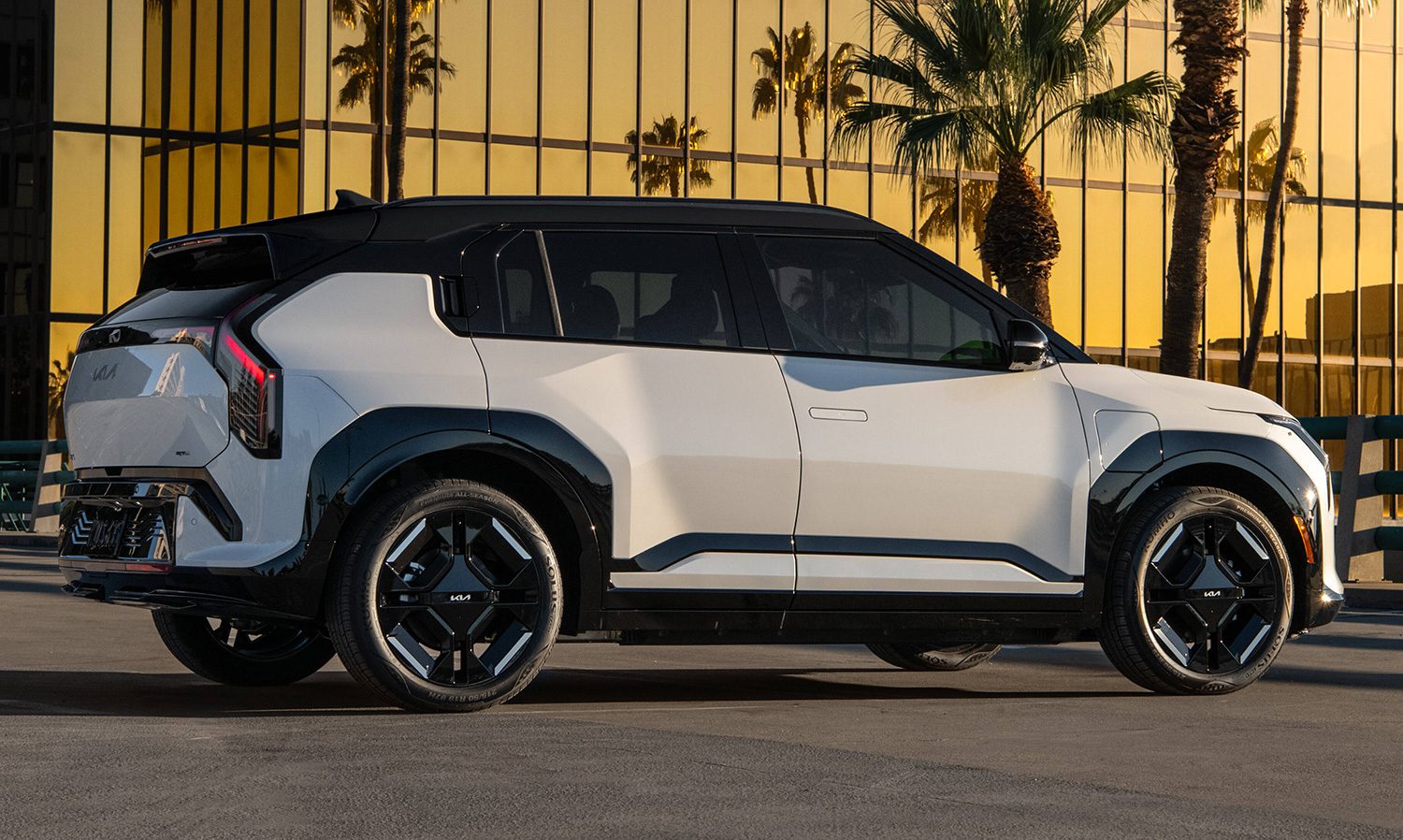
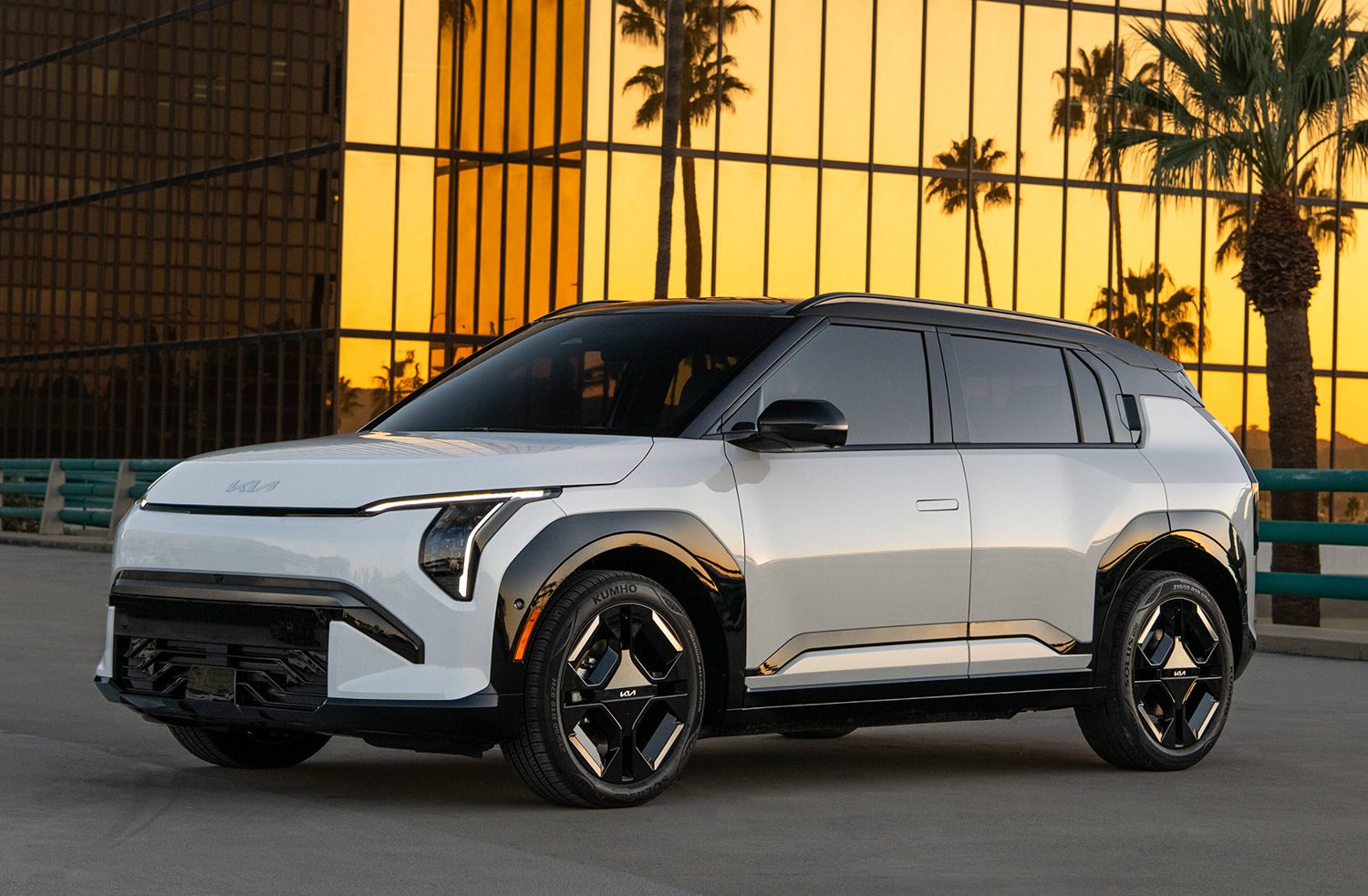
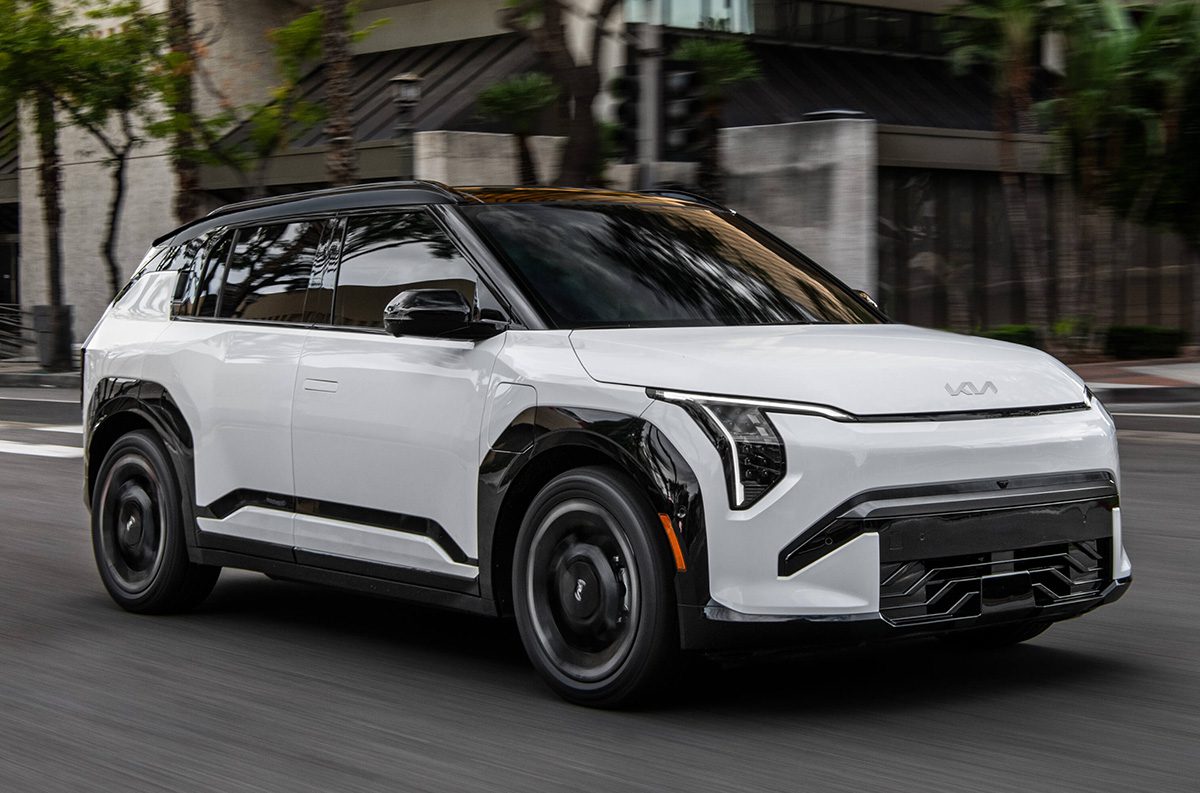
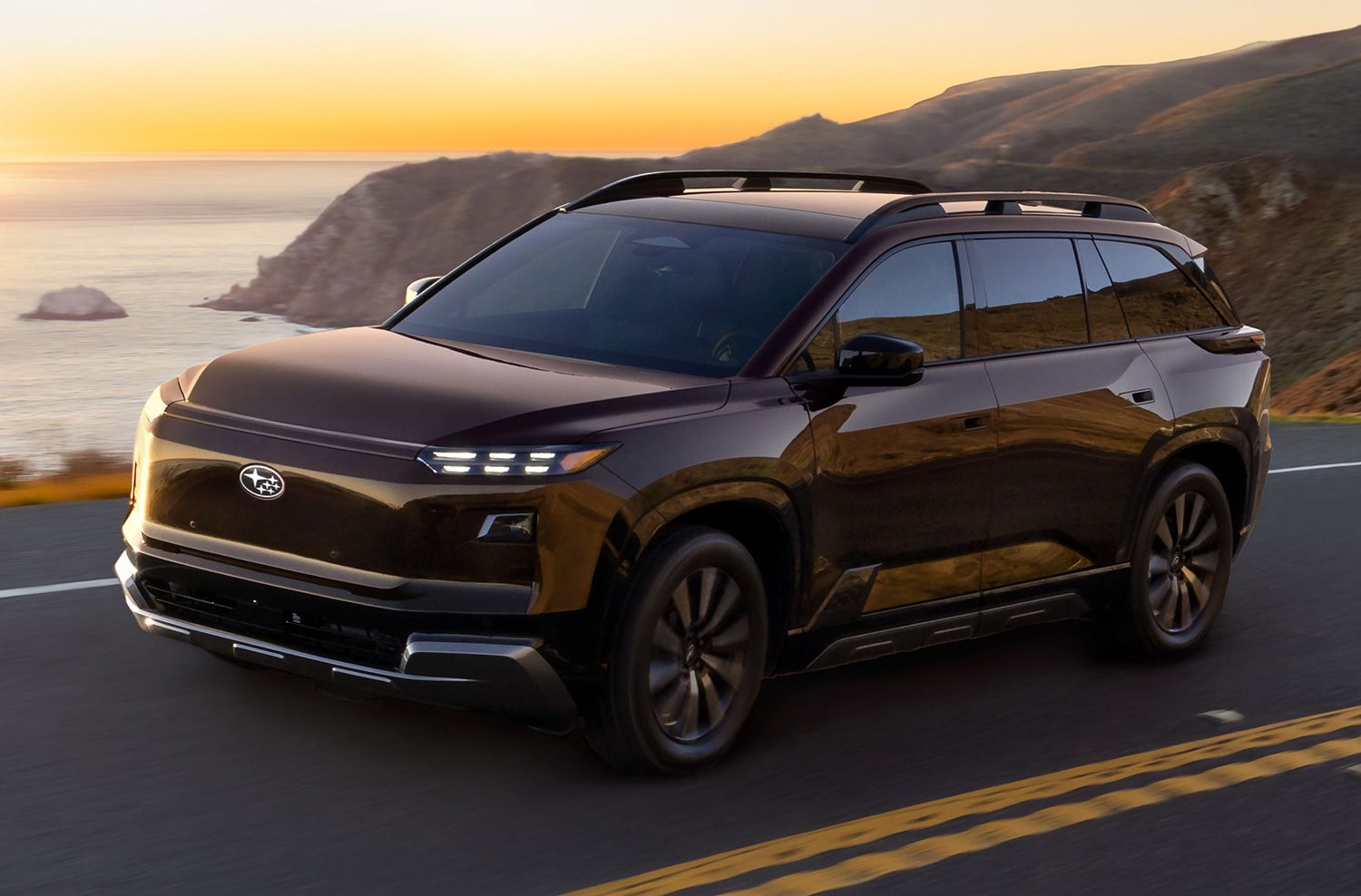
The 2027 Kia EV3 is a small SUV utility vehicle that’ll be the smallest, least expensive entry in Kia’s growing line of EVs; it’s expected to go on sale late this year. At the other end of the scale, the 2027 Subaru Getaway three-row SUV utility vehicle is the brand’s largest among the four EVs it’s announced. It too will land at dealerships in late 2026.
Small SUV, big range
The Kia EV3 has been on sale in South Korea for almost two years, followed by several European countries, Australia, and New Zealand. Demand in those markets has been substantial. In North America, it will compete in the low-priced end of the EV market. Pricing and specs won’t be released until later in the year, but it’s expected to compete with the Chevrolet Bolt (starting at $28,995), the Nissan Leaf ($31,485), and perhaps Ford’s upcoming midsize electric pickup, promised for $30,000 or so. All prices include the mandatory delivery fee.
In its US trim, the EV3 in US trim is promised to have up to 320 miles of EPA-rated battery range on certain versions, comfortably higher than the 300-mile mark that may be the new US standard for buyers concerned about range. Its design nods to the big, square EV9 three-row SUV, and Kia claims a drag coefficient of 0.275, low for such a small, square, upright vehicle.
Kia offers two options for battery capacity: the EV3 Light model uses a 58.3-kilowatt-hour pack, driving only the front wheels, and projected at a range of 220 miles. This is the model whose base price will no doubt be prominently featured in marketing. On higher trims (Wind, Land, GT-Line, and GT), battery capacity is 81.4 kWh. All-wheel drive is optional on Wind and Land, standard on GT-Line and GT. Motor output is 261 hp (192 kW) on all-wheel drive models, which rises to 288 hp (212 kW) on the higher-performance EV3 GT model.
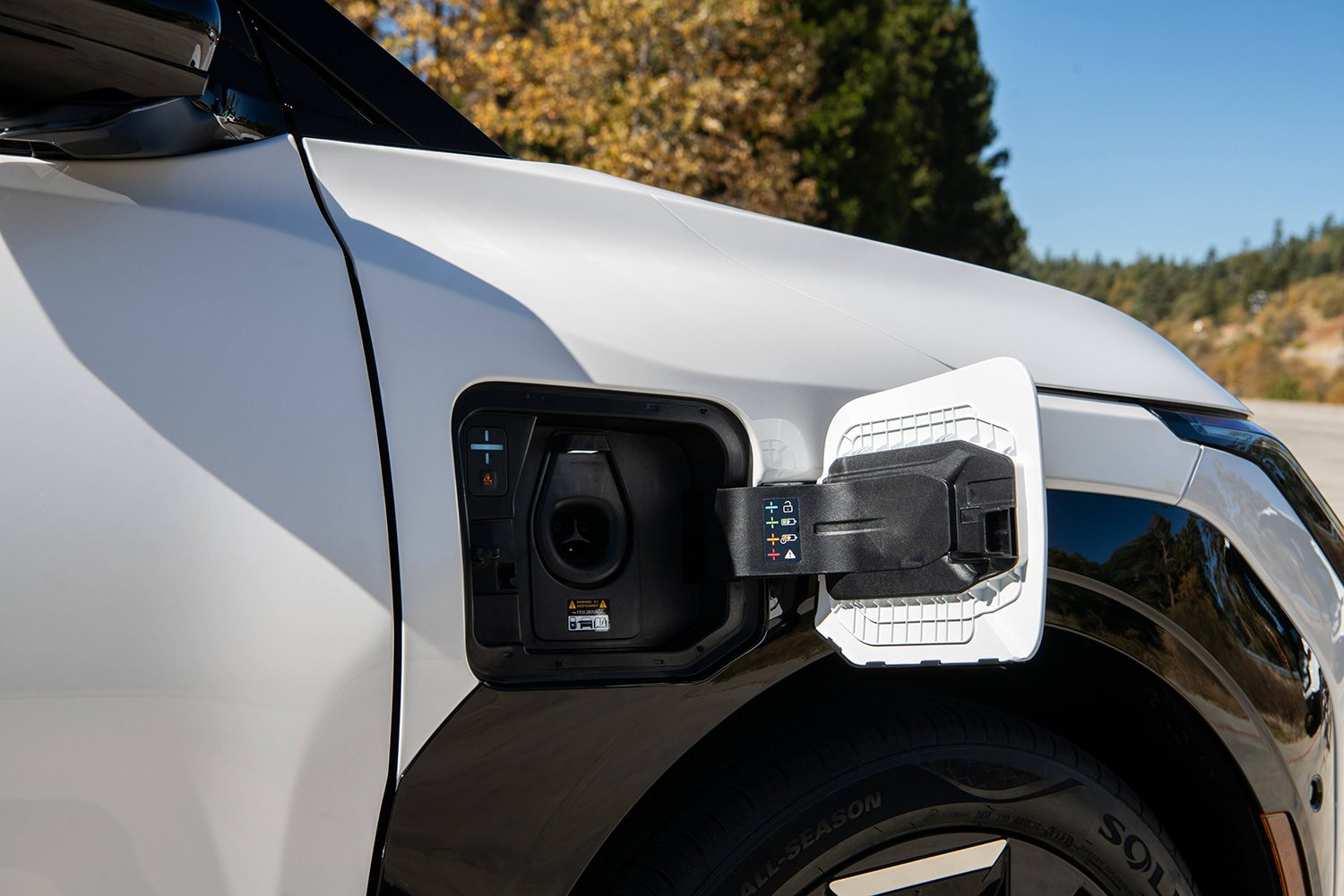
Charging is via a NACS port on the right-front fender. Kia claims DC fast charging from 10 to 80 percent in 29 minutes for the small battery, 31 minutes for the large one. As always, that’s under ideal conditions of battery temperature and ambient temperature, at a charging station capable of delivering the sustained current required. Plug and Charge is standard, allowing “plug it in and walk away” charging once set up. Kia didn’t provide a rating for onboard AC charging.
Reflecting the broad appeal of using an EV as a portable source of electricity, the EV3 will offer vehicle-to-load (V2L) power outputs. Using a bidirectional Wallbox home charging station, it will also offer vehicle-to-home (V2H) capability to power a home during outages.
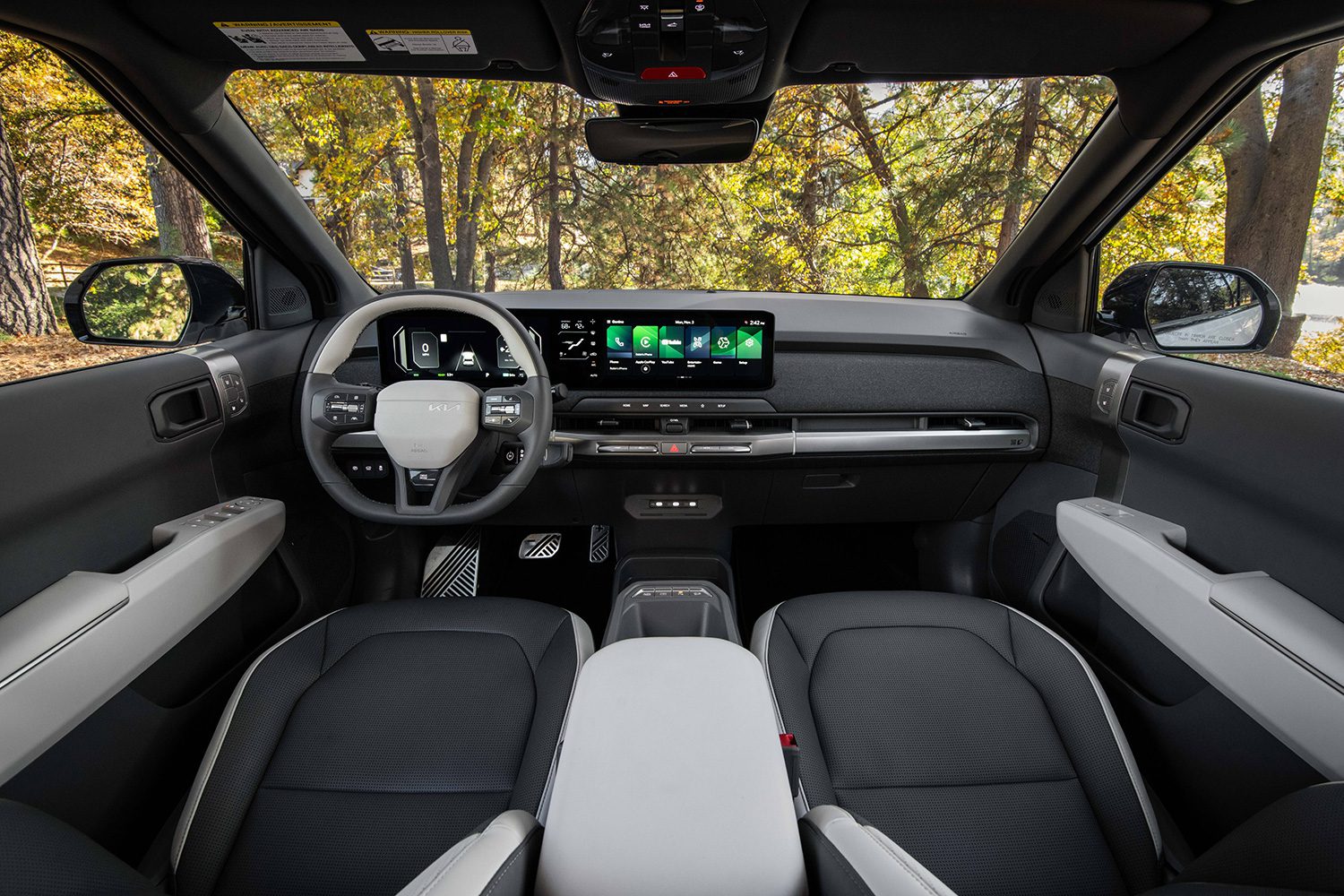
Inside the small SUV, the brand’s characteristic pair of 12.3-inch displays sit horizontally across the dash. The EV3 will offer some features and options rarely found on subcompact cars in the US, including a head-up display and Surround-View monitor. A power liftgate is available, giving access to 26.1 cubic feet of cargo volume behind the second row, or 56.5 cubic feet with the rear seat folded down.
To keep costs down, the EV3 is built on a lower-cost version of the Hyundai-Kia E-GMP battery-electric platform. One salient difference: a 400-volt battery architecture rather than the 800 volts of the EV6 hatchback utility and EV9 three-row SUV, its larger siblings. That lower-cost platform is also used for the Kia EV4, a sleek compact sedan whose US debut was indefinitely delayed in October after it was scheduled to go on sale in the first quarter of this year. With utility vehicles taking a growing share of the market, and sedans losing share, that may have been a smart decision—especially since the North American EV3 is expected to be assembled in Mexico, at the same Kia plant that builds the K4.
Big SUV, small maker
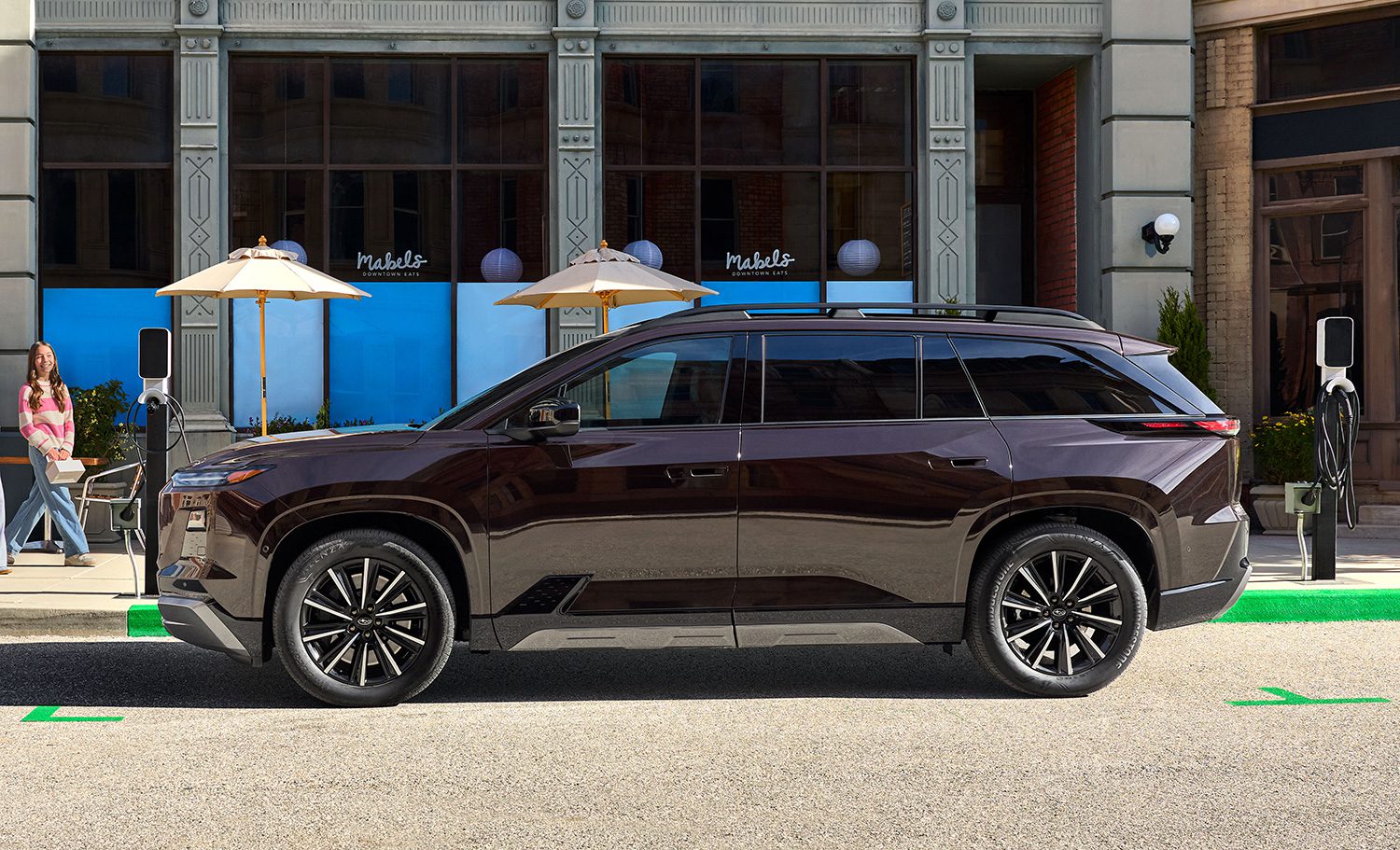
At the other end of the size scale, the 2027 Subaru Getaway 3-row SUV is the largest EV offering from the small Japanese maker that now sells two-thirds of its global output in North America. Like the EV3, it will have a rated range of more than 300 miles, but this seven-passenger crossover utility vehicle is aimed at the high end of Subaru’s range. The Getaway is the EV counterpart to the brand’s aging Ascent gasoline 3-row SUV; it becomes Subaru’s tenth separate US model line.
If the shape looks familiar, that’s because it’s a light redo of the Toyota Highlander battery-electric SUV announced early this year. It’s now the fourth Subaru EV to be a clone of a Toyota, following the Solterra hatchback (Toyota bZ nee bZ4X), Uncharted small hatchback (Toyota C-HR EV), and Trailseeker wagon or utility vehicle (Toyota bZ Woodland)—the latter being the only one whose shape genuinely reads as a Subaru.
Powered by a 95.8-kWh battery pack, every Getaway comes standard with all-wheel drive—a Subaru hallmark since the 1990s—provided by a pair of electric motors rated at 420 hp (309 kW) combined. The 0-to-60-mph acceleration time for this seven-passenger SUV is quoted at “less than 5 seconds,” and its towing capacity is up to 3,500 pounds.
Like the smaller EV3, the Getaway charges via a NACS port on the right-front fender. Subaru quotes a 10-to-80-percent DC fast charging time at up to 150 kW of “approximately 30 minutes”–again under those ideal conditions. Battery preconditioning is standard, and the front Daytime Running Lights double as charging-status indicators when the car is plugged in.
In the first half of 2027, a “standard-range” model with a lower battery capacity of 77.0 kWh will be offered. It too will have AWD standard, but details will have to wait until then.
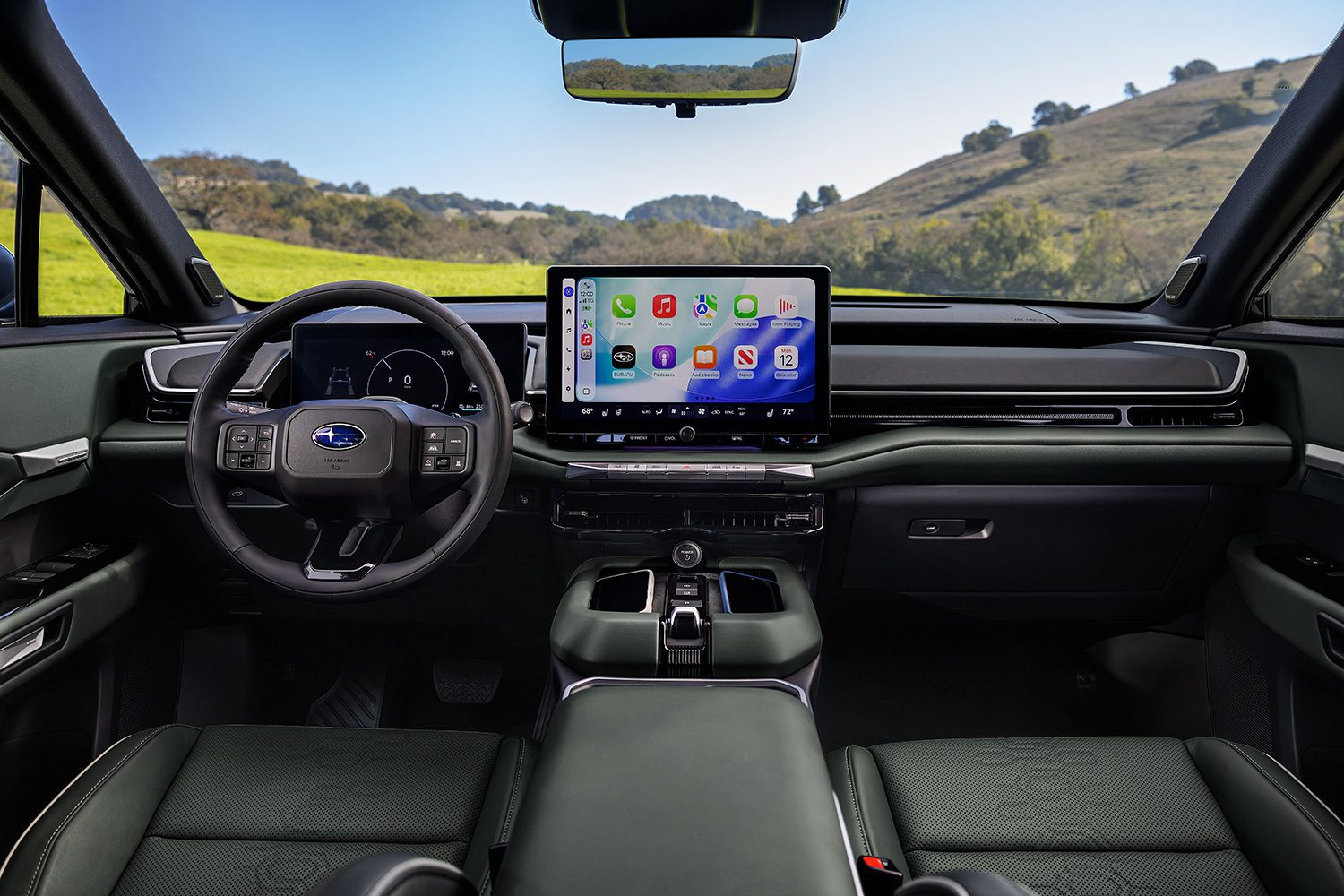
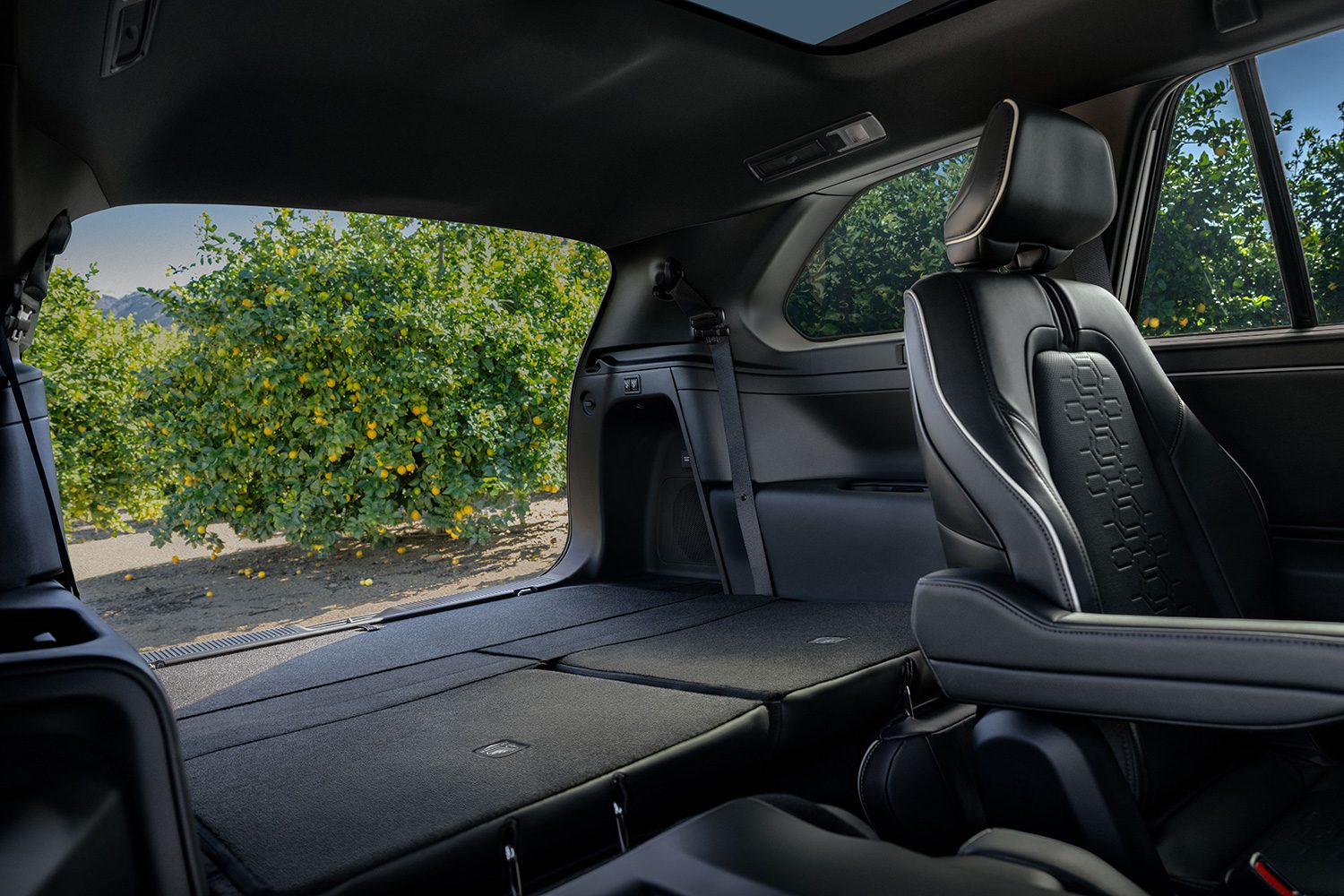
Inside, the Getaway uses a 12.3-inch digital instrument cluster—the standard Toyota setup—and a central 14-inch touchscreen display. Heated front seats are standard, with a heated steering wheel and an array of heated second- and third-row seats, ventilated seats, and more either standard on certain trims or optional.
Other features and options befit a three-row SUV likely used to carry families. Those include three-zone climate control that includes dedicated vents for the third row, a cup holder at every seat, USB-C charge ports for every row, and an optional panoramic moonroof. And “most” versions of the Getaway will have the brand’s characteristic ladder-type roof rails as standard, allowing owners of other Subaru models to use their existing Thule carriers and other roof accessories seen on Subies all across the country.
Unlike the Korea-built EV3, the 2027 Subaru Getaway will be assembled in the United States, at the Toyota plant that builds its Toyota Highlander twin in Georgetown, Kentucky. That exempts it from tariffs on imported vehicles, and it marks only the second US assembly plant for Subaru, which builds a majority of its gasoline models in its Lafayette, Indiana, plant.
Magna, one of the world’s largest automotive suppliers, has introduced DHD REX, a single-motor dedicated hybrid drive for range extended electric vehicles (REEVs). The ready-to-integrate system is built on a modular architecture designed for OEMs operating across markets with different regulatory requirements, infrastructure conditions and customer expectations.
DHD REX runs in three modes: pure electric driving, a generating mode in which the ICE charges the battery for range extension, and an optional parallel hybrid mode for highway performance. The single-motor design reduces cost and packaging complexity compared to dual-motor configurations. Magna says the system is validated across B through E vehicle segments in AWD layouts including SUVs, and integrates into both ICE-based platforms and BEV-derived architectures.
In a range extended EV, the combustion engine runs as a generator in most conditions rather than driving the wheels—the electric motor handles propulsion. DHD REX’s optional parallel mode adds the ability for the ICE to contribute mechanical drive at highway speeds, where the efficiency penalty of the generator-motor conversion path is most pronounced.
DHD REX complements Magna’s DHD Duo, a dual e-motor dedicated hybrid already in series production. The single-motor architecture targets OEMs that want range extension capability without the cost and packaging of a two-motor system, and the modular design adapts to both ICE-based platforms being electrified and native BEV architectures adding a range extender.
“DHD REX reflects our commitment to adaptable, customer-focused solutions that support a wide range of performance and market expectations,” said Diba Ilunga, President Magna Powertrain.
Off-the-shelf controllers with safety certifications are giving e-mobility engineers a false sense of security.
An off-the-shelf BMS with a third-party functional safety certification sounds like a solved problem. SIL-rated, ASIL-rated, ready to drop into your e-mobility battery pack. But according to Rich Byczek, Global Chief Engineer for Batteries at Intertek, that certification probably doesn’t cover what you think it covers.
“Certified BMS systems, meaning certified systems that have functional safety certifications from a third party, don’t necessarily address these functions,” Byczek told Charged during a recent webinar (now available to watch on demand). “They just look at the controller as a more generic electrical system.”
The problem: most certifications evaluate the controller hardware against a general integrity standard (IEC 61508, ISO 26262 or ISO 13849). They verify that the electronics are reliable. They don’t verify that the controller monitors individual cell voltages, manages cell-level temperature limits or handles the specific failure modes of lithium-ion chemistry.
Fuses don’t protect at the cell level
The gap is sharpest with passive protection. A pack-level fuse can interrupt a gross overcurrent event, but it’s blind to an individual cell in a series string being driven past its voltage limits. That requires active, per-cell monitoring, and a generic certified controller may not have the inputs and outputs to deliver it.
For e-mobility systems specifically, Byczek stressed that the failure modes and effects analysis (FMEA) must evaluate overvoltage, undervoltage, overcharge, overdischarge, over- and under-temperature, short circuit and excessive current, all at the cell level. “We look at those at the cell level, not only at the macro or battery pack level,” he said.
This is a different world from portable devices, where legacy standards like IEC 62133 rely on type tests and single-fault evaluations. Those standards were designed for products a user could set down and walk away from.
E-mobility doesn’t work that way. “You’re literally riding on top of that battery, potentially going at a fairly high speed,” said Byczek. “You can’t just get away from it.”
Start with the FMEA, not the certificate
The fix isn’t complicated, but it does require work. Start with an FMEA that covers every safety-critical function your BMS must perform, at the cell level. Then verify that your controller (certified or not) actually has the architecture to deliver each one. A certified controller is a starting point, not a finish line.
The standards themselves can be mixed and matched. SIL, ASIL and Performance Levels don’t map one-to-one, but regulators accept cross-framework approaches as long as your risk assessment demonstrably covers every identified hazard. For BMS systems, you’re typically targeting SIL 2, ASIL B or PLc, but the specific level matters less than proving your system can fail safely when a sensor drifts, a resistor opens or a communication link drops.
For teams pivoting from automotive EV programs into adjacent markets like forklifts, floor scrubbers and personal mobility devices, this is the adjustment that matters most. The batteries may be smaller, but the safety obligations are not.
Watch the full webinar: Rich Byczek’s complete presentation on applying functional safety to e-mobility battery systems is available on demand.
ENNOVI has secured a German patent for its adhesive-free lamination technology for battery cell contacting systems (CCS). The laser-based process eliminates the adhesives used in conventional hot and cold lamination, and the company says the technology is already validated—meaning OEMs can adopt it without having to prove out the manufacturing process themselves.
CCS components connect and integrate individual cells within a battery module, typically combining busbars, voltage sense lines and the physical laminate layers that hold them together. Conventional CCS lamination bonds those layers using adhesives in hot or cold press processes. ENNOVI’s laser lamination achieves the same bond without adhesive material. The technology supports cylindrical, prismatic and soft pouch cell architectures. With this patent, ENNOVI now offers three lamination options (hot, cold and adhesive-free) for its CCS designs, giving battery engineers a process choice matched to their cell format.
The patent’s main commercial argument is risk reduction. Developing a new lamination process in-house takes time and carries qualification uncertainty; using a pre-validated, patented technology lets engineering teams skip that work. ENNOVI supports co-development and tailored engineering engagement, which it says allows OEM partners to maintain control over their product roadmaps.
The technology was developed at ENNOVI’s Advanced Solutions Engineering Center in Neckarsulm, which includes prototyping, testing and R&D capabilities. The facility holds ISO 9001:2015 and TISAX certifications—the latter covering automotive supply chain data security requirements.
“Automotive OEMs and battery manufacturers can design in the unique features of adhesive-free lamination, reduce engineering risk by using a technology that is already validated, rather than reinventing it,” said Randy Tan, Product Portfolio Director for Energy Systems at ENNOVI.

 Login
Login