Reading view

Why Data Sovereignty Is Becoming a Strategic Imperative for AI Infrastructure
As artificial intelligence reshapes how organizations generate value from data, a quieter shift is happening beneath the surface. The question is no longer just how data is protected, but where it is processed, who governs it, and how infrastructure decisions intersect with national regulation and digital policy.

Datalec Precision Installations (DPI) is seeing this shift play out across global markets as enterprises and public sector organizations reassess how their data center strategies support both AI performance and regulatory alignment. What was once treated primarily as a compliance issue is increasingly viewed as a foundational design consideration.

Sovereignty moves upstream.

Data sovereignty has traditionally been addressed after systems were deployed, often resulting in fragmented architectures or operational workarounds. That approach is becoming less viable as regulations tighten and AI workloads demand closer proximity to sensitive data.

Organizations are now factoring sovereignty into infrastructure planning from the start, ensuring data remains within national borders and is governed by local legal frameworks. For many, this shift reduces regulatory risk while creating clearer operational boundaries for advanced workloads.

AI raises the complexity

AI intensifies data governance challenges by extending them beyond storage into compute and model execution. Training and inference processes frequently involve regulated or sensitive datasets, increasing exposure when data or workloads cross borders.

This has driven growing interest in sovereign AI environments, where data, compute, and models remain within a defined jurisdiction. Beyond compliance, these environments offer greater control over digital capabilities and reduced dependence on external platforms.

Balancing performance and governance 

Supporting sovereign AI requires infrastructure that can deliver high-density compute and low-latency performance without compromising physical security or regulatory alignment. DPI addresses this by delivering AI-ready data center environments designed to support GPU-intensive workloads while meeting regional compliance requirements.

The objective is to enable organizations to deploy advanced AI systems locally without sacrificing scalability or operational efficiency.

Regional execution at global scale

Demand for localized, compliant infrastructure is growing across regions where digital policy and economic strategy intersect. DPI’s expansion across the Middle East, APAC, and other international markets reflects this trend, combining regional delivery with standardized operational practices across 21 global entities.

According to Michael Aldridge, DPI’s Group Information Security Officer, organizations increasingly view localized infrastructure as a way to future-proof their digital strategies rather than constrain them.

Compliance as differentiation

As AI adoption accelerates, infrastructure and governance decisions are becoming inseparable. Organizations that can control where data lives and how AI systems operate are better positioned to manage risk, meet regulatory expectations, and move faster in regulated markets.

DPI’s approach reflects a broader industry shift: compliance is no longer just about meeting requirements, but about enabling innovation in an AI-driven environment.

To read DPI’s full perspective on data sovereignty and AI readiness, visit the company’s website.

The post Why Data Sovereignty Is Becoming a Strategic Imperative for AI Infrastructure appeared first on Data Center POST.
  •  

Duos Edge AI Earns PTC’26 Innovation Honor

Duos Technologies Group Inc. (Nasdaq: DUOT), through its operating subsidiary Duos Edge AI, Inc., received the Outstanding Innovation Award at Pacific Telecommunication Conference 2026 (PTC’26). This honor recognizes Duos Edge AI’s leadership in modular Edge Data Center (EDC) solutions that boost efficiency, scalability, security, and customer experience.

Duos Edge AI’s capital-efficient model supports rapid 90-day installations and scalable growth tailored to regional needs like education, healthcare, and municipal services. High-availability designs deliver up to 100 kW+ per cabinet with resilient, 24/7 operations positioned within 12 miles of end users for minimal latency.

“This recognition from Pacific Telecommunications Council (PTC) is a meaningful validation of our strategy and execution,” said Doug Recker, President of Duos and Founder of Duos Edge AI. “Our mission has been to bring secure, low-latency digital infrastructure directly to communities that need it most. By deploying edge data centers where people live, learn, and work, we’re helping close the digital divide while building a scalable platform aligned with long-term growth and shareholder value.”

The award spotlights Duos Edge AI’s patented modular EDCs deployed in underserved communities for low-latency, enterprise-grade infrastructure. These centers enable real-time AI processing, telemedicine, digital learning, and carrier-neutral connectivity without distant cloud reliance.

Duos Edge AI thanks partners like Texas Regions 16 and 3 Education Service Centers, Dumas ISD, and local leaders embracing localized tech for equity.

To learn more about Duos Edge AI, visit www.duosedge.ai.

The post Duos Edge AI Earns PTC’26 Innovation Honor appeared first on Data Center POST.

  •  

Resolute CS and Equinix Close the Last-Mile Gap with Automated Connectivity Platform

Equinix customers can now order last-mile connectivity from enterprise edge locations to any of Equinix’s 270+ data centers globally, eliminating weeks of manual sourcing and the margin stacking that has long plagued enterprise network procurement.

The collaboration integrates Resolute CS’s NEXUS platform directly into the Equinix Customer Portal, giving enterprises transparent access to 3,200+ carriers across 180 countries. Rather than navigating opaque pricing through multiple intermediaries, customers can design, price, and order last-mile access with full visibility into costs and carrier options.

The Last-Mile Problem

While interconnection platforms like Equinix Fabric have transformed data center connectivity, the edge connectivity gap has remained a persistent friction point. Enterprises connecting branch offices or remote facilities to data centers typically face weeks-long sourcing cycles, opaque pricing structures with 2-4 layers of margin stacking (25-30% each), and inconsistent delivery across geographies.

This inefficiency becomes particularly acute as AI workloads shift toward distributed architectures. Unlike centralized applications, AI infrastructure increasingly requires connectivity across edge locations, multiple data centers, and cloud platforms, creating exponentially more last-mile requirements that manual sourcing processes cannot efficiently handle.

How It Works

Resolute NEXUS automates route design, identifies diversity and resiliency options, simplifies cloud access paths, and coordinates direct ordering with carriers. The result: enterprises can manage connectivity from branch office to data center to cloud through a single portal, with transparent pricing and no hidden margin layers.

“We are empowering customers to design their network architecture without access constraints,” said Patrick C. Shutt, CEO and co-founder of Resolute CS. “With Equinix and Resolute NEXUS, customers can design, price, and order global last-mile access with full transparency, removing complexity and lowering costs.”

Benefits for Carriers Too

The platform also creates opportunities for network providers. By operating as a carrier-neutral marketplace, Resolute NEXUS gives providers direct visibility into qualified enterprise demand, improved infrastructure utilization, and lower customer acquisition costs, all without the traditional intermediary layers.

AI and Distributed Infrastructure

With Equinix operating 270+ AI-optimized data centers across 77 markets, automated last-mile sourcing directly addresses the connectivity requirements for distributed AI deployments. Enterprises can now provision edge-to-cloud connectivity with the speed and transparency expected from modern cloud services.

Equinix Fabric customers can access the platform immediately through the Equinix Customer Portal by navigating to “Find Service Providers” and searching for Resolute NEXUS – Last Mile Access.

To learn more, read the full press release here.

The post Resolute CS and Equinix Close the Last-Mile Gap with Automated Connectivity Platform appeared first on Data Center POST.

  •  

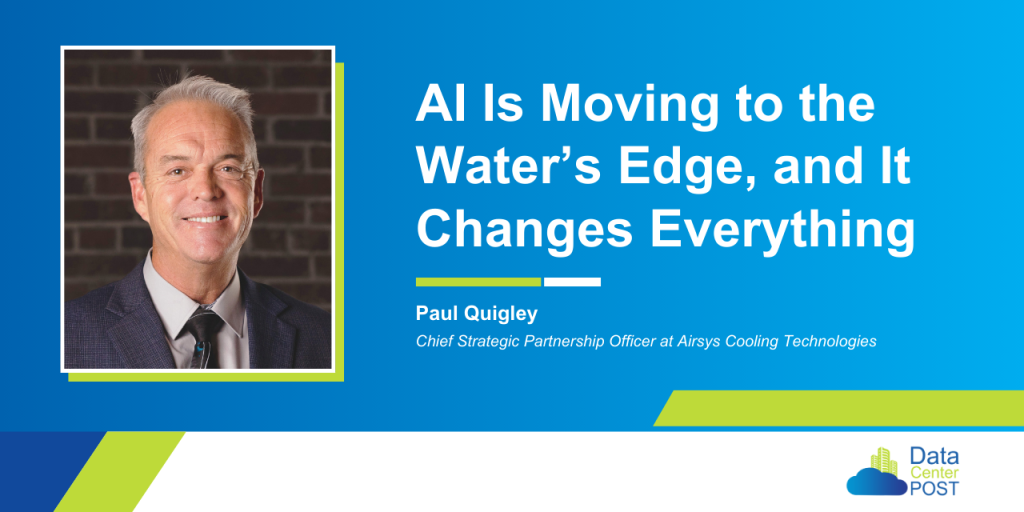
AI Is Moving to the Water’s Edge, and It Changes Everything

A new development on the Jersey Shore is signaling a shift in how and where AI infrastructure will grow. A subsea cable landing station has announced plans for a data hall built specifically for AI, complete with liquid-cooled GPU clusters and an advertised PUE of 1.25. That number reflects a well-designed facility, but it highlights an emerging reality. PUE only tells us how much power reaches the IT load. It tells us nothing about how much work that power actually produces.

As more “AI-ready” landing stations come online, the industry is beginning to move beyond energy efficiency alone and toward compute productivity. The question is no longer just how much power a facility uses, but how much useful compute it generates per megawatt. That is the core of Power Compute Effectiveness, PCE. When high-density AI hardware is placed at the exact point where global traffic enters a continent, PCE becomes far more relevant than PUE.

To understand why this matters, it helps to look at the role subsea landing stations play. These are the locations where the massive internet cables from overseas come ashore. They carry banking records, streaming platforms, enterprise applications, gaming traffic, and government communications. Most people never notice them, yet they are the physical beginning of the global internet.

For years, large data centers moved inland, following cheaper land and more available power. But as AI shifts from training to real-time inference, location again influences performance. Some AI workloads benefit from sitting directly on the network path instead of hundreds of miles away. This is why placing AI hardware at a cable landing station is suddenly becoming not just possible, but strategic.

A familiar example is Netflix. When millions of viewers press Play, the platform makes moment-to-moment decisions about resolution, bitrate, and content delivery paths. These decisions happen faster and more accurately when the intelligence sits closer to the traffic itself. Moving that logic to the cable landing reduces distance, delays, and potential bottlenecks. The result is a smoother user experience.

Governments have their own motivations. Many countries regulate which types of data can leave their borders. This concept, often called sovereignty, simply means that certain information must stay within the nation’s control. Placing AI infrastructure at the point where international traffic enters the country gives agencies the ability to analyze, enforce, and protect sensitive data without letting it cross a boundary.

This trend also exposes a challenge. High-density AI hardware produces far more heat than traditional servers. Most legacy facilities, especially multi-tenant carrier hotels in large cities, were never built to support liquid cooling, reinforced floors, or the weight of modern GPU racks. Purpose-built coastal sites are beginning to fill this gap.

And here is the real eye-opener. Two facilities can each draw 10 megawatts, yet one may produce twice the compute of the other. PUE will give both of them the same high efficiency score because it cannot see the difference in output. Their actual productivity, and even their revenue potential, could be worlds apart.

PCE and ROIP, Return on Invested Power, expose that difference immediately. PCE reveals how much compute is produced per watt, and ROIP shows the financial return on that power. These metrics are quickly becoming essential in AI-era build strategies, and investors and boards are beginning to incorporate them into their decision frameworks.

What is happening at these coastal sites is the early sign of a new class of data center. High density. Advanced cooling. Strategic placement at global entry points for digital traffic. Smaller footprints but far higher productivity per square foot.

The industry will increasingly judge facilities not by how much power they receive, but by how effectively they turn that power into intelligence. That shift is already underway, and the emergence of AI-ready landing stations is the clearest signal yet that compute productivity will guide the next generation of infrastructure.

# # #

About the Author

Paul Quigley is the former President and current Chief Strategic Partnership Officer of Airsys Cooling Technologies, and a global advocate for high density, energy efficient data center design. With more than three decades in HVAC and mission critical cooling, he focuses on practical solutions that connect energy stewardship with real world compute performance. Paul writes and speaks internationally about PCE, ROIP, and the future of data center health in the age of AI.

The post AI Is Moving to the Water’s Edge, and It Changes Everything appeared first on Data Center POST.

  •  

Evocative Advances Data Center Growth Strategy With New Financing

Evocative, a global provider of Internet infrastructure, has announced that it has raised debt financing from a large global investment firm, complementing continued equity support from its long-term investment partner, Crestline Investors. The financing reflects the next phase of a multi-year growth plan focused on scaling capacity in step with customer demand.

The investment will enable targeted infrastructure initiatives, including capacity upgrades, strategic metro expansions, and continued enhancements across Evocative’s data center, network, bare metal, and cloud platforms as the company responds to rising requirements for power, space, and network density to support enterprise and service provider customers.

“Crestline has worked closely with Evocative as the company continues to execute its strategic business plan,” said Will Palmer, Executive Managing Director and Co-Head of US Corporate Credit. “We believe Evocative is well positioned to meet the increasing demands of the digital infrastructure industry, and we are pleased to support their ongoing expansion and long-term vision.”

Crestline Investors has partnered with Evocative for several years, supporting the company through multiple phases of its strategic growth plan and backing its efforts to scale a global digital infrastructure platform focused on high-density colocation and connectivity. This latest financing builds on that foundation, providing capital to expand where demand is already taking shape.

“This financing marks a significant milestone in Evocative’s continued journey to expand capacity and deliver on our long-term vision of high density colocation and a robust global network to support next generation AI applications,” said Derek Garnier, CEO at Evocative. “We remain committed to building with discipline, scale, and customer focus. Our aim is to continue delivering the space, power, and connectivity required for AI development, hybrid cloud environments, and infrastructure diversification.”

As demand for AI-driven and hybrid infrastructure continues to grow, Evocative remains focused on expanding capacity with discipline across its digital infrastructure platform, aligning investment with real-world deployment needs rather than speculative buildout.

To learn more about Evocative’s digital infrastructure solutions, read the full press release here.

The post Evocative Advances Data Center Growth Strategy With New Financing appeared first on Data Center POST.

  •  

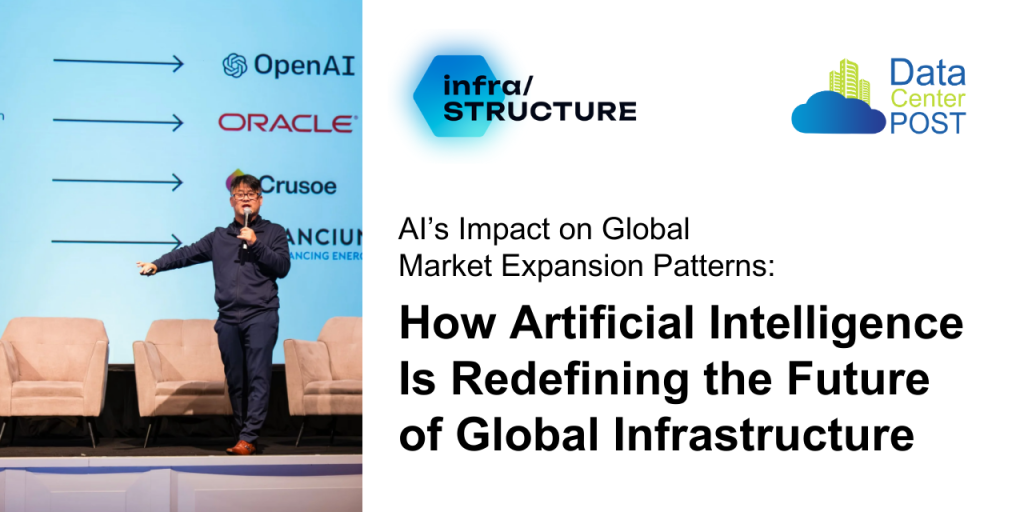
AI’s Impact on Global Market Expansion Patterns: How Artificial Intelligence Is Redefining the Future of Global Infrastructure

At infra/STRUCTURE Summit 2025, industry leaders from Inflect, NTT and NextDC explored how AI is accelerating development timelines, reshaping deal structures, and redrawing the global data center map.

The infra/STRUCTURE Summit 2025, held at The Wynn Las Vegas from October 15–16, 2025 convened the brightest minds in digital infrastructure to explore the seismic shifts underway in the age of artificial intelligence. Among the most forward-looking sessions was “AI Impact on Global Market Expansion Patterns,” a discussion that unpacked how AI is transforming where and how data centers are developed, financed, and operated worldwide.

Moderated by Swapna Subramani, Research Director, IMEA, for Structure Research, the panel featured leading executives including Mike Nguyen, CEO, Inflect; Steve Lim, SVP, Marketing & GTM, NTT Global Data Centers; Craig Scroggie, CEO and Managing Director, NEXTDC. Together, they examined how the explosive demand for AI compute power is pushing developers to rethink long-held assumptions about geography, energy, and risk.

AI Is Rewriting the Rules of Global Expansion

For decades, site selection decisions revolved around a handful of core variables: power cost, connectivity, and proximity to major user populations. But in 2025, those rules are being rewritten by the unprecedented scale of AI workloads.

Regions once considered secondary are suddenly front-runners. Scroggie noted how saturation in markets like Singapore and Hong Kong has forced expansion across Thailand, Indonesia, Malaysia, and India, each now racing to deliver power, land, and permitting capacity fast enough to attract global hyperscalers.

“You can’t build large campuses in Singapore anymore,” Scroggie said. “But throughout Southeast Asia, we’re seeing rapid acceleration as operators balance scale, sustainability, and access to emerging population centers.”

The panelists agreed that energy constraints, not capital, are now the primary limiting factor. “The short term is about finding locations where power exists at scale,” explained Scroggie. “The longer-term challenge is developing new storage and generation models to make that power sustainable.”

Geopolitics and Sovereignty Are Shaping Investment

AI’s global reach has also brought geopolitics and national sovereignty to the forefront of infrastructure strategy.

“We’re living in more challenging times than ever before,” said Nguyen, referencing chip export restrictions and international trade interventions. “AI is no longer just a technological conversation, it’s a matter of national defense and economic competitiveness.”

He noted that ongoing trade restrictions with China are reshaping who gets access to advanced chips and where they can be deployed. “The combination of geopolitical and local legislative pressures determines the future of global trade management,” Nguyen said.

As countries strengthen data sovereignty and privacy laws, regional differentiation is intensifying. “Every geography has a different view,” Nguyen continued. “Some nations are creating frameworks to enable AI and cross-border data sharing, others are locking down their ecosystems entirely.”

Scroggie echoed this, adding that sovereignty-driven strategies are driving a surge in localized buildouts. “We’re seeing more countries push to ensure domestic control of digital assets,” he said. “That’s changing the structure of global supply chains and creating ripple effects that extend well beyond national borders.”

The Industry’s Race Against Time

The conversation turned toward construction velocity, a challenge every developer feels acutely.

“Are we building fast enough?” Subramani, the moderator of the conversation asked.

“Simply put, no,” said Scroggie. “We can’t keep up with demand. Traditional 12-to-24-month build cycles no longer align with AI’s acceleration curve. We have to find a way to build differently.”

The group discussed the need for new modular construction methods, accelerated permitting, and AI-assisted project management to meet scale and speed requirements.

Nguyen framed it within the broader context of industrial history. “We are standing at the dawn of the next industrial revolution,” he said. “Just as steam, electricity, and the internet reshaped economies, AI will redefine global competitiveness. The countries that can deliver sustainable, affordable power will lead.”

He pointed to the “Jacquard Paradox” of AI infrastructure: the more intelligence we produce, the cheaper it becomes, and the more of it the world demands. “The hallmark of global competitiveness will be the unit cost of producing intelligence,” Nguyen explained. “That requires deep collaboration between developers, energy providers, and governments.”

Evolving Deal Structures Reflect a More Complex Market

The financial framework of data center development is also changing dramatically. Traditional “build-to-suit” models are giving way to more creative, multi-tiered partnerships as both hyperscalers and institutional investors seek flexibility and risk mitigation.

“There’s a diversity of players now entering the market, some with deep operational experience, others completely new to the space,” said Scroggie. “Everyone’s chasing the same megawatts, but their risk tolerance and credit profiles vary widely.”

Scroggie also described how education and transparency have become critical. “We’re constantly advising clients on what’s feasible and what’s not. Many are coming in with unrealistic expectations about speed, power, or pricing. It’s part of our job to bridge that gap.”

The consensus was clear: AI-driven demand has transformed data centers from real estate assets into strategic infrastructure platforms, with financial, political, and environmental implications far beyond the industry itself.

Looking Ahead: The Next Decade of AI-Driven Infrastructure

As the discussion drew to a close, the panelists reflected on the extraordinary pace of change. “AI is not replacing, it’s additive,” said Scroggie. “Every new workload, every new inference model adds demand. The scale we’re dealing with is unprecedented.”

In this new era, speed, sustainability, and sovereignty are the defining dimensions of competitiveness. The industry’s success will hinge on its ability to innovate faster than the challenges it faces, whether those are regulatory, environmental, or geopolitical.

“We’re building the highways of the digital era,” said Nguyen in closing. “And like every industrial revolution before it, those who solve the energy equation will lead the world.”

Infra/STRUCTURE 2026: Save the Date

Want to tune in live, received all presentations, gain access to C-level executives, investors and industry leading research? Then save the date for infra/STRUCTURE 2026 set for October 7-8, 2026 at The Wynn Las Vegas.  Pre-Registration for the 2026 event is now open, and you can visit www.infrastructuresummit.io to learn more.

The post AI’s Impact on Global Market Expansion Patterns: How Artificial Intelligence Is Redefining the Future of Global Infrastructure appeared first on Data Center POST.
  •  

DPI Expands Its Middle East Presence as Digital Infrastructure Demand Surges

As the Middle East accelerates toward becoming a global digital hub, Datalec Precision Installations (DPI) is emerging as one of the most influential players shaping the region’s next generation of data center capacity. From rapid growth in the United Arab Emirates (UAE) to its strategic expansion into Saudi Arabia, DPI is building not only facilities, but long-term regional capability, technical leadership, and a sustainable supply chain that aligns with the Gulf’s digital ambitions.

A Growing Footprint in the UAE

DPI’s presence in the UAE has expanded quickly. What began with a small local team has evolved into a 51,000 square foot regional headquarters in Dubai that combines manufacturing, training, a marketing suite, and operational support. The company is approaching 100,000 man hours without a major incident and continues to deliver high value projects across Abu Dhabi and the broader region.

This growth is reinforced by DPI’s strong engagement with the regional ecosystem, including industry events, solution showcases, and ongoing collaboration with operators and integrators.

Saudi Arabia Becomes the Next Major Hub

DPI’s new office in Dammam is nearing completion and will formalize its expansion into Saudi Arabia. The move aligns with the Kingdom’s fast growing data center market, which is projected to surpass US$6 billion by 2027. DPI’s in region leadership brings extensive experience in grey space integration, lifecycle services, facilities management, and technical fit outs, enabling the company to support large scale digital development plans across the country.

Moving Beyond Whitespace to a Full Service Partner

Although known for whitespace delivery, DPI’s capabilities span the entire data center lifecycle. The company manages grey space technical fit outs, maintenance and lifecycle services, secure migrations, operational support, and bespoke technical installations. These end to end capabilities allow operators to scale efficiently as AI, cloud, and government digital programs accelerate.

DPI’s Dubai facility also reflects an ESG focused approach to manufacturing. The site is powered by a rooftop solar array, sources most materials from local suppliers, and uses waste reducing production methods that support both environmental goals and regional supply chain resilience.

With demand rising for high density, AI ready environments, DPI continues to invest in modular, high load, and custom infrastructure solutions. Its Hyperion Ceiling System and in house cabinet manufacturing capabilities enable faster deployment and greater adaptability across diverse regional projects.

Looking Ahead

Sean Christie, DPI’s Regional Director for the Middle East, notes that the company’s growth reflects both market momentum and long term commitment.

“As the Middle East continues to position itself as a global digital hub, DPI is committed to being part of that journey for the long term. We are laying the foundation for a smarter, more resilient, and more sustainable digital future.”

With expanding operations in the UAE and Saudi Arabia and a model centered on sustainability, local capability, and technical excellence, DPI is well positioned to support the region’s next phase of digital infrastructure development.

To read more, click here.

The post DPI Expands Its Middle East Presence as Digital Infrastructure Demand Surges appeared first on Data Center POST.
  •  

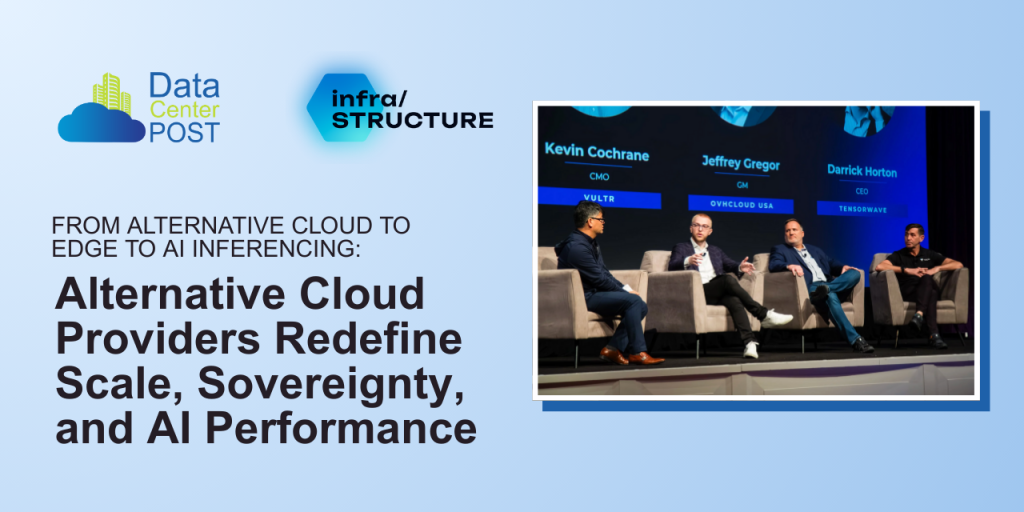
Alternative Cloud Providers Redefine Scale, Sovereignty, and AI Performance

At this year’s infra/STRUCTURE Summit 2025, held at the Wynn Las Vegas, one of the most forward-looking conversations came from the session “From Cloud to Edge to AI Inferencing.” Moderated by Philbert Shih, Managing Director at Structure Research, the discussion brought together a diverse panel of innovators shaping the future of cloud and AI infrastructure: Kevin Cochrane, Chief Marketing Officer at Vultr; Jeffrey Gregor, General Manager at OVHcloud; and Darrick Horton, CEO at TensorWave.

Together, they explored the emergence of new platforms bridging the gap between hyperscale cloud providers and the next wave of AI-driven, distributed workloads.

The Rise of Alternatives: Choice Beyond the Hyperscalers

Philbert Shih opened the session by emphasizing the growing diversity in the cloud ecosystem, from legacy hyperscalers to specialized, regionally focused providers. The conversation quickly turned to how these companies are filling critical gaps in the market as enterprises look for more flexible, sovereign, and performance-tuned infrastructure for AI workloads.

Cochrane shared insights from a recent survey of over 2,000 CIOs, revealing a striking shift: while just a few years ago nearly all enterprises defaulted to hyperscalers for AI development, only 18% plan to rely on them exclusively today. “We’re witnessing a dramatic change,” Cochrane said. “Organizations are seeking new partners who can deliver performance and expertise without the lock-in or limitations of traditional cloud models.”

Data Sovereignty and Global Reach

Data sovereignty remains a key differentiator, particularly in Europe. “Being European-born gives us a unique advantage,” Gregor noted. “Our customers care deeply about where their data resides, and we’ve built our infrastructure to reflect those values.”

He also highlighted OVHcloud’s focus on sustainability and self-sufficiency, from designing and operating its own servers to pioneering water-cooling technologies across its data centers. “Our mission is to bring the power of the cloud to everyone,” Gregor said. “From startups to the largest public institutions, we’re enabling a wider range of customers to build, train, and deploy AI workloads responsibly.”

AI Infrastructure at Scale

Horton described how next-generation cloud providers are building infrastructure purpose-built for AI, especially large-scale training and inferencing workloads. “We design for the most demanding use cases, foundational model training, and that requires reliability, flexibility, and power optimization at the cluster scale.”

Horton noted that customers are increasingly choosing data center locations based on power availability and sustainability, underscoring how energy strategy is becoming as critical as network performance. TensorWave’s approach, Horton added, is to make that scale accessible without the hyperscale overhead.

Democratizing Access to AI Compute

Across the panel, a common theme emerged: accessibility. Whether through Vultr’s push to simplify AI infrastructure deployment via API-based services, OVHcloud’s distributed “local zone” strategy, or TensorWave’s focus on purpose-built GPU clusters, each company is working to make advanced compute resources more open and flexible for developers, enterprises, and AI innovators.

These alternative cloud providers are not just filling gaps — they’re redefining what cloud infrastructure can look like in an AI-driven era. From sovereign data control to decentralized AI processing, the cloud is evolving into a more diverse, resilient, and performance-oriented ecosystem.

Looking Ahead

As AI reshapes industries, the demand for specialized infrastructure continues to accelerate. Sessions like this one underscored how innovation is no longer confined to the hyperscalers. It’s emerging from agile providers who combine scale with locality, sustainability, and purpose-built design.

Infra/STRUCTURE 2026: Save the Date

Want to tune in live, receive all presentations, gain access to C-level executives, investors and industry leading research? Then save the date for infra/STRUCTURE 2026 set for October 7-8, 2026 at The Wynn Las Vegas. Pre-Registration for the 2026 event is now open, and you can visit www.infrastructuresummit.io to learn more.

The post Alternative Cloud Providers Redefine Scale, Sovereignty, and AI Performance appeared first on Data Center POST.
  •  

How Capacity Europe 2025 Framed the Future of Cloud, Connectivity, and AI

Capacity Europe 2025: Collaboration, Connectivity, and the Cloud-AI Convergence

The 24th edition of Capacity Europe, held October 21–23, 2025 at the InterContinental London – The O2, brought together more than 3,000 global leaders across the connectivity, cloud, data center, and digital infrastructure ecosystem. Over three impactful days, the event served as Europe’s largest platform for carriers, hyperscalers, data center operators, investors, and technology providers to exchange ideas and forge partnerships shaping the future of global connectivity.

Discussions throughout the event centered on the convergence of network and cloud infrastructure, the accelerating impact of artificial intelligence (AI), and the race to deliver sustainable, scalable capacity. The agenda featured over 150 speakers from organizations including Google Cloud, DE-CIX, Colt Technology, Equinix, NTT DATA, DigitalBridge, and EXA Infrastructure.

Highlighted speakers included Lex Coors, President, EUDCA & Chief Datacenter Technology & Engineering Officer at Digital Realty, and Vladimir Prodanovic, Principal Program Manager at NVIDIA, who both shared insights during the panel “Build Today or Buy Forever: The Role of European Data Centres in Facilitating the AI Explosion.” Tony Rossabi, Founder & Managing Member of Ocolo, and Phillip Marangella, Chief Marketing & Product Officer at EdgeConneX, joined the session “Chasing Power: How to Meet Future Requirements,” addressing one of the industry’s most urgent challenges, access to reliable, sustainable energy for large-scale deployments.

AI at the Core of Infrastructure Growth

AI dominated the conversation from the main stage to private meeting rooms. From hyperscalers to regional fiber providers, leaders agreed that the next era of infrastructure growth will be defined by low-latency, high-capacity ecosystems designed for AI inference and training workloads. European operators are expanding into new metros, while investors are targeting secondary markets where power and land remain available. The consensus: AI is redefining the scale, speed, and sophistication of digital infrastructure build-outs.

Power, Sustainability, and Policy

With demand rising faster than grid capacity, power availability emerged as one of Europe’s most pressing constraints. Experts noted that securing new grid connections can take up to ten years in mature markets such as London, Frankfurt, and Amsterdam, prompting developers to pursue renewable PPAs, grid-adjacent campuses, and nuclear partnerships. Sustainability was another focal point, with increasing expectations around embodied-carbon reduction, operational efficiency, and regulatory transparency under the EU’s evolving sustainability framework.

From Competition to Collaboration

Another key theme was the shift from competition to collaboration. The once-distinct worlds of carrier, cloud, and colocation are converging as customers seek end-to-end solutions spanning connectivity, compute, and storage. Panelists and participants emphasized that the future of connectivity depends on strategic partnerships among vendors, technology providers, and investors to create the resilient ecosystems required for AI-era infrastructure.

Capacity Europe 2025 reaffirmed that connectivity, cloud, and colocation are no longer parallel industries, they are interdependent pillars of a unified digital ecosystem. The conversations in London underscored that collaboration, scalability, and sustainability will define Europe’s ability to remain competitive in the global digital economy.

The next opportunity to continue this dialogue will be Capacity Middle East co-located with Datacloud Middle East, taking place March 3–6, 2026 in Dubai, followed by International Telecoms Week (ITW) in Washington, D.C., May 10–13, 2026.

To learn more about upcoming events in the Capacity Media portfolio, visit www.capacitymedia.com/events.

The post How Capacity Europe 2025 Framed the Future of Cloud, Connectivity, and AI appeared first on Data Center POST.
  •  

Submarine Networks World 2025: Advancing Global Connectivity Beneath the Waves

Submarine Networks World 2025, held September 24–25 in Singapore, once again cemented its position as the premier global gathering for the subsea communications community. Bringing together leaders across undersea infrastructure, cable technology, and digital connectivity, this year’s event delivered fresh insights on innovation, collaboration, and the future of resilient global networks.

Event Overview

Hosted at the Sands Expo & Convention Centre, Submarine Networks World 2025 welcomed more than 1,000 attendees from across the industry, including cable operators, technology vendors, regulators, investors, and infrastructure developers. The program featured over 130 speakers and more than 70 sponsors and partners, including recognized industry leaders such as Nokia, Ciena, and Digital Realty. Keynotes, debates, technical theatre presentations, and high-value networking sessions created a dynamic environment for exchanging ideas and forecasting trends shaping the subsea ecosystem.

Key Themes and Highlights

Cable Resilience and Security

A central theme throughout the event was the industry’s increasing focus on resilience. Panels explored strategies for diversifying routes, improving fault detection, strengthening data openness, and protecting subsea assets from risks ranging from climate events to geopolitical tensions.

Technological Innovation

Speakers highlighted major advancements transforming the subsea landscape, including pluggable technologies for submarine networks, fiber sensing for predictive maintenance, and the evolution toward petabit-scale cable systems. These innovations mark an important shift as operators aim to deliver higher capacity with greater efficiency.

Scaling to Meet Demand

With global bandwidth needs accelerating due to cloud growth, AI workloads, and digital expansion, the conference underscored the pressing need for large-scale infrastructure development. Experts noted that traffic requirements could double by 2030, emphasizing the urgency for new systems, expanded routes, and increased investment.

Sustainability and Transparency

Sustainability also took center stage, with leaders calling for enhanced mapping practices, standardized open-data models, and more environmentally responsible construction. The conversation pointed toward building not only faster and stronger networks, but smarter and cleaner ones as well.

Regional Collaboration

Sessions highlighted the rising influence of emerging markets, particularly in the Asia-Pacific region. Indonesia stood out for showcasing its connectivity initiatives, unique subsea challenges, and growing leadership role in regional digital infrastructure.

Community Impact and Takeaways

Attendees praised the depth and relevance of the discussions, as well as the diversity of perspectives from C-suite executives to highly specialized engineers. The event reinforced a collective commitment to innovation, security, and global cooperation as the subsea community navigates rising demand and an increasingly complex operating environment.

Looking Ahead

Submarine Networks World 2025 reaffirmed its status as the definitive annual forum for subsea connectivity. By bringing together the industry’s brightest minds and boldest strategies, the event set the tone for continued progress heading into 2026 and beyond. With momentum building across technology, sustainability, and international partnership, the global subsea communications community is well positioned to meet the challenges and opportunities of the next decade.

To learn about the upcoming Submarine Networks World 2026 and to register for the event, visit www.terrapinn.com/conference/submarine-networks-world/index.stm.

The post Submarine Networks World 2025: Advancing Global Connectivity Beneath the Waves appeared first on Data Center POST.
  •  

From Vision to Global Leadership: Datalec’s Journey

Datalec Precision Installations (DPI) is celebrating more than a decade of growth, innovation, and excellence in building advanced data center infrastructure. Founded in 2012, DPI began with a vision to raise standards in the industry through precision, performance, and constant improvement. Today, the company employs more than 300 people and operates in over 25 countries across Europe, the Middle East, and the Asia-Pacific region.

Since its first turnkey data hall fit-out in 2014, DPI has continued to grow alongside the evolving data center market. The company has become known for delivering efficient, sustainable, and flexible digital infrastructure that supports modern technology and AI applications.

DPI’s success is built on its focus on quality, hands-on delivery, and innovation. Its UK manufacturing facilities handle everything from custom enclosures to powder coating and electronic security, allowing DPI to maintain control and consistency. The company’s powder coating site has achieved a 90% reduction in material waste, reflecting its commitment to sustainability.

Strategic growth has been central to DPI’s progress. The company’s 2022 acquisition of Technivo and the launch of a 52,000 square foot manufacturing facility in the United Arab Emirates marked the start of its expansion in the Middle East. A year later, DPI entered the Asia-Pacific region, where it completed the largest GPU installation of its kind outside the United States in 2025.

Today, DPI continues to broaden its services to include consultancy, facilities management, and project advisory. With new solutions like the Hyperion Ceiling System and modular data hall designs, the company remains focused on helping clients meet growing global demand for reliable and high-performance infrastructure.

DPI’s story is one of steady growth and clear purpose. From one person’s vision to a trusted global leader, the company continues to shape the future of data centers with precision, quality, and commitment.

To read more, please click here.

The post From Vision to Global Leadership: Datalec’s Journey appeared first on Data Center POST.
  •  

The Challenges of Building Data Centers in the AI Era

Amazon’s Chief Executive, Andy Jassy, recently told investors that the company could significantly increase its sales if it had more data centers. Jassy explained that electricity is critical to the company’s success, and that “the single biggest constraint is power.”

It’s Artificial Intelligence (AI) that is driving this need for more power, propelling computing demand to levels not seen since the advent of cloud computing. Training foundation models, deploying inference at scale, and supporting AI-powered applications require massive levels of compute, storage, and power capacity that have never been experienced. However, the task of scaling data centers creates a range of structural challenges, including power availability, supply chain fragility, security, and geographic constraints.

Power as the Ultimate Bottleneck

One of the primary challenges for building data centers is power. These data centers require megawatts of power delivered to racks designed for densities exceeding 50 kilowatts per square meter. Securing this kind of power can be difficult, with interconnection queues for new generation and transmission projects often extending over a decade.

Gas power plants may not be the solution. These kinds of energy plants, which have not already contracted equipment, are unlikely to be available until the 2030s. In addition to the negative environmental impacts that can agitate communities, there’s a fear that investments in gas-fired infrastructure could become “stranded” as the world transitions to cleaner energy sources. And yet, renewable energy build-outs can be constrained by transmission bottlenecks and land availability.

This conundrum posed by gas power and renewable energy sources highlights a problem between the current speed of AI workloads, which tend to occur within six-month time frames, and the multi-year timelines of energy infrastructure. This mismatch highlights how power availability is becoming a significant constraint in the AI era.

Supply Chain Fragility

Supply chains are the next most significant challenge after power. Delays in infrastructure components, such as transformers, uninterruptible power supply (UPS) systems, switchgear, generators, and cooling distribution units, are stalling and complicating projects. According to Deloitte, 65% of companies identified supply chain disruptions as a significant issue for data center build-outs.

Critical equipment now carries 12–18-month lead times, and global logistics remain susceptible to geopolitical instability. Trade restrictions, material shortages, and regional conflicts all impact procurement schedules, creating challenges for developers as they strive to align construction timelines with delivery schedules. With speed to market being the key to competitiveness, a one-year delay in equipment delivery could result in a significant and potentially fatal lag. The ability to pre-plan procurement, diversify suppliers, and stage modular components is quickly becoming a competitive differentiator.

Security and Reliability Pressures

With AI playing a critical role in economic and national competitiveness, security becomes an all-important concern. Sixty-four percent of data center executives surveyed by Deloitte ranked security as one of the biggest challenges. Vulnerabilities in AI data centers pose not only a threat to business profitability but also impact the healthcare, finance, and national defense sectors.

Modern operators must think about resilience in layered terms: physical hardening, advanced cyber protection, and compliance adherence, all while delivering at hyperscale speed. Building secure, resilient AI centers is no longer just an IT issue; it’s a national infrastructure imperative.

Spatial and Infrastructure Constraints

Geography presents the next biggest hurdle. Appropriate locations that have accessibility to load centers, available land, and access to water for cooling are not easy to find. Reliable power delivery is hindered by space limitations that make colocating data centers next to transmission infrastructure a challenging task. As for legacy infrastructure, it fails to meet the rack densities or dynamic load profiles required by modern AI. This inability forces operators to weigh the costs of retrofits against the benefits of greenfield development.

The Timeline Paradox

Traditional data center builds typically take 18 to 24 months. However, AI technology is evolving much more quickly. Model architectures and hardware accelerators change every six months. By the time a facility comes online, its design assumptions may already be outdated in relation to the latest AI requirements.

This paradox is forcing developers to reimagine delivery, turning to modular builds, pre-fabricated components, and “power-first” design strategies that bring capacity online in phases. The goal is no longer a perfect data center, but one that can evolve in lockstep with AI’s breakneck pace.

Conclusion

Industry leaders are reimagining procurement to ensure that critical components can be delivered earlier; they’re also diversifying supplier bases to lessen geopolitical risk and adopting modular construction to speed up deployment. Some organizations are partnering with utilities to co-plan grid upgrades, and others are exploring on-site generation and storage to bypass interconnection queues.

Treating supply chain resilience as a competitive differentiator is the ticket to a prosperous future for AI infrastructure. Organizations that can strike a balance between speed and reliability will keep pace with AI innovation.

The AI revolution is redesigning the structure of the digital economy. The challenges, ranging from strained power grids and fragile supply chains to evolving security demands and spatial constraints, are significant. Organizations that successfully navigate these challenges will set the standard for resilient digital infrastructure in the decades to come.

# # #

About the Author

Scott Embley is an Associate at hi-tequity, supporting sales operations, business development, and client relationships to drive company growth. He manages the full sales cycle, identifies new opportunities through market research, and ensures client success through proactive communication. Scott holds a B.S. in Business Administration and Management from Liberty University, where he graduated summa cum laude.

The post The Challenges of Building Data Centers in the AI Era appeared first on Data Center POST.
  •