Reading view

Conductive smart hydrogels as battery electrolytes: Promising for lithium, sodium, and zinc-ion chemistries

Hydrogels offer promise in batteries as an electrolyte, including lithium and sodium chemistries, due to being inherently more safe.

From ESS News

Battery research in industry and acadaemia continues to advance ideas in electrodes and electrolytes, covering materials, designs, safety, efficacy, and green credentials. In most cases for lithium-ion batteries used in stationary storage, the use of potentially flammable organic electrolytes has been a persistent safety liability and one the industry is constantly countering through often complex mitigation efforts, and expensive and destructive testing.

A new review paper taking a systematic review of hydrogel research from 2008 to 2025, including 186 published studies over 17 years, makes the case that conductive hydrogels are a credible electrolyte candidate. The paper notes this is the case particularly for flexible and wearable applications, however, stationary storage and lithium and sodium are potential winners. The paper was published this week in the Journal of Electroanalytical Chemistry by researchers at the University of Limpopo in South Africa.

The safety argument is perhaps the most straightforward, hydrogel electrolytes are water-based, which removes the thermal runaway contribution of conventional organic electrolytes, and their structure means they also do not leak and can self-repair.

While at this stage the commercial aspects are not clear, the performance picture is promising though it varies significantly by chemistry. For lithium-ion, a silicon nanoparticle-polyaniline composite electrode using an in-situ polymerised hydrogel achieved 1,600 mAh/g over 1,000 deep cycles, with 99.8% average coulombic efficiency from the second cycle onward. First-cycle efficiency sat around 70%, a known issue for silicon anodes.

To continue reading, please visit our ESS News website.
  •  

Swiss startup offers lifetime guarantee for second-life batteries

Switzerland startup Evolium Technologies’ subscription-based business model offers residential battery owners a lifetime guarantee on second life batteries. The startup tests and remotely monitors each battery cell so it can alert customers when a cell is under-performing.

From ESS News

Established in 2024 and backed by the Swiss Innovation Association, Evolium Technologies is a Swiss second-life battery startup with its own unique approach to battery recycling. It’s a modular approach, as Evolium’s founder and CEO, Alexandre Staub, told ESS News.

Evolium runs a subscription-based module exchange program, whereby (mostly) residential customers can exchange used and old modules for fully functional second-life modules. All cells used in its batteries are tested in-house by the company, which Staub claimed is another USP as cell testing is an area where a lot of second-life battery providers tend to struggle, he said.

“Most of our team are robotic experts, and they develop robots more than they develop batteries,” he said, explaining that the team develops robots to test the cells at scale. “The robots are fairly cheap, and they are able to execute this task of testing the cells and assessing which cell can go into a second life and which cell cannot.”

Evolium mostly works with INR18650 cylindrical cells and once these cells have been approved by testing, they can be reassembled into second-life batteries.

To continue reading, please visit our ESS News website.

 

  •  
  •  

Rolls-Royce and Voltaria to build a 43 MW large-scale battery storage facility in Scotland

Rolls-Royce and Voltaria to build a 43 MW large-scale battery storage facility in Scotland

mtu EnergyPack to support Scottish power grid and Clean Power 2030 Action Plan from 2027 The battery storage facility will have a capacity of 86 MWh and an output of 43 MW Rolls-Royce provides turnkey solution and long-term service More than 200 mtu battery storage systems in use worldwide

Rolls-Royce has begun construction on an Engineering, Procurement, and Construction EPC contract from leading battery energy storage platform Voltaria Helios Energy Storage to supply a large-scale battery energy storage facility in Falkirk, Scotland. This is the first large battery energy storage project by Rolls-Royce in the UK and will help stabilize the grid and support the UK’s Clean Power 2030 Action Plan.

The mtu EnergyPack, with a capacity of 86 MWh and an output of 43 MW – which is equivalent to the demand of around ten thousand homes or a large industrial site – will connect to the grid in 2026 and come online in 2027. It will store electrical energy during periods of high renewable energy production and feed it back into the grid during peak demand. The battery storage will facilitate additional renewable generation by avoiding uneconomical turn-down of wind generation. Rolls-Royce will maintain the system for 15 years.

The UK is considered Europe’s most mature market for battery energy storage systems, and it continues to grow rapidly. With its Clean Power 2030 Action Plan, the UK has set a target of providing 27 gigawatts (GW) of battery storage capacity by 2030, primarily for grid-connected applications to support carbon-free electricity supply. This capacity will help balance supply and demand, maximize electricity generation from renewable sources by reducing the requirement for expensive curtailment of renewable generation, and reduce dependence on fossil fuels.

Nigel Jefferson, CEO at Voltaria, said:

The Bankside project in Falkirk is the first of many battery energy storage sites Voltaria intends to deliver and operate.

”Rolls-Royce were selected because we were impressed by their commercial and technical offering, as well as their technical advice and engagement in the run-up to the decision, and their 15-year full-wrap long-term service agreement. Rolls-Royce and the CATL battery solution are market leaders, and both stand for quality, so our expectations for the delivery and operation of this project are high. Rolls-Royce has also leveraged the Scottish supply chain, which is great to see.”

Andreas Görtz, President Business Unit Mobile & Sustainable at Rolls-Royce Power Systems, said:

As a European turnkey integrator, we foster the energy transition by delivering storage solutions – from system design and EPC delivery to intelligent control and lifecycle support.

”Our collaboration with Voltaria draws on all the experience we have gained in over 200 battery projects worldwide.”

Voltaria Helios Energy Storage is a joint venture between Helios Energy Investments, a group of private equity funds focused on energy transition investments, and Voltaria (which is owned by Renewables Infrastructure Capital).

READ the latest Batteries News shaping the battery market

Rolls-Royce and Voltaria to build a 43 MW large-scale battery storage facility in Scotland, source

The post Rolls-Royce and Voltaria to build a 43 MW large-scale battery storage facility in Scotland appeared first on Batteries News.

  •  

‘We learned more in the past six months than the past six years’: Australian battery storage lenders navigate merchant risk

Australian BESS face new financing reality as spreads halve to AU$100/MWh and lenders demand 50-70% contracting amid 15GW deployment surge.

  •  

‘Massive reminder of geopolitical risk’: Australia positioned to capture fleeing battery storage investment amid Middle East tension

Climate Energy Finance’s Tim Buckley argues that geopolitical instability exposes Australia's oil dependency and positions the country as a safe haven for international renewable energy capital.

  •  

New Zealand port demonstrates battery storage potential amid complex tariff landscape

New Zealand's fragmented electricity market structure is creating both opportunities and obstacles for industrial battery storage, as demonstrated by CentrePort Wellington's upcoming deployment.

  •  

Data center survey reveals majority believe renewables and BESS are the ideal energy mix, power issues start in 2027

54% of respondents cited “energy availability and redundancy” as the single greatest obstacle to successful data center development between now and 2030.

From ESS News

aw firm Foley & Lardner LLP released today its 2026 Data Center Development Report, focusing on the growth and challenges in the data center boom that aims to sustain the growth in AI and LLM usage.

A major focus was on energy, with 54% of respondents citing “energy availability and redundancy” as the single greatest obstacle to successful data center development between now and 2030.

Want to learn more about matching renewables with data center demand?

Join us on April 22 for the 3rd SunRise Arabia Clean Energy Conference in Riyadh.

The event will spotlight how solar and energy storage solutions are driving sustainable and reliable infrastructure, with a particular focus on powering the country’s rapidly growing data center sector.

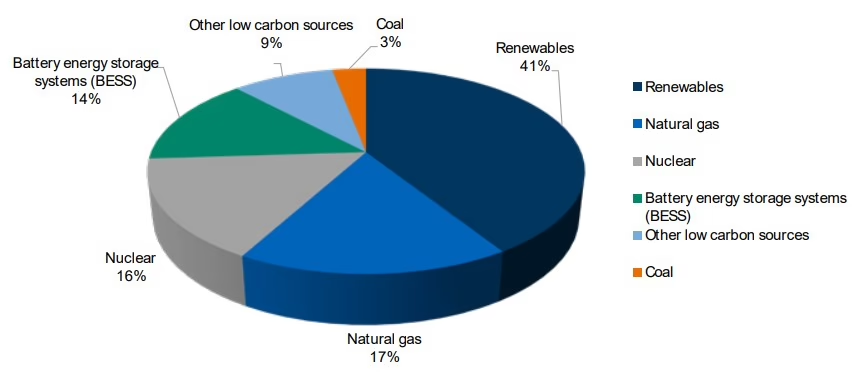
In terms of the right energy mix for data centers, 55% of respondents agreeing that the ideal energy mix to meet the growing power demand of data centers is largely renewables (41%), followed by natural gas (17%), nuclear (16%), and BESS (14%).

Nearly half (48%) of industry participants named advances in energy efficiency (which often includes storage optimization) as the greatest opportunity for development through the end of the decade, and nearly three in four respondents (74%) said advanced energy storage systems like batteries, hybrid solutions, and microgrids are the best way to ensure energy resilience.

Only 14% of developers are actually pursuing modular and small modular nuclear reactors as a viable energy opportunity.

Intriguingly, 63% anticipate a “strategic correction” in the market by 2030, driven by the intense competition for power, with one unnamed banking executive in the report saying, “Once power runs out in 2027 or 2028, that’s where we think deal flow will start to slow down.”

105 U.S.-based respondents were qualified to participate in the survey, including those who had direct experience in data center development, energy procurement, technology delivery, or operations within the past 24 months.

Energy analyst firm Wood Mackenzie identified data centers as one of the five trends to look for in 2026 for global energy storage, and within the past week, a battery storage project decided to give up a grid-connection to a data center and re-tool the batteries, earning revenue without being connected.

What they said:

Daniel Farris, partner and co-lead of Foley’s data center and digital infrastructure team: “There is a Gold Rush mentality right now around securing power. That’s a big part of why people feel there’s a bubble,” said “There’s going to a period in the next two to three years where power at necessary levels is going to be really hard to come by.”

Rachel Conrad, senior counsel and co-lead of Foley’s data center and digital infrastructure team: “Over the next five to 10 years, power providers will need to either grow capacity or increase efficiency to meet the demand fueled by data centers.”

  •  

NiCo₂O₄ Nanowire Photo-Capacitor Enables Self-Charging Energy Storage

Scientists at CeNS in Bengaluru have created a photo-rechargeable supercapacitor, known as a photo-capacitor, which simultaneously captures and stores solar energy, eliminating the need for separate solar panels and batteries. This innovative device enhances efficiency and compactness, paving the way for advanced, self-sustaining power systems in portable electronics and renewable energy use.

The post NiCo₂O₄ Nanowire Photo-Capacitor Enables Self-Charging Energy Storage appeared first on SolarQuarter.

  •  

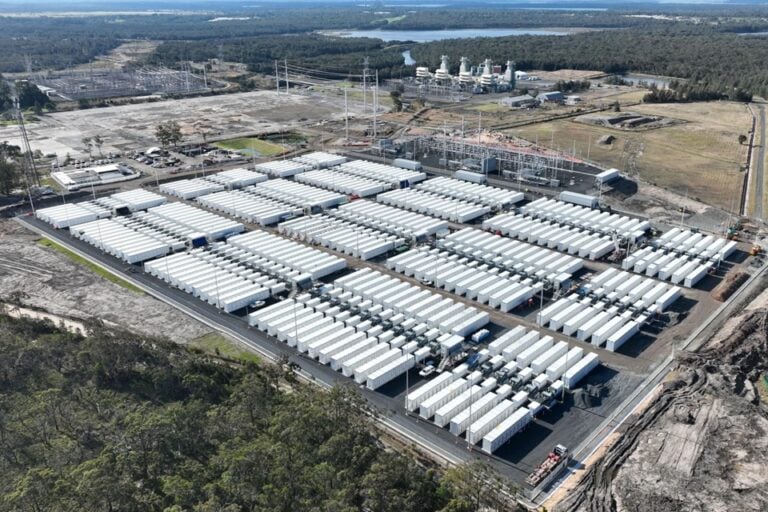
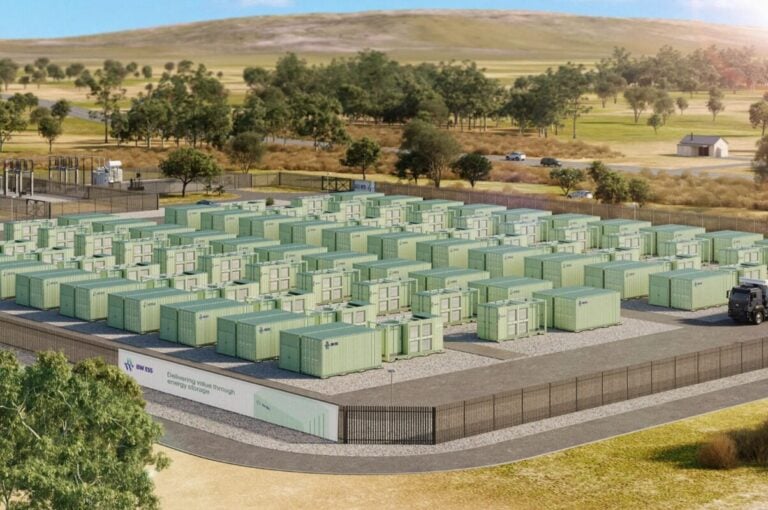
BW ESS proposes 1.6GWh battery energy storage facility for the Hunter Valley in Australia

Energy storage owner-operator BW ESS has submitted an application under Australia's Environment Protection and Biodiversity Conservation (EPBC) Act for a 1,600MWh battery energy storage system (BESS) in New South Wales (NSW).

  •