Spain installed 1.14 GW of solar capacity for self-consumption in 2025, lifting cumulative capacity to 9.3 GW, as residential and commercial installations declined while industrial and off-grid segments showed greater resilience, according to data from the Spanish Photovoltaic Union.
Solar self-consumption capacity in Spain reached a cumulative 9.3 GW in 2025, according to data from the Spanish Photovoltaic Union (UNEF).
Spain added 1,139 MW of new self-consumption capacity during the year, representing a 3.7% slowdown compared with 2024. UNEF said the deceleration signals a phase of market stabilization following several years of rapid growth.
The residential segment accounted for 229 MW across 36,330 new installations, a year-on-year decline of 17%. UNEF attributed the contraction to the phase-out of tax incentives linked to energy-efficient home renovations and lower compensation for surplus electricity exported to the grid under deregulated market contracts.
UNEF said falling surplus compensation prices are reducing the attractiveness of oversized systems designed primarily for grid injection. As a result, demand is shifting toward installations optimized for instantaneous self-consumption. The association is calling for revisions to the simplified regulated compensation mechanism to enable broader settlement of surplus energy and improve economic signals for small-scale systems.
The commercial segment installed 176 MW in 2025, down 15% from the previous year. Collective self-consumption remains limited despite its potential to optimize shared generation and demand. Industry representatives said pending regulatory updates are needed to enable aggregated management models, dynamic energy allocation, and an expansion of eligible self-consumption areas.
Industrial self-consumption installations totaled 679 MW, marking a slight increase compared with 2024. UNEF said growth in this segment is being driven by larger medium-voltage systems aimed at reducing electricity costs and partially covering electrified thermal demand. Project viability increasingly depends on tariff structures with a higher variable component and more streamlined permitting for medium-sized installations.
Off-grid installations reached 55 MW in 2025, reflecting growing uptake of hybrid solar-plus-storage systems in rural areas and locations without grid access. Battery integration in grid-connected installations also continued to rise, improving controllability of generation and supporting system flexibility.
UNEF said Spain will need to deploy an average of around 2 GW of self-consumption capacity per year to meet the 19 GW target set out in the country’s National Integrated Energy and Climate Plan. Achieving that level will require regulatory stability, administrative simplification, and more effective integration of distributed energy storage.
Czechia’s first international conference on solar and flexibility highlighted that the combination of solar with storage and flexibility sources is key to not just Czechia’s, but also Europe’s, secure and competitive electricity system.
Solar Flex Prague, jointly organised by SolarPower Europe, Solární Asociace and Asociace AKU-BAT CZ, welcomed visitors to a snowy Czech capital on Thursday (29 January), bringing together stakeholders from across Europe to discuss how flexibility solutions and storage can be further deployed.
The conference began with a speech from SolarPower Europe CEO, Walburga Hemetsberger, who said that while electrification is a lifeline for Europe, there is dwindling confidence in the energy transition among some politicians, some leading businesses and key players in the defence sector.
“The way out of the doubts is to really bank big time on flexibility, on storage and on electrification. This will show very concrete benefits very quickly, make politicians understand and really feel the benefits,” Hemetsberger told attendees, before adding that the combination of solar with storage and flexibility sources can lower energy system costs by €30 billion by 2030, while strengthening Europe’s security by removing dependency on foreign players.
Paula Dorado represented the European Commission via video call and told attendees work on an electrification action plan is underway, scheduled for adoption this year. The plan is expected to address barriers and provide a way forward on electrification for different sectors including companies, households and industrial processes, Dorado said.
Throughout the day, speakers were in agreement that storage and flexibility now play an integral role in Czechia’s electricity system. Panellists pointed out that solar-plus-storage projects can be implemented in a matter of months, offering companies the ability to save money or open new revenue streams. Other speakers stressed the idea that renewable sources are uncontrollable is now outdated, explaining that modern solar-plus-storage systems are not only manageable, offering the ability to respond to market prices and the needs of both transmission and distribution system operators, but are shifting from grid-following to grid-forming technologies and contribute to the stability of the electricity system.
Czechia appears ahead of the curve when it comes to deploying co-located storage with smaller-scale solar, with figures published by Czechia’s largest electricity distributor, ČEZ Distribuce, last September sharing 86% of solar plants connected during the first half of 2025 were equipped with energy storage. In contrast, the country’s large-scale solar market sits at a pivotal moment following the implementation of a legal framework for large-scale development and operation last year. During an afternoon session on opportunities and challenges related to storage and the grid, Rene Nedela from Czechia’s Ministry of Industry and Trade said up to 180 GW of BESS applications have been registered, although some are without any project readiness.
Several speakers advised Czechia to look to other countries further down the line of large-scale battery deployment, and in particular its neighbour Germany, whose favourable market environment for batteries has helped attract investors and move flexibility efforts forwards.
Attendees also said flexible solar-plus-storage projects could help to solve any power shortages that arise from the gradual shutdown of coal-fired power plants in Czechia. The Czech government has committed to phasing out coal-fired electricity generation by 2033 and the country’s last deep black coal mine shut down last month.
During the afternoon session, Alexandr Cerny from Czechia’s Energy Regulatory Office introduced proposed changes to Czechia’s energy tariffs, expected to come into force from the start of next year. The changes will restructure current tariff categories, particularly at the higher voltage levels, and are in part designed to reward flexibility in both consumption and generation, holding the potential to help ramp up the deployment of batteries while better integrating renewables to the grid.
Solar Flex Prague was SolarPower Europe’s second conference on flexibility following the inaugural Solar Flex Croatia held last March. A second edition of Solar Flex Croatia will take place in Zagreb on March 17 this year and Hemetsberger told pv magazine work is currently underway preparing the first Solar Flex Italy for later this year.
54% of respondents cited “energy availability and redundancy” as the single greatest obstacle to successful data center development between now and 2030.
aw firm Foley & Lardner LLP released today its 2026 Data Center Development Report, focusing on the growth and challenges in the data center boom that aims to sustain the growth in AI and LLM usage.
A major focus was on energy, with 54% of respondents citing “energy availability and redundancy” as the single greatest obstacle to successful data center development between now and 2030.
Want to learn more about matching renewables with data center demand?
The event will spotlight how solar and energy storage solutions are driving sustainable and reliable infrastructure, with a particular focus on powering the country’s rapidly growing data center sector.
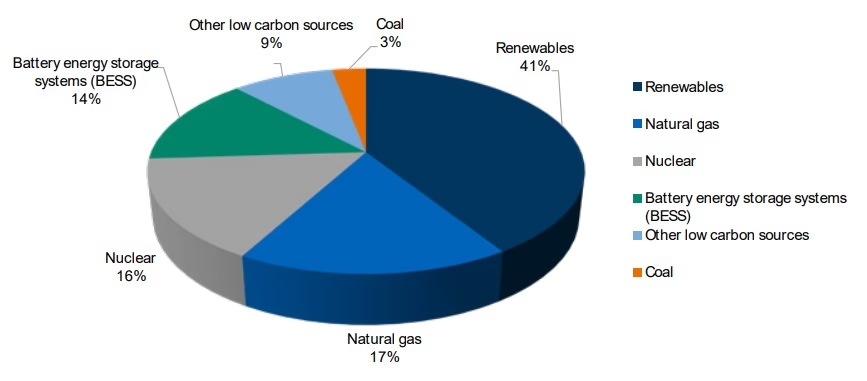
In terms of the right energy mix for data centers, 55% of respondents agreeing that the ideal energy mix to meet the growing power demand of data centers is largely renewables (41%), followed by natural gas (17%), nuclear (16%), and BESS (14%).
Nearly half (48%) of industry participants named advances in energy efficiency (which often includes storage optimization) as the greatest opportunity for development through the end of the decade, and nearly three in four respondents (74%) said advanced energy storage systems like batteries, hybrid solutions, and microgrids are the best way to ensure energy resilience.
Only 14% of developers are actually pursuing modular and small modular nuclear reactors as a viable energy opportunity.
Intriguingly, 63% anticipate a “strategic correction” in the market by 2030, driven by the intense competition for power, with one unnamed banking executive in the report saying, “Once power runs out in 2027 or 2028, that’s where we think deal flow will start to slow down.”
105 U.S.-based respondents were qualified to participate in the survey, including those who had direct experience in data center development, energy procurement, technology delivery, or operations within the past 24 months.
Daniel Farris, partner and co-lead of Foley’s data center and digital infrastructure team: “There is a Gold Rush mentality right now around securing power. That’s a big part of why people feel there’s a bubble,” said “There’s going to a period in the next two to three years where power at necessary levels is going to be really hard to come by.”
Rachel Conrad, senior counsel and co-lead of Foley’s data center and digital infrastructure team: “Over the next five to 10 years, power providers will need to either grow capacity or increase efficiency to meet the demand fueled by data centers.”
Brazil curtailed about one-fifth of its solar and wind generation in 2025, wasting an estimated BRL 6.5 billion ($1.23 billion), as grid constraints and demand mismatches pushed the power system close to operational safety limits on 16 days, according to a report from Volt Robotics.
Brazil failed to use roughly 20% of the solar and wind electricity it generated in 2025, resulting in an estimated loss of BRL 6.5 billion, according to Volt Robotics’ Annual Curtailment Report.
Volt Robotics said the scale of curtailment reflects an unprecedented period of renewable oversupply combined with operational constraints in Brazil’s national electricity system.
Average generation cuts reached 4,021 MW over the year, equivalent to the monthly output of a large hydroelectric plant. On at least 16 days in 2025, system operation approached the lower technical safety limit, a sharp increase from 2024, when only one comparable event was recorded.
Volt Robotics said the 2025 events were driven by excess electricity supply rather than scarcity, marking a structural shift in system risk dynamics.
Curtailment intensified between August and October, when historically high levels of generation coincided with transmission constraints and weaker demand. The report attributes the peak losses to a combination of operational limitations, grid congestion, and insufficient flexibility to absorb surplus power.
Sunday mornings emerged as the most frequent stress point for the grid. Volt Robotics said reduced economic activity during weekends lowers electricity demand, while solar output peaks and is often reinforced by strong wind generation. This recurring mismatch leads to network overloads, forced generation cuts, and system operation near the lower safety threshold.
The report also highlights the risk of system instability caused by excess renewable generation. During the 16 critical days, Brazil’s National System Operator classified conditions as severe and implemented emergency measures, supported by the National Electric Energy Agency, including extraordinary generation curtailments.
Volt Robotics warned that without structural adjustments, surplus clean energy itself can become a source of operational risk.
The economic impact extends beyond immediate revenue losses. Frequent curtailment increases perceived investment risk, raises financing costs, and weakens Brazil’s appeal for new renewable energy projects, the report said. Both regulated and free-market projects were affected, with exposure to contractual penalties and the Settlement Price of Differences.
Regionally, Minas Gerais, Ceará, and Rio Grande do Norte recorded the highest levels of curtailed energy, forming what Volt Robotics described as Brazil’s “curtailment triangle.” Southern states experienced significantly lower losses.
Volt Robotics said the situation reflects a structural mismatch between rapid renewable capacity expansion, rising distributed generation, transmission bottlenecks, and tariff structures that do not adequately signal when electricity consumption is most valuable.
The report recommends the introduction of more dynamic time-of-use tariffs, stronger demand-side participation, and regulatory reforms to reduce curtailment and maintain the stability of Brazil’s electricity system.
With conventional renewable PPA momentum slowing, Europe’s flexibility market soared in 2025, driven by a surge in fixed-offtake agreements and BESS optimization structures. At the same time, co-located storage gained unprecedented traction, signaling a shift toward more integrated and flexible energy solutions.
In a record-breaking year for flexibility in Europe, nearly 12 GW/24 GWh of BESS capacity was contracted under flexibility purchase agreements (FPAs) and optimization agreements, triple the volume recorded in 2024, according to Pexapark’s Renewables Market Outlook 2026. FPAs have emerged as the backbone of BESS bankability, unlocking infrastructure-style capital and enabling rapid expansion beyond Great Britain into Germany, Italy, and the Netherlands.
Contract innovation accelerated, with tolls, floors, and financial structures such as day-ahead swaps becoming mainstream, while new buyer profiles – including traders, insurers, and hedge funds – entered the flexibility market. By contrast, traditional European PPA momentum cooled in 2025 as markets adjusted to lower capture expectations. Total disclosed contracted PPA capacity fell to 13.1 GW across 247 deals, down from 15.3 GW in 2024.
To continue reading, please visit our ESS News website.
French researchers have developed a high-resolution computational framework to model microclimate effects of large floating solar PV systems, enabling accurate predictions of heat transfer, ambient temperatures, and water evaporation based on panel configuration and wind conditions. The model can inform thermal performance, environmental impacts, and optimize designs for utility-scale floating PV, as well as ground-mounted and agrivoltaic installations.
French researchers have developed a framework to model microclimate effects of large-sized floating PV systems.
The new model can be used to determine wind-dependent convective heat transfer coefficients (CHTC), ambient temperatures, and to estimate evaporation patterns in partially covered bodies of water based on a variety tilt angles, module heights, and pitch distances.
“The main novelty of this work lies in the numerical methodology we developed, specifically an upscaling method to quantify panel-atmosphere interactions at the module scale then model the micrometeorology at the power plant scale with a relatively fine resolution of about 4 meters,” Baptiste Amiot, corresponding author of the research told pv magazine, adding that the resolution is significantly higher than others in this field.
“Applying this methodology enables us to map the thermal performance across utility-scale installations and to provide insights into local environmental effects, such as evaporative losses,” he said.
The precursor model is geometrically adaptable: tt can handle various tilt angles, mounting heights, and inter-row spacings, according to Amiot. “It is particularly well-suited for large-scale installations exposed to sufficiently windy conditions,” Amiot added.
The researchers used a computational fluid dynamics (CFD) precursor model, a microclimate CFD model supporting the PV parameterization, and an experimental survey. A wind-tunnel setup typical of a land-based application was used to confirm accuracy of altitude-based wind profiles.
In addition, a geometrical layout of a commercial floating PV (FPV) installation was used for the atmosphere boundary layer parameters. The wind direction effects were assessed using the microclimate CFD model that reproduced the localized conditions of the commercial FPV array.
“The atmospheric component is fundamentally similar to regional climate models (RCMs) but deploying it within a CFD framework offers advantages in terms of surface element parameterization and the spatial discretization we can achieve,” said Amiot.
Some of the findings included temperature gradients range between 1.3 C/km and 5.8 C/km; headwinds and tailwinds relative to the front surface of the PV modules generate the greatest turbulence levels. Furthermore, the team was able investigate how turbulent flows influence water-saving gains based on PV coverage of the water surface.
Assessing the results, the researchers noted that the precursor method “readily determines” heat transfer coefficient correlations as a function of wind speed and direction. “This is essential to obtain the thermal U-values that govern panel cooling,” added Amiot.
The model can be extended to model large ground-mounted systems and agrivoltaics, including dynamic configurations where panels adjust orientation throughout the day, according to Amiot. It is suitable for inland and nearshore FPV, but not offshore FPV.
The researchers are currently focused on developing CFD models to predict both the energy output and environmental trade-offs of dual-use photovoltaics systems and FPV evaporation research at finer spatial scales, coupled with in-situ measurements. It is also working on an agrivoltaics CFD-plant model to predict crop response below PV canopies.
After hitting an all-time high of $121.65/oz on Jan. 29, silver prices have tumbled to $79.44/oz, with analysts warning of a potential drop toward $50/oz.
After reaching an all-time high of $$121.65 per ounce (oz) on Jan. 29, silver prices have fallen sharply in recent days, dropping to $79.44/oz this morning.
The downturn had been anticipated by two analysts interviewed by pv magazine on Jan. 27, who warned that the steep rally seen in previous weeks could reverse abruptly in the days ahead.
One of the two analysts, Mike McGlone, senior commodity strategist at Bloomberg Intelligence, said the price could stabilize around $50/oz, although he did not provide a timeframe for when this new trend might materialize.
“Reversion toward $50 appears as a normal path for the commodity known as the ‘devil's metal' due to its volatility,” he told pv magazine.
Rhona O’Connell, head of market analysis for EMEA and Asia at StoneX, said on Jan. 27 that investors might soon rethink their rush into silver. She explained that speculative buying had pushed the metal into risky territory, making prices vulnerable to a sharp correction. O’Connell also said fears of potential U.S. tariffs fueled the recent rally, swelling COMEX inventories as metal flowed into the U.S. Further gains are unlikely, she added, dismissing even $100/oz as unsustainable and warning of a potentially severe price reversal.
Silver prices surged by approximately 130% in the past six months and around 243% over the past year. The average silver price was $28.27/oz in 2024, $23.38/oz in 2023, and $21.80/oz in 2022.
Renewables and storage could reliably power data centers, but success requires active grids, coordinated planning, and the right mix of technologies. Hitachi Energy CTO, Gerhard Salge, tells pv magazine that holistic approaches ensure technical feasibility, economic viability, and energy system resilience.
As data centers grow in size and complexity, supplying them with cheap and reliable power has never been more pressing. Gerhard Salge, chief technology officer (CTO) at Hitachi Energy, a unit of Japanese conglomerate Hitachi, shed light on the relationship between renewable energy and data center operations, noting that while technically feasible, success requires careful planning, the right infrastructure, and a holistic approach.
“When we look at what's happening in the grids, then renewables are an active element on the power generation side, and the data centers are an active element on the demand side,” Salge told pv magazine. “What you need in addition to that is in the dimensions of flexibility, for which we need storage and a grid that can actively act also here in order to bring all these elements together.”
Want to learn more about matching renewables with data center demand?
The event will spotlight how solar and energy storage solutions are driving sustainable and reliable infrastructure, with a particular focus on powering the country’s rapidly growing data center sector.
According to Salge, the key is active grids, not passive systems that simply react to conditions. With more renewables, changing demand patterns, new load centers, and storage options like batteries and existing facilities such as pumped hydro, it is crucial to coordinate these resources actively to maintain supply security, power quality, and cost optimization.
“But when you talk about the impact and the correlation between renewables and data centers, you need always to consider this full scope of the flexibility in a power system of all the elements—demand side, generation side, storage side, and the active grid in between,” he said, noting that weak or congested grids would not serve this purpose.
AI data centers
Salge warned that not all data centers are the same. “There are conventional data centers and AI data centers,” he said. “Conventional data centers are essentially high-load systems with some fluctuations on top. They contain many processors handling requests—from search engines or other applications—so the workload is distributed stochastically across them. This creates a baseline load with random ups and downs, which is the typical load pattern of a conventional data center.”
AI workloads, in contrast, rely heavily on GPUs or AI accelerators, which consume significant power continuously. Unlike conventional data centers, AI data centers often run at sustained high load, sometimes close to maximum capacity for long periods.
Htitachi Energy CTO Gerhard Salge
Image: Hitachi Energy
“AI data centers are specifically good in doing parallel computing,” Salge explained. “So many of them are triggered with the same demand pattern at the same time, which creates these spikes up and down in the demand profile, and they come in parallel all together.”
These fluctuations challenge both the power supply and the voltage and frequency quality of the connected grid. “So, you need to transport active power from an energy storage system or a supercapacitor to the demand of the AI data center. And that then needs to involve really the control of the data center’s active power. What you need is the interaction between the storage unit and then the AI data center to provide active power or to absorb it afterwards when the peak goes down. That can be also done by a supercapacitor.”
Batteries can store much more energy than supercapacitors, but the latter can ramp smaller energies more frequently. “However, if you put a battery that is smaller than the load, and you really need to cycle the battery through its full capacity, the battery will not survive very long with your data center, because the frequency of these bursts is so high, then you are aging the battery very, very quickly, yeah, so supercapacitors can do more cycles,” Salge emphasized.
He also noted that batteries and supercapacitors are both mature technologies, but the optimal setup—whether one, the other, or a combination with traditional capacitors—depends on storage size, number of racks, voltage levels, and overall system design.
Managing AI training bursts
Salge stressed the importance of complying with grid codes across geographies. “You need to become a good citizen to the power system,” he said. “You have to collaborate with local utilities to make sure that you are not infringing the grid codes and you are not disturbing with the data center back into the grid. A good way to do this, when renewables and data centers are co-located, is to manage renewable energy supply already inside the data center territory. Moreover, having a future-fit developed grid is a clear advantage. Because you have much more of these flexibility elements and the active elements to manage storage and renewable integration and to manage the dynamic loads of the data centers.”
If the grid is not future-fit with modern, actively operating equipment, operators will see significantly more stress. “With holistic planning, instead, you can even use some of the data center flexibility as a controllable and demand response kind of feature,” Salge said, adding that data center operators could coordinate AI training bursts to periods when the power system has more available capacity. This makes the data center a predictable, controllable demand, stressing the grid only when it is prepared.
“In conclusion, regarding technical feasibility: yes, it’s possible, but it requires the right configuration,” Salge said.
Economic feasibility
On economics, Salge believes solar and wind remain the cheapest power sources, even when accounting for the grid flexibility needed to integrate them with data centers. Solar is fastest to deploy, wind complements it well, and both can be scaled in parallel.
“Any increase in data center demand requires investment, whether from renewables or conventional power. Economics depend on the market, and market mechanisms, regulations, and technical grid planning are interconnected, influencing energy flow, pricing, and system stability,” he said.
“We recommend developers to work with all stakeholders—utilities, technology providers, and planners—from the start to ensure reliability, affordability, and social acceptance. Holistic planning avoids reactive fixes and leads to better long-term outcomes,” Salge concluded.
Bulgaria installed over 1 GW of solar for the third consecutive year in 2025 and is forecast to add over 2 GW this year thanks to a large pipeline of utility-scale projects.
Bulgaria added 1,416 MW of solar last year, according to official data published on the ENTSO-E Transparency Platform. The result marks the third consecutive year Bulgaria has deployed over 1 GW of solar and takes the country’s cumulative capacity to 5,984 MW.
Desislava Mateva, project manager at the Sofia-based Association for Production, Storage and Trading of Electricity (APSTE) told pv magazine that Bulgaria’s solar market is currently dominated by ground-mounted, utility-scale solar plants, reflecting the availability of land, strong developer activity and increasing access to project finance.
Utility-scale solar made up around 90% of Bulgaria’s new capacity last year. Mateva said the market was driven by the strong commercial competitiveness of solar, making projects viable without direct subsidies, as well as active support from local and international banks and a large pipeline of development projects that reached the ready-to-build stage or financial close over the past 18 months.
Mateva also noted that Bulgaria is experiencing a wave of standalone battery energy storage system (BESS) deployments and the hybridization of both existing and new solar assets with BESS, as developers look to deal with price cannibalization and declining solar capture rates.
“These developments are expected to reduce price volatility, improve system flexibility, and mitigate capture-price pressure for solar producers,” she explained. “As a result, industry expectations remain positive.”
Among the largest projects to be commissioned in Bulgaria last year was the first phase of the 315 MW/760 MWh Tenevo hybrid project, with a second phase scheduled for commissioning early this year, and the Selanovtsi hybrid project, a 59.8 MW solar plus 107.3 MWh storage site in the northwestern Vratsa region. Bulgaria also commissioned one of the EU's largest standalone BESS facilities last year, located adjacent to a 107 MW solar park.
Bulgaria’s C&I solar market is showing steady momentum, particularly among projects designed for self-consumption, Mateva added, with rising electricity costs incentivizing businesses to invest in on-site solar, often in combination with storage.
In contrast, Bulgaria’s residential solar sector remains underdeveloped in capacity terms. Mateva said interest among households exists but the market segment has been constrained by regulatory complexity and limited incentives.
She added that the residential sector would benefit from the full liberalization of Bulgaria’s electricity market, as currently household electricity prices remain regulated, accounting for roughly 40% of national electricity demand. “Full liberalization would stimulate demand-side participation and unlock the residential solar and storage market,” she explained.
Looking ahead, Mateva predicted Bulgaria is on course for a record year in solar deployment in 2026. “An estimated 2.5 GW of additional solar projects are either under construction or at an advanced stage of development and expected to start construction soon,” she said. “This pipeline suggests that most of this capacity will be commissioned by the end of 2026.”
Bulgaria’s storage pipeline is looking equally healthy, with 15 GWh expected to be commissioned by half way through the year, supported by the country’s National Recovery and Resilience Plan.
Mateva added that the most significant policy change last year was a sharp increase in eco-taxes and recycling fees for solar panels and batteries. She explained that these fees are currently five to ten times higher than in comparable EU countries, in turn artificially inflating PV and BESS project costs.
“Unless addressed, this issue risks becoming a major bottleneck for new PV and BESS procurement,” Mateva told pv magazine. “Resolving this will require action from the Ministry of Ecology to align recycling fees with real-world costs and EU norms, ensuring that Bulgaria’s strong solar momentum is not undermined by avoidable regulatory distortions.”
Bulgaria opened a new grant program late last year targeting micro, small and medium-sized enterprises looking to deploy PV systems and storage, with a particular focus on those located in the country’s coal regions. The call is set to close next month.
Tesla and Chint Power rank first and second in a new long-duration energy storage leaderboard from Sightline Climate, while mechanical storage providers such as Italy’s Energy Dome feature prominently as post–final investment decision projects begin to reshape the competitive landscape.
An analysis of the long-duration energy storage (LDES) scene, focusing on technologies with at least eight-hour durations, shows the top two providers today globally are lithium-ion battery makers Tesla and Chint Power.
The new leaderboard by Sightline Climate, being developed over the past 15 months, according to the firm, gives a snapshot right now of leaders in LDES across factors including technology performance, financial profile, deployment track record, and economics and cost.
Lukas Karapin-Springorum, a research analyst at Sightline who introduced the LDES leaderboard to ESS News, said efforts to accurately rank players have been focusing on the core factors that matter to find the names that stakeholders like utilities, banks, and investors need to know right now.
To continue reading, please visit our ESS News website.
Bhutan’s Druk Green Power Corporation and India’s Carbon Resources Private Limited have agreed to collaborate on new solar and hydropower projects in Bhutan with capacities between 100 MW and 250 MW.
Bhutan’s leading renewables company Druk Green Power Corporation (DGPC) has signed a memorandum of understanding with Kolkata-based Carbon Resources Private Limited (CPRL) to jointly pursue renewable energy projects.
Under the terms of the partnership, DGPC and CPRL will collaborate on developing new solar and hydropower projects in Bhutan with capacities ranging between 100 MW and 250 MW.
DGPC will be responsible for sharing project information, past studies and regulatory frameworks to assist CRPL in undertaking required technical, commercial and financial assessments of potential projects.
Identified sites will then be developed through one or more special purpose vehicles incorporated in Bhutan as joint ventures between the two parties. The memorandum of understanding proposes a debt-equity financing structure of 70:30 between DGPC and CPRL.
The signing ceremony was attended by Bhutan’s Minister for Energy and Natural Resources, Lyonpo Gem Tshering, who said memorandums of understanding for more than 12 GW of generation capacity have been signed in the country to date.
Bhutan has a target of reaching 25 GW of installed generation capacity by 2040. A World Bank report published last June reported the country’s total generation capacity stood at 2.5 GW by the end of 2024, made up almost entirely of hydropower plants.
Bhutan’s first utility-scale solar plant, a 17.38 MW array located towards the centre of the country, was commissioned last July. A month later, a consortium consisting of local firm Rigsar Construction and India’s HILD Energy was awarded a contract to develop the 120 MW Jamjee solar project.
In December, DGPC opened a tender for the 120 MW Wobthang solar project. The project’s feasibility study and consultation meetings have since been completed, with DGPC planning to award the contract by June. The project is scheduled to begin construction this September and with the build expected to take around 18 months, is pencilled for operations during the first half of 2028.
Bhutan’s current national energy policy, published last year, aims to add 5 GW of solar capacity by 2040.
India’s renewable energy industry is urging the government to use Union Budget 2026 to unlock stalled projects, lower financing costs, and accelerate domestic manufacturing across solar, storage, and grid infrastructure.
The upcoming budget must prioritize in-house technology and equipment development, provide clarity on delayed power purchase agreements (PPAs) and power sale agreements (PSAs), increase budgetary allocation and policy support for Green Energy Corridors, introduce production-linked incentives for battery energy storage system (BESS) manufacturing, establish an Approved List of BESS Integrators (ALBI), lower the cost of capital through priority sector lending, extend ALMM for solar cells, and continue the ISTS waiver, among other measures.
1. Focus on In-House Technology & Equipment Development
The government should place strong emphasis on in-house development of cutting-edge solar technologies, enabling India to achieve self-reliance in a shorter timeframe and indigenize next-generation technologies.
In addition to this critical, solar, cell & module manufacturing equipment should be brought und er the PLI framework. This support may subsequently be extended in a phased and structured manner to wafer and ingot manufacturing equipment. India already possesses strong equipment manufacturing capabilities across multiple industrial sectors. Leveraging these capabilities, coupled with indigenous technology development, can rapidly position India as a globally competitive and self-reliant solar manufacturing hub.
2. Clarity on Delayed PPAs and PSAs
As of January 2026, over 45 GW of renewable energy capacity in India is facing large delays in signing Power Purchase Agreements (PPAs) and Power Sale Agreements (PSAs), with developers. This uncertainty has raised serious concerns among investors and lenders. The industry requests the government to provide clear confirmation in the budget that these PPAs and PSAs will be signed expeditiously. Such assurance will significantly improve sectoral sentiments and catalyse increased inflows of both equity and debt into India’s renewable energy sector.
3. Strengthening Green Transmission Infrastructure
The industry appreciates the increased budgetary allocation and policy focus on Green Energy Corridors. Continued emphasis with higher allocations and faster execution is critical to ensure timely grid connectivity for upcoming renewable capacity.
Additionally, procedures and guidelines at the state level for grid connectivity and charging infrastructure should be further streamlined to ensure faster approvals, seamless evacuation, and immediate power injection upon physical commissioning of projects.
4. PLI for BESS Manufacturing
“Solar and BESS Manufacturing” to be re-categorized into “Infrastructure” category of RBI for ease of financing and re-financing. A dedicated PLI scheme for BESS manufacturing—similar to solar—should be introduced, encouraging local integration of components such as Containers, HVAC systems, Cabling, Fire-fighting systems. Only Lithium-ion cells, which are currently not manufactured at scale in India, should be permitted for import under this scheme.
5. Approved List of BESS Integrators (ALBI)
An Approved List of BESS Integrators, on the lines of ALMM for solar modules, should be introduced. This will ensure grid-connected BESS assets meet quality and safety standards, minimize systemic risks to the electricity grid and Improve investor and lender confidence.
6. Lower Cost of Capital & Priority Sector Lending
India is estimated to require USD 200+ billion in investments by 2030 to meet its clean energy targets. Access to competitively priced capital will be critical. The industry requests the inclusion of renewable energy projects under Priority Sector Lending and Re-introduction of lower TDS rates on interest for ECBs and Rupee-denominated bonds. These measures will materially reduce financing costs and accelerate project deployment.
7. Extension of ALMM for Solar Cells
Considering manufacturing of solar cells in the country is still picking up and with an increasing demand for Solar cells &supply demand mismatch, government should consider exceeding its target to introduce ALCM for cells for a further period of 2 years.
8. Extension of ISTS Waiver
Interstate charges on power transmission through ISTS connectivity are waived till 2025. This should be further extended over the next 5 years to give a steeper boost to C&I segment which has large ISTS opportunities.
9. Concessional Corporate Tax Rate for Manufacturing
The concessional 15% income tax rate for new manufacturing entities in the renewable energy sector should be reintroduced in Budget 2026 and to be extended for a minimum of five years.
10. Exclusion from Deemed Dividend Tax
Renewable energy companies should be excluded from deemed dividend tax provisions in cases where loans or advances are provided by SPVs to shareholders. This will enable optimal capital utilization within project groups.
11. Reduction of GST on BESS
Lower GST on BESS and related products from existing18% to 5%. BESS enables grid stability and allows more RE to be integrated into the grid. Lower GST will accelerate adoption, encourage domestic manufacturing, support job creation, exports, and emissions reduction.
12. GST Exemption on Corporate Guarantees
Exemption of GST on Corporate Guarantee for renewable energy companies wherein Corporate Guarantee is provided by Holding Company to lenders in respect of funding obtained by SPVs.
Renewable generation supplied more than half of Australia’s electricity in the fourth quarter of 2025, driving wholesale power prices down by nearly 50% and coinciding with record battery output, according to the Australian Energy Market Operator (AEMO). Coal-fired generation fell 4.6% year on year to a record quarterly low, while gas-fired output dropped 27% to its lowest level in 25 years.
The last few weeks have been an object lesson in the benefits of the transformation of our energy market, dispelling the myths promulgated by fossil fuel vested interests that increased renewable energy means more expensive power and reduced grid reliability. We have seen exactly the opposite of that: with increased extreme weather events including unprecedented heatwaves and devastating fires in southeast Australia, the grid has proven resilient under surging demand and stress, and now AEMO confirms that increased renewables correlates with a significant decline in wholesale prices.
Grid reliability over the last decade has been significantly improving. The coincidence of extreme weather events and heatwaves has been matched by record production of variable renewable energy (VRE), particularly solar power.
But the big disruption that we’re seeing – which started profoundly in 2025 and is going to be even more consequential in 2026 – is batteries. AEMO reports that battery discharge nearly tripled in the fourth quarter. Behind-the-meter and utility scale battery storage capacity underpins reliable and stable energy supply when demand is high and grid transmission capacity is constrained, supplying power instantly during demand peaks, shifting low cost zero-emissions energy from low-demand to high-demand periods and reducing reliance on peaking gas plants.
The economics are unbeatable. We’ve seen the price of batteries plummet by 90% in the last decade and decline by 50% in the last three years. In a brilliant policy initiative, the federal government capitalised on the economic case to establish Cheaper Home Batteries scheme. We’ve now seen 200,000 batteries installed in just over six months, 4.7 GWh of batteries behind the meter in homes, supporting solar production in which Australia excels as we lead the world in rooftop solar installations. And Treasurer Jim Chalmers upscaled funding of this program to $7.2 billion last month.
But we’re also seeing a profound deployment of battery energy storage systems (BESS) at the utility scale. Australia was the third largest installer of batteries in the world in 2025, behind only the USA and China, and will likely repeat this again in 2026. It was important to see Akaysha Energy commission its second BESS near Brisbane this month, five months ahead of schedule, following its now operational 205 MW /410 MWh Brendale battery, which will play a key role in Queensland’s grid. As we continue this rapid build out into 2027, this allows an even greater share of renewable energy infrastructure to be deployed, leveraging the existing grid infrastructure. 2026 will be another year of record highs for renewables share in Australia. Non-solar households are set to be able to opt-in to benefit from the Solar Sharer three free hours of energy daily from July 2026.
The imperative of grid system reliability means at present we need as many solutions that are economically viable as possible, while focussing on transitioning as quickly as possible to a low-cost, clean, firmed renewables powered energy system. Gas currently plays an important but small and rapidly declining role in stabilising the grid. We are not going to run the Australian grid solely on batteries, but the positive impact of batteries operating and price setting is being seen an increasing percentage of the time, as battery energy densities improve phenomenally and two hour-discharge batteries become four-hour batteries, and even potentially eight-hour duration. This trajectory equates to record low use of prohibitively expensive fossil gas, as the AEMO report shows, with big batteries on the brink of making up a greater share of Australia’s electricity grid than gas in 2027.
Coal power is increasingly unreliable as our end-of-life coal clunker fleet is more and more prone to breakdown. The recent announcement of yet more taxpayer subsidies to extend the life of the Griffin Coal mine in WA, and Origin’s decision to delay the closure of its Eraring coal-power plant in NSW, the country’s largest, are timely reminders of the need to even further accelerate the transition by building replacement generation capacity fast, ahead of coal closures.
And for all the nuclear distractions in the 2025 Federal election, we note China just reported a staggering 446 GW of new renewable energy capacity additions and a world record 174 GWh of batteries in 2025. Nuclear additions of 1.7 GW are a rounding error in comparison.
The key point here is that the heatwaves and fires across southeast Australia and the increasing frequency and intensity of extreme weather events are evidence of the rapidly rising externalised cost to all of climate change. This is the very reason we must move away from climate-destroying coal and gas at speed and scale, to firmed renewables.
For all the misinformation and fearmongering of fossil fuel vested interests, the energy system transformation is unstoppable and its strengths increasingly evident to all, as the last few weeks have proven.
Authors: Tim Buckley, director of Climate Energy Finance, and AM Jonson, editorial director of Climate Energy Finance
Researchers in Iraq have developed biomimetic leaf vein–inspired fins for photovoltaic panels, with reticulate (RET) venation reducing panel temperature by 33.6 C and boosting efficiency by 18% using passive cooling. Their study combines 3D CFD simulations and electrical evaluations to optimize fin geometry, offering a sustainable alternative to conventional cooling methods.
A research group from Iraq’s Al-Furat Al-Awsat Technical University has numerically investigated the thermal and electrical performance of PV panels integrated with leaf vein–inspired fins. They have simulated four types of venation used by plants, namely pinnate venation (PIN), reticulate venation (RET), parallel venation along the vertical axis (PAR-I), and parallel venation along the horizontal axis (PAR-II).
“The key novelty of our research lies in introducing and systematically optimizing biomimetic leaf vein–inspired fin geometries as passive heat sinks for photovoltaic panels,” corresponding author Yasser A. Jebbar told pv magazine. “While conventional cooling approaches rely on simple straight fins, fluids, or active systems, our study is among the first to directly translate natural leaf venation patterns—particularly RET structures—into manufacturable backside fins specifically tailored for PV thermal and electrical performance.”
The team combined detailed 3D computational fluid dynamics (CFD) modeling with electrical efficiency analysis to identify geometries that maximize heat dissipation without additional energy input or water consumption. Next steps include experimental validation of the leaf vein fin designs under real outdoor conditions, particularly in hot climates.
The simulated PV panel consisted of five layers: glass, two ethylene-vinyl acetate (EVA) layers, a solar cell layer, and a Tedlar layer, with a copper heat sink and fins attached. All fin configurations were initially 0.002 m thick, 0.03 m high, and spaced 0.05 m apart. Panels measured 0.5 m × 0.5 m, with a surrounding air velocity of 1.5 m/s and incident irradiance of 1,000 W/m².
RET fins outperformed all other designs, reducing operating temperature by 33.6 C and increasing electrical efficiency from 12.0% to 14.19% —an 18 % relative improvement—compared to uncooled panels.
“This temperature reduction rivals, and in some cases exceeds, water-based or hybrid cooling methods, despite relying solely on passive air cooling,” Jebbar noted. The study also highlighted the significant impact of fin height, more than spacing or thickness, on cooling performance.
The team further optimized the RET fins, varying spacing from 0.02–0.07 m, height from 0.02–0.07 m, and thickness from 0.002–0.007 m. The optimal geometry—0.03 m spacing, 0.05 m height, and 0.006 m thickness—achieved the maximum 33.6 C temperature reduction and 18% efficiency gain.
UL Solutions has published new technical guidance and a proposed certification pathway for plug-in balcony solar systems, outlining safety risks and design requirements as several US states move to legalise the technology.
UL Solutions has released new design guidance and a proposed certification framework for balcony solar, also known as plug-in PV (PIPV), as US policymakers and manufacturers begin to explore consumer-installed solar systems that connect directly to wall outlets.
In a white paper titled “Interactions of Plug-In PV (PIPV) with Protection of Existing Power Systems,” UL outlines safety considerations for products that allow consumers to plug solar modules into existing residential circuits. The document identifies three primary risk categories: overcurrent protection, touch safety and ground-fault protection.
UL moved quickly to develop a new certification pathway, UL 3700, an Outline of Investigation for Interactive Plug-In PV Equipment and Systems, following the passage of Utah’s balcony solar legislation. Similar bills are now under consideration in other states, including California’s Senate Bill 868.
According to UL, overcurrent protection presents a key challenge because PIPV systems can inject power into branch circuits without being detected by standard circuit breakers. In some scenarios, combined household loads and injected solar power could exceed a circuit’s design limits without triggering protective devices, increasing the risk of overheating conductors and associated components.
UL said potential mitigation measures include dedicated circuits for PIPV systems, solar-specific receptacles, or connection to circuits with oversized conductors.
Touch safety is another concern, as PIPV systems are handled directly by consumers rather than trained electricians. While standard household plugs are well understood as loads, UL notes they have not been evaluated as power sources. The organization also flagged challenges related to inverter behaviour, particularly anti-islanding and grid-response functions that may not be designed for frequent plug-in and unplugging events.
Ground-fault protection was identified as the third major risk area. Because PIPV systems are typically installed outdoors and exposed to weather, UL said interactions with ground-fault circuit interrupters require careful design. Current electrical code requires outdoor receptacles to be on dedicated branch circuits, which may necessitate new outlet designs or dedicated connections for PIPV systems.
Ken Boyce, vice president of principal engineering at UL Solutions, said the organisation’s role is to evaluate safety outcomes rather than commercial viability. As of mid-January, he said UL was not aware of any PIPV products that had completed certification under UL 3700, noting that the outline was only released in mid-December.
To continue reading, please visit our pv magazine USA website.
UNSW researchers identified a new damp-heat degradation mechanism in TOPCon modules with laser-fired contacts, driven primarily by rear-side recombination and open-circuit voltage loss rather than series-resistance increase. The study highlights that magnesium in white EVA encapsulants accelerates degradation, guiding improved encapsulant and backsheet selection for more reliable modules in humid environments.
A research team from the University of New South Wales (UNSW) has identifed a new damp heat-induced degradation pathway in TOPCon modules fabricated with laser-assisted fired contacts.
“Unlike earlier studies dominated by series-resistance increase, the primary degradation driver here is a reduction in open-circuit voltage, linked to enhanced rear-side recombination,” the research's lead author, Bram Hoex, told pv magazine. “The new degradation mechanism emerged under extended damp-heat (DH) exposure.”
The scientists conducted their analysis on 182 mm × 182 mm TOPCon cells fabricated in 2024 with laser-assisted firing.
The TOPCon solar cells employed a boron-doped p⁺ emitter, along with a front-side passivation stack consisting of unintentionally grown silicon dioxide (SiOₓ), aluminium oxide (Al₂O₃), and hydrogenated silicon nitride (SiNₓ:H), capped with a screen-printed H-pattern silver (Ag) contact grid. On the rear side, the structure comprised a SiO₂/phosphorus-doped n⁺ polycrystalline silicon/SiNₓ:H stack, also contacted by a screen-printed H-pattern Ag grid.
The researchers encapsulated the cells with different bill of materials (BOMs): two types of ethylene vinyl acetate (EVA); two types of polyolefin elastomer (POE); and one type of EVA-POE-EVA (EPE). They also used commercial coated polyethylene terephthalate (PET) composite (CPC) backsheets.
“The mini modules were laminated at 153 C for 8 min under standard industrial lamination conditions,” the academics explained. “All modules underwent DH test at 85 C and 85% relative humidity (RH) in an ASLi climate chamber for up to 2,000 h to study humidity-induced failures.
Schematic of the TOPCon solar cells and modules
Image: UNSW, Solar Energy Materials and Solar Cells, CC BY 4.0
The tests showed that maximum power losses ranged from 6% to 16%, with the difference among these values depending strongly on the encapsulation BOM.
“The modules with POE on both sides were the most stable at around 8%, while those using white EVA on the rear side, especially in combination with EPE, showed the largest losses at around 16%,” said Hoex. “The primary driver of the degradation was a reduction in open-circuit voltage rather than the increased series resistance after DH testing, which diverges from previous findings that predominantly attributed DH-induced degradation to metallisation corrosion.”
The research team explained that higher levels of degradation were attributable to additives containing magnesium (Mg) in white EVA, which migrate under DH, hydrate, and create an alkaline micro-environment. “This alkaline chemistry corrodes the rear SiNx passivation layer, increases interfacial hydrogen concentration, induces local pinhole-like defects, and raises dark saturation current, ultimately reducing open-circuit voltage,” Hoex emphasized.
The scientists also explained that, although Mg in white EVA encapsulants and its role in acetic acid–induced degradation was previously reported, the effect of MgO on performance degradation in TOPCon modules was not explicitly studied.
“We hope this work helps refine encapsulant and BOM selection strategies for next-generation TOPCon modules, particularly for humid-climate deployment,” Hoex concluded. “It provides clear guidance for controlling Mg content in rear encapsulants and optimising rear-side passivation robustness. The mechanistic insights from this study have already informed upstream design changes, substantially reducing risk in commercial modules.”
China’s cumulative power-sector energy storage capacity reached 213.3 GW by the end of 2025, up 54% year on year, according to data from the China Energy Storage Alliance (CNESA). Pumped hydro accounted for 31.3% of the total, while “new-type” energy storage made up 67.9% – around 144.7 GW.
Based on CNESA DataLink 2025 annual energy storage dataset, presented at a press conference in Beijing on Jan. 22, a total of 66.43 GW/189.48 GWh of new-type energy storage systems were commissioned in 2025.
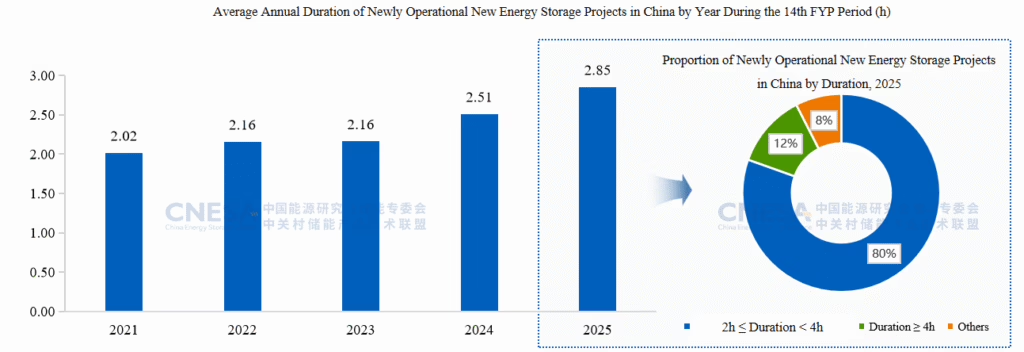
The added power and energy scales increased 52% and 73% year on year, respectively, which CNESA linked to a continued shift toward longer-duration configurations, it reported the average duration rising to 2.58 hours in 2025 (from 2.11 hours in 2021).
CNESA said the leading application scenario has shifted toward standalone energy storage, which accounted for 58%, while user-side storage fell to 8% and thermal-plus-storage frequency regulation to 1.4%; “renewables-paired storage” was described as stable.
Geographically, CNESA reported that the top 10 provinces each exceeded 5 GWh of newly commissioned capacity and together represented about 90% of additions. Inner Mongolia ranked first by both power and energy capacity, and Yunnan entered the top 10 for the first time.
Lithium iron phosphate (LFP) batteries continued to dominate, with CNESA reporting over 98% of new-type installed capacity. CNESA also noted emerging deployments of sodium-ion, vanadium flow, compressed air, gravity storage, and hybrid systems, separately citing a 40 MW/40 MWh grid-forming sodium-ion project in Wenshan, Yunnan as an example.
On procurement, CNESA reported 690 energy storage system tenders (excluding centralized/framework procurement), down 10.4%, while EPC tenders rose to 1,536, up 4.5%. Winning bid volumes (excluding centralized/framework procurement) reached 121.5 GWh for systems and 206.3 GWh for EPC.
CNESA’s tender-price analysis for LFP systems (excluding user-side applications) reported a 2025 winning bid price range of CNY 391.14/kWh ($55/kWh) to CNY 913.00/kWh ($128/kWh). For EPC (excluding user-side), CNESA reported average winning bid prices of CNY 1,043.82/kWh ($146/kWh) for 2-hour projects and CNY 935.40/kWh ($131/kWh) for 4-hour projects.
CNESA also launched a policy “map” for standalone storage market mechanisms covering 21 provinces.
A report from LevelTen Energy finds solar PPA prices in North America rose 3.2% in Q4 2025, marking a nearly 9% year-over-year increase as developers and buyers navigate a complex “post-OBBBA” regulatory environment.
Renewable energy power purchase agreement (PPA) prices continued their upward trajectory in the final quarter of 2025, driven by persistent policy headwinds and a shifting tax credit landscape.
According to the Q4 2025 PPA Price Index from marketplace operator LevelTen Energy, solar P25 prices rose by 3.2% following a 4% increase in the third quarter.
While solar costs climbed, wind PPA prices saw a slight dip, declining 1%. However, on an annual basis, both technologies have seen prices surge by nearly 9% compared to the same period last year.
Post-OBBBA
The market is currently adjusting to the “One Big Beautiful Bill Act” (OBBBA), which introduced tax credit cuts. LevelTen noted the second half of 2025 was defined by “ruthless” prioritization as firms scrambled to safe-harbor projects.
Despite these challenges, a November survey of developers representing over 230 GW of capacity found that more than 75% of projects slated to go online before 2029 expect to successfully retain access to tax credits.
This clarity has allowed some developers to dial in pricing by removing risk premiums that had previously accounted for OBBBA-related uncertainties, said the report.
Regional pricing
The report highlights significant price disparity across North American ISOs. For solar, P25 prices reached as high as $115 per MWh in ISO-NE and $81.03/MWh in PJM, while ERCOT remained the most competitive at $49 per MWh.
ISO Market
Solar P25 Price ($/MWh)
ISO-NE
$115.00
PJM
$81.03
MISO
$64.95
CAISO
$62.00
ERCOT
$49.00
In the wind sector, ERCOT has seen a massive 19% year-over-year price hike, fueled by an ongoing boom in data center development and a premium on available capacity.
Buyer headwinds
LevelTen pointed to several factors that could continue to apply upward pressure on prices:
Tariff uncertainties: Ongoing Section 232 investigation tariffs are adding direct development costs.
Permitting hurdles: “Harsh” new federal permitting procedures have stalled substantial amounts of development nationwide.
FEOC: The industry is still awaiting guidance on Foreign Entity of Concern (FEOC) rules, which are expected to add compliance costs and further complicate tax credit qualification.
Corporate strategy
Many corporate buyers are now pausing or adjusting their procurement strategies due to proposed updates to the Greenhouse Gas Protocol (GHGP) Scope 2 standards, said the report. The updates, expected to be finalized in 2027, may introduce more stringent accounting for hourly matching and physical deliverability.
“The current uncertainty has caused some buyers… to adjust or even delay their procurement strategies,” the report said.
LevelTen encourages industry players to weigh in on the proposal, as 97% of companies tracking emissions currently utilize the GHGP.
As buyers and sellers work to establish a “pricing equilibrium,” the report said in markets where contract values are challenging, sellers may need to find more transactable pricing levels to get deals done.
Repsol and Sunfire are advancing 200 MW of renewable hydrogen projects in Spain, while new collaborations and funding across Europe and India aim to accelerate electrolyzer development and hydrogen infrastructure.
Repsol has approved its second 100 MW electrolyzer at the Petronor industrial complex in Bilbao. “The electrolyzer will have the capacity to produce up to 15,000 tons of renewable hydrogen annually, which will mainly be used at the company’s Petronor refinery outside Bilbao in Northern Spain,” said the Spanish oil and gas company, adding that the new plant for producing renewable hydrogen will require an investment of €292 million ($347.9 million). The company did not explain the timing of the installation.
Sunfire said it will supply two 100 MW electrolyzers for renewable hydrogen projects in Spain. The first project, led by Repsol and Enagás Renovable, will install a 100 MW electrolyzer near Repsol’s industrial complex in Cartagena. The second 100 MW plant will be located at Petronor’s refinery in Muskiz (Bilbao), which is owned by Repsol and Kutxabank,” said the German company. For each of the two 100 MW projects, Sunfire will deliver ten of its 10 MW pressurized alkaline electrolyzer modules.
Matteco and Dunia Innovations have kicked off a strategic collaboration to accelerate the development of catalyst layers used inside AEM (Anion Exchange Membrane) electrolyzers. “Matteco contributes deep expertise in electrocatalysts, functional inks, and scalable electrodes, while Dunia brings its AI-guided experimentation platform, which helps test and compare many different material options quickly and consistently, under conditions that reflect how real electrolyzers operate,” said Spain-based Matteco. Dunia Innovations is based in Germany.
TheEuropean Commission said it will allocate nearly €650 million in grants to help finance 14 cross-border energy infrastructure projects. More than €176 million will be dedicated to boost hydrogen infrastructure. “The grant of €120 million for the hydrogen storage in Gronau project in Germany marks the first time CEF funding will be used for a works project for hydrogen,” said the European executive body, adding that other hydrogen projects in Austria, Bulgaria, France, Germany, the Netherlands and Slovakia will receive grants to support studies.
Tubos Reunidos (TR) said it is developing a seamless pipe that meets the specific requirements of the hydrogen sector. “The project aims to develop a 1.25 MW experimental portable electrolyzer, conceived as an enabling solution for the supply of green hydrogen to final industrial users,” said Eurometal, the European federation of steel tubes and metals distribution and trading. “The initiative is being led by a Basque consortium including Tubos Reunidos, ArcelorMittal Sestao, Sarralle, ABC Compresores, Matz-Erreka, Flubetech Coatings, Mugape, Sener, Team Group, Torraval Cooling, and Zigor Corporación.”
Deutsche Gesellschaft für Internationale Zusammenarbeit (GIZ) and thyssenkrupp nucera have entered into a new cooperation to accelerate the development of green hydrogen and Power-to-X (PtX) markets in India. “India is one of the most promising future markets for green hydrogen electrolysis. This cooperation enables us to deepen our understanding of the local market and engage more closely with India’s hydrogen ecosystem. It also reflects our strong commitment to supporting India’s ambitious National Green Hydrogen Mission,” said Kiran Paul Joseph, CEO of thyssenkrupp nucera India.
Greenzo Energy India has secured the contract for India’s first port-based 5 MW Green Hydrogen Plant at Deendayal Port, Kandla. The project has been awarded to Oswal Greenzo Energies, the JV between Oswal Energies Limited and Greenzo Energy India Limited. “Designed on an EPC basis, the project is scalable beyond the initial 5 MW up to 10 MW and is expected to produce approximately 800 tonnes of green hydrogen annually,” said Greenzo Energy.
Orlen has entered into cooperation agreements with three Finnish partners for the production and supply of renewable hydrogen and its derivatives. “The agreements signed with ABO Energy Suomi, Nordic Ren-Gas and VolagHy Kuopio SPV will help secure hydrogen supplies during a period of growing demand in the years ahead,” said Orlen.
Powerhouse Energy (PHE) has secured a site on Silverwood Business Park in Ballymena, Northern Ireland, on which the company submitted a planning application for a 40-ton per day (TPD) waste-to hydrogen facility. The site, 1.98 acres, will use a pilot unit.
UK-based Octopus Energy has agreed to set up a joint venture in China focused on spot power trading, in a bid to scale renewable electricity volumes as market reforms and demand growth accelerate.
Octopus Energy Group said it has partnered with China’s PCG Power to create a new company, Bitong Energy, to trade renewable energy across China’s electricity market. The joint venture was announced during UK Prime Minister Keir Starmer’s visit to Beijing in the final week of January.
Bitong Energy will combine PCG Power’s experience in commercial and industrial renewable energy with Octopus Energy’s technology for green energy trading and optimization. The company aims to annually trade up to 140 TWh of renewable power by 2030, with projected profits of around GBP 50 million ($68.7 million) per year, half of which will return to the United Kingdom.
The venture will launch in Guangdong province, China’s leading spot market, and expand nationwide as additional regions open. Octopus Energy said in an online statement that it will deploy its software to optimize the performance of batteries and renewable generation.
China’s electricity demand is expected to rise by about one-third over the next five years, with government mandates requiring at least 10% of electricity to be traded on spot markets this year, according to Octopus Energy.
The China joint venture follows earlier partnerships and capital commitments that have supported the UK energy supplier’s expansion beyond retail supply into energy software and clean energy infrastructure. Recent transactions in Europe and the United Kingdom show that the company aims to combine proprietary technology with institutional capital and industrial partners.
In July 2025, UK workplace pension provider Smart Pension committed GBP 330 million to two clean-energy funds managed by Octopus Energy Generation, targeting renewable energy projects and energy transition technologies in the United Kingdom. The allocation includes financing the United Kingdom’s first investor-funded ground-source heat pump network.
And in September, South Korea’s LG Electronics announced plans to integrate its high-efficiency heat pumps with Octopus Energy’s AI-driven Kraken energy software platform for key European markets, including the United Kingdom and Germany. The collaboration aims to optimize residential heating and cooling by linking heat pumps with Kraken’s grid-responsive controls to reduce energy costs and improve renewable integration.

 Login
Login