Reading view

Capacity LATAM 2026 Signals a New Era of AI, Cloud, and Data Center Growth Across Latin America
Capacity LATAM 2026, held March 17-18 in São Paulo, Brazil, made it clear that Latin America’s digital infrastructure market is no longer defined by potential, but by execution. As demand for cloud, AI, and connectivity accelerates across the region, the conversation has shifted from future opportunity to immediate deployment where power, capital, and collaboration must align to keep pace with growth.

Across the event, the narrative moved well beyond subsea routes and international traffic flows. Instead, speakers focused on how Latin America is becoming a destination for data creation, processing, and storage. With the region’s data center market projected to nearly double by 2030, investment is accelerating across Brazil, Mexico, Chile, and Colombia, while emerging markets are beginning to play a more strategic role in regional infrastructure planning.

Collaboration emerged as a central theme, particularly as infrastructure deployments become more complex and capital-intensive. During the “From Fiber to Facility” keynote, Gabriel del Campo, Data Center Vice President at Cirion Technologies emphasized that scaling data centers and networks across Latin America requires tighter alignment between operators, fiber providers, and hyperscalers. That coordination is increasingly necessary to navigate supply chain challenges and accelerate time to market in a region where demand is rising quickly.

Investment momentum continues to build, with the “LATAM’s $100B Digital Surge” keynote framing the scale of capital entering the market. Rodolfo Macarrein, Partner at Altman Solon highlighted how shifting political and regulatory dynamics are influencing where and how capital is deployed while reinforcing that long-term demand fundamentals remain strong. Key markets such as São Paulo, Santiago, and Querétaro are emerging as focal points for AI-ready capacity, driven by hyperscale expansion and enterprise demand.

AI infrastructure is already beginning to shape the next phase of development. In the AI keynote, Ivo Ivanov, CEO at DE-CIX pointed to the rise of next-generation digital hubs designed for high-density compute, where power availability, connectivity, and scalability must be considered from day one. José Eduardo Quintella, CEO at Terranova reinforced this by highlighting how speed to deployment and execution are becoming critical differentiators, particularly as new facilities are being delivered on accelerated timelines to meet demand.

Connectivity remains the backbone of this transformation. The subsea keynote highlighted new systems such as Firmina and Humboldt that are expanding capacity and reducing latency between Latin America and global markets. Peter Wood, Senior Research Analyst at TeleGeography emphasized the strategic importance of these routes in supporting cloud expansion and future AI workloads, particularly as latency-sensitive applications become more prevalent across the region.

Energy is quickly becoming one of the most important variables in the region’s growth trajectory. As discussed throughout the energy and infrastructure sessions, access to reliable and sustainable power will ultimately determine how quickly Latin America can scale to meet demand. Renewable energy partnerships, evolving grid strategies, and new power procurement models are all playing a role in shaping where future capacity will be built.

What stood out most across Capacity LATAM 2026 was the level of alignment between stakeholders. Operators, investors, and policymakers are increasingly focused on the same challenge: how to scale infrastructure quickly while addressing constraints around power, supply chains, and regulatory complexity. The shift toward AI-ready infrastructure, combined with sustained cloud demand, is accelerating timelines and raising the stakes for execution.

As the event concluded, the broader message was clear. Latin America is no longer simply part of the global network, it is becoming a critical region where infrastructure must be built to support both local demand and international data flows. The next phase of growth will depend on how effectively the region can translate investment into deployable, scalable infrastructure.

Upcoming Capacity events will continue to spotlight the trends shaping digital infrastructure worldwide, from AI-driven demand to evolving connectivity models. Explore the full event calendar at www.capacityglobal.com/events to see where the industry is heading next.

Dates for Capacity LATAM 2027 are not yet available, for information please visit www.capacityglobal.com/events.

The post Capacity LATAM 2026 Signals a New Era of AI, Cloud, and Data Center Growth Across Latin America appeared first on Data Center POST.


  •  

Metro Connect USA 2026 Highlights the Future of U.S. Digital Infrastructure

Metro Connect USA 2026 brought the digital infrastructure community together in Fort Lauderdale, Florida, Feb. 23 to 25, as executives, investors and network operators gathered to discuss the evolving connectivity landscape. Over three days, conversations across keynote sessions, panels and private meetings focused on how the industry is adapting to the rapid growth of artificial intelligence, cloud services and bandwidth demand.

The 2026 event drew more than 3,700 decision-makers representing over 1,200 companies, reflecting the scale of collaboration and investment shaping the next phase of digital infrastructure development in the United States.

Artificial intelligence was a central theme throughout the conference. Industry leaders discussed how AI workloads are driving new requirements for data center capacity, fiber connectivity and power infrastructure. As AI adoption expands beyond hyperscale environments into enterprise applications and edge deployments, operators are facing increasing pressure to scale networks capable of supporting high-volume data movement and compute-intensive workloads.

Fiber infrastructure also remained a key topic. Discussions throughout the event highlighted continued investment in metro fiber expansion, long-haul backbone routes and fiber-to-the-home networks. As cloud platforms, streaming services and AI applications generate greater data traffic, fiber continues to serve as the underlying foundation supporting the digital economy.

Several speakers addressed how infrastructure and investment strategies are evolving alongside these shifts. Marc Ganzi, Chief Executive Offer at DigitalBridge discussed the continued influx of capital into digital infrastructure and the importance of disciplined investment as the sector scales. Steve Smith, Chief Executive Officer at Zayo Group highlighted the role of fiber expansion in supporting enterprise connectivity and hyperscale demand. Alex Hernandez, CEO of PowerBridge, participated in discussions focused on the growing power demands associated with AI infrastructure, including how utilities, data center developers and investors are working to expand power capacity and modernize energy delivery to support large-scale computing environments.

From the investment perspective, Santhosh Rao, Managing Director, Head of Digital Infrastructure at MUFG explored the evolving capital structures supporting infrastructure development, including structured financing and private credit solutions. Anton Moldan, Senior Managing Director at Macquarie Group shared insights into how institutional investors continue to evaluate digital infrastructure assets as a long-term growth opportunity within global infrastructure portfolios.

Beyond the formal sessions, Metro Connect remains known for its highly productive networking environment. Thousands of meetings took place across the event’s exhibit floor, private meeting rooms and curated networking gatherings, reinforcing the conference’s reputation as a place where partnerships are formed and transactions begin.

Outside the formal sessions, attendees spent much of the week engaged in meetings and informal discussions across the venue’s networking areas. Many participants noted that the event continues to serve as a gathering point for companies exploring partnerships, investment opportunities and infrastructure projects.

Looking ahead, the industry will reconvene next year as Metro Connect USA 2027 moves to a new venue. The event will take place February 8–10, 2027 at the Diplomat Beach Resort in Hollywood, Florida.

The post Metro Connect USA 2026 Highlights the Future of U.S. Digital Infrastructure appeared first on Data Center POST.
  •  

Capacity Middle East and Datacloud Middle East 2026 Highlight Rapid Growth in AI and Data Center Infrastructure

The Middle East has long been described as a geographic bridge connecting Europe, Asia, and Africa. Today, however, the region is becoming far more than a transit corridor. At Capacity Middle East 2026 and Datacloud Middle East 2026, held in Dubai, February 10-12, 2026, industry leaders explored how the region is rapidly evolving into a major destination for digital infrastructure investment. Telecom operators, data center developers, investors, and technology providers gathered to discuss the next phase of growth, which includes expanding connectivity routes, scaling AI-ready data centers, and strengthening the interconnection ecosystems needed to support the region’s digital economy.

The Middle East’s Connectivity Role Is Expanding

For many years, global connectivity discussions framed the Middle East primarily as a transit hub linking international markets. Speakers at Capacity Middle East emphasized that this narrative is evolving as regional internet traffic, enterprise workloads, and cloud adoption continue to grow across the Middle East. Infrastructure strategies are increasingly focused on supporting demand generated within the region itself rather than simply facilitating global transit. This shift is encouraging greater investment in fiber interconnection between data center clusters, cross-border terrestrial routes linking neighboring markets, and internet exchange points that allow regional traffic to remain within the region. As the Middle East’s digital economy expands, more data is being generated and consumed locally, reinforcing the need for robust regional infrastructure.

Hybrid Connectivity Routes Are Gaining Momentum

Another major topic throughout Capacity Middle East was the development of hybrid connectivity routes that combine subsea cables with terrestrial fiber infrastructure. While subsea cables remain the backbone of global connectivity, geopolitical risks and congestion along traditional Red Sea routes have highlighted the need for diversified network paths between Asia and Europe. Operators are increasingly exploring alternative corridors that incorporate land-based routes across regional markets. Industry leaders noted that deploying these hybrid routes is not simply an engineering challenge. Subsea and terrestrial networks operate under different economic models and regulatory frameworks, meaning coordination across multiple jurisdictions will be required to ensure these routes remain commercially viable. Despite those complexities, hybrid infrastructure is expected to play an important role in strengthening global connectivity resilience.

Data Center Development Is Accelerating Across the Region

At Datacloud Middle East, much of the conversation centered on the region’s rapidly expanding data center ecosystem. The Middle East offers several structural advantages that are attracting global infrastructure investment, including competitive energy pricing, available land for hyperscale campuses, strong sovereign investment funds, and coordinated national digital strategies. Market insights shared during the event indicated that vacancy rates across regional data center markets remain low while a significant portion of new capacity is already pre-leased before completion. Although most existing capacity remains concentrated in the United Arab Emirates and Saudi Arabia, emerging markets such as Oman and Jordan are also advancing national initiatives designed to attract new digital infrastructure development and diversify the region’s data center footprint.

AI Is Reshaping Data Center Design

Artificial intelligence infrastructure requirements were a central theme at Datacloud Middle East. Traditional enterprise data centers typically operate at densities between 10 and 20 kilowatts per rack, but AI training clusters are already pushing beyond 100 kilowatts per rack, creating new challenges for power delivery, cooling strategies, and facility design. Because large-scale data center projects often require 18 to 24 months to build, developers must make long-term infrastructure decisions with limited visibility into future workload requirements. As a result, many operators are shifting toward flexible data center architectures capable of supporting both traditional enterprise workloads and high-density AI environments. Rather than designing facilities for a single predictable future state, the industry is increasingly prioritizing adaptability.

Industry Leaders Highlight the Region’s Momentum

Several speakers provided important insights into the trends shaping the Middle East’s digital infrastructure ecosystem. Johan Nilerud, Chief Strategy Officer at Khazna Data Centers, discussed how hyperscale demand and national digital initiatives are accelerating the development of large-scale data center campuses across the Gulf. Karim Benkirane, Chief Commercial Officer at du, highlighted the role telecommunications providers play in enabling cloud adoption and expanding regional connectivity capacity. Mehdi Paryavi, Chairman of the International Data Center Authority, explored how national initiatives such as Oman’s Digital Triangle are positioning emerging markets to compete for future AI and cloud infrastructure investment. Tahir Gok, MENA Lead at datacenterHawk, shared market insights showing continued demand for colocation capacity and strong growth across the region’s key digital hubs. Julian Barratt-Due, Managing Director at KKR, also discussed the growing interest from international investors seeking opportunities to participate in the Middle East’s digital infrastructure expansion alongside sovereign wealth funds.

Interconnection Will Define the Next Phase

A consistent theme across both conferences was the critical importance of interconnection. Data centers, cloud platforms, AI infrastructure, and enterprise networks all rely on strong connectivity ecosystems. Without robust interconnection between facilities, internet exchanges, and regional fiber routes, the full value of new infrastructure investments cannot be realized. Industry leaders emphasized that the next phase of digital infrastructure development in the Middle East will require dense fiber ecosystems, carrier-neutral exchanges, and strong regional connectivity frameworks that allow traffic to move efficiently across markets.

A New Era for Middle East Digital Infrastructure

Capacity Middle East and Datacloud Middle East demonstrated how quickly the region’s infrastructure landscape is evolving. Supported by AI demand, sovereign investment, and coordinated national strategies, the Middle East is rapidly expanding its connectivity and data center capacity. The region’s role in the global digital ecosystem is no longer limited to bridging continents. Instead, it is emerging as a strategic hub where infrastructure is being built to support both global traffic flows and a rapidly growing regional digital economy. As investment continues to accelerate, the conversations taking place in Dubai suggest that the Middle East will remain a central focus of digital infrastructure development in the years ahead.

The next Capacity event will be International Telecoms Week (ITW) in Washington, D.C., May 18-21, 2026.

To learn more about upcoming events in the Capacity Media portfolio, visit www.capacitymedia.com/events.

The post Capacity Middle East and Datacloud Middle East 2026 Highlight Rapid Growth in AI and Data Center Infrastructure appeared first on Data Center POST.
  •  

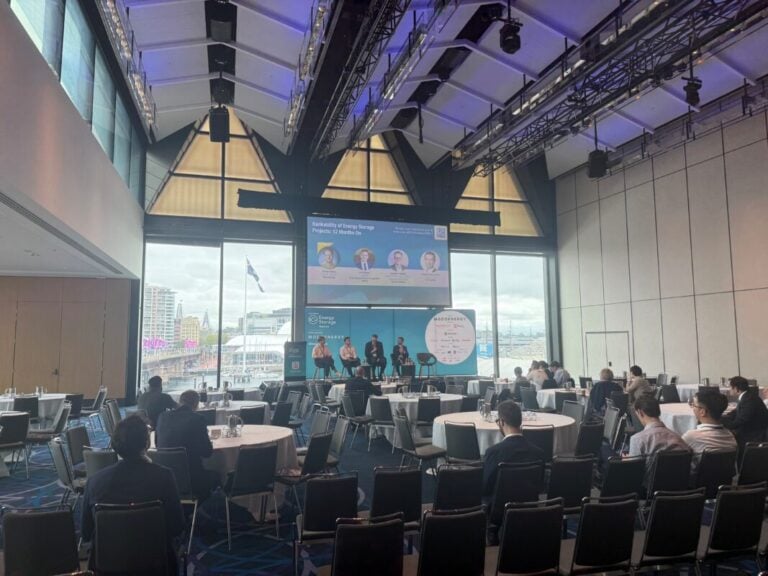
‘We learned more in the past six months than the past six years’: Australian battery storage lenders navigate merchant risk

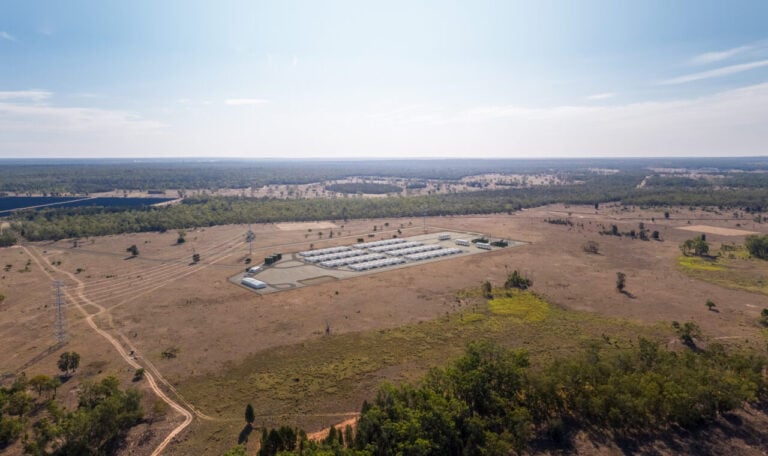
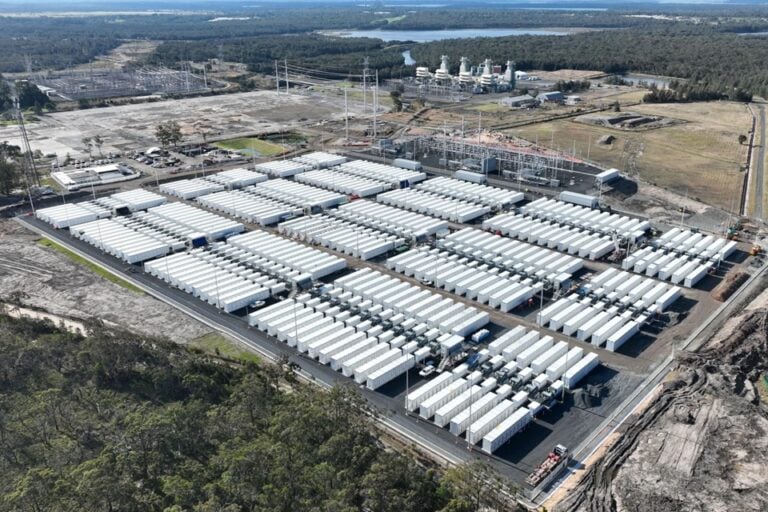
Australian BESS face new financing reality as spreads halve to AU$100/MWh and lenders demand 50-70% contracting amid 15GW deployment surge.

  •  

‘Massive reminder of geopolitical risk’: Australia positioned to capture fleeing battery storage investment amid Middle East tension

Climate Energy Finance’s Tim Buckley argues that geopolitical instability exposes Australia's oil dependency and positions the country as a safe haven for international renewable energy capital.

  •  

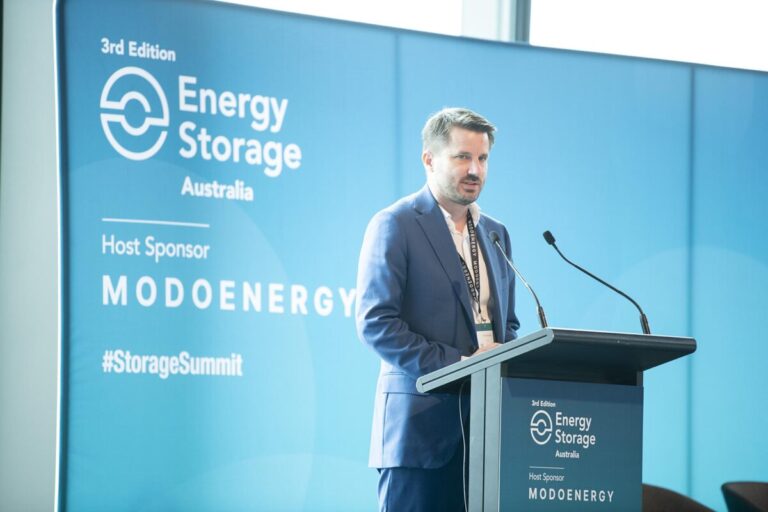
‘Culture of collaboration needed’: Australia’s NSW pushes energy storage projects from ambition to operation

Thimo Mueller, general manager of commercial at ASL, has urged that a ‘culture of collaboration’ will be key to New South Wales (NSW) achieving its energy storage targets.

  •  

Von optimistischen Modellen zu leeren Pipelines: Die intellektuelle Geschichte von Deutschlands Wasserstoff-Backbone*

Deutschlands Wasserstoff-Backbone existiert heute als Stahl im Boden und als unter Druck stehende Pipeline. Doch die wichtigere Infrastruktur wurde lange vor dem ersten ausgehobenen Graben geschaffen. Diese Infrastruktur war intellektuell. Eine lange Abfolge von Studien, Modellen und politiknahen Analysen erzeugte den Eindruck, dass Wasserstoff für großskalige Energienutzung nicht nur plausibel, ... [continued]

The post Von optimistischen Modellen zu leeren Pipelines: Die intellektuelle Geschichte von Deutschlands Wasserstoff-Backbone* appeared first on CleanTechnica.

  •  

Importierte Materialien sind beherrschbar, importierte Energie bepreist Volkswirtschaften neu

Europas Gaskrise im Jahr 2022 wird häufig als ein geopolitisch getriebener Versorgungsschock beschrieben, doch diese Rahmung verfehlt die zentrale Lehre. Die Krise wurde weder durch Importabhängigkeit im Allgemeinen verursacht noch durch Knappheiten bei industriellen Einsatzstoffen. Sie entstand durch die Abhängigkeit von einem importierten Energieträger, der am Rand der Strom- und ... [continued]

The post Importierte Materialien sind beherrschbar, importierte Energie bepreist Volkswirtschaften neu appeared first on CleanTechnica.

  •  

Ontario’s Nuclear Rate Shock Reveals a Deeper Affordability Problem

Ontario Power Generation (OPG) has asked the Ontario Energy Board to approve a sharp increase in regulated nuclear payment amounts, including a year over year jump of more than 40% in 2027. The weighted average regulated payment amount rises from about $78/MWh in 2026 to roughly $110/MWh in 2027, driven ... [continued]

The post Ontario’s Nuclear Rate Shock Reveals a Deeper Affordability Problem appeared first on CleanTechnica.

  •  

Von optimistischen Modellen zu leeren Pipelines: Die intellektuelle Geschichte von Deutschlands Wasserstoff-Backbone*

Deutschlands Wasserstoff-Backbone existiert heute als Stahl im Boden und als unter Druck stehende Pipeline. Doch die wichtigere Infrastruktur wurde lange vor dem ersten ausgehobenen Graben geschaffen. Diese Infrastruktur war intellektuell. Eine lange Abfolge von Studien, Modellen und politiknahen Analysen erzeugte den Eindruck, dass Wasserstoff für großskalige Energienutzung nicht nur plausibel, ... [continued]

The post Von optimistischen Modellen zu leeren Pipelines: Die intellektuelle Geschichte von Deutschlands Wasserstoff-Backbone* appeared first on CleanTechnica.

  •  

Importierte Materialien sind beherrschbar, importierte Energie bepreist Volkswirtschaften neu

Europas Gaskrise im Jahr 2022 wird häufig als ein geopolitisch getriebener Versorgungsschock beschrieben, doch diese Rahmung verfehlt die zentrale Lehre. Die Krise wurde weder durch Importabhängigkeit im Allgemeinen verursacht noch durch Knappheiten bei industriellen Einsatzstoffen. Sie entstand durch die Abhängigkeit von einem importierten Energieträger, der am Rand der Strom- und ... [continued]

The post Importierte Materialien sind beherrschbar, importierte Energie bepreist Volkswirtschaften neu appeared first on CleanTechnica.

  •  

Northern Graphite and Obeikan to develop battery anode material plant in Saudi Arabia


Canada-based Northern Graphite and Saudi industrial group Obeikan Investment have signed a financing agreement to jointly develop and operate a large-scale battery anode material (BAM) facility in Saudi Arabia through a joint venture company.

The $200-million BAM facility will have an initial annual production capacity of 25,000 tonnes. Construction of the facility is expected to start in 2026 and first-phase production is expected to begin in 2028. The facility will be scalable over time to meet growing global demand for graphite anode materials sourced outside of China.

The facility will be located in Yanbu, a strategically positioned industrial and logistics hub on the Red Sea that has direct access to European, North American and Middle Eastern markets.

Obeikan will hold a 51% stake in the joint venture company and Northern Graphite will hold 49%.

Obeikan will lead the organizing of local debt funding required to finance construction, development and commissioning of the plant. The partners will provide the remaining funding as equity in proportion to their ownership interests and through commercial banks.

Northern and Obeikan are in negotiations with battery manufacturers to secure long-term offtake agreements for the initial 25,000 tonnes per year of production. The joint venture will also enter into a long-term offtake agreement to purchase up to 50,000 tonnes of graphite concentrate annually from Northern’s Okanjande project in Namibia. That agreement will accelerate the restart and potential expansion of the graphite mine, which has been in a care and maintenance status since 2018.

“We are partnering with a well-financed and experienced industrial player, gaining scale, financing strength, and access to one of the world’s most strategically important industrial hubs, while accelerating the restart of our Okanjande mine in Namibia and advancing our broader mine-to-market strategy,” said Hugues Jacquemin, Chief Executive Officer of Northern Graphite.

Source: Northern Graphite

  •  

Unter Druck gesetzter Stahl, fehlende Nachfrage: Deutschlands Wasserstoff-Backbone in den Energieflüssen*

Das deutsche Wasserstoff-Backbone ohne Kunden oder Lieferanten — eine Pipeline von nirgendwo nach nirgendwo — ist realer Stahl im Boden, unter Druck gesetzt und als unvermeidlich verteidigt, doch sie wird für ein Energiesystem gebaut, das sie nicht braucht. Diese Aussage klingt provokant, bis die Energieflüsse vollständig offengelegt werden. Betrachtet man ... [continued]

The post Unter Druck gesetzter Stahl, fehlende Nachfrage: Deutschlands Wasserstoff-Backbone in den Energieflüssen* appeared first on CleanTechnica.

  •  

Wenn Stahl Strategien überdauert: Die Klimakosten von Deutschlands Wasserstoff-Pipeline*

Der 400 km lange Abschnitt des deutschen Wasserstoff-Backbones ist inzwischen unter Druck gesetzt, mit fossilem Wasserstoff gefüllt und wartet. Es sind keine nennenswerten Lieferanten angeschlossen und keine vertraglich gebundenen Abnehmer entnehmen Moleküle. Allein diese Tatsache rechtfertigt es, innezuhalten und die Rechnung sorgfältig aufzumachen, denn große Infrastrukturentscheidungen werden nicht automatisch klimapositiv, ... [continued]

The post Wenn Stahl Strategien überdauert: Die Klimakosten von Deutschlands Wasserstoff-Pipeline* appeared first on CleanTechnica.

  •  

Unter Druck gesetzter Stahl, fehlende Nachfrage: Deutschlands Wasserstoff-Backbone in den Energieflüssen*

Das deutsche Wasserstoff-Backbone ohne Kunden oder Lieferanten — eine Pipeline von nirgendwo nach nirgendwo — ist realer Stahl im Boden, unter Druck gesetzt und als unvermeidlich verteidigt, doch sie wird für ein Energiesystem gebaut, das sie nicht braucht. Diese Aussage klingt provokant, bis die Energieflüsse vollständig offengelegt werden. Betrachtet man ... [continued]

The post Unter Druck gesetzter Stahl, fehlende Nachfrage: Deutschlands Wasserstoff-Backbone in den Energieflüssen* appeared first on CleanTechnica.

  •  

Deutschlands Wasserstoff-Backbone und der lange Schatten des russischen Gases

Der neu unter Druck gesetzte Abschnitt von Deutschlands Wasserstoff-Backbone ohne Lieferanten und ohne Abnehmer wird oft als klarer Bruch mit der Vergangenheit beschrieben, als notwendige frühe Investition in eine künftige Wasserstoffwirtschaft. Der Stahl erzählt eine andere Geschichte. Trasse, Durchmesser, Alter und Wirtschaftlichkeit der Pipeline verweisen zurück auf russisches Erdgas, nicht ... [continued]

The post Deutschlands Wasserstoff-Backbone und der lange Schatten des russischen Gases appeared first on CleanTechnica.

  •  

Die Opportunitätskosten des deutschen Wasserstoff-Backbones*

Deutschland hat inzwischen rund 400 Kilometer Wasserstoff-Backbone-Pipeline fertiggestellt und unter Druck gesetzt, ohne angeschlossene Lieferanten und ohne vertraglich gebundene Abnehmer — eine Pipeline von nirgendwo nach nirgendwo. Die Infrastruktur existiert und ist betriebsbereit, aber es fließt kein Wasserstoff zu irgendjemandem, der sich verpflichtet hat, dafür zu bezahlen. Dies ist kein ... [continued]

The post Die Opportunitätskosten des deutschen Wasserstoff-Backbones* appeared first on CleanTechnica.

  •