In response to rising petrol and diesel costs and the uncertainty of where they will peak, March has seen a surge in Electric Vehicle sales across Australia and New Zealand. Reports of rapidly increasing search numbers — doubling each week — according to reports in the main stream media led ... [continued]
In response to rising petrol and diesel costs and the uncertainty of where they will peak, March has seen a surge in Electric Vehicle sales across Australia and New Zealand. Reports of rapidly increasing search numbers — doubling each week — according to reports in the main stream media led ... [continued]
In the midst of a fuel crisis in Australia, caused by Middle East war miscalculations, I would expect that many transport companies are wishing they had ordered more battery electric buses. Diesel is over $AU 3 per litre, while electricity prices remain the same. Fleets are still converting slowly, though. ... [continued]
A UNSW-led team found that annealing conditions significantly affect stress, strain, and microstructure in copper-plated heterojunction solar cell contacts, with fast annealing increasing microstrain in both copper and indium tin oxide.
A team of scientists led by Australia's University of New South Wales (UNSW) has studied how stress and strain evolve in copper (Cu)-plated contacts on heterojunction (HJT) solar cells under various annealing conditions. Their work specifically examined how annealing affects the material properties of Cu, indium tin oxide (ITO), and silicon (Si).
“We applied multiple characterization methods to understand how annealing conditions influence stress and strain in Cu-plated HJT cells,” co-author Pei-Chieh Hsiao told pv magazine. “Our results show that Cu contacts on HJT cells need careful assessment to balance adhesion with mechanical integrity.”
Hsiao highlighted the importance of controlling the microscopic structure of copper contacts to limit mechanical stress in HJT solar cells. “Ideally, plated Cu with a low defect density and (100) crystal texture is preferred,” he explained. “This reduces stress in Si after annealing because of a lower Young’s modulus. The preferred texture can be achieved by adjusting the electrolyte or plating parameters, and annealing can then be optimized to minimize thermal strain while preserving the (100) orientation.”
The team began with silicon heterojunction G12 half-cut n-type precursors measuring 210 mm × 105 mm. The cells were coated with a resin-based mask to restrict copper plating, with selective openings created via a collimated light source. Copper was then plated onto the exposed ITO surface using an acid-based electroplating solution at a current density of 42 mA/cm².
The team compared three annealing methods. In self-annealing, samples were stored at room temperature in a low-humidity environment. Fast annealing (same day) was carried out in compressed dry air at 205 ± 5 C for 45 seconds under approximately 15 suns of illumination. Fast annealing (next day) used the same conditions but was performed roughly 24 hours after plating.
Cross-sectional focused ion beam (FIB) image of a Cu-plated contact on an HJT cell after self-annealing.
Image: University of New South Wales, Sydney, Solar Energy Materials and Solar Cells, CC BY 4.0
“Due to the limitation of low temperature processing of HJT cells, fast annealing was performed at 200 C, which is lower than the grain growth stage at over 250 C,” Hsiao said. “It means that annealing of plated Cu contacts on HJT cells would perform distinctly from that on PERC or TOPCon cells, where higher annealing temperatures are permitted and improved contact adhesion has been demonstrated.”
The team then examined the samples in a series of tests. First, nanoindentation was used to measure the mechanical strength and stiffness of the plated copper. Second, X-ray diffraction (XRD) was used to examine the crystal structure of the copper and the underlying ITO layer. Finally, Raman spectroscopy was used to map the mechanical stress induced by the copper contacts in the silicon, especially near the contact edges.
The analysis showed that no significant differences were found in yield strength or plastic response of plated Cu, which was consistent with the comparable Cu grain size. Moreover, XRD patterns showed fast annealing reduced the Cu lattice parameter and promoted grain growth in the Cu (200) crystallographic orientation, while simultaneously increasing the ITO lattice parameter and full width at half maximum (FWHM).
As a result, microstrains in both Cu and ITO rose under rapid annealing, with the scientists noting that Raman spectroscopy revealed approximately 2 μm-wide regions of high local stress in the silicon along the plated Cu fingers, with stress being lower in self-annealed Cu and higher in fast-annealed Cu.
These results indicate that minimizing defects and promoting a preferential (100) texture in plated Cu can reduce stress transfer to Si and ITO. Maintaining uniform plating conditions and careful surface preparation are also essential for achieving optimal texture and adhesion. Overall, self-annealing is preferred when comparable contact adhesion can be achieved, as it preserves the (100) orientation and minimizes thermal strain.
In early January, a research team from UNSW and Chinese-Canadian solar module maker Canadian Solar investigated how HJT solar cells are hit by sodium (Na) and moisture degradation under accelerated damp-heat testing and has found that most degradation modes predominantly affect the cells themselves, making cell-level testing the preferred approach.
A month later, another UNSW team assessed the impact of soldering flux on HJT solar cells and found that the composition of this component is key to prevent major cracks and significant peeling.
New system-level modelling from the Australian Centre for Advanced Photovoltaics (ACAP) has revealed that achieving ultra-low-cost solar targets could create a 2,000GW-scale solar PV market in Australia.
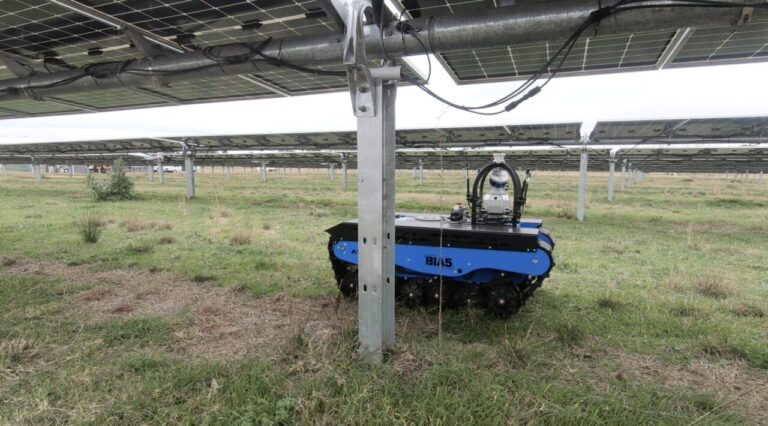
Australia's national science agency, CSIRO, has successfully completed trials of autonomous robots designed to revolutionise maintenance operations at large-scale solar installations.
Climate Energy Finance’s Tim Buckley argues that geopolitical instability exposes Australia's oil dependency and positions the country as a safe haven for international renewable energy capital.
Thimo Mueller, general manager of commercial at ASL, has urged that a ‘culture of collaboration’ will be key to New South Wales (NSW) achieving its energy storage targets.

 Login
Login