Reading view

Conductive smart hydrogels as battery electrolytes: Promising for lithium, sodium, and zinc-ion chemistries

Hydrogels offer promise in batteries as an electrolyte, including lithium and sodium chemistries, due to being inherently more safe.

From ESS News

Battery research in industry and acadaemia continues to advance ideas in electrodes and electrolytes, covering materials, designs, safety, efficacy, and green credentials. In most cases for lithium-ion batteries used in stationary storage, the use of potentially flammable organic electrolytes has been a persistent safety liability and one the industry is constantly countering through often complex mitigation efforts, and expensive and destructive testing.

A new review paper taking a systematic review of hydrogel research from 2008 to 2025, including 186 published studies over 17 years, makes the case that conductive hydrogels are a credible electrolyte candidate. The paper notes this is the case particularly for flexible and wearable applications, however, stationary storage and lithium and sodium are potential winners. The paper was published this week in the Journal of Electroanalytical Chemistry by researchers at the University of Limpopo in South Africa.

The safety argument is perhaps the most straightforward, hydrogel electrolytes are water-based, which removes the thermal runaway contribution of conventional organic electrolytes, and their structure means they also do not leak and can self-repair.

While at this stage the commercial aspects are not clear, the performance picture is promising though it varies significantly by chemistry. For lithium-ion, a silicon nanoparticle-polyaniline composite electrode using an in-situ polymerised hydrogel achieved 1,600 mAh/g over 1,000 deep cycles, with 99.8% average coulombic efficiency from the second cycle onward. First-cycle efficiency sat around 70%, a known issue for silicon anodes.

To continue reading, please visit our ESS News website.

  •  

Electrification alone may not shield firms from gas-linked prices

With electricity markets still tied to natural gas in many regions, battery storage is emerging as a tool to manage price volatility and reduce exposure to grid-driven risks.

From pv magazine USA

As the geopolitical situation in the Middle East continues deteriorating, fears of a long-term energy crisis are growing. Conflict-driven volatility on the oil and gas market is pushing up electricity and fuel prices, leaving individual consumers and corporations alike scrambling to insulate themselves from financial shocks.  

Many companies who have already deployed solar and storage or are currently transitioning to renewables likely believed the move would protect them from fossil fuel price fluctuations, as they’d no longer be directly reliant on combustion fuels. This may not be the case.  

“In the U.S., companies in the process of electrifying can remain indirectly exposed to fossil fuel markets because electricity prices and grid stability are still often shaped by natural gas dynamics, regional transmission bottlenecks and capacity constraints,” explained ABB Electrification Service’s president Stuart Thompson.

Thompson told pv magazine USA that in practice, this indirect exposure via grid pricing is more significant than many companies assume. Static supply contracts can’t respond to real-time market conditions, he said, meaning that electrification alone doesn’t eliminate vulnerability unless that underlying system is modernized.  

“Companies that thought electrification had solved their energy exposure are seeing costs rise in lockstep with gas markets,” he added, saying that many had underestimated the extent of exposure and risk. Yes, electrification can provide some protection, but it won’t necessarily guarantee predictability or control over pricing.   

“Consistently high prices are painful but predictable,” Thompson said. “Companies can budget for them and adapt. What they can’t budget for is unpredictability.”  

The somewhat nasty surprise is accelerating discussions of what comes next. For many companies, that looks like adding another layer of flexibility and intelligence that enables control over how and when they interact with the grid instead of simply automatically accepting the market prices.  

Storage is the name of that game and has been for some time. Still, Thompson pointed out most operators still treat electrification as a set-it-and-forget-it, one-and-done infrastructure decision instead of a source of ongoing revenue in a tumultuous energy market. Shifting that strategy to one that’s smarter and more flexible is “increasingly essential” to future-proofing operations, he added.  

The economic logic hasn’t changed, but the urgency has, as skyrocketing gas prices impact the bottom line for electrified and fossil-fueled facilities alike. While that exigency may ease when prices stabilize and the market course corrects, Thompson noted that the strategic value of electrification and storage will stick around.  

“The underlying drivers are not going away. Companies still need more resilient operations, more flexible systems and a credible path to lower-carbon performance,” he said. “The shift in how companies think about energy has been building for quite some time. Recent market volatility has reinforced that direction, but it is not the root cause of the shift.”

  •  

All emerging cyber threats targeting power infrastructure at a glance

Researchers in Moroco analyzed cybersecurity challenges in smart grids, highlighting AI-driven detection and defense strategies against threats like distributed denial-of-service, false data injection replay, and IoT-based attacks. They recommend multi-layered protections, real-time anomaly detection, secure IoT devices, and staff training to enhance resilience and safeguard power system operations.

Researchers at Morocco's Higher School of Technology, Moulay Ismail University, have conducted a comprehensive analysis of emerging cybersecurity challenges in power systems and detailed recent advances in detection and defense strategies.

Their work emphasizes the growing role of AI in enhancing control, protection, and resilience in modern smart grids. It also classifies cyber threats by origin, impact, and affected system layers to provide a structured understanding and reviews machine learning and optimization-based intrusion detection systems (IDSs) for power systems.

The researchers highlighted that renewable smart grids face diverse cyber threats that can disrupt operations and compromise data. Distributed denial-of-service (DDoS) attacks, for example, flood networks with traffic, blocking legitimate access and delaying control actions, while data integrity attacks manipulate sensor or control data, causing incorrect decisions or blackouts.

Additionally, replay attacks retransmit intercepted data to confuse the system, and false data injection attacks subtly alter real-time data to mimic normal operations while disrupting the grid. Covert attacks inject hidden signals that manipulate system behavior without detection, whereas IoT device-based attacks exploit vulnerabilities in meters or sensors to spread malware, steal data, or launch DoS attacks.

Finally, zero dynamics attacks leverage system models to generate hidden signals that leave output measurements unchanged but affect operations, posing sophisticated stealth threats to smart grid security.

 Do you want to strengthen and enhance the cyber security of your solar energy assets to safeguard them against emerging threats?

Join us on Apr. 29 for pv magazine Webinar+ | Decoding the first massive cyberattack on Europe’s solar energy infrastructure – The Poland case and lessons learned

The researchers warned that while smart grids have improved energy efficiency and flexibility through advanced communication tools and distributed energy sources, they have also introduced new cyber vulnerabilities. Threats such as phishing, malware, denial-of-service (DoS) attacks, and false data injection (FDI) can disrupt operations, compromise data, and damage infrastructure.

They recommend implementing defense strategies that maintain confidentiality, integrity, and availability, while also incorporating authentication, authorization, privacy, and reliability. Machine learning and data-driven intrusion detection systems can help identify anomalies and detect FDI attacks in real time, particularly in smart grids and industrial control systems such as SCADA, which rely on accurate sensor measurements for state estimation.

The research team also encouraged energy asset owners and grid operators to adopt substation security measures and protocol vulnerability analyses to detect risks at the hardware and network levels. Blockchain, distributed ledgers, and Hilbert-Huang transform methods are highlighted as tools to further strengthen cybersecurity.

IoT devices, including sensors and smart meters, should be secured with strong authentication, safe boot procedures, frequent firmware updates, and standardized security across manufacturers. Sensitive grid data should be protected using techniques such as homomorphic encryption to maintain confidentiality during storage and transmission.

“A multi-tiered security approach that includes firewalls, intrusion detection systems, and network segmentation can enhance grid resilience. Extracting critical elements from vulnerable IoT devices and leveraging redundant control channels ensures operational continuity during attacks,” the researchers stated.

Machine learning and anomaly detection systems should be deployed to enable real-time identification of irregular activities, including FDI and malware propagation. Standardized protocols and rapid incident response measures should also support collaboration among grid operators, IoT manufacturers, and regulators, facilitated by information-sharing platforms.

The researchers emphasize that human-centered attacks, including phishing and social engineering, remain significant threats, but these can be mitigated through regular staff and user training.

The review was presented in “Cybersecurity challenges and defense strategies for next-generation power systems,” published in Cyber-Physical Energy Systems.


  •  

The impact of annealing on copper-plated heterojunction solar cells

A UNSW-led team found that annealing conditions significantly affect stress, strain, and microstructure in copper-plated heterojunction solar cell contacts, with fast annealing increasing microstrain in both copper and indium tin oxide.

A team of scientists led by Australia's University of New South Wales (UNSW) has studied how stress and strain evolve in copper (Cu)-plated contacts on heterojunction (HJT) solar cells under various annealing conditions. Their work specifically examined how annealing affects the material properties of Cu, indium tin oxide (ITO), and silicon (Si).

“We applied multiple characterization methods to understand how annealing conditions influence stress and strain in Cu-plated HJT cells,” co-author Pei-Chieh Hsiao told pv magazine. “Our results show that Cu contacts on HJT cells need careful assessment to balance adhesion with mechanical integrity.”

Hsiao highlighted the importance of controlling the microscopic structure of copper contacts to limit mechanical stress in HJT solar cells. “Ideally, plated Cu with a low defect density and (100) crystal texture is preferred,” he explained. “This reduces stress in Si after annealing because of a lower Young’s modulus. The preferred texture can be achieved by adjusting the electrolyte or plating parameters, and annealing can then be optimized to minimize thermal strain while preserving the (100) orientation.”

The team began with silicon heterojunction G12 half-cut n-type precursors measuring 210 mm × 105 mm. The cells were coated with a resin-based mask to restrict copper plating, with selective openings created via a collimated light source. Copper was then plated onto the exposed ITO surface using an acid-based electroplating solution at a current density of 42 mA/cm².

The team compared three annealing methods. In self-annealing, samples were stored at room temperature in a low-humidity environment. Fast annealing (same day) was carried out in compressed dry air at 205 ± 5 C for 45 seconds under approximately 15 suns of illumination. Fast annealing (next day) used the same conditions but was performed roughly 24 hours after plating.

Cross-sectional focused ion beam (FIB) image of a Cu-plated contact on an HJT cell after self-annealing.

Image: University of New South Wales, Sydney, Solar Energy Materials and Solar Cells, CC BY 4.0

“Due to the limitation of low temperature processing of HJT cells, fast annealing was performed at 200 C, which is lower than the grain growth stage at over 250 C,” Hsiao said. “It means that annealing of plated Cu contacts on HJT cells would perform distinctly from that on PERC or TOPCon cells, where higher annealing temperatures are permitted and improved contact adhesion has been demonstrated.”

The team then examined the samples in a series of tests. First, nanoindentation was used to measure the mechanical strength and stiffness of the plated copper. Second, X-ray diffraction (XRD) was used to examine the crystal structure of the copper and the underlying ITO layer. Finally, Raman spectroscopy was used to map the mechanical stress induced by the copper contacts in the silicon, especially near the contact edges.

The analysis showed that no significant differences were found in yield strength or plastic response of plated Cu, which was consistent with the comparable Cu grain size. Moreover, XRD patterns showed fast annealing reduced the Cu lattice parameter and promoted grain growth in the Cu (200) crystallographic orientation, while simultaneously increasing the ITO lattice parameter and full width at half maximum (FWHM).

As a result, microstrains in both Cu and ITO rose under rapid annealing, with the scientists noting that Raman spectroscopy revealed approximately 2 μm-wide regions of high local stress in the silicon along the plated Cu fingers, with stress being lower in self-annealed Cu and higher in fast-annealed Cu.

These results indicate that minimizing defects and promoting a preferential (100) texture in plated Cu can reduce stress transfer to Si and ITO. Maintaining uniform plating conditions and careful surface preparation are also essential for achieving optimal texture and adhesion. Overall, self-annealing is preferred when comparable contact adhesion can be achieved, as it preserves the (100) orientation and minimizes thermal strain.

The research work was described in “Stress and strain analysis of Cu plated contacts on HJT cells under different annealing conditions,” published in Solar Energy Materials and Solar Cells. Scientists from Australia's University of New South Wales and technology company SunDrive Solar have contributed to the research.

In early January, a research team from UNSW and Chinese-Canadian solar module maker Canadian Solar investigated how HJT solar cells are hit by sodium (Na) and moisture degradation under accelerated damp-heat testing and has found that most degradation modes predominantly affect the cells themselves, making cell-level testing the preferred approach.

A month later, another UNSW team assessed the impact of soldering flux on HJT solar cells and found that the composition of this component is key to prevent major cracks and significant peeling.

  •  

New Time targets large-scale perovskite production in Italy

New Time has outlined a four-year roadmap to industrialize perovskite solar cells in Italy, with pilot production planned within three years and full-scale output to follow.

From pv magazine Italia

New Time has outlined plans to industrialize perovskite PV production in Italy, following a two-day strategic meeting in Forlì to advance the project in the Emilia-Romagna region.

The company said the roadmap to commercialization is structured in four phases. The first year will focus on optimizing the perovskite formulation and identifying stabilizing materials. In the second year, the company plans to begin small-scale production for certification purposes.

The third phase will center on developing an industrial solution for large-scale manufacturing, followed by the start of full-scale production in the fourth year. New Time said pilot-scale production with stabilized processes is expected within three years, with large-scale output targeted within four years.

To support the rollout, the company plans to allocate existing industrial facilities to the project, backed by dedicated internal investment. It said funding is already underway and is being sourced through reinvestment of company profits into innovation and research and development.

New Time said current pricing for perovskite PV modules remains influenced by the lack of optimized production processes and ongoing material selection. The project aims to improve cost competitiveness with existing PV technologies while maintaining strong potential for gains in performance and efficiency.

The Forlì meeting, held over two days starting March 31, focused on defining the operational phases of the project and establishing how expertise and technologies will be shared. Participants included researchers from Italy and the Netherlands, including representatives from the Italian National Research Council (CNR), the University of Bari Aldo Moro, and Delft University of Technology.

  •  

How much agrivoltaic shading is enough

Spanish researchers found that semi-transparent silicon PV greenhouses boosted tomato fruit weight by 25% while generating 726.8 kWh over two seasons, outperforming cadmium telluride PV and shaded controls. The PV-Si system balanced sunlight, temperature, and energy, showing strong agrivoltaic potential.

Researchers led by Spain’s Murcian Institute for Agricultural and Environmental Research and Development (IMIDA) have evaluated the impact of different agrivoltaic system designs on tomato crops to determine the level of shading that benefits the plants most.

“The use of four independent, identical greenhouses enables a robust assessment of their respective impacts on microclimate, crop performance, and energy generation,” the team said. “Specifically, the study aimed to evaluate the agronomic and energy performance of two commercially available semi-transparent PV technologies, with distinct light transmission patterns, in comparison with control and shading-net treatments.”

The researchers tested a semi-transparent monocrystalline silicon (PV-Si) greenhouse and a cadmium telluride thin-film (PV-TF) greenhouse against a control greenhouse and one with a shading net.

The study took place in Murcia, Spain, over two tomato-growing seasons: a 120-day winter-spring season from December 2023 to April 2024, and a 98-day spring-summer season from April to July 2024. Murcia’s semi-arid Mediterranean climate features average summer and winter temperatures of 30 C and 12 C, respectively. In both seasons, the team used polyethylene greenhouses measuring 3.9 m long × 2 m wide × 3.1 m high.

Materials under evaluation were installed on the roof and south façade of each greenhouse. The control greenhouse used only the standard polyethylene film, while the shading-control greenhouse added a shading net to selected zones. One solar greenhouse featured monofacial silicon PV modules with 50% transparency, and the other used cadmium telluride (CdTe) modules, also at 50% transparency. Each solar greenhouse had 18 modules—half on the roof, half on the façade—with nominal powers of 59 W for PV-Si and 40 W for PV-TF.

The microclimatic conditions inside each pilot greenhouse were monitored at two-minute intervals. Measurements included air temperature, relative humidity, solar irradiance, and photosynthetically active radiation,” the team explained. “Additionally, soil temperature and humidity were measured at five-minute intervals at depths ranging from 10 to 60 cm in 10 cm increments.”

The testing showed that the PV-Si technology generated an average daily energy output of 3.92 kWh in winter-spring and 4.07 kWh in spring-summer. PV-TF, meanwhile, produced 2.58 kWh and 2.79 kWh, respectively. Total energy generation across both seasons reached 726.8 kWh for PV-Si and 488.4 kWh for PV-TF.

Daily light integral (DLI), representing total photosynthetically active light received by plants each day, averaged 18.1 mol m⁻² in winter-spring and 25.4 mol m⁻² in spring-summer in the Si greenhouse. In the TF greenhouse, DLI averaged 10.8 mol m⁻² and 17 mol m⁻², respectively.

“During the winter-spring cycle, only the control and PV-Si greenhouses maintained DLI values above the minimum threshold required for optimal crop development,” the researchers reported. “Despite a similar number of fruits, the PV-Si greenhouse produced fruits with a mean weight 25% higher than the control, attributed to more favorable nighttime air temperatures and higher soil moisture.”

In winter-spring, the Si greenhouse yielded 21 fruits with an average weight of 74 g, while the TF greenhouse produced 18 fruits averaging 50 g. During spring-summer, the Si greenhouse produced 30 fruits averaging 93 g, compared with 23 fruits at 79 g in the TF greenhouse.

“Overall, the PV-Si system effectively balanced solar radiation management, thermal regulation, and energy production, demonstrating its potential as a suitable technology for agrivoltaic applications,” the team concluded.

The research findings were presented in “Comparative evaluation of semi-transparent monocrystalline silicon and cadmium telluride photovoltaics for tomato cultivation in Mediterranean agrivoltaic greenhouses,” published in Smart Agricultural Technology. Researchers from Spain’s IMIDA, Miguel Hernández University of Elche, and Italy’s University of Bari Aldo Moro have contributed to the study.

  •  

Neoen unveils large-scale battery projects in France, Japan

Neoen has announced two battery energy storage system (BESS) projects in France and Japan, expanding its footprint in both markets with installations totaling 348 MW and 896 MWh.

From pv magazine France

Neoen has announced two new BESS projects in France and Japan, as part of the Franco-Japanese Economic Forum in Tokyo during an official visit by French President Emmanuel Macron.

The company, a subsidiary of Canadian asset manager Brookfield, is developing its first large-scale installation in Japan while expanding its storage portfolio in France.

The French project, located in Vernou-la-Celle-sur-Seine in the Seine-et-Marne department, will have a capacity of 248 MW and 496 MWh. It is expected to be the largest battery in the country and the first to connect to the 400 kV transmission network operated by RTE.

Situated near the Chesnoy substation, the system will provide frequency and voltage regulation services to the Île-de-France grid. Construction is scheduled to begin in summer 2026, with commissioning planned for 2028, subject to additional environmental studies.

This marks Neoen’s second major storage project in France, following the Breizh Big Battery (92 MW/183 MWh) in Pleyber-Christ, Brittany, which the company said is nearing completion.

Neoen said the project also reflects its ongoing industrial partnership with Japan-based Nidec, with this being the twelfth battery project the two companies have developed together. Nidec will supply the battery units, assemble them at its production facility in La Fouillouse near Saint-Étienne, and provide maintenance services for 20 years.

In parallel, Neoen is launching its first investment in Japan with the Ako Battery project in Hyogo prefecture. The facility will have a capacity of 100 MW and 400 MWh. The company is partnering with France’s Equans and Japan’s Toho, and signed a grid connection agreement with Kansai Electric Power Company (KEPCO) in January 2026. Construction is expected to begin in the coming months, with commissioning targeted for 2028.

Globally, Neoen has a battery portfolio of 2.8 GW and 8.1 GWh in operation or under construction across Australia, Germany, Finland, France, Italy, Sweden, and El Salvador. The company aims to install an additional 10 GW of capacity by 2030.

  •  

Chinese PV Industry Brief: Sungrow storage overtakes inverters in 2025

Sungrow says energy storage systems overtook PV inverters as its largest business segment in 2025, as the company posted double-digit revenue and profit growth.

Sungrow said revenue reached CNY 89.184 billion ($12.95 billion) in 2025, up 14.55% year on year, with net profit attributable to shareholders rising 21.97% to CNY 13.461 billion. Energy storage systems generated CNY 37.287 billion in revenue, up 49.39%, accounting for 41.8% of total revenue, while global storage shipments reached 43 GWh. PV inverter revenue totaled CNY 31.136 billion, with global shipments of 198 GW and an estimated 30% market share. Overseas revenue rose 48.7% to CNY 53.992 billion, representing 60.5% of total revenue. The company attributed a more than 50% year-on-year decline in fourth-quarter net profit to a CNY 1.0 billion incentive fund provision and adjustments to overseas project delivery schedules, and said it is advancing plans for a Hong Kong listing to support global expansion.

Laplace has denied market rumors that it had secured a second-phase PV project from Tesla valued at nearly CNY 10 billion, saying no such orders existed and no undisclosed material information was being withheld. The company warned investors against irrational speculation following recent stock gains.

The National Energy Administration (NEA) said China's nationwide PV utilization rate reached 90.8% in January to February, down four percentage points from the 2025 average and approaching the commonly cited 90% curtailment threshold. The decline was attributed to reduced electricity demand during the Lunar New Year holiday period, when lower industrial and commercial activity typically increases solar curtailment.

GCL New Energy said its board has proposed changing the company's English name to Dynasty Digital Holdings Ltd, reflecting a strategic shift toward integrating digital technologies including AI and Web3.0 into its business development.

The China Nonferrous Metals Industry Association (CNMIA) said polysilicon prices are falling sharply, with n-type re-feed and granular silicon both averaging CNY 36,500 per metric ton on April 1, down 9.88% week on week. N-type re-feed polysilicon traded between CNY 35,000 and 37,000 per metric ton (MT), while n-type granular silicon traded between CNY 36,000/MT and 37,000/MT, with both averaging CNY 36,500/MT.

  •  

TCL Zhonghuan to acquire control of DAS Solar in consolidation move

TCL Zhonghuan has agreed to take majority control of Chinese solar manufacturer DAS Solar, a producer of advanced n-type modules based on tunnel oxide passivated contact (TOPCon) and back-contact (BC) technologies.

TCL Zhonghuan has signed a definitive agreement to acquire control of DAS Solar through a combination of share transfers, capital injection, and voting rights delegation, in one of the most closely watched solar sector consolidation deals of 2026.

The Shenzhen-listed company, a unit of TCL Technology, said on March 30 that it had finalized transaction documents after securing a 90-day exclusive negotiation window under a framework agreement signed Jan. 16.

Under the terms of the deal, TCL Zhonghuan will pay CNY 1.258 billion ($182.7 million) in cash. This includes CNY 258 million to acquire 8.06% of DAS Solar’s pre-money equity from 50 existing shareholders, and CNY 1 billion in new capital, giving it 55.56% of post-money equity. The transaction implies a pre-investment valuation of CNY 800 million, roughly 10% of the company’s peak valuation. TCL Zhonghuan will also receive voting rights over an additional 7.20% of shares from founder Liu Yong and affiliated partnerships.

Following completion, TCL Zhonghuan will hold 59.14% of DAS Solar and control 66.34% of voting rights. DAS Solar will become a consolidated subsidiary.

The deal has been approved by TCL Zhonghuan’s board and does not require shareholder approval, according to the company. Remaining steps include state asset approvals, antitrust filing, and final closing.

Founded in 2018, DAS Solar has built significant capacity in n-type technologies. By the end of 2025, it had more than 50 GW of cell capacity and more than 70 GW of module capacity, with a strong presence in n-type TOPCon and BC module bidding in recent years.

However, the company faces financial pressure. As of the end of 2025, DAS Solar reported liabilities of CNY 14.189 billion and negative net assets of CNY 1.292 billion.

The acquisition would extend TCL Zhonghuan downstream from wafers into cells and modules, strengthening vertical integration. The company, via subsidiary Maxeon, holds BC-related intellectual property, while DAS Solar contributes manufacturing capacity. The combination could accelerate BC commercialization, according to the announcement.

Industry views are mixed. Supporters see a low-cost acquisition of a strategic asset at a depressed valuation and a signal of broader industry consolidation. Risks include near-term earnings pressure from DAS Solar’s losses, potential goodwill impairment, and integration challenges across operations, talent, and customers.

  •  

Malaysia’s solar capacity surpasses 5.7 GW

Reports from the International Energy Agency's Photovoltaic Power Systems Programme (IEA-PVPS) indicate Malaysia added over 1.4 GW of solar in 2025, with more than 5.7 GW now deployed across multiple government schemes.

Malaysia’s solar capacity reached 5,777 MW by the end of 2025, according to figures from the International Energy Agency's IEA-PVPS.

The figure includes solar deployed across Malaysia’s large-scale solar (LSS), feed-in tariff (FiT), and net energy metering (NEM) schemes. An IEA-PVPS report from 2024 put the country’s cumulative solar capacity at 4,329 MW at the end of that year, implying additions of around 1,448 MW in 2025.

The country's total solar capacity may stand even higher, as the figure does not account for any solar installed outside the government schemes, such as off-grid installations.

Malaysia's LSS program is a competitive auction scheme targeting utility projects that had deployed 2,648 MW of solar by the end of 2025. The most recent auction round kicked off in January 2025, tendering 2 GW of large-scale solar projects with capacities ranging from 10 MW to 500 MW.

It approved 13 projects in September 2025 with a combined capacity of 1,975 MW. Figures from Malaysia's Ministry of Energy Transition and Water Transformation published in October said the LSS has now approved 6,028 MW of solar capacity to 117 companies since its inception.

IEA-PVPS adds that a total 345 MW of solar was deployed under Malaysia's feed-in tariff scheme, an earlier policy offering a fixed tariff for small-scale rooftop solar, before it was replaced by a net-metering scheme at the start of 2016.

The three rounds of Malaysia's net-metering schemes, which have expanded over time to include residential, commercial and industrial (C&I), and government-owned buildings, had deployed 2,747 MW of solar, IEA-PVPS' figures add, by the time of its conclusion in June 2025.

At the start of 2026, Malaysia replaced its net-metering program with the Solar Accelerated Transition Action Program (ATAP), aimed at both residential and commercial customers.

Lam Pham and Alnie Demoral, energy analysts at Ember specializing in Asian markets, told pv magazine that the LSS program and third net metering scheme were key drivers of Malaysia's solar market last year, as well as high commercial tariffs helping to make solar competitive for the C&I market.

Looking ahead, Pham and Demoral forecast that more solar will be deployed in Malaysia in 2026 than in 2025, driven by the launch of the ATAP and completion of utility-scale solar projects awarded in the most recent LSS rounds.

“The ATAP in 2026 removes quota constraints and expands rooftop adoption which previously constrained distributed solar,” the pair told pv magazine. They also explained the program will bring easier approval compared to the NEM but focuses on self-consumption by offering no export benefits.

Pham and Demoral said allowing the monetization of excess generation under ATAP would help support Malaysia’s solar market further. They also suggested standardizing and speeding up grid connection approvals and publishing hosting capacity maps for improved transparency, as well electricity pricing and subsidies reform, explaining that natural gas and coal remain indirectly subsidized, in turn distorting solar competitiveness.

Data centre developments also appear poised to play a growing role in the development of Malaysia's solar sector. Among the largest solar project under development in the country is a 1.5 GW project to be tied with battery storage to supply hyperscale data centres under the country's Corporate Renewable Energy Supply Scheme scheme, which allows businesses to purchase green electricity directly from renewable energy developers via the grid. 

In February, Malaysian Prime Minister Datuk Seri Anwar Ibrahim said that, due to their role in increasing energy and water usage, the government will restrict the entry of new data centers unrelated to AI.
  •  

Hydro-Québec launches grant for residential, commercial solar

Hydro-Québec has introduced a grant offering up to CAD 1,000 ($718.40) per kilowatt installed, covering up to 40% of eligible costs to accelerate rooftop solar adoption and reduce payback periods for residential and business customers in the Canadian province of Québec.

Provincial utility Hydro-Québec has launched a new grant program aimed at residential and commercial customers installing PV systems, as part of its broader strategy to expand solar generation in Québec, Canada.

The program provides CAD 1,000/kW of installed capacity and can cover up to 40% of eligible project costs. According to the utility, typical residential systems range between CAD 5,000 and CAD 6,000 in total costs, while business installations average around CAD 45,000.

Hydro-Québec said the initiative is designed to shorten payback periods for customers who choose to become self-generators. It expects typical payback times to fall from between 25 and 30 years to around 10 to 12 years under the new program.

Residential customers can apply through the LogiVert Efficient Homes Program, provided installations were completed on or after June 30, 2025, and meet program eligibility requirements. Business customers must apply via the OSE calculation tool under the Efficient Solutions Program, with projects required to meet technical and administrative criteria and be purchased after March 31, 2026.

The utility also allows participants to enroll in a net metering option, enabling them to export surplus electricity to the grid in exchange for kilowatt-hour credits. Hydro-Québec has increased the maximum self-generation capacity under this option from 50 kW to 1 MW over the past months.

To qualify for the grant, all installations must secure authorization for grid connection from Hydro-Québec and comply with the technical standards set out under the relevant residential and commercial program frameworks.

Canada's installed PV capacity stood at around 5.4 GW at the end of 2025, with Québec contributing just 17 MW of the cumulative total. The new grant program is part of Hydro-Québec's broader push to close that gap, alongside a 300 MW utility-scale solar tender launched last year and a long-term target of integrating 3 GW of solar into the provincial grid by 2035, driven by rising electricity demand.

  •  

Heat dome and high pressure boost southern US solar as polar vortex clouds the north

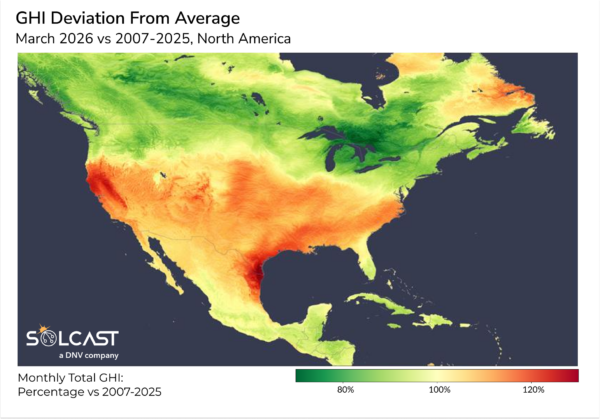
In a new weekly update for pv magazine, Solcast, a DNV company, reports that last month North America saw a stark solar divide, with southern regions like northeastern Mexico, southeastern Texas, and much of California experiencing 20–25% above-average irradiance, while Canada, the Great Lakes, and the northeastern U.S. faced persistent cloudiness and below-normal solar conditions. This contrast was driven by high-pressure systems and a southwestern heat dome in the south versus a polar vortex bringing cold air and storms to the north.

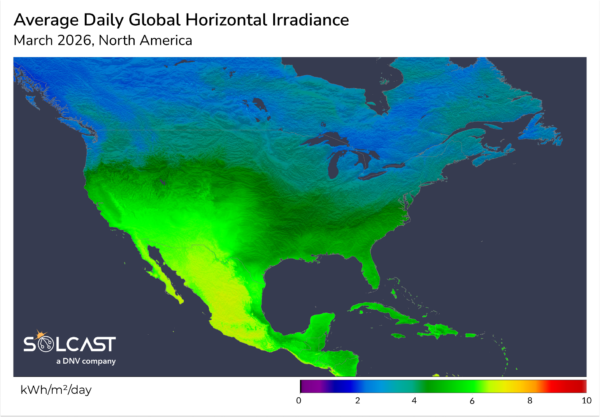
North America experienced a pronounced divide in solar conditions through March, with the southern half of the continent recording widespread increases in solar resource while the north faced persistent cloud and storm activity, according to analysis using the Solcast API.

The strongest gains were centered on northeastern Mexico and southeastern Texas where deviations reached roughly 20–25% above the long-term March average, with much of California also seeing similar increases. Canada, the Great Lakes and the northeastern United States recorded lower-than-normal irradiance as polar air and storm systems dominated conditions. This produced a month in which the usual seasonal contrast between north and south was sharpened, with clearer skies in the south and cloudier conditions in the north compared with the 2007–2025 average.

Much of the southern United States and northern Mexico benefited from a pair of high-pressure systems positioned over the Pacific and Atlantic coasts of North America. These systems stabilised the atmosphere and kept skies clearer than normal across large areas. Southern Mexico and Florida were exceptions to the southern trend, each experiencing slightly below average irradiance where localised cloud cover persisted.

A pronounced heat dome over the southwestern United States further reinforced these conditions, driving temperatures 10–19 C (18-35 F) above seasonal norms and breaking multiple records, as localized areas saw even large increases. These warm conditions, more like summer temperatures than spring, were the result of high atmospheric stability, which also suppressed cloud formation and supported extended periods of clear skies. As a result, California emerged as one of the strongest-performing regions relative to average conditions, with irradiance levels significantly elevated through much of the month. The scale of the heat anomalies was notable, with attribution studies indicating these extremes would be highly unlikely without the influence of climate change.

At the same time, northern parts of the continent experienced a very different pattern as an unstable polar vortex pushed cold polar air into Canada and the northern United States. This brought snowstorms and blizzards across several regions, particularly around the Great Lakes and the Northeast, where irradiance fell far below normal for March. These stormy conditions contributed to the largest percentage drops from average in areas north of the Great Lakes.

The push of polar air extended unusually far south, reaching into Florida and contributing to its slightly below normal irradiance despite the generally sunnier conditions across most of the southern half of North America. Collectively, these factors reinforced the strong contrast between the sunnier southern regions and the cloudier, storm affected conditions across the north.

Solcast produces these figures by tracking clouds and aerosols at 1-2km resolution globally, using satellite data and proprietary AI/ML algorithms. This data is used to drive irradiance models, enabling Solcast to calculate irradiance at high resolution, with typical bias of less than 2%, and also cloud-tracking forecasts. This data is used by more than 350 companies managing over 300 GW of solar assets globally.

  •  

Agratas advances 20 GWh battery plant in western India

Agratas, the global battery business of the Tata Group, has completed the steel frame of its Sanand facility in India, with production expected to begin in 2027.

From pv magazine India

Agratas, the global battery business of the Tata Group, has completed the steel frame of its Sanand battery manufacturing facility in India, marking a key milestone toward operational readiness. The company expects production to commence in 2027.

The first phase of the project is designed for an annual production capacity of 20 GWh. Once operational, the facility will manufacture advanced battery cells for electric vehicles and energy storage applications.

Deepak Khare, vice president of manufacturing operations at Agratas, said completing the steel frame represents an important step in the company’s progress toward operational readiness. He said the focus now is on developing systems, processes, and capabilities to deliver batteries manufactured in India for global markets, while also building a skilled workforce to support safe and high-quality production.

The steel structure spans 700 meters in length and 150 meters in width, reaching a maximum height of 34 meters and covering a built-up area of 105,000 square meters. More than 24,000 tonnes of steel have been used in the main structure, while associated buildings are being developed in parallel. At peak construction, more than 2,500 skilled workers were active on-site simultaneously.

The project is being executed by Tata Projects Ltd. in collaboration with Tata Consulting Engineers and multiple steel contractors.

  •  

Zambia tenders 300 MW of solar

The first bid window of Zambia's new Carbon Feed In Premium Program plans to develop 300 MW of solar across projects that are connected to on-site battery energy storage systems. The deadline to submit expressions of interest is May 31.

The Zambian government is inviting applications to its Carbon Feed In Premium Program (CFIP), a new results-based financing mechanism geared towards large-scale, grid-connected solar installations.

The program, implemented by the country’s Ministry of Green Economy and Environment and Ministry of Energy, is open to both national and international independent power producers, national power utility ZESCO and its subsidiaries.

A call for proposals states that the first CFIP window will focus on procuring 300 MW of new solar projects.

Participation criteria adds that only solar projects with planned installed capacities between 30 MW and 100 MW are eligible. Projects should also encompass a battery energy storage system located on site with a capacity of at least half an hour.

Projects supported by the program must be connected to the national grid, with ZESCO acting as the primary offtaker via a power purchase agreement.

An online CFIP information event will take place on April 14, ahead of a deadline for applicants to submit their expressions of interest by May 31.

Funding for the CFIP has been made available through a bilateral agreement between Zambia and Norway, with Norway set to pay for the verified emissions reductions generated by the projects delivered under the program.

The Africa Solar Industry Association (AFSIA) has identified 912.4 MW of operational solar in Zambia across 142 projects, according to its project database.

Last May, ZESCO completed the 100 MW Chisamba solar farm in southern Zambia, the country's largest operational project to date. At the time, the company said it plans to add a second 100 MW at the site. Work is also underway on a separate 100 MW solar project towards the east of the country.

  •  

Rooftop solar now accounts for one-fifth of Puerto Rico’s generation capacity

Distributed solar additions have vastly outpaced all other forms of generation as Puerto Rico’s overall power generation capacity continues to grow.

From pv magazine USA

Recently released data from the US Energy Information Administration (EIA) indicates that 20% of all power generation capacity in Puerto Rico now comes from rooftop solar, surpassing natural gas to become the second-largest capacity source in the territory.

Growth in rooftop solar capacity has outpaced all other energy sources in Puerto Rico over the past decade. According to EIA data, distributed solar installations accounted for 81% of all new generating capacity added to the island’s grid between 2016 and 2025.

During 2025 alone, an average of 3,850 rooftop systems were installed each month at homes and businesses, bringing the total number of active systems to 191,929 by year-end.

Rooftop solar capacity growth has been a bright spot in Puerto Rico’s energy story. The 1,456 MW of rooftop capacity far exceeds the estimated 165 MW of utility-scale solar installed on the island.

PJ Wilson, president of the Solar Energy and Storage Association Puerto Rico, said the industry group remains committed to expanding distributed solar across the territory.

“We are committed to building on this momentum and ensuring rooftop solar and storage continue to grow as a key part of Puerto Rico’s energy system to strengthen the grid and expand energy independence,” he told pv magazine USA.

Notably, the growth in solar capacity has not displaced other generation sources, with capacity from petroleum, natural gas, and coal showing little change over the past five years.

In 2025, Puerto Rico Governor Jenniffer González Colón signed Act 1-2025 into law, extending the lifespan of the territory’s only coal-fired power plant through 2032, despite opposition from local communities. The legislation also revised renewable portfolio standards, removing interim targets of 40% by 2025 and 60% by 2040, while retaining the long-term goal of 100% renewable energy by 2050.

Battery storage and virtual power plants

Grid resilience has become increasingly important in Puerto Rico in recent years. Data shows that the average utility customer experiences a minimum of 27 hours of outages annually, with some locations facing up to nearly 200 hours depending on severe weather events.

In response, adoption of distributed energy storage has grown rapidly. The Puerto Rico Energy Bureau estimates more than 171,000 households and businesses had installed battery systems by the end of 2025, representing a combined capacity of 2,864 MWh.

Analysts at Wood Mackenzie expect an additional 3,000 MWh of distributed storage to be added by 2030.

Many battery owners participate in virtual power plants (VPPs) through the Customer Battery Energy Sharing (CBES) program operated by grid operator LUMA. Through the program, LUMA works with storage aggregators that manage fleets of customer-sited batteries across the territory. During periods of peak demand, the utility can call on these aggregators to temporarily control distributed batteries in “CBES events” to help balance the grid.

LUMA currently lists seven aggregators on its website, allowing customers to enroll and receive compensation in exchange for participation.

Grid challenges have also prompted changes at LUMA. New CEO Janisse Quiñones began her tenure on March 30, 2026, bringing experience from her previous role as CEO and chief engineer of LADWP, with a stated focus on improving grid reliability.

Wilson said the industry group is optimistic about increased collaboration under new leadership.

“SESA remains focused on advancing policies that allow rooftop solar and battery storage to keep growing as a central pillar of Puerto Rico’s energy future, and we’re encouraged by the opportunity for stronger collaboration under LUMA’s new leadership,” he said.

  •  

Terabase Energy advances automated PV construction with robotics, AI tools

California-based Terabase Energy is scaling up its automated solar construction platform and expanding its engineering software ecosystem to improve project delivery and performance modeling.

From pv magazine USA

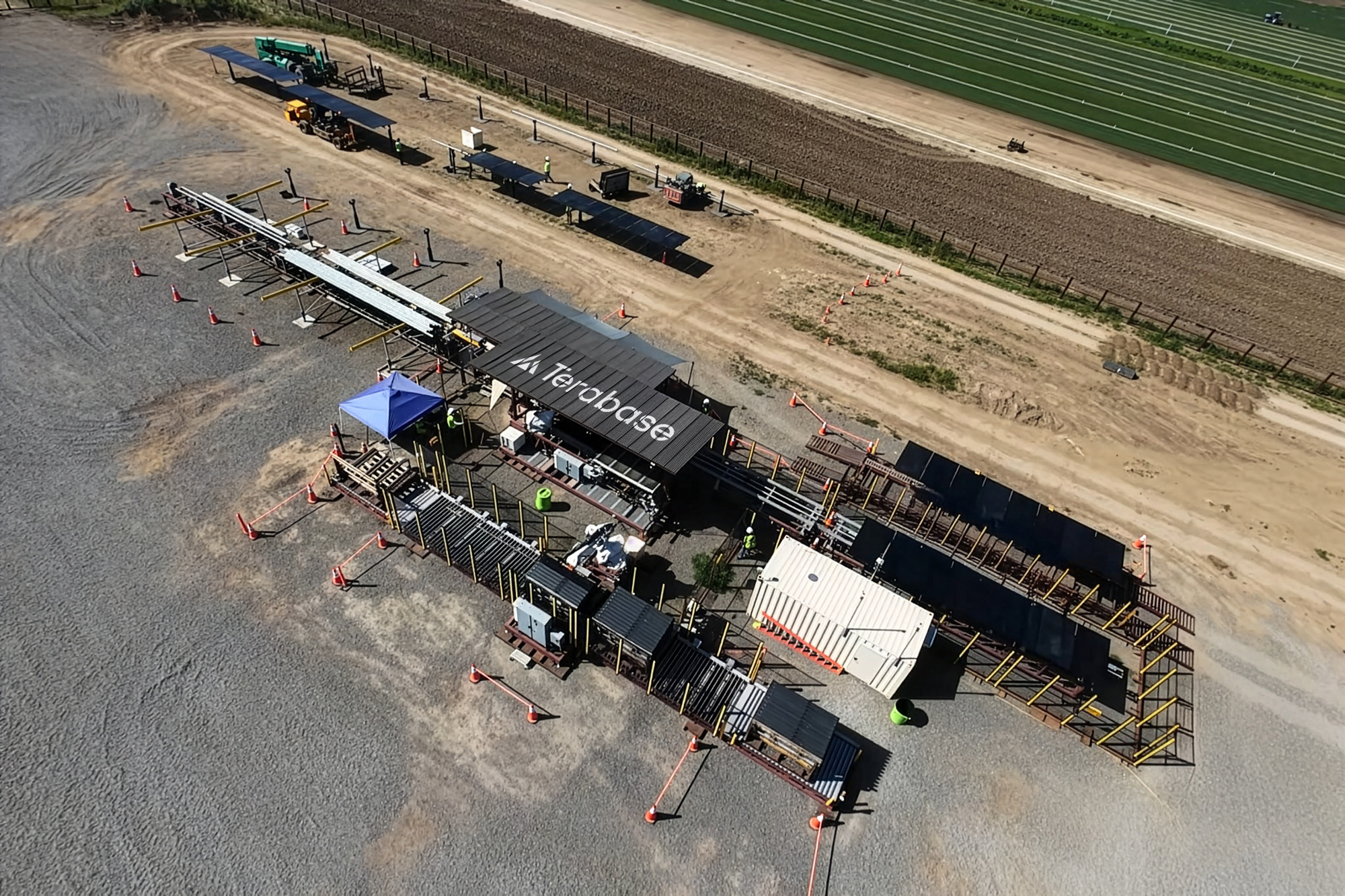
California-based engineering and construction technology firm Terabase Energy says its new Terafab V2 automated solar array construction system has completed field testing and is ready for commercial service. The Terafab process solar panel and tracker torque tube assemblies onsite and deploys them on prepositioned tracker mounts using AI-assisted robotics.

In addition, Terafab has established a partnership with California-based energy consulting firm PowerUQ to integrate the latter’s uncertainty analysis software with the former’s PlantPredict solar modeling tools. The developments represent significant investments in solar plant technology at a time when new large-capacity power projects face shifting economic incentives.

The core of the upgraded Terafab factory system is an outdoor assembly and inspection center that is erected on active construction sites. The current version of the factory is optimized for First Solar Series 7 panels and Nextpower trackers.

Palleted panels are paired with steel tubes and in the field and run through an automated inspection line that performs quality control. Defects are caught in real time. Robotic arms load approved assemblies from the line onto unmanned rovers that drive them out to their appointed locations in the array field for manual placement.

Matt Campbell, CEO and co-founder of Terabase Energy told pv magazine USA that he has been working for ways to streamline solar construction since his days at SunPower a decade and a half ago. Earlier efforts involved prefabricating tracking module assemblies in the factory and shipping them to the site, but the weight and dimension limits imposed too many compromises on the process.

“We decided, ‘Hey, let’s do prefab, but we’re going to do it on-site because of the shipping density problem.’ But then we inherit these other problems,” Campbell said. “It’s hard to do outdoor robotics. Plus, we essentially take a factory assembly operation and set it up on site, where we have to fight through rain, hail, wind, tornadoes, dust, ants, bees, snakes, badgers, rats. Literally.”

Terabase’s research and development efforts have resulted in factory line that is hardened against the elements and nature’s creatures. Palleted modules and tracker frame components are shipped to the construction site. One robot unpacks them and moves module and torque tube assemblies through the inspection and loading point. Campbell says Terafab V2 has a two-minute cycle time that could ideally place 20 MW per week per line if running continuously. Campbell says there are two deployable factories available now with a third to be ready by the end of the year. He expects 10 factories to be available in the second quarter of 2027.

Terabase has used the first version of the Terafab system to install 40 MW of tracking solar over across multiple commercial projects in the U.S. With the addition of AI-assisted management software and automated robotics, the company expects to install hundreds more megawatts of solar in 2026.

“The new version is more compact than the original, so you can you can move it in four hours,” he said. “It’s pretty nimble and has a higher level of automation. The factory is twice as fast, and you can run multiple lines per site. My goal is to install a gigawatt in 10 weeks. The way you could do that is if we send four or five Terafabs to a site and run them 24 hours. We could do that.”

With the current version of the system, workers manually unload the panel-tube assemblies from the rovers and install them onto mounts, which have been pre-placed. Terabase says a future version of the system, due in 2027, will automate the process of fitting assemblies onto tracker mounts. Campbell said versions of Terafab capable of handling panels using silicon modules and other tracker components are forthcoming.

Terafab V2 was financed largely through a $130 million series C investment round led by Softbank last year. Campbell said the investment has enabled the company to pursue research and development on a number of initiatives designed to bring down the cost and time required to install large-scale solar.

“Well, the original goal of the company is in the name, ‘Terawatt Baseload Energy,’” Campbell said. “When we started the company, I asked, ‘What do we need for solar to be a terawatt-scale source of baseload energy?’ And the conclusion was, we need to be able to build it 10 times faster for half the cost.”

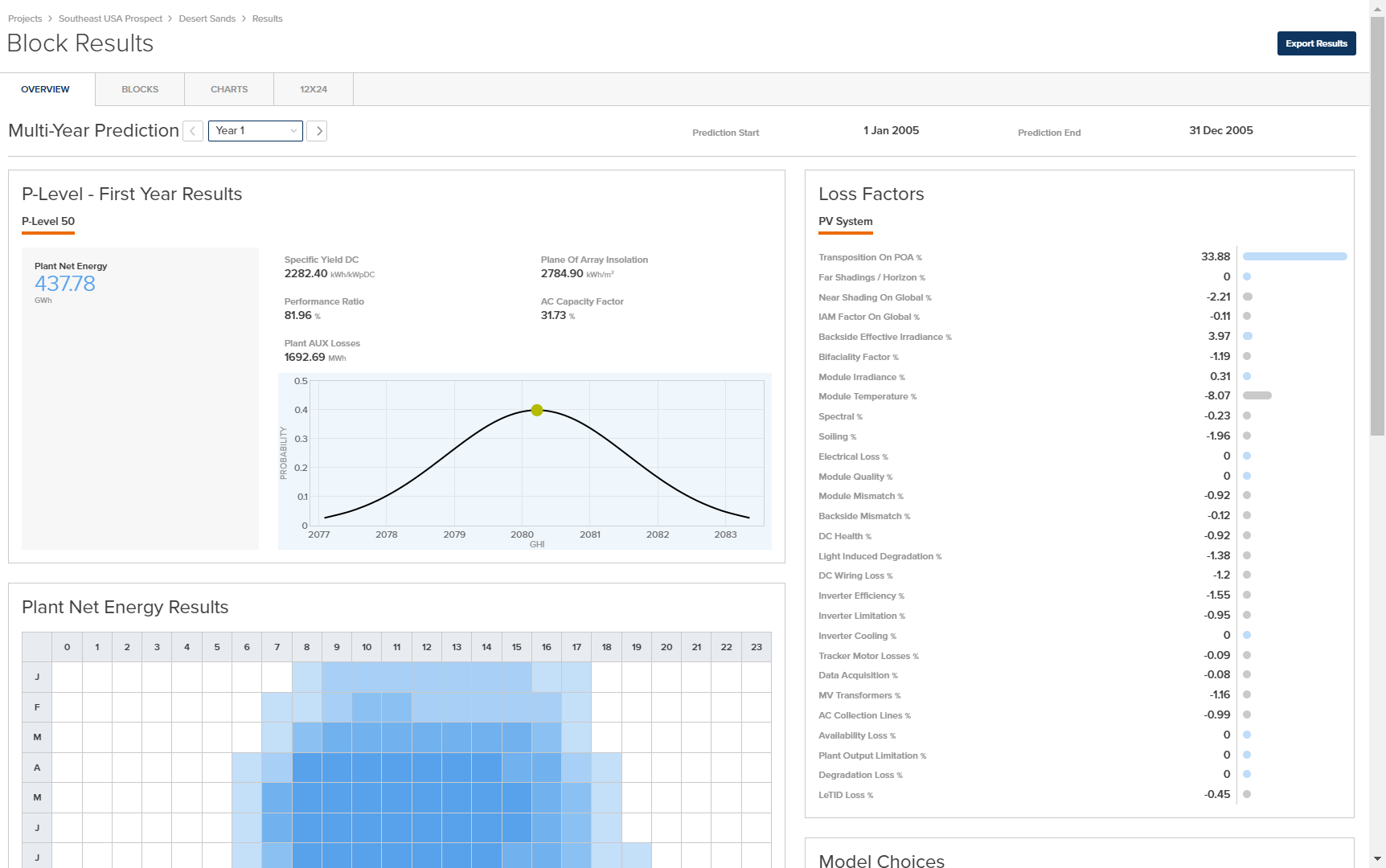
Another example of this investment in new technology can be found on the company’s engineering and analysis side of the business, with PlantPredict’s integration agreement with PowerUQ. The integration enables a solar productivity analysis in PlantPredict to be loaded into PowerUQ for an uncertainty quantification analysis to forecast plant performance over time taking additional factors into account.

David Spieldenner, director of PlantPredict sales at Terabase, told pv magazine USA that his company’s software represents an expansion of desktop photovoltaic analysis tools such as PVSyst by using cloud computing to enable more extensive analyses. Access to high-end computing enables PlantPredict to use parallel processing across many data centers to produce very granular results.

“We unlock the power of the cloud to do very advanced 3-D sub-hourly simulations,” he said.

Chetan Chaudhari, co-founder and CEO of PowerUQ, told pv magazine USA that while PlanPredict is a very high-fidelity, accurate physics model with its shading engine and different model chains that it considers while calculating energy production, its focus has mainly been on first year energy generation. Historically this has been worked, he added, because most of the plant value came from project’s tax credits and the high power purchase agreement rates it could command.

“But now that that’s kind of going away” Chaudhari said. “There are a lot more market pressures. We are seeing more news about the underperformance of these solar assets over their lifespans. This is the time for the industry to move away from just looking at the first-year generation and basing all the financial calculations on that. We need to be able to think about the project as a 20-year, 30-year asset that you’re investing billions of dollars in.”

The function of PowerUQ is to analyze factors that introduce variability into plant output models and evaluate the risks these impose on the project. Examples of such uncertainty are the performance of components over time, curtailment policies of utilities that dampen production, and the impact of El Niño weather events. A PowerUQ analysis of a PlantPredict model could show a range of probabilities for output scenarios and the risk levels associated with them.

“As we’re moving forward, we want to make sure people don’t get results that they don’t trust,” Spieldenner said. “PowerUQ is going to help people better understand the implications of the deeper results they are getting out of PlantPredict.”

  •  

‘Motherhood further shaped my leadership perspective’

This week Women in Solar+ Europe gives voice to Margarita Licht, Product Manager BESS & Charging at Germany's Goldbeck Solar. She says diverse perspectives and cognitive styles are essential in the solar and energy storage sector, enabling smarter solutions, effective problem-solving, and long-term planning. She also emphasizes that creating inclusive environments, fostering allyship, and choosing workplaces that value authentic strengths empower growth and drive meaningful impact.

Energy storage within the solar sector demands multi-disciplinary thinking. We are dealing with complex topics: grid balancing, battery optimization, integration across markets, and these challenges cannot be solved through a single lens. Effective problem-solving comes from teams with diverse experiences and perspectives. People from different backgrounds bring different approaches: some excel at seeing the whole system, others at diving into details, and others at rapid decision-making. When you combine these approaches, you get smarter solutions. This isn’t just an ethical argument; industry studies and real-world results consistently show that diverse teams outperform more homogeneous ones. In my experience managing international teams deploying batteries in new markets, inclusion was never an abstract concept, it was an operational necessity. To deliver results, I needed cross-functional expertise, diverse perspectives, and buy-in from different stakeholders.

Motherhood further shaped my leadership perspective. It taught me to think in generations rather than quarters, an approach that aligns naturally with the long-term nature of energy infrastructure. But it’s not just about gender or parental status, any life experience that gives you a new lens can enhance problem-solving. What this industry truly needs is diversity in cognitive styles: reflective planners, decisive communicators, and integrators who understand complexity. Diversity, in all its forms, is a strategic advantage.

I focus on creating environments where people can remain themselves while contributing their strengths. Inclusion is not about forcing uniformity; it is about enabling difference to become a source of value. I build task forces that bring together cross-functional experts and invite different levels of management into decision-making processes. Facilitating these conversations requires intention. I prepare deep-dive knowledge and actively track who is speaking. If someone hasn’t contributed, I will ask directly: “What’s your take on the approach?” or suggest we take time to reflect: “Let’s take 24 hours to review this.” This approach values thoughtful analysis alongside quick decision-making. Whether I am direct, careful, or empathetic in communication, my goal remains the same: to ensure valuable perspectives are acknowledged and considered.

However, building inclusive environments goes beyond team dynamics; it requires a shift in how we frame talent and leadership. Language shapes reality, and in our industry, that matters more than we often realise. For example, describing motherhood as a “work-life balance challenge” frames it as a limitation, when in fact it can cultivate long-term planning skills that are invaluable to our sector. It is the same reality, but with an empowering narrative.

Similarly, telling women to “be more confident” places responsibility on the individual. A more effective question is whether the environment values different cognitive styles. This shifts the focus from fixing individuals to improving culture and leadership.

Allyship has played a critical role in my career. My first manager demonstrated what that looks like in practice. Coming from a chemistry background with no sales experience, I was unsure how quickly I needed to develop new skills. He gave me clarity: “I know what you can do and what you need to learn. I want to support you.” That statement created both trust and direction.

In another instance, when a customer requested “someone more senior” during a technical discussion, he joined the call but immediately redirected the conversation: “Margarita is leading, she’ll walk you through it.” This was not about stepping in to rescue; it was about reinforcing my credibility. These are simple, replicable behaviours: redirect rather than replace, vocalise trust, and align visibility with growth. That support reinforced my confidence as I took on complex, customer-facing roles across new markets.

Reflecting on this, I don’t say “I was lucky to have great bosses.” I say, “I chose environments where I could grow once I understood how much that mattered.” This reframing reinforces agency and reshapes how we think about career progression and inclusion. Narrative change is not just semantic; it creates clarity, calm, and ultimately power.

For young women entering the solar and renewable energy industry today, my advice is simple: stay yourself. Success is not about becoming louder if you are naturally reflective, it is about finding environments that value your cognitive style.

During interviews, go beyond the role description. Meet the team, observe how they interact, and ask yourself whether different voices are truly heard. This is how you assess strategic fit, not by adapting yourself to the environment, but by choosing the right one.

Look for what I call the “allyship playbook”: leaders who redirect conversations to you, create space for reflection, and openly express trust in your capabilities. These signals matter.

Early in my career, I avoided architecture because it felt too male-dominated. Today, I work on solar and battery projects in EPC environments because I made deliberate choices about where I could grow and contribute authentically. You do not need to change who you are. You need to choose where your strengths are recognised.

That is not always the easiest path, but it is the one that allows you to grow faster while staying true to yourself. And in an industry as critical as the energy transition, that authenticity is not just beneficial, it is essential.

Margarita Licht is Product Manager for Battery Energy Storage Systems (BESS) and Charging at Goldbeck Solar. With a background in chemistry and over a decade of experience in the lithium-ion battery sector, she has held roles in sales, program management, and strategic customer development through key account management. Margarita has worked across Europe and internationally, coordinating cross-functional initiatives and complex energy storage projects from concept to market. She is known for building inclusive, cognitively diverse teams and for influencing without formal authority, bringing together stakeholders at all levels to align on technical and commercial decisions. Passionate about sustainable infrastructure, she bridges technical depth with customer relevance to deliver long-term, reliable energy solutions.

Interested in joining Margarita Licht and other women industry leaders and experts at Women in Solar+ Europe? Find out more: www.wiseu.network

  •  

Bauer Solar launches 480 W back-contact solar module

The German manufacturer said its new back-contact solar panel has a power conversion efficiency of up to 23.52%.

From pv magazine Germany

German module manufacturer Bauer Solar is expanding its product portfolio with a new back-contact panel.

Initially, it will launch a full-black glass-glass version with an output of 480 W. It is built on 108 bifacial half-cells and measure 1,800 mm × 1,134 mm × 30 mm, with a listed weight of 24.8 kg. The module power conversion efficiency is 23.52%.

The company said that both the front and rear glass panes are 2 mm thick and feature anti-reflective coatings. The frame is made of anodized black aluminum alloy. The modules are rated for operating temperatures from –40 C to 85 C and a maximum system voltage of 1,500 V. They can reportedly withstand static loads up to 5,400 Pa and carry a hail resistance rating of HW3. Certifications include fire protection class A.

Bauer Solar is offering a 30-year product and performance warranty on the new modules. The linear performance warranty guarantees a minimum output of 88.85 % of the original capacity after 30 years. The company also plans to increase the output of its back-contact modules to 500 W later this year with the “Pure” and “Performance” variants.

Alongside back-contact modules, Bauer Solar will continue to focus on its TOPCon technology. This portfolio will be expanded this summer with the “Pure” and “Black” variants, which will reach an output of 465 W. While the company did not disclose pricing, it emphasized that the modules are aimed at the residential rooftop solar market as “an economical solution with an optimal price-performance ratio.”

  •  

New intrusion detection systems boost protection of SCADA systems against cyber threats

An international reserch team developed two deep learning-based IDS models to enhance cybersecurity in SCADA systems. The hybrid approach reportedly improves detection of complex and novel cyber threats with high accuracy, adaptability, and efficiency, outperforming traditional methods across multiple datasets.

A Saudi-British research team has develeped two new deep learning-based intrusion detection systems (IDSs) that can reportedly improve the cybersecurity of SCADA networks.

In large-scale solar power plants, SCADA systems play a vital role by overseeing energy generation, monitoring the performance of solar panels, optimizing output, identifying potential faults, and maintaining smooth overall operations. In essence, they act as the central system that converts raw solar data into practical control decisions, ensuring the plant operates safely, efficiently, and profitably.

The scientists explaind that current cybersecurity frameworks are often inadequate for SCADA systems because they cannot fully cope with the complexity and constantly evolving nature of modern cyber threats. Most existing approaches rely on signature-based detection, which depends on prior knowledge of attack patterns and therefore fails to detect zero-day exploits or novel intrusion techniques.

To address this limitation, the researchers considered deep learning methods, as these techniques allows to process large volumes of data, identify complex patterns, and enable more proactive threat detection.

“Such capability of handling and analyzing big data is particularly useful during scenarios when SCADA systems are generating huge streams of real-time data, including sensor readings, control commands, and other system logs,” they explained. “Furthermore, deep learning methods, especially convolutional neural networks (CNNs) and recurrent neural networks (RNNs), have shown outstanding performances in the detection of complex attack scenarios with sequential or spatial patterns in data.”

 Do you want to strengthen and enhance the cyber security of your solar energy assets to safeguard them against emerging threats?

Join us on Apr. 29 for pv magazine Webinar+ | Decoding the first massive cyberattack on Europe’s solar energy infrastructure – The Poland case and lessons learned

Industry experts will explore real-world cyberattack scenarios, highlight potential vulnerabilities in solar and storage systems, and share practical, actionable strategies to protect your energy assets. Attendees will gain valuable knowledge on how to anticipate, prevent, and respond to cyber threats in the rapidly evolving solar energy sector.

The proposed approach integrates two new IDSs, named the Spike Encoding Adaptive Regulation Kernel (SPARK) and the Scented Alpine Descent (SAD) algorithm. By leveraging their complementary strengths, the method reportedly improves spike-threshold accuracy while enhancing adaptability and robustness under dynamic conditions.

The SPARK model introduces adaptive spike encoding by dynamically adjusting thresholds based on input signal characteristics. It uses advanced statistical methods to respond to variations in neural input, improving sensitivity to changes in intensity and frequency. By integrating both temporal and spatial features, SPARK enhances information encoding, especially for complex datasets. Unlike traditional fixed-threshold methods, it provides context-aware thresholding, improving accuracy and reliability.

The SAD algorithm complements SPARK by offering an optimization strategy inspired by olfactory navigation, which is the process by which animals and organisms use odor cues to locate food, mates, or home, and Lévy flight behavior, which is a strategy obeserved in many animal species to randomly search for a target in an unknown environment. This purportedly enables efficient exploration of solution spaces and avoids local minima, ensuring optimal threshold selection.

The hybrid approach can dynamically adjust and optimize spike thresholds simultaneously, surpassing conventional static or isolated approaches, according to scientists, which noted that the SPARK model is well-suited for SCADA and IoT systems due to its scalability, real-time adaptability, and efficient data handling. Additionally, its lightweight design reduces computational overhead and false positives, making it effective for resource-constrained environments.

“SAD is complementary to SPARK in the sense that it focuses on improving the detection accuracy while maintaining computational efficiency,” the researchers emphasized. “SAD's anomaly scoring mechanism can be integrated into this framework to add another layer of detection, which can run parallel with SPARK. In effect, integrating the deep learning models into the scoring mechanism means that SAD would enable a much more fine-grained analysis of attack patterns with little noticeable impact on performance for the SCADA system in question.”

The researchers used multiple benchmark datasets are used to evaluate SCADA intrusion detection performance, including the Secure Water Treatment (SWaT) testbed, Gas Pipeline, WUSTL-IIoT, and Electra. These datasets capture diverse industrial environments, attack types, and operational conditions, enabling comprehensive testing. They also include time-series sensor data, actuator commands, and labeled attack scenarios such as denial-of-service (DoS), distributed denial-of-service (DDoS), malware, and injection attacks.

The diversity of datasets ensured accurate modeling of both normal behavior and complex anomalies in SCADA and IIoT systems, according to the research team. Standardized preprocessing, training, and evaluation procedures also enabled comparison across all tested models. Cross-validation and controlled training conditions, meanwhile, reportedly prevented bias and ensured reliable generalization results. Visualization tools such as histograms, loss curves, and confusion matrices provided insights into model behavior and anomaly detection.

The SPARK model was found to consistently demonstrate “superior” performance, achieving high accuracy, precision, and recall across datasets. It outperformed traditional machine learning and deep learning approaches in detecting diverse intrusion types.

“The findings underline, in summary, that the SPARK and SAD models are basically the final frontier in modern intrusion detection,” the scientists said. “Distinctly designed to provide improved detection capabilities and operational efficiency, the two designs also chart a way into more resilient and intelligent security solutions for modern industrial controlled systems (ICSs) and Internet-of-Things (IoT) networks.”

The novel IDSs have been presented in “SPARK and SAD: Leading-edge deep learning frameworks for robust and effective intrusion detection in SCADA systems,” published in the International Journal of Critical Infrastructure Protection. The research team comprised academics form the Leeds Beckett University in the United Kingdom and King Abdulaziz University in Saudi Arabia. 

  •  

Neuron Energy plans 5 GWh battery storage factory in India

India-based EV battery manufacturer Neuron Energy plans to enter the grid-scale storage market with a 5 GWh battery energy storage system (BESS) manufacturing facility in the Indian state of Maharashtra.

From pv magazine India

Neuron Energy has announced plans to build a fully automated battery energy storage system (BESS) manufacturing facility in Talegaon, in the western Indian state of Maharashtra, marking its entry into the grid-scale storage segment.

The 7-acre facility is being developed with an investment of INR 1 billion ($10.8 million) and is designed as a robotic manufacturing plant for containerized energy storage systems. Once fully operational, it will have an annual production capacity of 5 GWh and the capability to produce up to 1,000 BESS units per year.

The modular systems are intended for deployment across solar and grid infrastructure, enabling storage of surplus energy during peak generation periods and dispatch during periods of high demand.

The company said the facility will create more than 500 direct and indirect jobs across engineering, manufacturing, system integration, installation, and technical services.

Neuron Energy said its go-to-market strategy will target solar developers, commercial and industrial (C&I) customers, and utilities, with a planned business mix of 60% domestic and 40% export markets.

The company added that it plans to expand its energy storage portfolio as it builds on its existing battery manufacturing capabilities.

  •