Reading view

Sion Power’s Licerion cells exceed 500 Wh/kg for defense and aerospace


Sion Power is expanding its Licerion® lithium-metal battery program to supply cells and battery systems for US defense and aerospace. The cells are engineered to exceed 500 Wh/kg, up to 200 Wh/kg more than current advanced lithium-ion technology, even with silicon anode enhancements.

The platform covers both primary (single-discharge) and secondary (rechargeable) configurations. Target applications include long-endurance UAS, tactical and counter-UAS drones, missile and loitering munition platforms, autonomous maritime and ground vehicles and space systems. Sion Power operates a 110,000 sq ft cell manufacturing facility in Tucson, Arizona, and says it can demonstrate cells and integrated battery systems today, and expects initial product shipments in late 2026.

Lithium-metal anodes store substantially more energy per kilogram than graphite because lithium metal is lighter and more electrochemically active. For weight-constrained platforms, closing the gap from 300-350 Wh/kg for advanced Li-ion to 500+ Wh/kg translates directly into longer endurance and expanded payload capacity. Sion Power’s expansion also responds to US policy momentum—NDAA provisions support domestic battery supply chains and highlight demand for American-manufactured advanced cells.

“Our lithium-metal technology provides the step-change in energy density required to support longer-range missions, increased flight duration and higher payload capability while maintaining a U.S.-based manufacturing capability aligned with national security priorities,” said Pamela Fletcher, CEO of Sion Power.

“By combining high-energy lithium-metal chemistry with advanced battery pack engineering, Sion Power enables defense integrators to unlock two to three times increases in mission endurance, significantly extended operational range and dramatically higher payload capacity compared with conventional lithium-ion and lithium-polymer batteries used in today’s unmanned systems,” said Tracy Kelley, chief science officer at Sion Power.

Source: Sion Power
  •  

Vishay’s new automotive MOSFET driver delivers 8 mm creepage in compact SMD-4 package


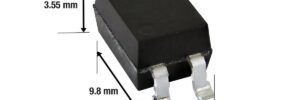
Vishay Intertechnology has launched the VODA1275, an automotive-grade photovoltaic MOSFET driver that delivers 8 mm creepage distance and CTI 600 mold compound in a compact SMD-4 package. The device targets high voltage automotive applications including pre-charge circuits, wall chargers, and battery management systems for EVs and HEVs.

The VODA1275 delivers 20 V open circuit voltage, 20 μA short circuit current, and 80 μs turn-on time—three times faster than competing devices, according to Vishay. The driver provides reinforced isolation with a working isolation voltage of 1260 Vpeak and isolation test voltage of 5300 VRMS, making it suitable for 800 V+ battery systems. The device is AEC-Q102 qualified and meets automotive reliability standards.

The high open circuit voltage allows designers to use a single MOSFET driver instead of two drivers in series, which was previously required for higher voltage applications. This simplifies circuit design and reduces component count in systems that need to drive MOSFETs and IGBTs reliably at high voltages. The driver can also enable custom solid-state relays to replace electromechanical relays in next-generation vehicles.

The optically isolated device draws power from an infrared emitter on the low voltage side, eliminating the need for an external power supply on the isolated side. “The VODA1275 features the industry’s fastest turn-on times and the highest open circuit voltage and short circuit current in its class,” the company stated. The driver is RoHS-compliant and halogen-free. Samples and production quantities are available now with eight-week lead times, priced at $1.20 per piece for US delivery.

Source: Vishay Intertechnology

  •  

Bosch Rexroth introduces TS 7plus conveyor for payloads up to 3,000 kg


Bosch Rexroth has introduced the TS 7plus, a fully electric roller conveyor designed for heavy-payload manufacturing lines. The company says it’s the world’s first freely configurable, fully electric transfer system for loads up to 3,000 kg, targeting automotive, battery and aerospace/defense assembly.

The TS 7plus runs on modular sections using solid or hollow rollers roughly 50% larger than those in the predecessor TS 7 system. The larger rollers reduce moving parts per meter, which Bosch Rexroth says improves availability. Standard workpiece pallets go up to 2,200 x 3,000 mm, minimum transport height is 350 mm for both longitudinal and transverse conveying, and conveyor speed reaches 24 m/min—Bosch Rexroth says that’s significantly faster than AGVs. A redesigned bearing block with two mounting tabs speeds assembly and simplifies maintenance and replacement.

Drive is via lubrication-free king shafts with bevel gears, eliminating the re-tensioning and lubrication demands of chain drives. Motors come in 180 W and 250 W variants with a third-party interface, and can mount inside or outside the conveyor section. Internal mounting clears the working area of interfering contours, the bevel gear path also keeps lubricants away from workpieces.

The system supports two operating modes: conventional accumulation with stop gates, and a segmented mode where each motor section runs only when required. Segmented operation cuts energy consumption over the full lifecycle and allows smaller motors to be specified, extending service life. Configuration is handled by MTpro planning software—available as a local install or as the browser-based MTpro Online Designer—which auto-generates CAD models and parts lists from the standard-component builds for export to the Rexroth Store or certified partners.

Source: Bosch Rexroth

  •  

From Cold Starts to Warm Rides: Advanced Thick-Film Heaters on Steel (HoS) for EV Batteries


Sponsored by Heraeus Electronics.

The electric vehicle market is emerging as a leading field for advanced heating technologies. In EVs, heating systems are essential not only for passenger comfort but also fundamental to thermal management, keeping battery cells within their optimal temperature range in cold climates. Proper thermal control enables faster and more efficient charging, longer driving range, and extended battery life. To achieve this, EV battery heaters must be compact, lightweight, reliable, energy-efficient, and durable under demanding conditions.

Thick-film heaters on steel (HoS) are advancing as a next-generation solution, gaining adoption in Asia due to their high-power density, design flexibility, and proven resilience in harsh environments. Unlike conventional systems such as heat pumps, cartridge heaters, or positive temperature coefficient (PTC) ceramic heaters, HoS technology offers superior efficiency, reduced size and weight, and faster thermal response.

This paper reviews traditional EV battery heating methods, outlines the performance advantages of HoS technology, and examines the market forces driving innovation in thermal management. A case study is also presented that demonstrates how HoS technology is enabling progress in electric mobility.

  •  

Magna unveils DHD REX single-motor hybrid drive for range-extended EVs


Magna, one of the world’s largest automotive suppliers, has introduced DHD REX, a single-motor dedicated hybrid drive for range extended electric vehicles (REEVs). The ready-to-integrate system is built on a modular architecture designed for OEMs operating across markets with different regulatory requirements, infrastructure conditions and customer expectations.

DHD REX runs in three modes: pure electric driving, a generating mode in which the ICE charges the battery for range extension, and an optional parallel hybrid mode for highway performance. The single-motor design reduces cost and packaging complexity compared to dual-motor configurations. Magna says the system is validated across B through E vehicle segments in AWD layouts including SUVs, and integrates into both ICE-based platforms and BEV-derived architectures.

In a range extended EV, the combustion engine runs as a generator in most conditions rather than driving the wheels—the electric motor handles propulsion. DHD REX’s optional parallel mode adds the ability for the ICE to contribute mechanical drive at highway speeds, where the efficiency penalty of the generator-motor conversion path is most pronounced.

DHD REX complements Magna’s DHD Duo, a dual e-motor dedicated hybrid already in series production. The single-motor architecture targets OEMs that want range extension capability without the cost and packaging of a two-motor system, and the modular design adapts to both ICE-based platforms being electrified and native BEV architectures adding a range extender.

“DHD REX reflects our commitment to adaptable, customer-focused solutions that support a wide range of performance and market expectations,” said Diba Ilunga, President Magna Powertrain.

Source: Magna

  •  

The certified BMS trap: why it might not actually protect your battery


Off-the-shelf controllers with safety certifications are giving e-mobility engineers a false sense of security.

An off-the-shelf BMS with a third-party functional safety certification sounds like a solved problem. SIL-rated, ASIL-rated, ready to drop into your e-mobility battery pack. But according to Rich Byczek, Global Chief Engineer for Batteries at Intertek, that certification probably doesn’t cover what you think it covers.

“Certified BMS systems, meaning certified systems that have functional safety certifications from a third party, don’t necessarily address these functions,” Byczek told Charged during a recent webinar (now available to watch on demand). “They just look at the controller as a more generic electrical system.”

The problem: most certifications evaluate the controller hardware against a general integrity standard (IEC 61508, ISO 26262 or ISO 13849). They verify that the electronics are reliable. They don’t verify that the controller monitors individual cell voltages, manages cell-level temperature limits or handles the specific failure modes of lithium-ion chemistry.

Fuses don’t protect at the cell level

The gap is sharpest with passive protection. A pack-level fuse can interrupt a gross overcurrent event, but it’s blind to an individual cell in a series string being driven past its voltage limits. That requires active, per-cell monitoring, and a generic certified controller may not have the inputs and outputs to deliver it.

For e-mobility systems specifically, Byczek stressed that the failure modes and effects analysis (FMEA) must evaluate overvoltage, undervoltage, overcharge, overdischarge, over- and under-temperature, short circuit and excessive current, all at the cell level. “We look at those at the cell level, not only at the macro or battery pack level,” he said.

This is a different world from portable devices, where legacy standards like IEC 62133 rely on type tests and single-fault evaluations. Those standards were designed for products a user could set down and walk away from.

E-mobility doesn’t work that way. “You’re literally riding on top of that battery, potentially going at a fairly high speed,” said Byczek. “You can’t just get away from it.”

Start with the FMEA, not the certificate

The fix isn’t complicated, but it does require work. Start with an FMEA that covers every safety-critical function your BMS must perform, at the cell level. Then verify that your controller (certified or not) actually has the architecture to deliver each one. A certified controller is a starting point, not a finish line.

The standards themselves can be mixed and matched. SIL, ASIL and Performance Levels don’t map one-to-one, but regulators accept cross-framework approaches as long as your risk assessment demonstrably covers every identified hazard. For BMS systems, you’re typically targeting SIL 2, ASIL B or PLc, but the specific level matters less than proving your system can fail safely when a sensor drifts, a resistor opens or a communication link drops.

For teams pivoting from automotive EV programs into adjacent markets like forklifts, floor scrubbers and personal mobility devices, this is the adjustment that matters most. The batteries may be smaller, but the safety obligations are not.

Watch the full webinar: Rich Byczek’s complete presentation on applying functional safety to e-mobility battery systems is available on demand.

  •  

ENNOVI patents adhesive-free lamination for battery cell contacting systems


ENNOVI has secured a German patent for its adhesive-free lamination technology for battery cell contacting systems (CCS). The laser-based process eliminates the adhesives used in conventional hot and cold lamination, and the company says the technology is already validated—meaning OEMs can adopt it without having to prove out the manufacturing process themselves.

CCS components connect and integrate individual cells within a battery module, typically combining busbars, voltage sense lines and the physical laminate layers that hold them together. Conventional CCS lamination bonds those layers using adhesives in hot or cold press processes. ENNOVI’s laser lamination achieves the same bond without adhesive material. The technology supports cylindrical, prismatic and soft pouch cell architectures. With this patent, ENNOVI now offers three lamination options (hot, cold and adhesive-free) for its CCS designs, giving battery engineers a process choice matched to their cell format.

The patent’s main commercial argument is risk reduction. Developing a new lamination process in-house takes time and carries qualification uncertainty; using a pre-validated, patented technology lets engineering teams skip that work. ENNOVI supports co-development and tailored engineering engagement, which it says allows OEM partners to maintain control over their product roadmaps.

The technology was developed at ENNOVI’s Advanced Solutions Engineering Center in Neckarsulm, which includes prototyping, testing and R&D capabilities. The facility holds ISO 9001:2015 and TISAX certifications—the latter covering automotive supply chain data security requirements.

“Automotive OEMs and battery manufacturers can design in the unique features of adhesive-free lamination, reduce engineering risk by using a technology that is already validated, rather than reinventing it,” said Randy Tan, Product Portfolio Director for Energy Systems at ENNOVI.

Source: ENNOVI

  •  

Download the guide to groundbreaking advancements in bio-based heat shrink tubing


Sponsored by TE Connectivity.

Due to the rising global demand for sustainable chemicals, the bio-based polymer market is anticipated to expand substantially in the future, based on industry forecasts. The primary driving force behind the development of bio-based polymers is their use of renewable, plant-based content which is critical given the public’s concern on the use of fossil fuels. Significant advancements in the method for refining biomass raw materials towards the creation of bio-based construction materials and products are driving this rise.

Are you ready to revolutionize your approach to electronic component protection?  Discover the groundbreaking advancements in bio-based heat shrink tubing materials that are setting new standards in sustainability and performance. This exclusive whitepaper delves into the latest innovations and market trends, providing you with the insights needed to stay ahead in the industry.

 Here’s what you’ll learn:

  • Market Dynamics: Understand the driving forces behind the growth of bio-based polymers and their impact on the industry
  • Scientific Innovations: Explore the latest advancements in polymer chemistry and the development of bio-based materials
  • Environmental Impact: Learn how bio-based polymers reduce greenhouse gas emissions and reliance on fossil fuels
  • Application Benefits: Discover the versatility, durability, and safety features of bio-based heat shrink tubing in various applications.

  •  

Beyond Visibility: How True Leadership Really Works

Originally posted on CMOtech.

Every year on International Women’s Day, we celebrate women who have broken barriers, led teams, built businesses, and shaped industries. That recognition is important. However,  it only tells part of the story. What truly advances organizations and sectors isn’t simply the presence of women at the table, but how leadership functions once we’re there.

Leadership is not defined by intent or visibility alone; it is measured by accountability, consistency, and what actually gets done. Though, what truly advances organizations and sectors isn’t simply the presence of women at the table, it’s how leadership functions once we are there and after the meeting ends.

In today’s technology-driven landscape, the pace of change is relentless and the margin for execution errors is thin. Vision may get you invited into the room, but follow-through is what keeps you there.

A critical and often misunderstood aspect of leadership is who we are actually serving. While organizations exist to serve clients and customers, leaders are not successful by focusing outward alone. Strong leaders understand that their first responsibility is to serve their teams by providing them with clarity, structure, and support so that together they can serve clients well.

When leaders fail to support their teams with clear expectations, consistent communication, and accountability, the impact eventually reaches clients. Internal breakdowns always surface externally. Leadership is not about absorbing all responsibility personally; it’s about enabling others to perform at their best.

Accountability needs to be visible every day, not just during performance reviews. Technology offers no shortage of tools to support this: shared calendars, automated reminders, project management platforms, and real-time dashboards. These tools are not optional accessories. In modern organizations, managing commitments with discipline is foundational to trust.

When commitments aren’t kept, it doesn’t just slow progress, it erodes confidence. Across industries, leaders who consistently miss deadlines or fail to communicate reveal a deeper issue: a gap between how work is described and how it is executed. In an era of transparency and digital workflows, “I forgot” is no longer a credible explanation. Leadership requires intentionality.

To continue reading, please click here.

The post Beyond Visibility: How True Leadership Really Works appeared first on Data Center POST.

  •  

Cyclic Materials raises $75 million to scale rare earth magnet recycling


Cyclic Materials has closed a $75-million Series C equity round to scale its rare earth element recycling operations across the US and Europe and accelerate its Canada-based research and development footprint. The company says the funding will speed deployment of locally anchored recycling infrastructure for magnet-containing end-of-life scrap and magnet production waste—materials it processes to produce magnet rare earth elements, including heavy rare earth elements that it notes are less commonly available from Western mining deposits.

Cyclic Materials says that the new capital will support commercial rollout and global expansion with “a substantial focus” on North American market needs.

Cyclic Materials operates a two-stage physical and hydrometallurgical recycling technology to produce rare earth elements from end-of-life products and magnet production waste. It claims its approach reduces carbon footprint by 61.2%, cuts water use to five percent of what mining requires, and achieves recovery rates exceeding 98%. The company also says its recycling infrastructure can be deployed years faster than traditional mining projects, and it positions the system as a pathway to supply heavy rare earths used in high-performance permanent magnets.

Cyclic Materials’ Mesa, Arizona site, the very first scale-up of a commercial plant for recycling and local production of rare earths in the US, with a focus on heavy and light rare earth magnets.

Cyclic Materials says its proprietary technologies can economically and sustainably recover critical raw materials from end-of-life electric vehicle motors (as well as wind turbines, MRI machines, and data center electronic waste). The company links these feedstocks to demand growth in e-mobility and other permanent-magnet-driven systems.

Source: Cyclic Materials


  •  

Northern Graphite and Obeikan to develop battery anode material plant in Saudi Arabia


Canada-based Northern Graphite and Saudi industrial group Obeikan Investment have signed a financing agreement to jointly develop and operate a large-scale battery anode material (BAM) facility in Saudi Arabia through a joint venture company.

The $200-million BAM facility will have an initial annual production capacity of 25,000 tonnes. Construction of the facility is expected to start in 2026 and first-phase production is expected to begin in 2028. The facility will be scalable over time to meet growing global demand for graphite anode materials sourced outside of China.

The facility will be located in Yanbu, a strategically positioned industrial and logistics hub on the Red Sea that has direct access to European, North American and Middle Eastern markets.

Obeikan will hold a 51% stake in the joint venture company and Northern Graphite will hold 49%.

Obeikan will lead the organizing of local debt funding required to finance construction, development and commissioning of the plant. The partners will provide the remaining funding as equity in proportion to their ownership interests and through commercial banks.

Northern and Obeikan are in negotiations with battery manufacturers to secure long-term offtake agreements for the initial 25,000 tonnes per year of production. The joint venture will also enter into a long-term offtake agreement to purchase up to 50,000 tonnes of graphite concentrate annually from Northern’s Okanjande project in Namibia. That agreement will accelerate the restart and potential expansion of the graphite mine, which has been in a care and maintenance status since 2018.

“We are partnering with a well-financed and experienced industrial player, gaining scale, financing strength, and access to one of the world’s most strategically important industrial hubs, while accelerating the restart of our Okanjande mine in Namibia and advancing our broader mine-to-market strategy,” said Hugues Jacquemin, Chief Executive Officer of Northern Graphite.

Source: Northern Graphite

  •  

Real-Time Battery Impedance Monitoring: A Breakthrough in Safety, Performance, and Lifespan

Fraunhofer IFAM has developed a dynamic impedance spectroscopy method for real-time battery diagnostics, allowing continuous monitoring during operation. This innovative approach enhances performance, safety, and lifespan by enabling precise, instant detection of internal issues and optimising charging processes. Its applications extend across electric vehicles, renewable energy, and critical power systems.

The post Real-Time Battery Impedance Monitoring: A Breakthrough in Safety, Performance, and Lifespan appeared first on SolarQuarter.

  •  

NiCo₂O₄ Nanowire Photo-Capacitor Enables Self-Charging Energy Storage

Scientists at CeNS in Bengaluru have created a photo-rechargeable supercapacitor, known as a photo-capacitor, which simultaneously captures and stores solar energy, eliminating the need for separate solar panels and batteries. This innovative device enhances efficiency and compactness, paving the way for advanced, self-sustaining power systems in portable electronics and renewable energy use.

The post NiCo₂O₄ Nanowire Photo-Capacitor Enables Self-Charging Energy Storage appeared first on SolarQuarter.

  •  

Heilind adds Molex SideWize high-voltage connectors for space-constrained EV charging systems


Heilind Electronics is adding the Molex SideWize High-Voltage Connectors to its portfolio of high-power interconnect solutions. The connectors target space-constrained, high-power designs where engineers are balancing packaging, electrical safety and power density in power-distribution hardware, like EV charging systems, data-center power shelves, UPS equipment and industrial automation.

The Molex SideWize Connectors use a right-angle architecture intended to maximize power transfer in constrained environments. The connectors are rated up to 80 A and 1,500 V per UL 4128, positioning them for high-voltage, high-current systems. The design supports higher-wattage, denser power architectures “without increasing heat generation or installation complexity.”

The right-angle design is intended to eliminate cable bend-radius challenges, while color-coding, positive locking, and 360° cable rotation are meant to simplify mating and reduce cable wear.

Source: Heilind Electronics

  •