Reading view

Datalec Unveils Next-Generation Modular Data Centre Solution to Accelerate Deployment

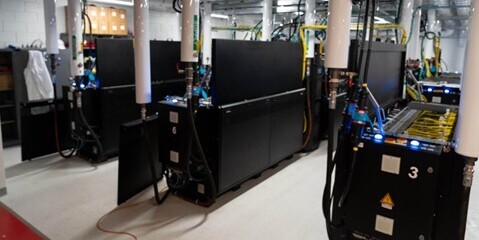
Datalec Precision Installations (DPI) has introduced its next-generation Data Centre Modularisation Solution, targeting operators that need to add capacity quickly without sacrificing control, reliability or lifecycle value.

Developed in response to surging demand for rapid capacity expansion, the new solution is designed to compress delivery timelines while maintaining full flexibility over configuration, performance and long-term scalability. Each system is precision engineered and manufactured by Datalec to ensure compatibility across structural, mechanical and electrical systems, helping to reduce onsite risk and integration challenges.

Datalec’s modular approach combines pre-engineered design principles with tailored manufacturing, enabling customers to adapt deployments to specific site conditions, operational requirements and growth strategies, including AI-intensive workloads. By shifting more work offsite into a controlled manufacturing environment, the solution minimises disruption associated with traditional construction-led projects and supports safer, more succinct installations and a faster speed to market.

“With organisations under pressure to scale quickly while managing capital expenditure and quality, this launch marks a pivotal shift in how data centre capacity can be delivered,” said John Lever, Director of Modular Solutions at Datalec. “Our modular solution brings these priorities together, giving customers the confidence and agility to develop at the pace their business requires.”

By emphasising reliability, engineering excellence and lifecycle value, Datalec’s new Modularisation Solution reinforces the company’s role in delivering robust, scalable infrastructure for today’s data-driven enterprises and AI-led digital transformation. More information on Datalec’s modular critical infrastructure solutions is available at www.datalecltd.com/critical-infrastructure/modular.

The post Datalec Unveils Next-Generation Modular Data Centre Solution to Accelerate Deployment appeared first on Data Center POST.

  •  

Key takeaways from Solar Flex Prague

Czechia’s first international conference on solar and flexibility highlighted that the combination of solar with storage and flexibility sources is key to not just Czechia’s, but also Europe’s, secure and competitive electricity system.

Solar Flex Prague, jointly organised by SolarPower Europe, Solární Asociace and Asociace AKU-BAT CZ, welcomed visitors to a snowy Czech capital on Thursday (29 January), bringing together stakeholders from across Europe to discuss how flexibility solutions and storage can be further deployed.

The conference began with a speech from SolarPower Europe CEO, Walburga Hemetsberger, who said that while electrification is a lifeline for Europe, there is dwindling confidence in the energy transition among some politicians, some leading businesses and key players in the defence sector.

“The way out of the doubts is to really bank big time on flexibility, on storage and on electrification. This will show very concrete benefits very quickly, make politicians understand and really feel the benefits,” Hemetsberger told attendees, before adding that the combination of solar with storage and flexibility sources can lower energy system costs by €30 billion by 2030, while strengthening Europe’s security by removing dependency on foreign players. 

Paula Dorado represented the European Commission via video call and told attendees work on an electrification action plan is underway, scheduled for adoption this year. The plan is expected to address barriers and provide a way forward on electrification for different sectors including companies, households and industrial processes, Dorado said.

Throughout the day, speakers were in agreement that storage and flexibility now play an integral role in Czechia’s electricity system. Panellists pointed out that solar-plus-storage projects can be implemented in a matter of months, offering companies the ability to save money or open new revenue streams. Other speakers stressed the idea that renewable sources are uncontrollable is now outdated, explaining that modern solar-plus-storage systems are not only manageable, offering the ability to respond to market prices and the needs of both transmission and distribution system operators, but are shifting from grid-following to grid-forming technologies and contribute to the stability of the electricity system.

Czechia appears ahead of the curve when it comes to deploying co-located storage with smaller-scale solar, with figures published by Czechia’s largest electricity distributor, ČEZ Distribuce, last September sharing 86% of solar plants connected during the first half of 2025 were equipped with energy storage. In contrast, the country’s large-scale solar market sits at a pivotal moment following the implementation of a legal framework for large-scale development and operation last year. During an afternoon session on opportunities and challenges related to storage and the grid, Rene Nedela from Czechia’s Ministry of Industry and Trade said up to 180 GW of BESS applications have been registered, although some are without any project readiness.

Several speakers advised Czechia to look to other countries further down the line of large-scale battery deployment, and in particular its neighbour Germany, whose favourable market environment for batteries has helped attract investors and move flexibility efforts forwards.

Attendees also said flexible solar-plus-storage projects could help to solve any power shortages that arise from the gradual shutdown of coal-fired power plants in Czechia. The Czech government has committed to phasing out coal-fired electricity generation by 2033 and the country’s last deep black coal mine shut down last month.

During the afternoon session, Alexandr Cerny from Czechia’s Energy Regulatory Office introduced proposed changes to Czechia’s energy tariffs, expected to come into force from the start of next year. The changes will restructure current tariff categories, particularly at the higher voltage levels, and are in part designed to reward flexibility in both consumption and generation, holding the potential to help ramp up the deployment of batteries while better integrating renewables to the grid.

Solar Flex Prague was SolarPower Europe’s second conference on flexibility following the inaugural Solar Flex Croatia held last March. A second edition of Solar Flex Croatia will take place in Zagreb on March 17 this year and Hemetsberger told pv magazine work is currently underway preparing the first Solar Flex Italy for later this year.

  •  

The impact of microclimate effects on floating PV plants

French researchers have developed a high-resolution computational framework to model microclimate effects of large floating solar PV systems, enabling accurate predictions of heat transfer, ambient temperatures, and water evaporation based on panel configuration and wind conditions. The model can inform thermal performance, environmental impacts, and optimize designs for utility-scale floating PV, as well as ground-mounted and agrivoltaic installations.

French researchers have developed a framework to model microclimate effects of large-sized floating PV systems.

The new model can be used to determine wind-dependent convective heat transfer coefficients (CHTC), ambient temperatures, and to estimate evaporation patterns in partially covered bodies of water based on a variety tilt angles, module heights, and pitch distances.

“The main novelty of this work lies in the numerical methodology we developed, specifically an upscaling method to quantify panel-atmosphere interactions at the module scale then model the micrometeorology at the power plant scale with a relatively fine resolution of about 4 meters,” Baptiste Amiot, corresponding author of the research told pv magazine, adding that the resolution is significantly higher than others in this field.

“Applying this methodology enables us to map the thermal performance across utility-scale installations and to provide insights into local environmental effects, such as evaporative losses,” he said.

The precursor model is geometrically adaptable: tt can handle various tilt angles, mounting heights, and inter-row spacings, according to Amiot. “It is particularly well-suited for large-scale installations exposed to sufficiently windy conditions,” Amiot added.

The researchers used a computational fluid dynamics (CFD) precursor model, a microclimate CFD model supporting the PV parameterization, and an experimental survey. A wind-tunnel setup typical of a land-based application was used to confirm accuracy of altitude-based wind profiles.

In addition, a geometrical layout of a commercial floating PV (FPV) installation was used for the atmosphere boundary layer parameters. The wind direction effects were assessed using the microclimate CFD model that reproduced the localized conditions of the commercial FPV array.

“The atmospheric component is fundamentally similar to regional climate models (RCMs) but deploying it within a CFD framework offers advantages in terms of surface element parameterization and the spatial discretization we can achieve,” said Amiot.

Some of the findings included temperature gradients range between 1.3 C/km and 5.8 C/km; headwinds and tailwinds relative to the front surface of the PV modules generate the greatest turbulence levels. Furthermore, the team was able investigate how turbulent flows influence water-saving gains based on PV coverage of the water surface.

Assessing the results, the researchers noted that the precursor method “readily determines” heat transfer coefficient correlations as a function of wind speed and direction. “This is essential to obtain the thermal U-values that govern panel cooling,” added Amiot.

The model can be extended to model large ground-mounted systems and agrivoltaics, including dynamic configurations where panels adjust orientation throughout the day, according to Amiot. It is suitable for inland and nearshore FPV, but not offshore FPV.

The work is detailed in “Boundary-layer parameterization for assessing temperature and evaporation in floating photovoltaics at the utility-scale,” published in Renewable Energy. Research participants include Ecole nationale des ponts et chaussees, Electricité de France RD, and Université Claude Bernard.

The researchers are currently focused on developing CFD models to predict both the energy output and environmental trade-offs of dual-use photovoltaics systems and FPV evaporation research at finer spatial scales, coupled with in-situ measurements. It is also working on an agrivoltaics CFD-plant model to predict crop response below PV canopies.

  •  

Bulgaria installs 1.4 GW of solar in 2025

Bulgaria installed over 1 GW of solar for the third consecutive year in 2025 and is forecast to add over 2 GW this year thanks to a large pipeline of utility-scale projects.

Bulgaria added 1,416 MW of solar last year, according to official data published on the ENTSO-E Transparency Platform. The result marks the third consecutive year Bulgaria has deployed over 1 GW of solar and takes the country’s cumulative capacity to 5,984 MW.

Desislava Mateva, project manager at the Sofia-based Association for Production, Storage and Trading of Electricity (APSTE) told pv magazine that Bulgaria’s solar market is currently dominated by ground-mounted, utility-scale solar plants, reflecting the availability of land, strong developer activity and increasing access to project finance.

Utility-scale solar made up around 90% of Bulgaria’s new capacity last year. Mateva said the market was driven by the strong commercial competitiveness of solar, making projects viable without direct subsidies, as well as active support from local and international banks and a large pipeline of development projects that reached the ready-to-build stage or financial close over the past 18 months.

Mateva also noted that Bulgaria is experiencing a wave of standalone battery energy storage system (BESS) deployments and the hybridization of both existing and new solar assets with BESS, as developers look to deal with price cannibalization and declining solar capture rates.

“These developments are expected to reduce price volatility, improve system flexibility, and mitigate capture-price pressure for solar producers,” she explained. “As a result, industry expectations remain positive.”

Among the largest projects to be commissioned in Bulgaria last year was the first phase of the 315 MW/760 MWh Tenevo hybrid project, with a second phase scheduled for commissioning early this year, and the Selanovtsi hybrid project, a 59.8 MW solar plus 107.3 MWh storage site in the northwestern Vratsa region. Bulgaria also commissioned one of the EU's largest standalone BESS facilities last year, located adjacent to a 107 MW solar park.

Bulgaria’s C&I solar market is showing steady momentum, particularly among projects designed for self-consumption, Mateva added, with rising electricity costs incentivizing businesses to invest in on-site solar, often in combination with storage. 

In contrast, Bulgaria’s residential solar sector remains underdeveloped in capacity terms. Mateva said interest among households exists but the market segment has been constrained by regulatory complexity and limited incentives.

She added that the residential sector would benefit from the full liberalization of Bulgaria’s electricity market, as currently household electricity prices remain regulated, accounting for roughly 40% of national electricity demand. “Full liberalization would stimulate demand-side participation and unlock the residential solar and storage market,” she explained.

Looking ahead, Mateva predicted Bulgaria is on course for a record year in solar deployment in 2026. “An estimated 2.5 GW of additional solar projects are either under construction or at an advanced stage of development and expected to start construction soon,” she said. “This pipeline suggests that most of this capacity will be commissioned by the end of 2026.”

Bulgaria’s storage pipeline is looking equally healthy, with 15 GWh expected to be commissioned by half way through the year, supported by the country’s National Recovery and Resilience Plan.

Mateva added that the most significant policy change last year was a sharp increase in eco-taxes and recycling fees for solar panels and batteries. She explained that these fees are currently five to ten times higher than in comparable EU countries, in turn artificially inflating PV and BESS project costs.

“Unless addressed, this issue risks becoming a major bottleneck for new PV and BESS procurement,” Mateva told pv magazine. “Resolving this will require action from the Ministry of Ecology to align recycling fees with real-world costs and EU norms, ensuring that Bulgaria’s strong solar momentum is not undermined by avoidable regulatory distortions.”

Bulgaria opened a new grant program late last year targeting micro, small and medium-sized enterprises looking to deploy PV systems and storage, with a particular focus on those located in the country’s coal regions. The call is set to close next month.

  •  

Bhutan to develop new solar, hydropower projects

Bhutan’s Druk Green Power Corporation and India’s Carbon Resources Private Limited have agreed to collaborate on new solar and hydropower projects in Bhutan with capacities between 100 MW and 250 MW.

Bhutan’s leading renewables company Druk Green Power Corporation (DGPC) has signed a memorandum of understanding with Kolkata-based Carbon Resources Private Limited (CPRL) to jointly pursue renewable energy projects.

Under the terms of the partnership, DGPC and CPRL will collaborate on developing new solar and hydropower projects in Bhutan with capacities ranging between 100 MW and 250 MW.

DGPC will be responsible for sharing project information, past studies and regulatory frameworks to assist CRPL in undertaking required technical, commercial and financial assessments of potential projects.

Identified sites will then be developed through one or more special purpose vehicles incorporated in Bhutan as joint ventures between the two parties. The memorandum of understanding proposes a debt-equity financing structure of 70:30 between DGPC and CPRL.

The signing ceremony was attended by Bhutan’s Minister for Energy and Natural Resources, Lyonpo Gem Tshering, who said memorandums of understanding for more than 12 GW of generation capacity have been signed in the country to date.

Bhutan has a target of reaching 25 GW of installed generation capacity by 2040. A World Bank report published last June reported the country’s total generation capacity stood at 2.5 GW by the end of 2024, made up almost entirely of hydropower plants.

Bhutan’s first utility-scale solar plant, a 17.38 MW array located towards the centre of the country, was commissioned last July. A month later, a consortium consisting of local firm Rigsar Construction and India’s HILD Energy was awarded a contract to develop the 120 MW Jamjee solar project.

In December, DGPC opened a tender for the 120 MW Wobthang solar project. The project’s feasibility study and consultation meetings have since been completed, with DGPC planning to award the contract by June. The project is scheduled to begin construction this September and with the build expected to take around 18 months, is pencilled for operations during the first half of 2028.

Bhutan’s current national energy policy, published last year, aims to add 5 GW of solar capacity by 2040.

  •  

Signature Solar Launches Sun Atlas Power To Deliver Transparent, Full-Service Solar Installations Across 31 States By Mid-2026

Signature Solar has launched Sun Atlas Power, a new solar installation company committed to providing transparent and streamlined services to homeowners and businesses. Operating in several states, Sun Atlas Power simplifies the installation process with a single accountable team, clear pricing, and flexible design options, fostering energy independence and customer trust.

The post Signature Solar Launches Sun Atlas Power To Deliver Transparent, Full-Service Solar Installations Across 31 States By Mid-2026 appeared first on SolarQuarter.

  •  

The Hydrogen Stream: Repsol, Sunfire advance 200 MW of green H2 in Spain

Repsol and Sunfire are advancing 200 MW of renewable hydrogen projects in Spain, while new collaborations and funding across Europe and India aim to accelerate electrolyzer development and hydrogen infrastructure.

Repsol has approved its second 100 MW electrolyzer at the Petronor industrial complex in Bilbao. “The electrolyzer will have the capacity to produce up to 15,000 tons of renewable hydrogen annually, which will mainly be used at the company’s Petronor refinery outside Bilbao in Northern Spain,” said the Spanish oil and gas company, adding that the new plant for producing renewable hydrogen will require an investment of €292 million ($347.9 million). The company did not explain the timing of the installation.

Sunfire said it will supply two 100 MW electrolyzers for renewable hydrogen projects in Spain. The first project, led by Repsol and Enagás Renovable, will install a 100 MW electrolyzer near Repsol’s industrial complex in Cartagena. The second 100 MW plant will be located at Petronor’s refinery in Muskiz (Bilbao), which is owned by Repsol and Kutxabank,” said the German company. For each of the two 100 MW projects, Sunfire will deliver ten of its 10 MW pressurized alkaline electrolyzer modules.

Matteco and Dunia Innovations have kicked off a strategic collaboration to accelerate the development of catalyst layers used inside AEM (Anion Exchange Membrane) electrolyzers. “Matteco contributes deep expertise in electrocatalysts, functional inks, and scalable electrodes, while Dunia brings its AI-guided experimentation platform, which helps test and compare many different material options quickly and consistently, under conditions that reflect how real electrolyzers operate,” said Spain-based Matteco. Dunia Innovations is based in Germany.

The European Commission said it will allocate nearly €650 million in grants to help finance 14 cross-border energy infrastructure projects. More than €176 million will be dedicated to boost hydrogen infrastructure. “The grant of €120 million for the hydrogen storage in Gronau project in Germany marks the first time CEF funding will be used for a works project for hydrogen,” said the European executive body, adding that other hydrogen projects in Austria, Bulgaria, France, Germany, the Netherlands and Slovakia will receive grants to support studies.

Tubos Reunidos (TR) said it is developing a seamless pipe that meets the specific requirements of the hydrogen sector. “The project aims to develop a 1.25 MW experimental portable electrolyzer, conceived as an enabling solution for the supply of green hydrogen to final industrial users,” said Eurometal, the European federation of steel tubes and metals distribution and trading. “The initiative is being led by a Basque consortium including Tubos Reunidos, ArcelorMittal Sestao, Sarralle, ABC Compresores, Matz-Erreka, Flubetech Coatings, Mugape, Sener, Team Group, Torraval Cooling, and Zigor Corporación.”

Deutsche Gesellschaft für Internationale Zusammenarbeit (GIZ) and thyssenkrupp nucera have entered into a new cooperation to accelerate the development of green hydrogen and Power-to-X (PtX) markets in India. “India is one of the most promising future markets for green hydrogen electrolysis. This cooperation enables us to deepen our understanding of the local market and engage more closely with India’s hydrogen ecosystem. It also reflects our strong commitment to supporting India’s ambitious National Green Hydrogen Mission,” said Kiran Paul Joseph, CEO of thyssenkrupp nucera India.

Greenzo Energy India has secured the contract for India’s first port-based 5 MW Green Hydrogen Plant at Deendayal Port, Kandla. The project has been awarded to Oswal Greenzo Energies, the JV between Oswal Energies Limited and Greenzo Energy India Limited. “Designed on an EPC basis, the project is scalable beyond the initial 5 MW up to 10 MW and is expected to produce approximately 800 tonnes of green hydrogen annually,” said Greenzo Energy.

Orlen has entered into cooperation agreements with three Finnish partners for the production and supply of renewable hydrogen and its derivatives. “The agreements signed with ABO Energy Suomi, Nordic Ren-Gas and VolagHy Kuopio SPV will help secure hydrogen supplies during a period of growing demand in the years ahead,” said Orlen.

Powerhouse Energy (PHE) has secured a site on Silverwood Business Park in Ballymena, Northern Ireland, on which the company submitted a planning application for a 40-ton per day (TPD) waste-to hydrogen facility. The site, 1.98 acres, will use a pilot unit.

  •  

Agrivoltaics can help lettuce survive extreme heat

Scientists have grown organic romaine lettuce under 13 different types of PV modules, in an unusual hot Canadian summer. Their analysis showed lettuce yields increased by over 400% compared to unshaded control plants.

A research group from Canada’s Western University has investigated the performance of organic romaine lettuce, a heat-sensitive crop, under a broad range of agrivoltaic conditions. The test was conducted in London, Ontario, in the summer of 2025, during which 18 days had temperatures over 30 C.

“Our study explores how agrivoltaic systems can be tailored to optimize crop growth, especially under extreme heat conditions, while contributing to sustainable energy generation,” corresponding researcher Uzair Jamil told pv magazine.

“This becomes especially relevant in the context of climate change, where we are experiencing temperature extremes across the world,” Jamil added. “We examined the performance of organic romaine lettuce under thirteen different agrivoltaic configurations – ranging from crystalline silicon PV to thin-film-colored modules (red, blue, green) – in outdoor, high-temperature stress conditions.”

More specifically, the experiment included c-Si modules with 8%, 44% and 69% transparency rate; blue c-Si modules with transparency of 60%, 70%, and 80%; green c-Si modules with transparency of 60%, 70%, and 80%; and red c-Si modules with transparency of of 40%, 50%, 70%, and 80%.

All agrivoltaics installations had a leading-edge height of 2.0 m and a trailing-edge height of 2.8 m, and the modules were oriented southwards at 34◦. Pots with organic romaine lettuce were placed under all configurations, along with three pots fully exposed to ambient sunlight without shading, used as controls.

In addition to measurements against the control, the scientific group has compared the results to the national average per-pot yield for 2022, which included less high-temperature days and was therefore considered typical. Those data points were taken from agricultural census data, which later enabled the researcher also to create nationwide projections of their results.

“Lettuce yields increased by over 400% compared to unshaded control plants, and 200% relative to national average yields,” Jamil said about the results. “60% transparent blue Cd-Te and 44% transparent crystalline silicon PV modules delivered the highest productivity gains, demonstrating the importance of both shading intensity and spectral quality in boosting plant growth.”

Jamil further added that if agrivoltaic were to scale up to protect Canada’s entire lettuce crop, they could add 392,000 tonnes of lettuce.

“That translates into CAD $62.9 billion (USD $46.6 billion) in revenue over 25 years,” he said. “If scaled across Canada, agrivoltaics could also reduce 6.4 million tonnes of CO2 emissions over 25 years, making it a key player in reducing the agricultural sector’s environmental footprint.”

The results of the research work were presented in “Enhancing heat stress tolerance in organic romaine lettuce using crystalline silicon and red, blue & green-colored thin film agrivoltaic systems,” published in Solar Energy.

  •  

Cubenergy releases energy storage block for utility, C&I applications

Cubenergy has launched FlexCombo 2.0, a scalable battery energy storage system for utility, commercial, and industrial applications, offering up to 16 MWh capacity with LFP batteries. Its modular design, advanced BMS, and cloud-based operations enable easy installation, seamless expansion, and efficient grid integration, according to the manufacturer.

Cubenergy, a Chinese manufacturer of battery energy storage systems (BESS), has introduced a new energy block designed for utility, commercial, and industrial (C&I) applications.

The product, named FlexCombo 2.0, uses the company’s 835 kWh FlexCombo D2 batteries. It is available in three configurations: 10, 12, or 12 batteries, providing a total capacity of 8 MWh, 10 MWh, or 16 MWh, respectively.

“With the FlexCombo D2 modular design and parallel architecture, FlexCombo’s core advantage lies in its long-term scalability,” the company said in a statement. “It enables seamless capacity growth and effortless integration with power generation systems (PGS), simplifying deployment and accelerating delivery for ultimate flexibility.”

The FlexCombo D2 batteries feature lithium iron phosphate (LFP) chemistry, offering a lifespan of 8,000 cycles at 70% capacity retention, according to the manufacturer.

Each battery measures 2 m x 1.68 m x 2.55 m and has a weight of up to eight tons. They carry an IP55 protection rating. Each block also comes with a power conversion system (PCS) rated at 430 kW AC with an IP66 protection grade. Optional medium-voltage (MV) transformers are available, with AC power ratings of either 8,800 kVA or 5,250 kVA.

“The FlexCombo 2.0 is designed primarily for utility and C&I applications, including renewable energy arbitrage, stand-alone grid stabilization, factories, and commercial buildings,” the company stated. “This integrated, easy-to-install BESS can be quickly connected and aligned with project requirements, while the advanced Active Balancing battery management system (BMS) and cloud-based operations provide a superior user experience.”

  •  

Sweden deploys 652 MW of solar in 2025

Sweden deployed less solar in 2025 than the year prior despite record growth in the large-scale segment. Solar association Svensk Solenergi predicts last year was likely the bottom of Sweden's installation curve.

Sweden commissioned 652 MW of new solar last year, according to estimates from Swedish solar association Svensk Solenergi. The figure is down on the 848 MW installed in 2024 and takes cumulative capacity to around 5.4 GW.

Residential installations totaled 239 MW in 2025, a 39% year-on-year decrease. Alex Jankell, head of politics at Svensk Solenergi, told pv magazine the household market has been impacted by the removal of a tax rebate scheme as of the start of this year. He added that lower energy prices in comparison to massive hikes in 2022, higher interest rates and inflation have also impacted the market segment.

Although the residential market contracted in 2025, installations smaller than 20 kW continue to represent more than half of Sweden’s solar market, with a little over 3 GW of total capacity. There are now just over 287,000 solar power plants of less than 20 kW in Sweden, equivalent to 90% of all grid-connected solar plants.

Cumulative capacity of grid-connected solar plants

Image: Svensk Solenergi

Commercial and industrial installations reached 215 MW in 2025, down 35% year-on-year, but utility-scale installations increased, deploying a record 198 MW for 46% more than in 2024.

The large-scale segment accounted for 30% of new solar power in 2025, compared to 7% in 2024. New installations were led by Sweden’s largest solar plant to date, the 100 MW Hultsfred solar farm, and the 64 MW Ax-el solar park. Last year also saw developer Svea Solar announce plans to build eight new solar parks in Sweden with a total capacity of approximately 500 MW.

Jankell said the market is experiencing a shift to more large-scale solar, often combined with large-scale battery installations, but added that challenges remain in high costs or long waiting times for grid connections. He recommended Sweden adopt proposed changes to permitting procedures to make them quicker and more predictable.

The residential battery market is also broadening, with preliminary figures from the Swedish Tax Agency showing around 75,000 private individuals received a green reduction for battery installations in 2025, a 34% increase on the previous year.

Jankell suggested that Sweden’s solar market could be supported further by abolishing energy tax for all electricity that is produced and consumed behind the same meter and implementing proper power-tariffs which reflectively reward the ability of solar and battery installations to help the grid. He also recommended proposed proper revenue frames for Swedish grid companies that reward flexibility, and not only grid expansion.

Jankell told pv magazine more solar is likely to be installed this year than in 2025. “Given the implementation of solar demands in the Energy Performance of Buildings Directive, new permitting processes on the way, and a general deflation of PV and battery prices, we predict that 2025 is the bottom of the installation curve,” he said.

  •  

Samsung releases new all-in-one heat pump for residential use

The South Korean giant said its new EHS All-in-One provides air heating and cooling, floor heating, and hot water from a single outdoor unit. It can supply hot water up to 65 C in below-zero weather.

South Korean tech giant Samsung has launched a new all-in-one heat pump for residential and commercial use.

Dubbed EHS All-in-One, the system provides air heating and cooling, floor heating, and hot water from a single outdoor unit. It is initially released for the European market, with a Korean rollout expected within a year.

“It delivers stable performance across diverse weather conditions. It can supply hot water up to 65 C even in below-zero weather and is designed to operate heating even in severe cold down to -25 C,” the company said in a statement. “The system also uses the R32 refrigerant, which has a substantially lower impact on global warming compared with the older R410A refrigerant.”

The product is an upgrade to the EHS Mono R290 monobloc heat pump that the company released in 2023. The company has enlarged the propeller fan and used a high-capacity motor in the novel model, reducing the number of fans from two to one. That results in a design with a height of about 850 mm, approximately 40% lower than before.

“The system also introduces a new Heat Recovery feature, which does not release waste heat from the cooling process to the outside but recycles it. Using this feature can boost the energy efficiency of water heating by more than twice under certain conditions,” Samsung added. “It also includes an ‘AI Saving Mode’ that can reduce energy consumption by up to 17%.”

  •  

SolarEdge, Helioplant build 6.3 MW ‘cross-shaped’ bifacial PV system for Alpine regions

Helioplant will leverage SolarEdge’s inverter and power optimization technology to power its cross-shaped bifacial solar system specially designed for snowy Alpine regions with high elevation. They anticipate ski resorts will be a big market for the solution which uses SolarEdge's technology to overcome shading issues caused by the cross-structure.

The first large-scale installation combining SolarEdge technology and Helioplant’s design is already under construction, and on completion the 6.3 MW system will power three ski resorts in Sölden, Austria.

SolarEdge and Helioplant foresee significant demand for their system from ski resorts located in snowy, mountainous areas where conventional PV installations are a challenge. Standard linear PV systems tend to lose productivity with extreme Alpine conditions, such as snow drifts caused by rapidly changing wind conditions. They are also often difficult, and therefore more expensive, to build in challenging terrain areas.

Helioplant’s cross design, which resembles a tree or a flagpole with four wings, features 15 or 16 bifacial modules depending on the slope. The cross-shaped structure creates air turbulence even at low wind speeds, which prevents snow build-up from accumulating and decreasing efficiency. Snow around the base of the tree-like structure reflects light to the underside of the modules to further boost energy yields in what is known as the albedo effect.

Helioplant piloted an installation with 12 bifacial tree-like structures at 2,850 m in Sölden underneath the Tiefenbach glacier in Austria’s Ötztal Valley in 2023. The PV system powered a ski-lift for an entire season, reducing reliance on grid electricity. It was powered by SolarEdge’s technology.

The 6.3 MW installation now under construction in Austria has around 800 of Helioplant’s structures set at an altitude of 2,850 m to 3,000 m. Completion is expected in the second half of this year, and the installation will cover around one third of the three ski resorts’ annual energy needs – approximately 28 GWh.

Patrick Janak, Head of C&I DACH at SolarEdge said that by combining Helioplant's bifacial structures with SolarEdge inverter and power optimizer technology, the two companies “are bringing superior economics to the table to unlock this largely untapped market.” He claimed that conventional PV systems would not work in this scenario.

“Bifacial PV systems are ideal for alpine regions because they can capture both direct sunlight and reflected light from snow, boosting overall energy yields. With our patented cross-shaped support structure, our solar panels stay snow-free providing maximum yields of clean solar energy to offset the high electricity demands of busy ski resorts. With around 6,000 ski resorts worldwide, there is enormous market potential,” said Florian Jamschek, Co-Founder of Helioplant.

Jamschek added that SolarEdge's technology made it possible to address the problem of shading on the panels which he said is exacerbated by the tree-like structure. “While our tree-like structure for bifacial PV addresses the challenges of solar in high-altitude alpine regions, it also is susceptible to more shading on the panels. The only solution to overcome this problem and maximize energy yields was to incorporate SolarEdge technology. This means we can deliver on our promise to supply reliable and stable clean energy that ski resorts can rely on to offset their high energy demands.”

Check out the February edition of pv magazine Global, available February 5, which features interviews with Helioplant and other developers of solar systems for snowy regions.
  •  

Why Data Sovereignty Is Becoming a Strategic Imperative for AI Infrastructure

As artificial intelligence reshapes how organizations generate value from data, a quieter shift is happening beneath the surface. The question is no longer just how data is protected, but where it is processed, who governs it, and how infrastructure decisions intersect with national regulation and digital policy.

Datalec Precision Installations (DPI) is seeing this shift play out across global markets as enterprises and public sector organizations reassess how their data center strategies support both AI performance and regulatory alignment. What was once treated primarily as a compliance issue is increasingly viewed as a foundational design consideration.

Sovereignty moves upstream.

Data sovereignty has traditionally been addressed after systems were deployed, often resulting in fragmented architectures or operational workarounds. That approach is becoming less viable as regulations tighten and AI workloads demand closer proximity to sensitive data.

Organizations are now factoring sovereignty into infrastructure planning from the start, ensuring data remains within national borders and is governed by local legal frameworks. For many, this shift reduces regulatory risk while creating clearer operational boundaries for advanced workloads.

AI raises the complexity

AI intensifies data governance challenges by extending them beyond storage into compute and model execution. Training and inference processes frequently involve regulated or sensitive datasets, increasing exposure when data or workloads cross borders.

This has driven growing interest in sovereign AI environments, where data, compute, and models remain within a defined jurisdiction. Beyond compliance, these environments offer greater control over digital capabilities and reduced dependence on external platforms.

Balancing performance and governance 

Supporting sovereign AI requires infrastructure that can deliver high-density compute and low-latency performance without compromising physical security or regulatory alignment. DPI addresses this by delivering AI-ready data center environments designed to support GPU-intensive workloads while meeting regional compliance requirements.

The objective is to enable organizations to deploy advanced AI systems locally without sacrificing scalability or operational efficiency.

Regional execution at global scale

Demand for localized, compliant infrastructure is growing across regions where digital policy and economic strategy intersect. DPI’s expansion across the Middle East, APAC, and other international markets reflects this trend, combining regional delivery with standardized operational practices across 21 global entities.

According to Michael Aldridge, DPI’s Group Information Security Officer, organizations increasingly view localized infrastructure as a way to future-proof their digital strategies rather than constrain them.

Compliance as differentiation

As AI adoption accelerates, infrastructure and governance decisions are becoming inseparable. Organizations that can control where data lives and how AI systems operate are better positioned to manage risk, meet regulatory expectations, and move faster in regulated markets.

DPI’s approach reflects a broader industry shift: compliance is no longer just about meeting requirements, but about enabling innovation in an AI-driven environment.

To read DPI’s full perspective on data sovereignty and AI readiness, visit the company’s website.

The post Why Data Sovereignty Is Becoming a Strategic Imperative for AI Infrastructure appeared first on Data Center POST.

  •  

UK Invests £36M in AMD-Powered Supercomputer at the Univ. of Cambridge

The UK government announced it has injected £36 million to increase the power of one of the UK’s leading supercomputing centres sixfold. This includes backing a new National Computational Resource supercomputer ....

The post UK Invests £36M in AMD-Powered Supercomputer at the Univ. of Cambridge appeared first on Inside HPC & AI News | High-Performance Computing & Artificial Intelligence.

  •  

Nokia and Hypertec Group Install ‘Nibi’ Supercomputer Cluster at the University of Waterloo

Jan. 22, 2026 — Nokia, an IP networking and AI-HPC data center fabric provider, and Hypertec, an AI and HPC infrastructure company, today announced the deployment of Nibi, an advanced supercomputing cluster at the University of Waterloo in Ontario. The system is designed to support more than 4,000 researchers annually, expanding Canada’s capacity to advance […]

The post Nokia and Hypertec Group Install ‘Nibi’ Supercomputer Cluster at the University of Waterloo appeared first on Inside HPC & AI News | High-Performance Computing & Artificial Intelligence.

  •  

Reflecting on a Year of Global Growth at Datalec Precision Installations

As 2025 comes to a close, Tim Hickinbottom, Head of Strategic Accounts at Datalec Precision Installations (DPI), is reflecting on a milestone year both personally and professionally. With nearly four decades in the digital infrastructure and technology sector, Hickinbottom’s perspective offers insight into how experience, adaptability, and long-term vision continue to shape growth in an evolving industry.

A Career Built on Experience and Adaptability

Hickinbottom’s career began in 1986 at Compucorp and includes formative years in the Royal Navy and with British Aerospace in Saudi Arabia. These early experiences helped shape a leadership approach grounded in resilience, discipline, and adaptability. These are qualities that remain critical as data center and mission-critical services grow more complex and globally connected.

A Defining Year 

In 2025, DPI sustained its year-on-year growth while expanding into new regions. The launch of operations in APAC, continued momentum in the Middle East, and steady growth across Europe marked one of the company’s busiest periods to date. By year-end, DPI expects to operate 23 entities worldwide, with further expansion already underway.

According to Hickinbottom, this progress reflects both strong market demand and a deliberate strategy focused on operational discipline and long-term stability.

Strategy, Engagement, and Sustainability

Behind the visible growth is a leadership team focused on reinvestment and sustainable expansion. While much of this work occurs behind the scenes, evolving strategies and internal alignment are shaping DPI’s direction.

Throughout the year, DPI reinforced its global presence at major industry events including Datacentre World and GITEX conferences across multiple regions. At the same time, the company advanced its sustainability efforts, earning recognition from CDP and EcoVadis and preparing to share its Science Based Targets.

“These initiatives matter deeply to our clients and partners,” Hickinbottom notes, emphasizing accountability and environmental stewardship as core elements of industry leadership.

Looking Ahead to 2026

As DPI looks toward 2026, Hickinbottom remains optimistic about the challenges and opportunities ahead. With hard work embedded in the company’s culture and a clear focus on innovation, DPI is positioned to continue supporting data center operators and digital infrastructure stakeholders worldwide.

“Work should be enjoyable,” Hickinbottom reflects. “It’s been an incredible journey so far, and I’m excited for what’s next.”

To explore Hickinbottom’s full reflections on 2025 and his perspective on the year ahead, read the complete blog on Datalec Precision Installations’ website here.

The post Reflecting on a Year of Global Growth at Datalec Precision Installations appeared first on Data Center POST.

  •  

Datalec Precision Installations Earns ‘B’ Score from CDP, Reinforcing Commitment to Environmental Transparency

In an era where sustainability is no longer just a buzzword but a business imperative, the data center industry is under increasing pressure to demonstrate measurable environmental progress. Datalec Precision Installations (DPI), a provider of world-class global data center design, supply, build, and installation services, has taken a significant step in this direction. The company announced this week that it has been recognized for its transparency on environmental issues with a ‘B’ score from CDP Worldwide, the global non-profit that runs the world’s leading environmental disclosure system.

A Benchmark for Transparency

DPI’s ‘B’ rating in the climate change category places it among a select group of organizations demonstrating “Management” level stewardship. This score indicates that Datalec is not just aware of its environmental impact but is taking coordinated action on climate issues.

The achievement is notable given the rigour of the CDP process. In 2025, nearly 20,000 companies were scored, with CDP’s methodology widely considered the gold standard for corporate environmental reporting. By aligning with the Task Force on Climate-related Financial Disclosures (TCFD) framework, CDP scores are a critical metric for the 640 institutional investors – representing over $127 trillion in assets – who use this data to inform their investment and procurement decisions.

Driving an Earth-Positive Economy

For the data center sector, where Scope 3 emissions and supply chain transparency are critical challenges, DPI’s disclosure represents a commitment to the future.

“We are proud to receive a B score from CDP, which is a meaningful recognition of the tireless and consistent work of our entire team towards achieving our ESG goals,” said Tim Hickinbottom, DPI ESG Group Lead. “Transparency and accountability are at the heart of our sustainability strategy, and this result reflects our commitment to driving positive environmental impact. While we celebrate this milestone, we remain focused on continuous improvement and advancing sustainable practices.”

The Importance of Disclosure

Sherry Madera, CEO of CDP, emphasized that these scores are about more than just accolades. They are about future-proofing operations. “A CDP score is a sign of commitment to high-quality data that enables companies to take earth-positive economic decisions,” Madera noted. “Tackling environmental risks head-on will create a more resilient economy and increase companies’ ability to innovate and invest.”

To learn more about Datalec’s services and sustainability initiatives, visit www.datalecltd.com.

The post Datalec Precision Installations Earns ‘B’ Score from CDP, Reinforcing Commitment to Environmental Transparency appeared first on Data Center POST.

  •  

The Hydrogen Stream: EU Commission invites offtakers under Hydrogen Mechanism

The European Commission is advancing market matching for renewable and low-carbon hydrogen by inviting European offtakers to signal supply interest under the Hydrogen Mechanism, while Germany’s electrolysis rollout continues to lag official targets despite new EU-backed funding schemes.

The European Commission said it is inviting European offtakers to express interest in supply offers under the Hydrogen Mechanism, adding that the current phase runs until March 20, 2026, under the EU Energy and Raw Materials Platform that links buyers with suppliers of renewable and low-carbon hydrogen and derivatives including ammonia, methanol, eMethane and electro-sustainable aviation fuel, after companies submitted supply offers from more than 260 projects from Nov. 12, 2025, to Jan. 2, 2026, with the European Commission set to outline further details at an online webinar on Jan. 27. Separately, the European Commission has also approved a €200 million ($234.9 million) German plan to support the production of renewable hydrogen and its derivatives in Canada. “The scheme will support the construction of up to 300 MW of electrolysis capacity. The aid will be awarded through a competitive bidding process, planned to be concluded in 2027,” wrote the European executive body.

The Institute of Energy Economics at the University of Cologne (EWI) said Germany’s rollout of electrolysis capacity is progressing far more slowly than planned. The institute said installed electrolyser capacity currently stands at 181 MW, with a further 1.3 GW having reached a final investment decision (FID) or being under construction. On that basis, EWI said total operating capacity could reach up to 1.5 GW by the end of 2027, leaving Germany on course to fall well short of its target of 10 GW of electrolysis capacity by 2030.

BKW plans to take a 40%stake in the planned hydrogen-ready (H2-ready) gas-fired power plant at the Hamm site (North Rhine-Westphalia), Germany. “BKW is developing the project together with the German municipal utility cooperation Trianel,” said the German company. “The location offers ideal conditions: sufficient space, existing grid and gas connections, and a well-developed infrastructure.”

Lhyfe said it expects to increase by 70% its installed renewable hydrogen production capacity in 2026. The French company currently has four renewable hydrogen production sites installed in France and Germany (21 MW). “Lhyfe has been supplying France’s first motorway hydrogen station accessible to heavy goods vehicles, operated by TEAL Mobility, since November 2025”, said the company this week, underlining that the four sites received RFNBO certifications in May and September 2025.

Honda Motor said it has decided to discontinue production, before the end of 2026, of the current model of fuel cell system now produced at Fuel Cell System Manufacturing, a joint venture between Honda and General Motors (GM). “After the discontinuation, Honda will utilize the next-generation fuel-cell system being developed independently by Honda”, said the Japanese company, referring to the joint venture established in January 2017 in Brownstown, Michigan.

  •  

Agrivoltaics for tea plantations

CHN Energy, via its subsidiary Guohua Energy Investment, is constructing a solar project above a tea plantation in southwestern China, with the first 32 MW now connected to the grid. 

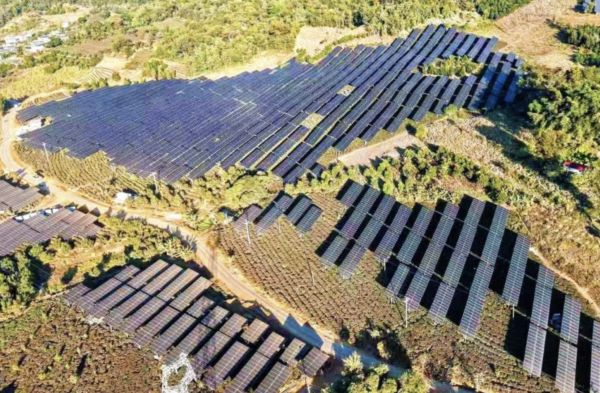
China's state-owned CHN Energy has switched on the first 32 MW of an agrivoltaic project constructed among tea terraces.

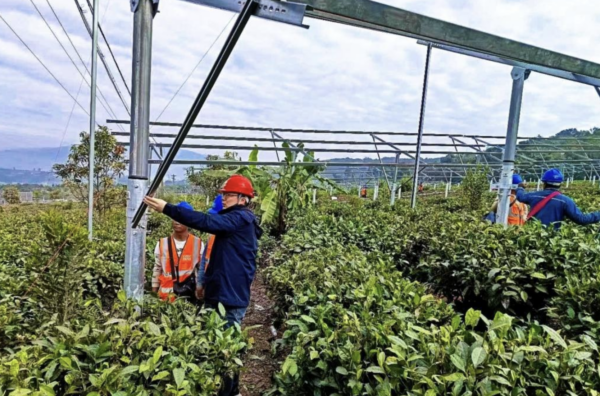
Located at the Mengsheng Farm in Cangyuan County within the Yunnan province of southwestern China, the project spans an over 666,000 m2 area across a tea plantation. The solar arrays are mounted uniformly at a height of 2.5 meters, allowing mechanized farming to continue underneath.

Construction began in August, with Guohua Energy Investment, a subsidiary of CHN Energy, leading investment and development. Once fully operational, the solar project is expected to feed back approximately 85,000 TWh of energy annually to the local power grid.

Project staff installing solar panels.

Image: CHN Energy

A statement on CHN Energy’s website says the integrated solar-plus-tea plantation model creates a positive micro-cycle system in which the solar panels provide moderate shade that helps improve tea quality, while maintenance of the tea plantation offers environmental protection for the solar array.

The statement adds that the project is also increasing local residents income through land lease payments, direct employment opportunities and skills training.

  •  

UAE’s massive solar-plus-storage project set to redefine baseload power, says Wood Mackenzie

Wood Mackenzie highlights a groundbreaking 5.2 GW solar-plus-storage project in the UAE capable of delivering 1 GW of continuous baseload power, signaling a potential shift in renewable energy deployment despite high costs. The report also forecasts strong global solar growth through 2030, including the rise of residential “balcony solar” in the U.S. and expanded solar shares in Asia Pacific and the U.S.

Wood Mackenzie has said it that a massive solar-plus-storage project currently under construction in the UAE will “redefine baseload power.”

The prediction is one of three Wood Mackenzie has published as part of its “Global solar: Key things to look for in 2026” report.

The 5.2 GW solar plus 19 GWh battery energy storage project, under development by Masdar and Emirates Water and Electricity Company (EWEC), which broke ground in October, is the world’s first first gigawatt-scale renewable project engineered to deliver 1 GW of continuous, around-the-clock baseload power.

Michelle Davis, global head of solar for Wood Mackenzie, said the project represents a structural shift in hybrid project development in the region.

Davis noted that while the project is currently too expensive to replicate broadly, at roughly six times the cost of a new gas-fired combined-cycle gas turbine plant, successful project execution and continued cost declines could redefine baseload power.

“Despite the challenging events of 2025, solar market fundamentals and demand will remain strong in 2026, especially as the global economy continues to electrify,” Davis concluded.

The report also forecasts solar to play a major role in meeting the electricity load growth anticipated over the next decade in several regions of the globe.

Annual solar generation, including distributed solar, is expected to grow by 232 GWh, of 65%, in the U.S. between 2026 and 2030, according to Wood Mackenzie’s analysis. This will bring solar closer to gas, which makes up the largest share of electricity generation in the U.S., which is expected to grow by 340 GWh, or 21%, over the next four years.

In the Asia Pacific, solar made up 11% of the power generation mix in 2025 and is forecast to grow to 17% by 2030. Wood Mackenzie expects solar, wind and storage to make up a third of the power generation mix in the region by the end of the decade, having accounted for less than 10% in 2020. The analysis say new power capacity in the region is overwhelmingly directed towards solar due to price competitiveness.

Wood Mackenzie’s final prediction for 2026 is that balcony solar, or plug-in-solar, will begin to take a foothold in the US this year, while continuing its market penetration in Europe.

The market research company explains that prior to early 2025, there was no market for balcony solar in the U.S.. Utah became the first state to enable residential customers to utilize portable solar generation devices that produce up to 1.2 kW of power without the need for a utility interconnection agreement last March, with more than a dozen states introducing similar legislation since.

Wood Mackenzie expects this number to continue growing but also warned that key challenges lie in fragmented electrical standards, lower voltage in U.S. homes, and a larger share of single-family homes without balconies.


  •