Reading view

How Electrical Engineers Fight a War


Every time Russia attacks Ukraine’s power infrastructure, Ukrainian engineers risk their lives in the scramble to get electricity flowing again. It’s a dangerous job at best, and a lethal one at worst. It also requires creativity. Time pressure and equipment shortages make it nearly impossible to rebuild things exactly as they were, so engineers must redesign on the fly.

These dangerous, stressful conditions have led to more engineers being hurt or killed. The rate of injuries among Ukrainian workers in electricity generation, transmission, and distribution jumped nearly 50 percent after Russia’s full-scale invasion began four years ago, according to data provided by Antonina Nagorna, who leads the Department of Epidemiology and Physiology of Work at the Kundiiev Institute of Occupational Health, in Kiev. By her count at least 48 people had died on the job through the end of 2025, either while repairing damage or during the bombardment itself.

Transmission mastermind Oleksiy Brecht joined that grim count in January. Brecht, who was director for network operations and development at the Ukrainian grid operator Ukrenergo, died while coordinating work at Ukraine’s most attacked electrical switchyard, Kyivska, west of the capital. He was 47 years old.

Brecht’s life and death are a window into the realities of thousands of Ukrainian engineers who face conditions beyond what most engineers could imagine. “The war completely transformed the professional life of a top-manager engineer,” says Mariia Tsaturian, an energy analyst and chief communication officer at the think tank Ukraine Facility Platform, who previously worked with Brecht at Ukrenergo. “As for junior staff, their world was turned upside down entirely. A substation engineer working under shelling is something no one had ever seen or experienced before,” she says.

How Russia Attacks Ukraine’s Grid

Over the course of the war, Russia has increasingly focused on destroying Ukraine’s energy infrastructure. It sends attack drones almost daily during the winter there, when heat and electricity is needed most to survive the bitter cold. Every 10 days or so it barrages Ukraine’s power system with combinations of missiles and hundreds of drones, repeatedly mangling equipment and cutting off power. The cold imposed on Ukrainian homes is especially hard on former prisoners of war held in Russia, where cold is routinely employed as a form of torture.

In the first two years of the war, keeping the grid flowing was a 24/7 job. But Ukrenergo has adapted to the impossible since then, says Vitaliy Zaychenko, Ukrenergo’s CEO, who somehow found a moment to speak with IEEE Spectrum via video call. Now, “we are more prepared for each attack. We have well-trained teams. We have support from Europe,” he says.

But the risk involved in repairing the grid remains unnerving. Last month a crew from DTEK, Ukraine’s biggest private-sector energy firm, was traveling between locations when it was targeted by a Russian drone. They heard the drone coming and escaped before their bucket truck was destroyed. Russian forces have employed “double tap” attacks against DTEK’s crews, targeting their power infrastructure with a follow-up strike designed to kill first responders—a practice confirmed by the U.N.

When Russia began targeting power infrastructure in October 2022, Brecht’s job shifted from high-level direction of grid planning and maintenance to near-constant triage and real-time system reengineering. Most weeks, Brecht spent several days in the field, crisscrossing the country to coordinate work at smashed substations. Brecht would often be found on site figuring out how to restart power using whatever equipment was available. “It was a unique decision every time,” says Zaychenko.

Oleksiy Brecht seated in a conference room while listening intently to a virtual Ukrenergo meeting projected onto the wall. Oleksiy Brecht died in January while overseeing repairs to a bombed-out substation near Kyiv. He called his employees at Ukrenergo “my fighters. They called him “our general.”Ukrenergo

Zaychenko noted Brecht’s “genius” for finding creative grid fixes, his passion and leadership skills, and his credibility with power brokers in Ukraine and abroad. Brecht scoured the globe sourcing critical replacement parts, including stockpiled or older equipment from international utilities. Transformers, which can take a year or more to source, are especially precious.

When the right equipment wasn’t forthcoming, Brecht figured out how to make do. For example, he would deploy transformers from Western Europe rated for 400 kilovolts to restart a 330-kV circuit. He would adapt transformers designed for 60-hertz alternating current for emergency use on Ukraine’s 50-Hz grid. “He would find a way,” says Zaychenko, who worked closely with Brecht for over 20 years.

Brecht’s assistant at Ukrenergo, Svitlana Dubas-Veremiienko, says he also contributed to the teams’ morale and confidence. She shared on Facebook that he smoked “like a locomotive” at the worst times, and yet exuded calm: “In his presence, chaos subsided,” she wrote. Brecht was not easy to intimidate. “He was someone who never feared anything or anyone,” adds Tsaturian.

Brecht’s work proved so essential that Ukrenergo’s former Deputy CEO Andrii Nemyrovskyi recalls telling Ukraine’s Ministry of Defense in 2022 that the military must protect two people: Zaychenko, because he ran grid operations, and Brecht because “system operations requires that the system exists.” Last week, President Zelenskyy posthumously named Brecht a “Hero of Ukrainefor “strengthening the energy security of Ukraine under martial law.”

Ukraine’s Power Infrastructure Under Fire

Brecht joined Ukrenergo in 2002 after earning his degree in power engineering from Igor Sikorsky Kyiv Polytechnic Institute. Over the next 20 years, he held leadership positions in dispatching and grid planning and development. He joined Ukrenergo’s management board in June 2022 and served as its interim leader in 2024.

Brecht’s contributions to Ukraine’s wartime survival began with several key upgrades to Ukrenergo’s technical capabilities ahead of the February 2022 invasion. He reintroduced “live line” techniques, providing training and equipment that enable crews to work on circuits while they continue to carry power to homes and to sustain critical needs.

Brecht also led preparations for Ukraine’s disconnection from the Russian grid and synchronization with Europe’s. When the invasion began, Ukraine’s Minister of Energy at the time, Herman Halushchenko, had argued that switching from Russia’s grid to Europe’s was too risky, according to Tsaturian and Nemyrovskyi. But Brecht insisted—correctly, as hindsight has shown—that synchronizing with Europe would provide crucial stability and backup power. At his urging, the switch was completed in daring fashion during the first weeks of the invasion.

(Halushchenko was dismissed last year following longstanding allegations of corruption and Russian influence in Ukraine’s energy sector that gave way to indictments in November 2025 that have rocked President Zelenskyy’s government. In January, Halushchenko was detained while attempting to leave the country and charged with money laundering.)

Two power grid workers in heavy coats preparing a bucket truck for power line repairs on a snowy residential street. DTEK workers conduct repairs on 26 January following a Russian attack in Kyiv.Danylo Antoniuk/Cover Images/AP

A Ukrainian Electrical Engineer’s Final Day

Brecht’s final act of service followed the mass destruction of January 19—a day when Kyiv’s high temperature was –10° C. That night, Russian forces targeted Ukraine’s energy infrastructure with 18 ballistic missiles, a hypersonic cruise missile, 15 conventional cruise missiles, and 339 drones.

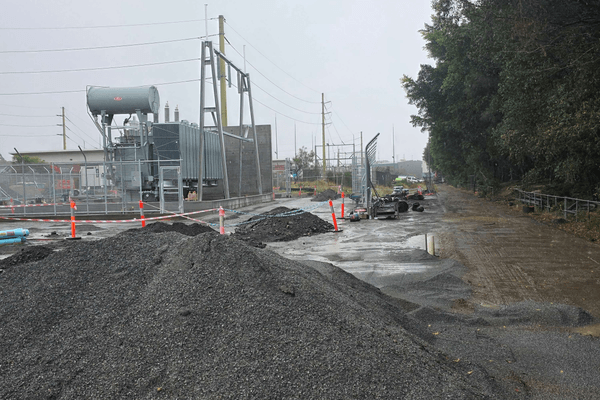
The impact included catastrophic damage at the 750-kV Kyivska substation, which feeds electricity to the capital and ensures cooling power for two nuclear power plants.

Brecht was leading a team of about 100 people who were undoing the damage when he made a deadly choice. He picked up a section of busbar—solid conduits that connect circuits within substations. It had been blasted to the ground and, unbeknownst to Brecht, was carrying lethal voltage. It’s unclear whether its circuit was still connected, or if it had picked up voltage from another circuit.

Zaychenko says an investigation is ongoing to provide answers. “I don’t know why he touched this busbar. Maybe because of tiredness. Maybe something else,” he says. “He was trying to help the team to do this job quickly. It was a huge mistake and a huge loss for us.”

  •  

POWERGRID Wins Tumkur-II Transmission Project To Integrate 2.7 GW Renewable Energy

Power Grid Corporation of India Limited has won a bid for an inter-state transmission project to enhance India's power infrastructure. The project aims to integrate 2.7 GW of renewable energy and involves constructing a 400 kV transmission line in Karnataka. It will be managed under the BOOT model, ensuring grid stability and supporting clean energy goals.

The post POWERGRID Wins Tumkur-II Transmission Project To Integrate 2.7 GW Renewable Energy appeared first on SolarQuarter.

  •  
  •  

Von optimistischen Modellen zu leeren Pipelines: Die intellektuelle Geschichte von Deutschlands Wasserstoff-Backbone*

Deutschlands Wasserstoff-Backbone existiert heute als Stahl im Boden und als unter Druck stehende Pipeline. Doch die wichtigere Infrastruktur wurde lange vor dem ersten ausgehobenen Graben geschaffen. Diese Infrastruktur war intellektuell. Eine lange Abfolge von Studien, Modellen und politiknahen Analysen erzeugte den Eindruck, dass Wasserstoff für großskalige Energienutzung nicht nur plausibel, ... [continued]

The post Von optimistischen Modellen zu leeren Pipelines: Die intellektuelle Geschichte von Deutschlands Wasserstoff-Backbone* appeared first on CleanTechnica.

  •  

Why Waiting on Grid Batteries Will Cost Ontario More Than Acting Now

Recently I took part in a discussion in Ottawa as part of CAFES Network’s work to raise local energy literacy, hosted by Invest Ottawa and attended by a mixed audience of residents, municipal and provincial policy observers, students, and people already working in energy and climate. Angela Keller-Herzog, founding executive ... [continued]

The post Why Waiting on Grid Batteries Will Cost Ontario More Than Acting Now appeared first on CleanTechnica.

  •  

Ontario’s Nuclear Rate Shock Reveals a Deeper Affordability Problem

Ontario Power Generation (OPG) has asked the Ontario Energy Board to approve a sharp increase in regulated nuclear payment amounts, including a year over year jump of more than 40% in 2027. The weighted average regulated payment amount rises from about $78/MWh in 2026 to roughly $110/MWh in 2027, driven ... [continued]

The post Ontario’s Nuclear Rate Shock Reveals a Deeper Affordability Problem appeared first on CleanTechnica.

  •  

Winter Storms Wreak Havoc — Blame Fossil Fuels, Not Renewables

Weather is big news these days, and winter storms make for great clickbait. (Okay, I’ll admit that I’m a bit culpable here.) The US Eastern seaboard is in the midst of a rolling series of winter storms — wind, ice, sleet, and snow have caused upheavals in communities. Sure, the ... [continued]

The post Winter Storms Wreak Havoc — Blame Fossil Fuels, Not Renewables appeared first on CleanTechnica.

  •  

Von optimistischen Modellen zu leeren Pipelines: Die intellektuelle Geschichte von Deutschlands Wasserstoff-Backbone*

Deutschlands Wasserstoff-Backbone existiert heute als Stahl im Boden und als unter Druck stehende Pipeline. Doch die wichtigere Infrastruktur wurde lange vor dem ersten ausgehobenen Graben geschaffen. Diese Infrastruktur war intellektuell. Eine lange Abfolge von Studien, Modellen und politiknahen Analysen erzeugte den Eindruck, dass Wasserstoff für großskalige Energienutzung nicht nur plausibel, ... [continued]

The post Von optimistischen Modellen zu leeren Pipelines: Die intellektuelle Geschichte von Deutschlands Wasserstoff-Backbone* appeared first on CleanTechnica.

  •  

POWERGRID Commissions 4.5 GW Transmission Project To Boost Renewable Energy Evacuation At Khavda

Power Grid Corporation of India Limited (POWERGRID), a leading Government of India enterprise, has achieved a major milestone in strengthening the country’s renewable energy infrastructure. On February 2, 2026, the […]

The post POWERGRID Commissions 4.5 GW Transmission Project To Boost Renewable Energy Evacuation At Khavda appeared first on SolarQuarter.

  •  

Die Opportunitätskosten des deutschen Wasserstoff-Backbones*

Deutschland hat inzwischen rund 400 Kilometer Wasserstoff-Backbone-Pipeline fertiggestellt und unter Druck gesetzt, ohne angeschlossene Lieferanten und ohne vertraglich gebundene Abnehmer — eine Pipeline von nirgendwo nach nirgendwo. Die Infrastruktur existiert und ist betriebsbereit, aber es fließt kein Wasserstoff zu irgendjemandem, der sich verpflichtet hat, dafür zu bezahlen. Dies ist kein ... [continued]

The post Die Opportunitätskosten des deutschen Wasserstoff-Backbones* appeared first on CleanTechnica.

  •  

CEI Africa and Energise Africa Mobilise $2.9 Million to Develop Nine Solar Mini-Grids in Rural Benin

Stichting Clean Energy and Energy Inclusion for Africa (CEI Africa), through its Crowdlending Window, along with crowdfunding platform Energise Africa, has mobilised $2.9 million in financing to support the development […]

The post CEI Africa and Energise Africa Mobilise $2.9 Million to Develop Nine Solar Mini-Grids in Rural Benin appeared first on SolarQuarter.

  •  

CrossBoundary Access and ANKA Acquire Four Operational Mini-Grids in Madagascar

CrossBoundary Access, Africa’s first blended finance platform for mini-grids, and ANKA, a leading mini-grid developer, have completed the acquisition of an asset company owning four operational mini-grid projects in Madagascar. […]

The post CrossBoundary Access and ANKA Acquire Four Operational Mini-Grids in Madagascar appeared first on SolarQuarter.

  •  

India Must Pivot Renewable Strategy from Capacity Addition to Grid and Manufacturing, Says MNRE Secretary – EQ

In Short : Santosh Kumar Sarangi, Secretary of MNRE, emphasized that India’s renewable energy focus must evolve from mere capacity addition to strengthening grid infrastructure and domestic manufacturing. He highlighted that integrating renewables efficiently, scaling battery storage, and boosting local manufacturing are critical to sustaining growth, ensuring energy security, and supporting India’s long-term clean energy and decarbonization goals.

In Detail : Santosh Kumar Sarangi, Secretary of the Ministry of New and Renewable Energy (MNRE), stressed that India’s renewable energy strategy needs a fundamental shift. While capacity additions have been impressive, the focus must now move toward strengthening grid infrastructure, integrating distributed energy resources, and building a resilient renewable energy ecosystem that can sustain long-term growth.

Sarangi highlighted that India’s record renewable installations have brought the country to the forefront globally, but challenges remain in grid management, intermittency, and storage. To maintain momentum, India must invest in smart grids, flexible transmission networks, and digital solutions that allow renewable energy to be efficiently integrated without compromising reliability.

Another key area Sarangi emphasized is domestic manufacturing. India’s renewable transition cannot rely solely on imports of solar modules, wind turbines, and batteries. Developing local manufacturing capabilities is essential for energy security, reducing costs, creating jobs, and establishing a self-reliant ecosystem for critical clean energy technologies.

The MNRE Secretary also pointed out the importance of energy storage and hybrid solutions. Battery systems, pumped hydro, and other storage technologies are vital to manage variability, provide grid stability, and ensure that high shares of renewable energy can be delivered consistently to consumers and industries.

Sarangi stressed that policy and regulatory frameworks need to evolve in tandem with technological development. Efficient grid integration, market mechanisms for storage and flexibility, and incentives for domestic manufacturing are essential to ensure that India’s renewable push translates into reliable, sustainable, and cost-effective energy systems.

He also highlighted that the transition from capacity addition to infrastructure focus would create multiple economic benefits. Strengthening grid networks and expanding manufacturing can generate jobs, attract investment, and foster technological innovation, positioning India as a global hub for clean energy solutions.

Sarangi emphasized that decentralized energy, such as rooftop solar, community microgrids, and P2P trading, must be integrated into national planning. This requires modern grid architecture and digital monitoring to enable two-way power flows while maintaining stability across regions with varying generation and consumption patterns.

The Secretary called for a collaborative approach involving industry, academia, financial institutions, and government bodies to accelerate the transition. Investments in R&D, skill development, and advanced manufacturing capabilities are crucial for building a robust and resilient renewable ecosystem capable of meeting India’s ambitious climate and energy targets.

Overall, Sarangi’s message underscores that India’s renewable energy journey must now evolve from quantitative growth to qualitative development. By focusing on grid modernization, energy storage, and domestic manufacturing, the country can achieve a sustainable, secure, and self-reliant energy future while strengthening its leadership in the global clean energy transition.

  •  

Powering the Digital Grid: India Prepares for a New Era of Peer-to-Peer Electricity Trading – EQ

In Short : India is set to begin pilot projects under the India Energy Stack, starting with peer-to-peer electricity trading. The initiative aims to build a unified digital foundation for the power sector, enabling direct energy transactions between consumers and prosumers, improving data interoperability, supporting renewable integration, and transforming the electricity market into a more transparent, decentralized, and technology-driven ecosystem.

In Detail : India is on the verge of launching the first pilot projects under the India Energy Stack, a national digital initiative designed to modernize the country’s power sector. These pilots mark a critical shift from traditional electricity systems toward a digitally enabled framework where data, transactions, and grid operations are integrated through standardized platforms. The initial focus on peer-to-peer electricity trading reflects a growing emphasis on decentralization and consumer participation in energy markets.

The India Energy Stack is being developed as a comprehensive digital backbone for the entire electricity ecosystem. It seeks to connect utilities, regulators, system operators, power producers, and consumers through common digital protocols. By creating a shared infrastructure for data exchange, the stack aims to eliminate silos, improve coordination, and ensure that all stakeholders can operate within a unified and interoperable system.

At the heart of the first pilot is peer-to-peer power trading, a model that allows electricity to be bought and sold directly between users. Prosumers, such as households and businesses with rooftop solar systems or other distributed energy resources, can sell excess electricity to nearby consumers. This creates a more flexible and market-driven environment, reducing dependence on centralized generation and empowering users to actively participate in the energy economy.

This new trading model has the potential to redefine how electricity flows across the grid. Instead of a one-directional system where power moves only from large generators to end consumers, peer-to-peer trading introduces a multi-directional structure. Electricity can flow between multiple points, enabling local energy balancing, reducing transmission losses, and improving overall grid efficiency through smarter digital coordination.

The pilot projects will also test how regulatory frameworks adapt to this evolving market structure. Electricity regulators and distribution companies are expected to play a crucial role in ensuring that peer-to-peer trading remains secure, transparent, and aligned with grid stability requirements. These pilots will help identify policy gaps, technical challenges, and commercial models needed for wider adoption.

Unlike conventional power exchanges, the India Energy Stack will not function as a centralized trading platform. Instead, it will provide open digital standards and interfaces that private technology companies can use to develop innovative applications. These platforms can offer services such as energy trading, billing, settlement, forecasting, and analytics, creating a competitive digital marketplace around electricity services.

A major advantage of this approach is its potential to significantly enhance renewable energy integration. As solar rooftops, battery storage systems, and electric vehicles become more widespread, the digital stack can enable these resources to interact intelligently with the grid. Prosumers can optimize their energy usage, store surplus power, and sell electricity during peak demand periods, making renewables more economically attractive.

Over time, the India Energy Stack could unlock advanced energy services such as real-time pricing, demand response programs, flexible tariffs, and energy-based financial products. Consumers may gain access to personalized energy plans, while utilities can use data-driven insights to improve planning, reduce losses, and enhance system reliability across urban and rural areas alike.

Overall, the India Energy Stack represents a transformative step toward building a digital-first power sector. By enabling peer-to-peer trading and creating a shared technological foundation, the initiative has the potential to reshape electricity markets, empower consumers, accelerate clean energy adoption, and establish a more resilient, transparent, and future-ready energy ecosystem for India.

  •  

Battery storage claims 46% share of Australia’s record 64GW energy investment pipeline

Battery energy storage projects have emerged as the dominant force in Australia's energy investment landscape, accounting for 46% of the nation's 64GW development pipeline, according to the Australian Energy Market Operator's (AEMO) latest quarterly report.

  •